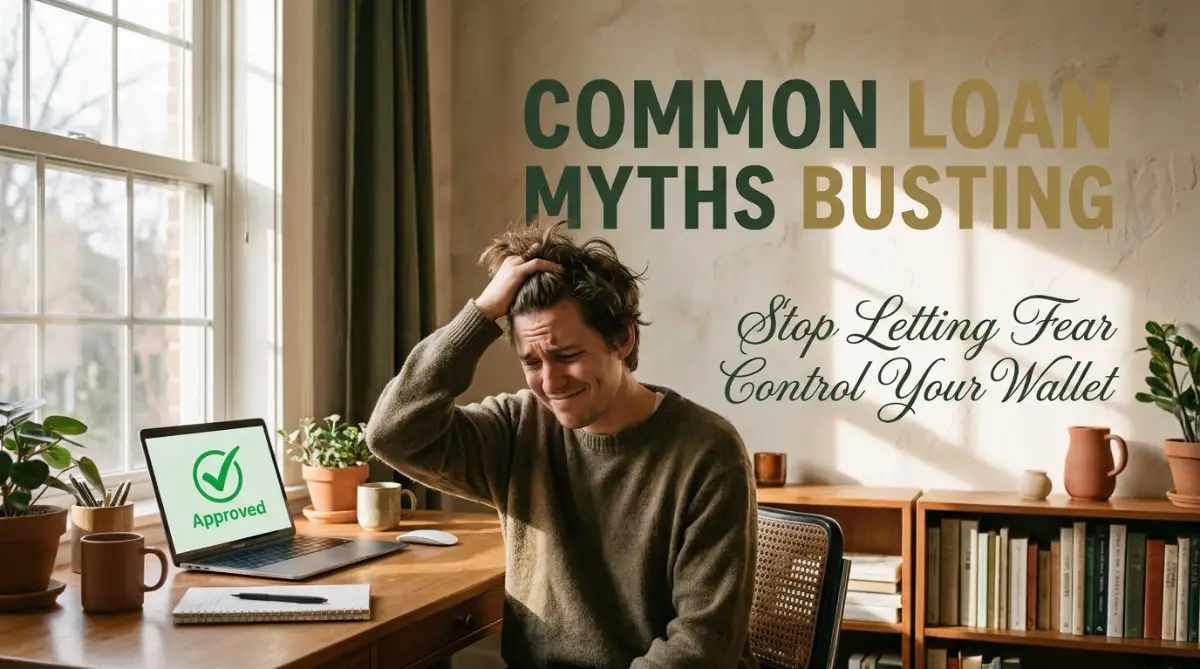
Breaking Through The Dark Cloud Of Financial Fear
Let's be completely honest for a second. Getting hit with a massive, unexpected bill can instantly make your stomach drop. You might think borrowing money to fix your broken car or pay a medical bill will just trap you in a never-ending cycle of high-interest debt. For a long time, I let that exact same fear stop me from getting the financial help I needed. But what if I told you that most of the scary rumors we hear about personal loans are completely outdated? Today, we are going to bust those old money myths so you can handle your next emergency without losing sleep.
Everyday people face this exact same terror when sudden financial emergencies strike out of nowhere. You might have a heavily leaking roof, a suddenly broken-down car, or massive surprise medical expenses. Instead of finding a calm and clear solution, you end up freezing in fear.
The constant stress of money problems simply keeps you awake at night. You imagine strict, unsmiling bank managers judging your past financial mistakes with a cold stare. You worry deeply that a single simple loan application will completely destroy the fragile credit score you worked so hard to build over time.
They incorrectly think the bank paperwork will be an absolute nightmare. They assume they need a flawlessly perfect financial history just to safely walk through the front doors of a bank. This severe lack of clear, honest information acts as a very heavy chain around your ankles, preventing you from moving forward.

Quick Summary: What You Need To Know
- Checking your loan rates using pre-qualification tools (soft inquiries) will never hurt your credit score.
- You do not need a perfect financial history to borrow money; modern online lenders look at your steady income and job stability too.
- Always hunt for loans that proudly offer "Zero Pre-payment Penalties" so you can pay off your debt early and save money.
- Never borrow more cash than you strictly need for your emergency, as extra funds just mean paying unnecessary interest.
The Real Truth Behind Borrowing Money Safely
If you want to solve your immediate money problems, you need to firmly separate solid facts from complete fiction. We are going to walk through the exact realities of modern lending so you can take control of your wallet. Let us look closely at the actual science and logic behind how modern banks make their decisions.
You need to completely forget everything your parents or older friends told you about borrowing cash. The entire financial system has completely transformed over the recent past. Today, getting funding is largely driven by smart computers, helpful algorithms, and highly flexible borrowing rules.
Myth 1: Checking Your Options Will Destroy Your Credit Score
The absolute biggest fear most folks have is that just asking a bank for a rate quote will tank their credit score. This single misunderstanding keeps thousands of good people from ever finding the best possible interest rates. They mistakenly settle for terrible, expensive options just because they are terrified of a simple credit check.
The actual reality is entirely different and much more forgiving than you think. Modern lenders use something called a "Soft Inquiry" when you first check your rates. A soft inquiry is exactly like looking at your own reflection in a mirror. You can do it a hundred times, and it will never leave a single scratch on your actual credit profile.
When you use a pre-qualification tool online, the computer is just taking a very quick, harmless peek at your basic history. It does this just to see if you basically match what they are looking for. No other banks can see this soft peek, and it mathematically does not affect your score at all.
Hard Inquiry Vs Soft Inquiry Explained
Let us make this incredibly simple to understand. A hard inquiry only happens at the very end of the process, when you officially sign the final paperwork and say "yes" to the money. Yes, a hard inquiry might drop your score by a tiny amount, usually just a few points. However, this small drop is completely temporary and usually recovers in a couple of short months as you make payments.
Here is a quick breakdown of how these two actions differ:
I remember my biggest mistake was applying directly to four different traditional banks on the exact same afternoon out of pure panic. I mistakenly thought applying everywhere would increase my chances, but it actually triggered four hard inquiries and dropped my score. My realization is that you should always use online pre-qualification tools first to safely protect your credit profile before committing.
Pro Tip: The "Freeze and Thaw" Method
If you are still nervous about random hard inquiries hitting your report, you can actually freeze your credit for free with the major bureaus (Experian, Equifax, TransUnion). When you finally find a rate you love through a soft check, you simply "thaw" or unfreeze your credit for 24 hours so the specific lender can process your final application. I do this every single time, and it keeps my profile completely locked down and safe from mistakes.
Myth 2: You Need Flawless Credit To Get Any Money
Another massive roadblock is the belief that personal loans are only handed out to wealthy people with perfect credit histories. People assume that if they missed a single credit card payment a long time ago, they are permanently blacklisted from borrowing. This totally false idea makes people turn to highly dangerous payday lenders instead of safe banks.
The actual logical truth is that lenders exist strictly to make money by lending money. If they only lent to perfect individuals, they would simply go out of business very quickly. Banks and online lenders use a scientific model known as "Risk-Based Pricing."
This simply means they are willing to lend to people with average or even slightly poor credit. They balance their mathematical risk by adjusting the interest rate accordingly. If your history is slightly bumpy, you might simply pay a slightly higher interest rate, but you can still absolutely get approved for the cash you need.
The Rise Of Alternative Digital Lenders
Traditional brick-and-mortar banks used to be extremely strict, but that is no longer the case. The internet has created hundreds of new alternative online lenders who look at the bigger picture of your life. They do not just blindly stare at your three-digit credit score anymore.
Many modern financial companies now deeply analyze your current banking habits. They safely look at your steady monthly income, your job stability, and your regular rent payments. If you have a decent steady job and a clean recent history, your chances of getting approved are surprisingly high.
Watch this short video before you fill out a single form or application. It breaks down exactly what modern lenders actually look for, so you can easily get approved on your very first try.
Myth 3: The Process Takes Endless Weeks Of Heavy Paperwork
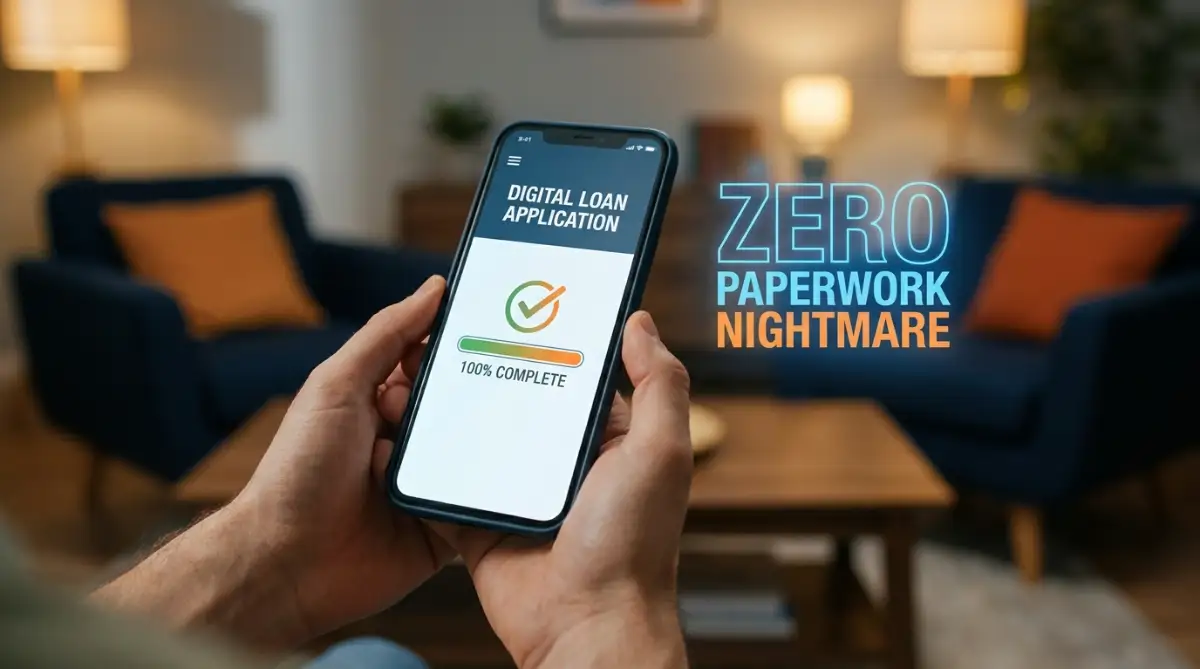
If you grew up watching old movies, you probably picture loan applications involving giant stacks of complicated paperwork. You might imagine sitting in a stuffy office for hours, handing over tax returns, pay stubs, and endless physical documents. This very thought alone makes people deeply exhausted before they even begin.
You will be highly relieved to know that this old-school nightmare is mostly dead. Today's lending process is entirely digital, incredibly smooth, and highly automated. You can literally apply for a personal loan while sitting on your living room couch wearing your pajamas.
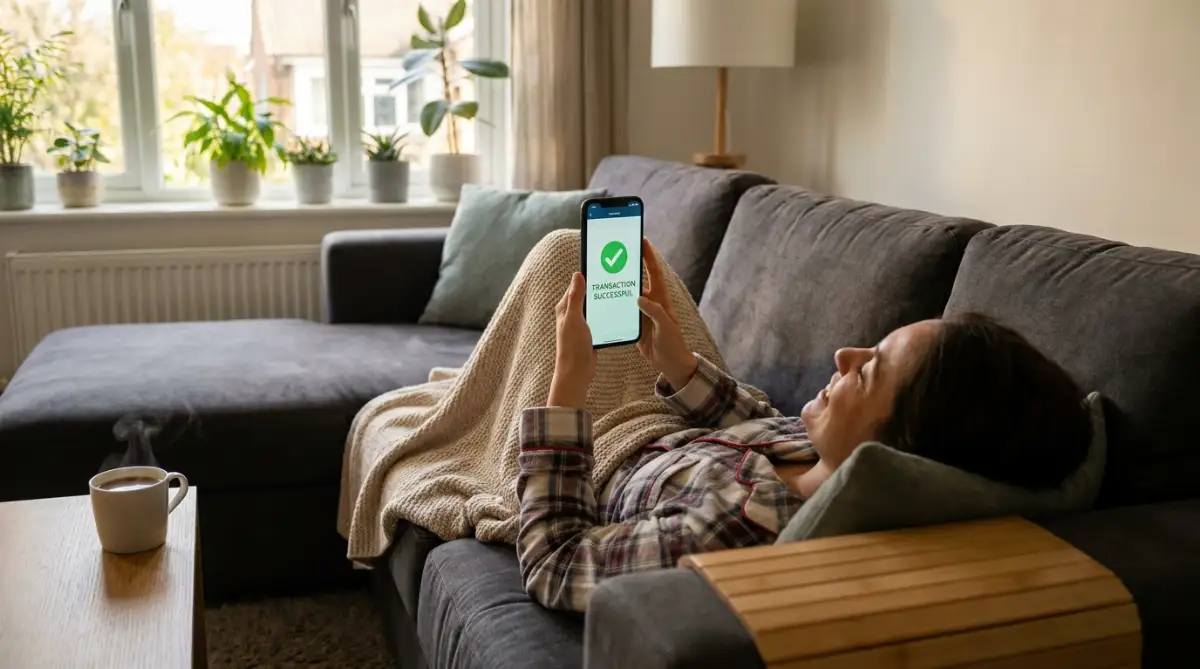
Most top-tier online lenders use highly secure digital connections to instantly verify your essential information. You simply log into your regular bank account through their secure portal. The smart software instantly verifies your exact income and identity in seconds, requiring zero physical paper.
Speed From Approval To Funding
The scientific magic of automated algorithms has completely changed how fast you get your money. In the past, human beings had to manually calculate your debt ratios using slow calculators. Today, supercomputers do this exact complex math in less than three seconds.
Because of this amazing technological shift, the time it takes to get cash has shrunk drastically. Many popular online lenders now offer guaranteed same-day or next-day funding. If you apply on a Tuesday morning, you could easily have the emergency cash sitting safely in your checking account by Wednesday afternoon.
Myth 4: Paying Off Your Debt Early Carries Massive Penalties
There is a very stubborn rumor that banks will angrily punish you if you try to be responsible and pay off your debt early. People often tell completely scary stories about hidden "pre-payment penalties" designed to keep you trapped in debt forever. Because of this, many folks avoid loans, thinking they will be locked into paying maximum interest.
While this absolutely used to be true many decades ago, it is largely a complete myth today. The massive increase in online competition has heavily forced lenders to become much more consumer-friendly. The vast majority of modern personal loans completely proudly advertise "Zero Pre-payment Penalties."
The Math Of Paying Early
Let us explore exactly how this works in your favor mathematically. When you take out a standard loan, the interest is calculated based on how long you actually hold onto the money. If you borrow cash for a promised term of four years but pay it all back in two years, you simply stop paying interest at year two.
This flexible system actually puts you firmly in the driver's seat of your financial journey. You can confidently take out a slightly longer loan to keep your required monthly payments comfortably low. Then, whenever you get a bonus at work or a tax refund, you can safely dump that extra cash onto the balance to save hundreds in interest.
Always quickly double-check the fine print of your specific contract before signing. Just briefly scan the single document for the phrase "no pre-payment fee" to ensure you are fully protected. Taking this five-second step guarantees you total freedom to escape your debt whenever you want.
Myth 5: Unsecured Loans Are Highly Dangerous
Many conservative folks believe that if a loan is "unsecured," it must be some sort of dangerous financial trap. They confuse standard personal loans with highly predatory payday loans or totally unregulated loan sharks. This deep confusion prevents excellent, hardworking people from using a highly safe financial tool.
To understand the truth, we need to clearly define what "unsecured" actually means in the banking world. A secured loan is something like a car note or a heavy house mortgage. If you sadly stop paying, the bank physically comes and takes your car or your house away from you.
An unsecured personal loan simply means your property is never directly on the line. The bank is handing you cash based entirely on your good word and your history of paying people back. You do not have to put up your family car, your precious jewelry, or your home as a strict guarantee.
Why Unsecured Is Actually Safer For You
Logically speaking, an unsecured option is physically much safer for your daily life. If a terrible disaster happens and you completely lose your job, you will indeed damage your credit score if you miss payments. However, the bank cannot magically tow your car out of your driveway the next morning.
This specific type of borrowing is heavily regulated by strict federal and state consumer protection laws. Legitimate lenders are legally required to clearly show you the exact Annual Percentage Rate (APR) before you accept. There are zero hidden tricks, zero surprise balloon payments, and zero shady back-alley collections.
By understanding these simple protective laws, you remove the scary mystery from the entire process. You realize that personal loans are simply heavily standardized products sitting safely on a digital shelf. You are the customer, and you hold the total power to firmly choose what works best for your family
Smart Borrowing: Secrets The Banking Industry Seldom Shares
Now that we have cleared away those dark clouds of fear, it is time to look at exactly how you can win the financial game. Most ordinary people just accept whatever interest rate the very first bank offers them. They simply nod their heads, sign the heavy digital paperwork, and hope for the best.
I want you to be much smarter than the average consumer sitting in the waiting room. If you genuinely want to protect your hard-earned money, you need to understand the hidden rules of modern lending. Lenders secretly love it when you do not do your homework, because it means higher profits for them.
Let us start with a fantastic secret called the "Rate Shopping Window." Did you know that major credit bureaus actually want you to shop around for the best deal? According to the consumer education guidelines provided by FICO, multiple hard inquiries for the exact same type of loan are often treated as a single inquiry.
This magical window typically lasts anywhere from fourteen to forty-five days, depending on the specific scoring model. This means you can confidently apply for a rate with three different solid lenders in one weekend without ruining your score. It gives you the ultimate power to force these massive banks to fight for your business.
Another amazing strategy is looking closely at exactly why you are borrowing the cash. If you are drowning in five different expensive credit cards, understanding how debt consolidation affects your credit score is an absolute game-changer. By combining all those messy bills into one single, clean monthly payment, you instantly reduce your mental stress.
Consolidation also usually lowers your overall interest rate, saving you thousands of dollars over the life of the loan. This simple trick turns a chaotic financial nightmare into a calm, highly predictable monthly routine.
Let’s Look At A Real Math Example:
Imagine you have $5,000 sitting on a credit card that charges you 24% in interest. If you only pay the minimum each month, it will take you years to clear and cost you a fortune. By moving that exact same $5,000 over to a clean personal loan with a 10% rate, you can easily save over $1,200 in interest charges alone. Plus, you get a fixed finish line, meaning you know the exact month you will finally be debt-free.
Many smart folks also use these specific funds to invest in themselves rather than just paying off bad mistakes. For example, if you want to start a side hustle, you can use a small personal loan to build a brand on a tight budget safely. It allows you to buy the necessary basic equipment without totally draining your emergency savings account.
However, you must treat this borrowed money with intense respect and heavy planning. Just like successful software teams strictly follow proven project management frameworks to stay organized, you must manage your loan payments with absolute precision. You cannot just guess when your payments are due; you need a solid, written plan.
You also need to heavily research something called an "Origination Fee" before you sign anything. Many online lenders advertise a shockingly low interest rate, but they secretly hide a massive fee deep in the fine print. This fee is literally deducted right out of your cash before it even hits your bank account.
If you ask for ten thousand dollars, an origination fee might silently eat five hundred dollars of it instantly. You are then left paying back the full ten thousand, even though you never actually received the full amount. Always boldly demand a lender that clearly offers zero origination fees to protect your wallet.
Finally, you should set up automatic payments the very second your funds clear your account. Most excellent lenders will actually give you a sweet "Autopay Discount" just for letting them pull the money automatically. This usually drops your interest rate by a quarter of a percent, which keeps more money in your pocket over time.
Financial Potholes: Avoiding Decisions That Will Haunt Your Wallet
Even with the best intentions, I have seen incredibly smart people make terrible choices when they are desperate for cash. Panic is a horrible advisor, and it often leads us straight into completely avoidable financial traps. When your mind is racing because the rent is due, you stop reading the fine print.
The most dangerous trap by far is only looking at the tiny monthly payment instead of the total cost. Shady salespeople love to stretch a simple loan out for seven long years just to make the monthly bill look cheap. They excitedly tell you that you only have to pay a hundred dollars a month, which sounds amazing at first.
What they intentionally fail to mention is that you will end up paying double the original amount in pure interest. The Federal Trade Commission (FTC) strongly warns consumers to always focus heavily on the Annual Percentage Rate (APR), not just the monthly bill. The APR reveals the absolute true, total cost of the money you are borrowing.
Another massive mistake is borrowing way more money than you actually need right now. The bank's smart computer might kindly tell you that you are approved for twenty thousand dollars. If you only really need five thousand to fix your car, it is incredibly tempting to take the extra cash for a fun vacation.
Please, I am begging you, absolutely never borrow a single penny more than your emergency strictly requires. Every extra dollar you take is another heavy brick added to the backpack you have to carry for the next few years. That shiny new television is simply not worth the heavy anxiety of an inflated monthly payment.

You also have to be incredibly careful about completely ignoring your own bad spending habits. Taking out a loan to pay off your credit cards is absolutely pointless if you keep using those exact same cards the next day. It is highly similar to trying to empty a sinking boat with a small bucket while ignoring the giant hole in the bottom.
If you do not fix the root cause of your spending, you will simply double your massive debt in a few short months. Much like how artificial intelligence is transforming healthcare diagnostics by safely spotting problems early, you need to spot your personal financial bad habits immediately. You must diagnose your emotional spending triggers before you sign any new legal contracts.
Many people also make the terrible error of skipping their very first payment because they feel a false sense of relief. They finally get the heavy cash in their account, they breathe a sigh of relief, and they completely forget the due date. Missing that single first payment will absolutely destroy your credit score overnight.
It tells the nervous bank that you are highly irresponsible, and they will immediately start calling your phone endlessly. That beautiful peace of mind you just bought will totally vanish, replaced by aggressive debt collectors. You must treat that very first payment like it is a matter of absolute life and death.
Instead of falling into these dark traps, try to completely rethink how you handle your household cash flow. Corporate businesses constantly rely on strict metrics to measure CAC and LTV to survive long-term. You should absolutely measure the exact cost of your new loan against the long-term value it brings to your family's stability.
If things get slightly tight, do not just blindly ignore the angry letters from the bank. Use smart agile methodologies to skyrocket your own personal budget flexibility. This simply means you should quickly adapt, cut unnecessary expenses, and communicate openly with your lender if you face sudden trouble.
Your Immediate Action Plan For A Debt-Free Future
You now have a complete, totally transparent view of how the modern borrowing industry actually works behind the scenes. You know exactly how to avoid the scary myths, and you know how to safely navigate the hidden traps. The heavy fear that used to hold you back should be completely gone by now.
Knowledge alone is absolutely useless if you do not take immediate, focused action to improve your situation. Your very first step tomorrow morning should be pulling a totally free copy of your credit report online. You need to confidently see exactly what the smart banking algorithms are seeing when they look at your name.
If you spot any weird errors or strange old accounts, you must politely dispute them immediately to boost your score. The Consumer Financial Protection Bureau (CFPB) offers excellent free resources to help you fix these annoying reporting mistakes safely.
Once your report looks completely clean and accurate, you can confidently start your soft-inquiry rate shopping. Make a warm cup of coffee, sit down at your laptop, and proudly use those simple pre-qualification tools. Compare the hidden fees, closely check the final APR, and choose the option that heavily respects your wallet.
Remember, getting approved for funding is not some sort of magical lottery meant only for lucky people. It is a highly logical, deeply mathematical process that you can easily win if you strictly follow the right rules. You hold the pen, you sign the digital paper, and you are totally in charge of your own journey.
Frequently Asked Questions About Securing Your Funds
Does checking my rate multiple times hurt my chances?
Not at all, as long as you are strictly using soft-inquiry pre-qualification tools on the lender's website. These quick checks are completely invisible to other banks and do not lower your score. You can safely compare five different offers in a single day without any fear.
Can I actually get approved if I am fully self-employed?
Yes, absolutely, but you will need to provide slightly different paperwork to prove your steady income. Instead of a standard corporate pay stub, you will simply show them your recent bank statements or recent tax returns. Lenders just want to clearly see that you have cash regularly flowing into your checking account.
What happens if I accidentally miss a scheduled payment?
If you simply miss the strict due date by a day or two, you will usually just get a small late fee. However, if your payment is more than thirty days late, it gets heavily reported to the major credit bureaus. This single massive mistake will drop your score terribly, so always set up automatic payments.
Is it legally safe to provide my bank login to an online lender?
Yes, legitimate and highly trusted lenders use deeply encrypted, read-only connections to instantly verify your daily income. They cannot ever move your money, steal your passwords, or make any changes to your personal account. It is just a highly secure, modern way to completely skip sending them massive stacks of paper documents.
I honestly wish someone had sat me down and clearly explained all these simple truths before I made my early mistakes. My ultimate hope is that you use this exact knowledge to permanently remove the heavy stress from your daily life. Take a deep breath, trust the clear facts, and step boldly into your bright financial future!
The information provided in this article is strictly for educational and informational purposes only and does not constitute professional financial, legal, or tax advice. I am not a licensed financial advisor. Interest rates, loan terms, and credit score impacts vary heavily based on individual circumstances and lender policies. Always conduct your own thorough research and consult with a certified financial professional before signing any legally binding loan agreements or making major financial decisions.

![7 Hidden Ways Mandatory Forbearance Destroys Your Credit [Avoid These Mistakes]](https://vimex24.com/storage/uploads/blogs/1788962201_7-hidden-ways-mandatory-forbearance-destroys-your-credit-avoid-these-mistakes.webp)