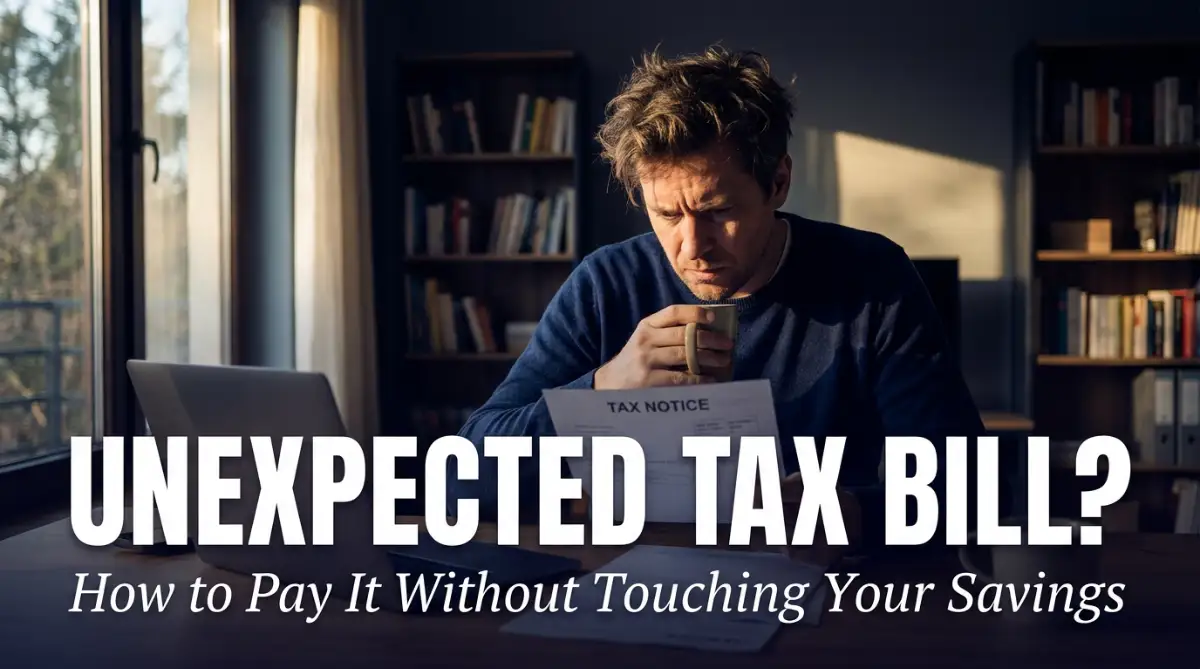
The Sudden Shock of a Massive Tax Bill
Opening a letter from the tax department and seeing a massive, unexpected number at the bottom can make your stomach drop. You did everything right—saved up, paid your bills, and even kept a decent emergency fund—but now a surprise freelance gig or a simple math error has flipped your tax bracket upside down. Before you panic and drain your hard-earned savings to pay the government today, stop. You actually have multiple legal options that will not leave you broke. Let us fix this mess step by step.
This is a silent nightmare that so many honest, hardworking people go through every single tax season. You do your absolute best to save money, pay your bills on time, and build a little safety net for your family.
Then, out of nowhere, a massive tax bill lands in your mailbox and completely ruins your mental peace. You start losing sleep, tossing and turning while wondering how you will pay for groceries if the government takes your savings
Most folks panic immediately and make the worst possible choice out of pure fear. They empty their primary savings account, leaving themselves completely exposed to actual emergencies like sudden medical bills or expensive car repairs.
But wiping out your safety net to pay the government is not the only way out of this messy situation. There are smart, legal, and highly effective methods to handle this debt while keeping your savings perfectly intact.

Key Takeaways: Quick Fixes for Your Tax Bill
- Do not touch your emergency fund: Keep your cash for real life emergencies; use a government payment plan instead.
- Ask for forgiveness: Call the tax office and request "First-Time Penalty Abatement" to instantly wipe out expensive late fees.
- Never raid your 401(k) or IRA: Early withdrawal penalties will just create a much bigger tax debt for you next year.
- Adjust your paperwork today: Fix your W-4 forms or quarterly estimates tomorrow morning so this nightmare does not repeat next tax season.
Smart Strategies to Tackle Tax Debt Without Touching Savings
Paying a surprise bill from the government feels incredibly scary, but it is just another financial puzzle to solve. When you panic and empty your savings, you fix one problem but instantly create another. You lose the cash cushion that keeps you safe from life's random curveballs.
Let us explore some highly practical, tested ways to handle this debt logically. By taking a deep breath and using the right tools, you can easily keep your money in the bank where it belongs.
Break the Debt Down With an Installment Plan
The absolute easiest way to protect your savings is to ask for a payment plan. Tax authorities actually want you to pay, and they are usually very willing to give you more time. You do not have to hand over a giant lump sum on day one.
You can set up a short-term or long-term monthly installment agreement. A short-term plan gives you a few extra months to gather the cash from your regular income. A long-term plan lets you stretch the payments out over several years.
Think of this like paying a monthly utility bill instead of buying a whole house in cash. Yes, you will pay a little bit of interest over time. However, keeping your emergency fund safe and earning interest in your own bank account easily outweighs this small cost.
Watch this simple breakdown to see exactly how these payment plans actually work in real life.
Quick Look: IRS Payment Plan Options
| Plan Type | Time Given to Pay | Setup Fee | Best For |
| :--- | :--- | :--- | :--- |
| Short-Term | Up to 180 days | 0(Free)∣Whenyoujustneedafewextrapaycheckstocoverthebalance.∣∣∗∗Long−Term∗∗∣Upto72months∣Varies(
0(Free)∣Whenyoujustneedafewextrapaycheckstocoverthebalance.∣∣∗∗Long−Term∗∗∣Upto72months∣Varies(
31 - $225) | Large debts you need to pay off slowly over several years. |
Request Penalty Forgiveness to Lower the Total
Most people look at a tax bill and assume every single penny is set in stone. That is a huge misunderstanding. A large portion of an unexpected tax liability is often made up of late fees and penalties.
If this is your first time messing up your taxes, you are in luck. Many tax agencies offer something called First-Time Penalty Abatement. This is basically a forgiveness program for good citizens who made a simple math error or missed a deadline.
You just have to call them up and ask for it politely. If they approve it, your total debt shrinks instantly. This makes it much easier to pay off from your regular monthly paycheck without ever touching your savings account.
Insider Tip: If you are dealing with the IRS in the United States, you can actually use Form 843 (Claim for Refund and Request for Abatement). You do not even need a fancy lawyer for this. If you have had a clean tax record for the past three years, the IRS will almost automatically grant this forgiveness under their First-Time Abatement policy.

I remember when I tried to ignore a small tax notice hoping it would magically disappear. My delay only added weird penalty fees, teaching me that calling them immediately is always the safest bet. Facing the problem head-on saved my bank account from total disaster.
Reorganize Your Cash Flow Temporarily
Sometimes, the best loan you can get is the money hiding in your own monthly budget. If the tax bill is not too huge, you can pay it off by temporarily shifting your spending habits. This requires discipline, but it works incredibly well.
Sit down and look at where your cash goes every single month. Identify your non-essential spending categories like dining out, entertainment subscriptions, or weekend trips. Pause these activities for just a few months.
Redirect all that saved cash directly to your tax liability. It is like putting your lifestyle on a brief hold to clear a hurdle. Once the debt is entirely gone, you can go right back to your normal spending habits, and your main savings account will still be full.
Leverage Low-Interest Alternatives Safely
If the tax office's interest rates are too high, you can look for outside help to fund the payment. The goal is to borrow money at a much cheaper rate than what the government charges. This strategy keeps your personal savings completely out of the picture.
One popular method is using a 0% introductory APR credit card. Many financial institutions offer credit cards with no interest for a year or more. You can pay your taxes with this card and then pay off the card slowly over time.
You must be extremely careful with this strategy, though. You have to pay off the card balance before the promotional period ends. If you fail, the regular high-interest rate will hit you hard. Only use this trick if you are highly organized with your monthly bills.
Myth vs. Reality: The Truth About Tax Debts
Let us clear up some common misunderstandings that cause people to panic and drain their savings. When you know the actual facts, the fear naturally starts to fade away. You make much better financial decisions when your mind is calm.
Consider an Offer in Compromise
If your tax bill is so massive that you can never realistically pay it, there is a special legal route. It is called an Offer in Compromise. This allows you to settle your massive tax debt for much less than you actually owe.
The tax agency will look deeply at your ability to pay, your income, your expenses, and your asset equity. If they agree that collecting the full amount is impossible, they will accept a smaller lump sum.
This is not an easy pass, and the approval process is very strict. However, for people in deep financial trouble, it is a legal way to wipe the slate clean. It stops the aggressive collection letters and lets you rebuild your life without zeroing out your last remaining dollars.
Tap into Sinking Funds Instead of Emergency Savings
There is a huge difference between an emergency fund and a sinking fund. Your emergency fund is for sudden job loss or major health problems. Sinking funds are smaller savings pots for planned expenses like holidays or a new laptop.
If you have a sinking fund sitting around, use that money to pay the tax bill. It is much better to cancel a planned vacation than to expose yourself to a real financial disaster.
You can always rebuild a sinking fund for a vacation next year. But if you lose your job tomorrow, you will desperately need that main emergency fund to survive. Always protect your biggest safety net first.
Boost Your Income to Cover the Gap
When cutting expenses is not enough, you have to attack the problem from the other side. Earning extra money is a highly effective way to crush a sudden tax bill. The best part is that this extra income is completely separate from your regular salary and savings.
You can take on temporary freelance work, sell items you no longer need around the house, or work a few overtime shifts. Every single extra dollar you make goes straight to the tax department.
It might mean working really hard for a short period of time. However, the feeling of paying off the government without touching your hard-earned savings is incredibly rewarding. You will sleep much better knowing your main bank account is still growing safely.
Do Not Ignore the Problem
The biggest mistake you can ever make with a tax bill is hiding it in a drawer. Tax agencies are not like regular bill collectors; they have an incredible amount of legal power. They will eventually find you, and the math will be much worse.
When you ignore a notice, the penalties and interest keep multiplying every single day. What started as a small, manageable bill can quickly turn into a massive financial monster.
Always open government letters the exact day they arrive. Read the instructions carefully and take immediate action. The faster you communicate with them, the more options you will have to protect your personal money.
Work With a Professional Tax Advocate
Sometimes, the paperwork and the legal jargon are just too confusing for a regular person to handle alone. If you feel completely lost, it is time to bring in a professional. A certified tax professional or enrolled agent can be your best defense.
These professionals deal with tax authorities every single day. They know exactly which forms to file, how to ask for penalty relief, and how to set up the best payment plans. They can often negotiate better terms than you ever could on your own.
Yes, you have to pay them a fee for their services. But a good professional will often save you much more money than they cost. They take the emotional stress completely off your shoulders, allowing you to focus on your normal life and career.
Re-Evaluate Your Future Tax Strategy
Once you finally clear this unexpected debt, you must make sure it never happens again. A surprise tax bill usually means something is slightly wrong with your income withholding or your estimated payments. You need to fix the root cause of the problem.
Sit down and review your current tax withholding setup. If you are an employee, you might need to adjust your forms to take more taxes out of your weekly paycheck. If you are a freelancer, you definitely need to increase your quarterly estimated payments.
It is always better to get a small refund next year than to face another terrifying bill. By adjusting your strategy now, you guarantee that your savings account will never be threatened by the tax office again. You take complete control of your financial destiny.
The Psychological Benefit of Protecting Savings
Even if you have to pay a little bit of interest on a tax payment plan, the psychological benefit of keeping your savings is massive. You still feel financially strong. You do not have to walk around feeling broke and defeated.
Always value your mental health when making these big money choices. A small monthly payment to the government is slightly annoying, but having zero dollars in your bank account is absolutely terrifying. Protect your peace of mind by keeping your safety net exactly where it is.
Next-Level Moves for Long-Term Tax Safety
Once you have stopped the immediate panic, it is time to play defense for the future. Handling a sudden tax bill without touching your main savings is just the first battle. You need a solid system to ensure this stressful situation never happens to your family again.
Many people successfully pay off their tax debt but fall right back into the exact same trap the next season. They simply do not change their underlying financial habits. Let us walk through some advanced strategies that keep your bank account safe forever.
These are the exact methods professional financial advisors use to protect their clients' wealth. You do not need to be rich to use them; you just need to be slightly more organized. Let us break down these clever tactics step by step.
Set Up an Invisible "Tax Bucket" Account
The absolute best way to manage surprise taxes is to separate your money entirely. When all your cash sits in one big checking account, your brain thinks it is all available to spend. This creates a dangerous illusion of wealth that trips up so many honest people.
Go to a completely different bank and open a separate high-yield savings account. Name this account something very clear, like "Government Money" or "Do Not Touch - Taxes." Every time you get paid, immediately transfer a small percentage into this hidden bucket.
If you are a freelancer or gig worker, try to move about twenty to thirty percent of every single invoice over to this account. Because it is at a different bank, you will not see it when you log in to check your daily spending balance. When tax season arrives, you simply pay the bill straight from this bucket, leaving your personal emergency fund completely untouched.
Recalculate Your Daily Financial Risks
Sometimes, an unexpected tax bill happens because our overall financial life is disorganized. We focus too much on daily expenses and forget about the bigger picture. You have to look at how all your different debts and obligations connect to one another.
For instance, if you are blindly using credit cards to fund your lifestyle, you are walking into a trap. It is incredibly easy to get crushed by the hidden costs of revolving credit lines when you are also trying to pay the government. You must pause unnecessary spending immediately and review every single monthly statement.
This same logic applies to other major life changes that drain your cash flow. If your family is growing, such as adding a teen driver to your policy, your monthly budget takes a massive hit. You must anticipate these extra costs so you do not accidentally spend the money you actually owe for taxes.
Master the Art of Direct Negotiation
Most people are terrified of talking to government officials on the phone. They assume the person on the other end is a cold robot who only wants to take their money. In reality, the people working at the tax office are just regular human beings doing their jobs.
When you call them, be incredibly polite, honest, and humble. Explain your situation calmly without getting angry or overly emotional. If you treat them with deep respect, they are often much more willing to help you find a flexible payment option.
If you ever feel like you are not being heard, you can always reach out to an independent support system. For example, using the free services provided by the Taxpayer Advocate Service can give you a massive advantage. They specifically help regular folks resolve extremely complicated tax problems when standard channels fail.
Adjust Your Paycheck Withholding Immediately
If you received a massive tax bill as a regular employee, your employer is simply not holding enough money from your check. You basically gave yourself a tiny, accidental loan throughout the year without realizing it. Now, the government wants that money back all at once.
You need to march into your HR department tomorrow morning and ask for a new withholding form. You want to instruct them to hold back just a little bit more from every single paycheck. It might make your weekly take-home pay slightly smaller, but it guarantees you will never owe a huge lump sum again.
If you are confused about exactly how much they should hold back, do not guess blindly. You can easily use the official IRS Tax Withholding Estimator online to get the exact math right. It is a completely free tool that tells you exactly how to fill out your forms based on your unique lifestyle.
Protect Your Data During the Chaos
When people are desperate to fix a tax problem, they often rush and make sloppy mistakes. They start emailing sensitive financial documents over public Wi-Fi or sharing their social security numbers with unverified online helpers. This is a massive security risk that can ruin your life.
Scammers absolutely love tax season because people are stressed and vulnerable. If a fake debt collector steals your identity, your financial problems will multiply overnight. You must be heavily guarded with your personal information, especially if you are working from a coffee shop or a shared space.
Always ensure you are using secure, encrypted connections when dealing with any financial portals. If you do administrative work outside your house, implementing strict cybersecurity protocols for remote workers is entirely non-negotiable. Protecting your digital identity is just as important as protecting your physical bank account.
Leverage Professional Tax Strategists
There is a huge difference between someone who just fills out tax forms and a true tax strategist. A basic accountant just records your history, but a strategist helps you plan your financial future. They actively look for legal loopholes and deductions to lower your overall burden.
Finding the right professional can literally save you thousands of dollars over a decade. They know the exact legal boundaries and can guide you through complex financial mazes. If you want peace of mind, consider consulting an expert from the National Association of Enrolled Agents, as they are federally licensed tax practitioners.
A great professional will look at everything from your side hustles to your medical expenses. They might even help you balance your tax debt while you are simultaneously navigating student loan forgiveness requirements. Having a smart financial coach in your corner is the best investment you can ever make.

Dangerous Traps That Will Destroy Your Wealth
Knowing what to do is only half the battle when facing a massive tax bill. Knowing exactly what to avoid is often much more important for your long-term survival. When humans panic, our brains push us toward terrible, short-sighted decisions.
I have seen so many hardworking friends destroy years of financial progress simply because they got scared of a government letter. They tried to fix the problem instantly instead of fixing it smartly. Let us walk through the most toxic mistakes people make so you can stay far away from them.
Raiding Your Retirement Accounts Early
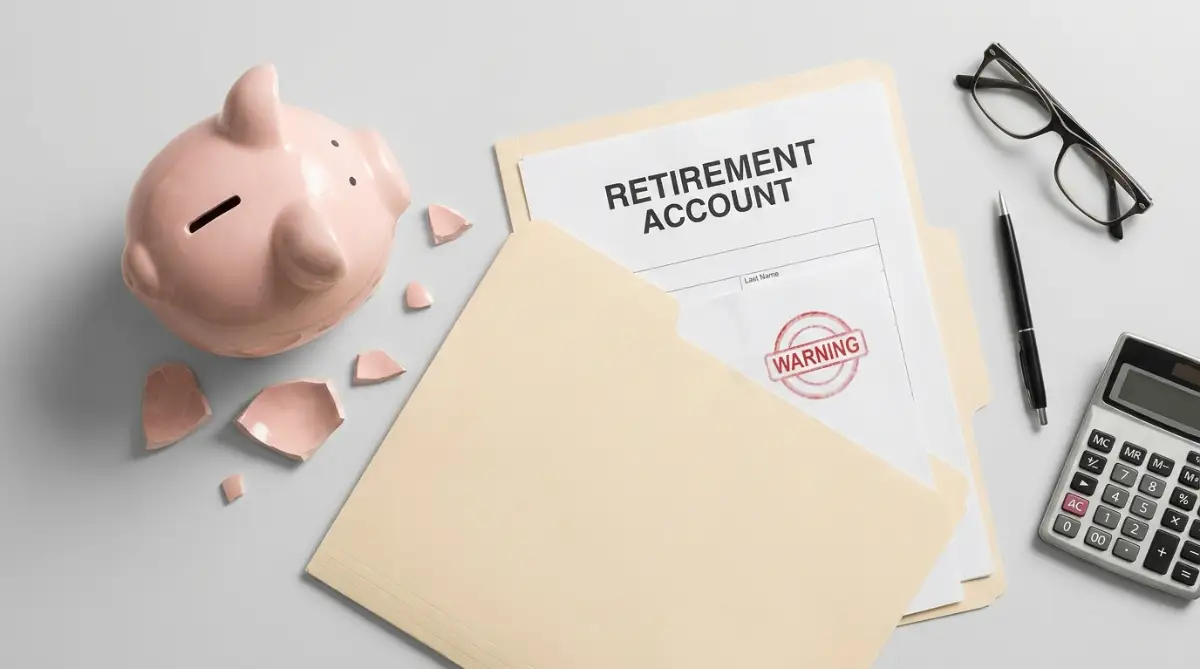
This is honestly the most heartbreaking mistake I see people make every single year. You look at your 401(k) or IRA, see a big pile of cash, and think it is the perfect solution. You tell yourself that you will just borrow it now and pay it back later when things get better.
Do not ever touch your retirement money to pay a standard tax bill. When you pull money out of these accounts early, the government hits you with massive early withdrawal penalties. On top of that, the money you withdraw is added to your total income, which means you will owe even more taxes next year!
It is a vicious, endless cycle that completely destroys the magic of compound interest. Let your retirement money sit safely and grow quietly for your old age. Negotiating a monthly payment plan with the tax office is always a million times cheaper than ruining your future retirement.
Ignoring the Letters and Hoping They Disappear
We all have that deeply childish instinct to hide under the blankets when something scary happens. When that thick government envelope arrives, some people just toss it in a drawer unopened. They somehow convince themselves that if they do not look at it, the problem does not actually exist.
This is the fastest way to turn a slightly annoying bill into a complete financial disaster. Government tax software does not forget, and it does not feel sympathy when you ignore it. The automated systems will simply start piling on heavy daily interest and late fees.
If you wait too long, they will take aggressive legal action against you. They can freeze your checking accounts, intercept your future paychecks, or even put a legal claim on your family home. Facing the fear immediately on day one is the only way to retain your power and protect your assets.
Using High-Interest Predatory Loans
When traditional bank accounts are low, desperate folks often turn to the darkest corners of the lending world. They walk into payday loan shops or take out incredibly expensive personal loans online. They think borrowing money quickly will get the government off their backs.
This is like trying to put out a kitchen fire by pouring a bucket of gasoline on it. Predatory loans often carry interest rates that are completely absurd, sometimes over three hundred percent! You might pay the tax office today, but you will be drowning in terrible private debt tomorrow morning.
If you absolutely must borrow money, stick to verified, low-interest options. Look for decent personal loans from local credit unions or ask a wealthy family member for temporary help. Never sign a loan agreement if you do not fully understand the exact interest rate and the strict repayment schedule.
Paying Everything Upfront While Starving Your Life
Some extremely honest people hate the idea of being in debt to the government so much that they punish themselves. They take every single penny they have in their checking account and send it away. They zero out their balance just to feel the immediate relief of a clean slate.
But what happens next week when your car engine suddenly blows up on the highway? Because you gave all your cash to the government, you now have zero safety net for real-life emergencies. You are completely exposed to danger, just like driving a car without a seatbelt.
In situations like this, having a backup plan is everything. It is just like how uninsured motorist coverage saves you when another driver ruins your car. You always need a solid buffer of cash on hand to protect your family from random, unpredictable life disasters.
Blindly Trusting Unverified "Tax Relief" Commercials
If you owe a lot of money, you will eventually start seeing aggressive advertisements online and on television. They feature loud men promising to "settle your tax debt for pennies on the dollar!" They make it sound like a magical wand they can wave to erase your entire financial history.
Please understand that most of these late-night tax relief companies are highly deceptive. They charge you thousands of dollars upfront in non-refundable fees just to look at your paperwork. Often, they submit the exact same basic forms you could have easily submitted yourself for free.
While the "Offer in Compromise" program is totally real, it is incredibly hard to qualify for. The government is getting smarter, and automated systems are better at catching fraudulent claims. Interestingly, some experts even discuss how AI actually reads your true emotions and behaviors during complex digital evaluations, making it harder to fake financial hardship. Always use a highly trusted, local professional rather than a random toll-free number from a commercial.
Your Game Plan for Financial Peace of Mind
Getting hit with a sudden tax bill is definitely a heavy punch to the gut, but it is never the end of the world. You are not the first person to face this, and you certainly will not be the last. Millions of hardworking people navigate this exact same messy maze every single spring.
The most important takeaway is that you have highly effective options. You do not have to sacrifice your hard-earned emergency fund, and you do not have to lose sleep at night. By stepping back, taking a deep breath, and communicating openly with the tax office, you regain total control.
Set up a manageable payment plan that fits your monthly lifestyle perfectly. Request that first-time penalty forgiveness to knock the total balance down a few notches. Finally, fix your withholding documents immediately so you never have to deal with this headache next season.
I know exactly how suffocating it feels when you stare at that massive number on the government letterhead. But the moment I finally picked up the phone and set up my payment plan, a huge weight completely vanished from my shoulders. Take that first brave step today, protect your main savings account, and reclaim your daily peace of mind!
Common Questions About Sudden Tax Bills
Will the government freeze my bank account immediately?
No, the tax authorities cannot randomly freeze your account out of nowhere. They are legally required to send you multiple warning letters over several months. As long as you respond and try to set up a payment plan, your daily bank account remains completely safe.
Does setting up a tax payment plan ruin my credit score?
A standard monthly installment agreement with the tax office does not get reported to the major credit bureaus. It will not hurt your credit score or stop you from buying a house. However, if you completely ignore the debt, they might file a public tax lien, which definitely damages your credit.
Can I actually negotiate the total amount I owe?
You cannot negotiate the base tax amount just because you do not want to pay it. However, you can easily negotiate to have the late fees and heavy penalties removed if you have a good history. If you are in deep financial poverty, you can apply for an Offer in Compromise to settle for a smaller amount.
What if I literally have zero extra dollars to pay right now?
If you recently lost your job or faced a massive medical crisis, you can ask for a "Currently Not Collectible" status. This temporarily pauses all collection efforts and stops the scary letters while you get back on your feet. The debt does not disappear, but it gives you time to breathe without active harassment.
Disclaimer: The information provided in this article is for educational and informational purposes only and does not constitute financial, legal, or tax advice. Tax laws change frequently and vary by location. Always consult with a certified tax professional, CPA, or financial advisor before making any major decisions regarding your personal tax liabilities or savings accounts.

![7 Hidden Ways Mandatory Forbearance Destroys Your Credit [Avoid These Mistakes]](https://vimex24.com/storage/uploads/blogs/1788962201_7-hidden-ways-mandatory-forbearance-destroys-your-credit-avoid-these-mistakes.webp)