Escaping the Debt Trap: My Personal Nightmare with Shady Lenders
Nobody wakes up thinking they are going to get trapped by a loan company today. But when your car breaks down or a massive medical bill hits your mailbox out of nowhere, panic takes over. I know that feeling all too well. A few years ago, I needed quick cash and almost clicked "accept" on a loan that would have drained my bank account for years. When you are desperate, shady lenders look like lifesavers. Today, I want to show you exactly how to see right through their friendly masks so you can keep your money safe.
It took me months of severe anxiety, legal letters, and endless stress to finally break free from their grip. I am sharing my story because I know exactly how vulnerable you feel when you are desperately looking for financial help. When the bills are piling up, it becomes incredibly easy to ignore the warning signs. You just want the pain to stop, so you click "accept" without asking the right questions.
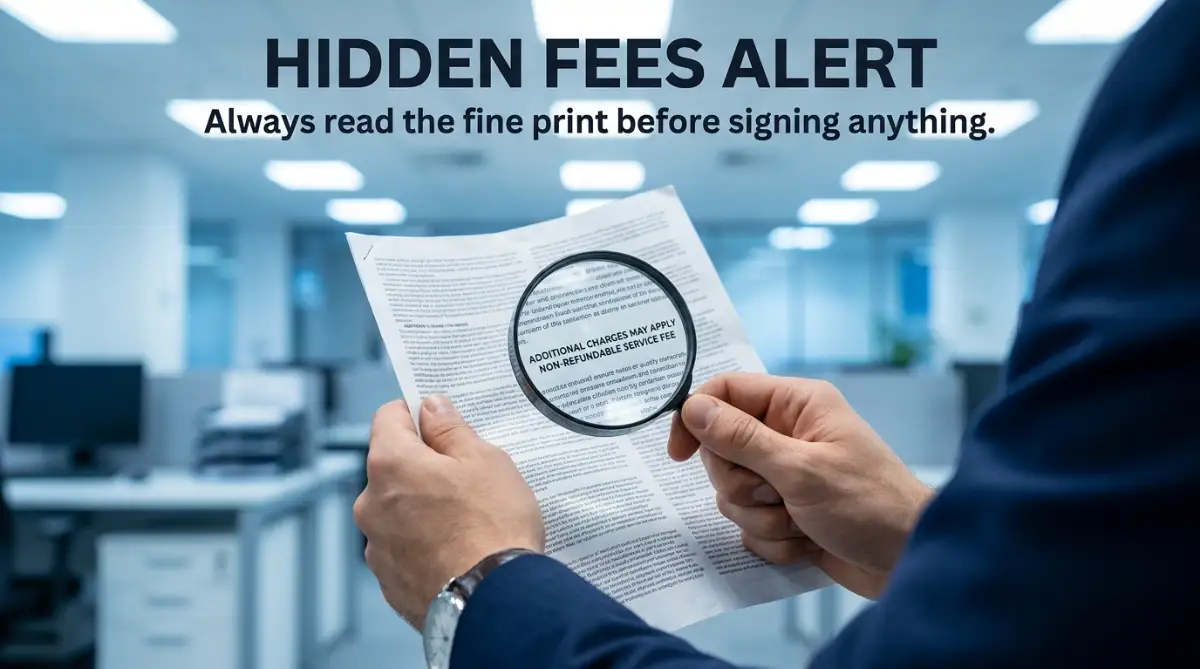
Key Takeaways to Protect Your Wallet
- Never pay any upfront fees before receiving your loan funds.
- Ignore fake countdown timers and high-pressure sales tactics.
- Always verify a lender's state license and physical office address.
- Watch out for hidden pre-payment penalties in the fine print.
- Never share your online banking login credentials with a lender.
Spotting the Danger Signs Before You Sign the Dotted Line
The absolute best way to protect your money is to recognize a bad deal long before you ever share your personal information. These shady companies rely heavily on your panic and urgency. If we can remove the panic, we can easily spot their dirty tricks.
Let us walk through exactly what you need to look out for. These are not just wild theories. These are hard facts based on how predatory financial systems operate behind the scenes.
The Upfront Fee Scam (A Major Warning Sign)
One of the biggest warning signs is when a company asks you to pay them before they even give you a loan. This makes absolutely zero sense when you stop to think about it. You are going to them because you need money, so why should you pay them first?
Do you want to see exactly how these scams operate in real life? Watch this short breakdown showing how fake lenders trap honest people, and then read on to discover how to protect your bank account from hidden fees.
Legitimate lenders will simply deduct any processing fees directly from the total loan amount. If a company demands a direct wire transfer, a prepaid debit card, or a cryptocurrency payment for "insurance" or "processing," run the other way immediately. This is a common tactic used to steal your last few dollars before disappearing completely.
Think of it like hiring a contractor to fix your roof. If they demand 100% of the cash upfront before bringing a single tool to your house, you would probably slam the door. You need to treat your financial choices with the exact same level of suspicion. Never pay out of pocket to borrow money.
Quick Checklist: Scam vs. Safe Lenders
- Scam: Asks for money through gift cards, crypto, or direct wire transfers.
- Safe: Deducts any small processing fees straight from your approved loan amount.
- Scam: Approves you in 30 seconds without checking your identity.
- Safe: Asks for a few days to review your real financial documents.
Aggressive Urgency and Pressure Tactics
Have you ever had a salesperson breathe down your neck, demanding you make a decision right this second? That is exactly how predatory financial businesses operate. They do not want you to think carefully.
Here is a quick Pro Tip from my own experience: I once received a loan offer that said "This approval expires in 60 minutes." I panicked and almost signed it. Later, I realized that real, trustworthy companies will always give you a few days to read the contract and make a smart decision. If they rush you, they are definitely hiding something bad.

They use countdown timers on their websites or send text messages claiming your application will be deleted in ten minutes. This creates a fake sense of urgency. A solid, legal financial institution will always respect your time. They want to make sure you can actually repay the money.
When you feel pushed into a corner, take a deep breath and step away from your computer. Go for a walk or drink a glass of water. Getting out of that high-pressure environment is often enough to clear your head and see the situation clearly.
Real-Life Scenario: I once had a phone representative tell me, "My manager approved this low rate just for you, but I have to pull the offer if we hang up." I hung up anyway. Guess what? Two days later, that same company emailed me an even "better" offer. Their fake deadlines are just a psychological trick to stop you from reading the fine print.
The "No Credit Check Guaranteed" Trap
We all love the idea of a guaranteed victory, especially when our credit score is not looking great. But in the world of borrowing money, guaranteed approval is a massive red flag. Real lenders take on financial risk when they hand you cash.
To manage that risk, they have to verify your identity and your ability to repay the debt. If a company completely ignores your financial history, they are not a real lender. They are likely a lead generation scam designed to steal your social security number and sell it to hackers.
Alternatively, they might be planning to charge you an astronomical interest rate that is impossible to pay back. Let us break down the reality of these promises.
Myth vs Reality: Understanding Unsecured Lending
Looking at this table, it becomes clear that if an offer sounds way too good to be true, it is entirely fake. Good financial deals require some basic paperwork and simple verification.
Phantom Addresses and Unprofessional Communication
A real business has a real footprint in the real world. When you are evaluating an offer, scroll down to the bottom of their website. You should see a physical office address and a working customer service number.
If the only way to contact them is through a random web form or an anonymous email address, you are in danger zone. Many fake operations use PO Boxes or fake addresses to avoid being tracked down by law enforcement. I highly recommend typing their listed address into a map application.
If the address shows an empty parking lot or a fast-food restaurant, you know it is a total scam. Another clear sign is poor spelling and bad grammar in their official emails. Professional companies spend good money on copywriters and legal teams to make sure their documents look perfect.
If your official loan agreement looks like it was translated poorly by a cheap software program, do not sign it. Your financial future is too important to trust to someone who cannot even spell your name correctly.
The Endless Trap of Hidden Fees
Let us talk about the fine print. I know reading pages of legal text is incredibly boring. But skipping this step is exactly how they trap you. Unsecured loans do not have collateral like a house or a car attached to them.
Because they cannot take your car if you miss a payment, bad companies try to drain you through hidden penalties. They will sneak in daily late fees, processing charges, and even penalties for paying off your debt early. Yes, you read that correctly.
Some predatory companies will actually punish you for giving them their money back too quickly. They do this because they want you stuck in a never-ending cycle of high interest payments. Think of it like a leaky bucket.
No matter how much water you pour into the bucket, it never fills up because of the holes at the bottom. These hidden fees are the holes in your financial bucket. You will keep paying and paying, but your main balance will never actually go down.
Protecting Your Digital Identity
In our modern era, your digital information is just as valuable as the cash in your wallet. Bad actors do not always want your upfront money. Sometimes, they just want your data.
When you fill out a fake application, you are handing over your full name, date of birth, home address, and banking details. This is a goldmine for identity thieves. They can take this information and open new credit cards in your name across the country.
Before you type any personal information into a website, look closely at the web address bar. You want to see a small padlock icon, which means the connection is secure. You should also search for the company name online along with the words "scam," "review," or "complaint."
Reading reviews from real people on independent websites will save you a massive amount of trouble. If dozens of people are screaming that the company ruined their lives, you need to listen to them. Do not assume your experience will magically be any different.
Building a Safe Financial Defense
Dealing with money shortages is stressful enough without having to dodge criminals at every turn. But you have complete control over who gets access to your life. You hold the power to say no, close the browser window, and walk away.
Always trust your gut feeling. If a phone representative is rude to you, or if a website feels slightly suspicious, just leave. There are thousands of legally registered, safe, and helpful financial institutions out there.
You do not need to settle for a shady operation just because you are in a hurry. Take a step back, review the facts, and protect your hard-earned money. By staying alert and looking for these specific warning signs, you will keep your peace of mind entirely safe.
Taking control of your personal finances means being a defensive player. You have to guard your bank account like a fortress. Keep your eyes wide open, read every single line of text, and never let anyone rush your choices.
Next-Level Defenses: How to Outsmart Shady Lenders
Now that we know how these bad actors operate on the surface, we need to talk about building a permanent wall around your finances. You do not have to be a Wall Street banker to spot a fake contract. You just need a solid game plan and a few insider secrets that predatory companies hope you never learn.
The very first habit you should build is verifying state licenses. Every legitimate financial business legally must hold a license to operate in your specific state. They cannot simply set up a website and start handing out cash without government approval.
You can easily verify this by checking with your state's attorney general office or financial regulation department. If the company claims they do not need a state license because they operate internationally or through a special loophole, close the browser immediately. This is one of the most common lies used to bypass basic Federal Trade Commission guidelines on predatory lending.
The Reverse Image Search Strategy
Here is a highly effective, practical trick I always use when checking a new website. Scammers rarely spend money on real photography for their websites. Instead, they buy cheap stock photos and pretend these smiling models are their real customer service team or company founders.
You can right-click on the "CEO" or "Team" photos on their website and run a quick reverse image search on Google. If that exact same smiling face shows up on a dental clinic website in Canada and a plumbing site in Australia, you know the lender is completely fake. Honest companies proudly show their real staff and actual office buildings.
This simple five-second check can save you from a massive headache. It acts as an incredible filter to immediately weed out the lazy scammers who are just looking for a quick payday.
Protecting Your Primary Contact Information
When you are desperately searching for financial relief, you probably fill out multiple quote request forms online. This is a huge mistake if you are using your primary email address and personal cell phone number. The moment you hit submit on a shady lead-generation site, your information is sold to dozens of third-party marketers.
Within hours, your phone will start blowing up with spam texts, robocalls, and aggressive salespeople. To prevent this, always create a free, separate email address specifically for shopping around for rates. You should also consider using a temporary internet phone number for these applications.
By keeping your primary contact details private, you maintain total control over who gets to speak with you. If a company turns out to be a total scam, you can simply delete the temporary email account and never hear from them again. This level of caution is just as important as setting up proven cybersecurity protocols for remote workers to protect sensitive data.
Analyzing the Annual Percentage Rate (APR)
Predatory businesses love to play word games with the interest rates they offer. A common trick is advertising a low "monthly" interest rate to make the deal sound incredibly cheap. For example, they might say, "You only pay 5% interest!"
But when you read the fine print, you realize they mean 5% every single month. When you calculate that over a full year, your actual Annual Percentage Rate (APR) is a staggering 60% or higher. Always force the representative to tell you the final APR in plain writing.
Legitimate institutions are legally required to show you the APR clearly before you sign anything. If the salesperson avoids the question, talks in circles, or refuses to give you a straight answer, they are actively trying to trap you. Understanding these math tricks is just like managing the hidden costs of revolving credit lines; if you do not pay attention, your debt will double overnight.
The Dangerous Traps We Fall Into When Desperate for Cash
When you are stressed about paying rent or keeping the lights on, your brain naturally looks for the fastest possible exit from the pain. This intense panic is exactly what bad financial institutions rely on to make their money. They know you are not reading the contract carefully, and they know you are willing to ignore red flags just to get some quick relief.
Let us walk through the most destructive mistakes people make when dealing with unverified companies. These are the traps that turn a small money problem into a complete financial disaster. If you can avoid these specific errors, you will easily keep your bank account safe from predators.
Handing Over Your Bank Login Credentials
This is arguably the most terrifying trend happening in the financial world right now. Some aggressive online lenders will tell you they need "instant verification" of your bank history to approve your application. They will ask you to type your actual online banking username and password into their website portal.
They claim their automated system needs this to read your account balance. Never, under any circumstances, give your banking login details to a third party. A real, trustworthy financial institution will simply ask for a standard PDF copy of your bank statements or use a secure, encrypted third-party service that never sees your actual password.
If you give a shady company your password, they can log into your account, see your entire financial history, and even initiate unauthorized transfers. If you accidentally fall for this, you must immediately change your passwords and start reading up on recognizing financial fraud and scams to secure your remaining assets.
Borrowing Money to Pay Off Another Bad Debt
I see this heartbreaking cycle happen all the time. Someone takes out a predatory cash advance with a massive interest rate, and they quickly realize they cannot make the payments. In a panic, they find a second shady lender to borrow money just to pay off the first one.
This is known as loan stacking, and it is the fastest way to completely destroy your financial future. You are essentially digging a massive hole to fill a smaller hole, and eventually, the ground caves in on you. The fees double, the interest compounds, and your monthly payments become larger than your actual paycheck.
Instead of taking on new toxic debt, you should always speak directly with your original creditors to negotiate a payment plan. Many hospitals, utility companies, and even landlords will work with you if you explain your situation honestly. It requires swallowing your pride, but it is infinitely better than stepping into a permanent debt trap.
Ignoring the Fine Print on Pre-Payment Penalties
Imagine you borrow a small amount of money, and two months later, you get a new job or a nice tax refund. You decide to be responsible and pay off the entire balance early to save on interest. But when you check your account, the lender has slapped you with a massive penalty fee for paying them back too quickly.
This is called a pre-payment penalty, and it is a favorite tool of dishonest financial companies. They build their entire business model on the expectation that you will pay them high interest for years. When you try to escape early, they punish you to make up for their lost profits.
Before you agree to any terms, use your computer to search the contract document for the words "early payoff" or "prepayment." If you see a fee attached to these actions, refuse the offer immediately. You should never be financially punished for doing the right thing and clearing your debts ahead of schedule.
Falling for the "Instant Forgiveness" Illusion
Scammers heavily target people who are already drowning in obligations like medical bills or student debts. They will send you an official-looking letter promising a secret government program that will instantly wipe out your entire balance. All you have to do is pay them a hefty "processing fee" to unlock this magical relief.
Real debt relief takes time, legal paperwork, and direct communication with official servicers. No private company has a magic button to make your debts disappear overnight. This scam operates very similarly to the confusing paperwork involved in navigating student loan forgiveness requirements, where bad actors charge you for free forms you can easily fill out yourself.
Always go directly to the source. If you need help managing large debts, speak to a certified, non-profit credit counselor in your area. They provide genuine, legal advice without demanding a massive upfront payment for a fake promise.
Your Personal Action Plan for Safe Borrowing
Dealing with financial stress is tough, but you are completely capable of taking control of your situation. You now have the exact blueprint to spot the liars, avoid the hidden traps, and protect your hard-earned money. Education is your absolute best shield against the companies that want to take advantage of your tough times.
When you approach a new financial opportunity, treat it like a major job interview where you are the boss. You have the right to ask tough questions, demand clear answers, and walk away if anything feels slightly off. Never let a smooth-talking salesperson or a flashing countdown timer rush you into a bad contract.
Start building your defenses today by freezing your credit reports if you are not actively shopping for rates. This stops scammers from opening secret accounts in your name even if they manage to steal your data. You can also bookmark strong consumer protection resources for banking to stay updated on the latest financial scams happening in your area.
Financial safety is not about having a perfect credit score; it is about making smart, defensive choices with the options you have available right now. Take a deep breath, trust your instincts, and always remember that a genuine business will respect your need to verify their background. You might also want to review smart safety nets, just like understanding how uninsured motorist coverage saves you when things go entirely wrong on the road.
I want you to know that I have been exactly where you are right now, staring at the ceiling at 2 AM, wondering how to fix a money problem. My biggest breakthrough came when I stopped rushing and started trusting my own judgment over high-pressure sales pitches. You have the power to protect your peace of mind, and taking the time to read the fine print is the smartest investment you will ever make.
Common Questions About Safe Borrowing
Are all online lending platforms basically scams?
Absolutely not. There are many highly regulated, trustworthy online platforms that offer excellent rates and safe borrowing options. The trick is to verify their physical address, check their state licenses, and read independent customer reviews before applying.
What should I do if I already signed a contract with a predatory company?
First, stop any automated bank withdrawals by contacting your bank directly and explaining the situation. Next, review your local state laws, as many predatory contracts are completely illegal and unenforceable in court. You can also file an official complaint with your state's attorney general for immediate guidance.
How can I stop aggressive debt collectors from calling my phone all day?
You have strong federal rights that protect you from harassment. You can send the collection agency a formal "cease and desist" letter via certified mail, which legally forces them to stop calling you. If they ignore this letter, you can actually sue them for violating fair collection practices.
What happens if I accidentally gave my social security number to a fake website?
You need to act immediately by placing a fraud alert on your credit files with the three major credit bureaus. Then, spend some time reporting the incident to official identity theft recovery services so you have a legal record of the theft. Monitor your bank accounts daily for any strange activity or unauthorized charges.
Do automated verification systems collect my personal data?
Yes, many modern financial platforms use complex algorithms to analyze your digital footprint before approving you. You should always read their privacy policy to see if they sell your data to third-party marketers. This data collection is becoming very advanced, much like understanding how AI actually reads your true emotions during online identity checks.
Disclaimer: This article is for informational and educational purposes only and does not constitute professional financial or legal advice. The author and publisher are not responsible for any financial decisions made based on this content. Always consult with a certified financial advisor or legal professional before signing any contracts or making significant money-related decisions. Any external links provided are for your convenience and do not imply an endorsement of those specific services.
![7 Hidden Ways Mandatory Forbearance Destroys Your Credit [Avoid These Mistakes]](https://vimex24.com/storage/uploads/blogs/1788962201_7-hidden-ways-mandatory-forbearance-destroys-your-credit-avoid-these-mistakes.webp)