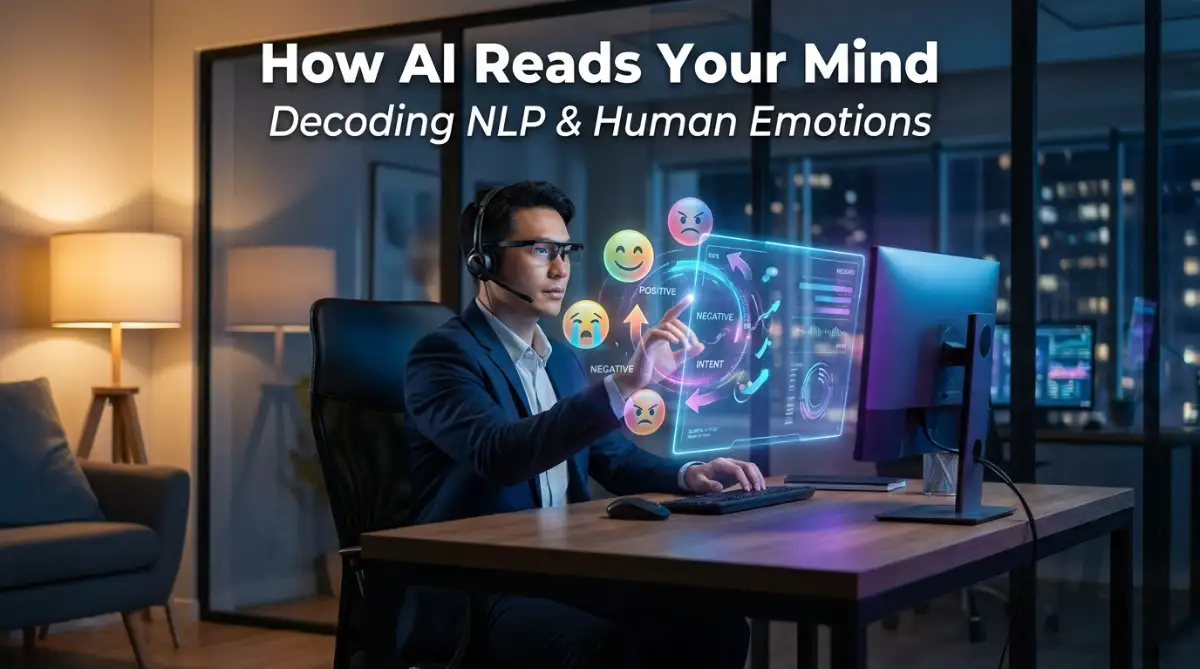
The Hidden Frustration of Talking to Machines (Why AI Seldom Gets It Right)
Have you ever typed in all caps at a customer service bot, only for it to reply with a smiley face and a link to the FAQ page? Yeah, I have been there too. It makes you want to throw your phone across the room. Let's talk about why these "smart" digital assistants act so clueless sometimes, and how you can actually get them to understand what you want without losing your mind.
Regular people face this exact same digital wall every single day. You might be trying to explain a sensitive health issue to an AI symptom checker, only to get a cold, robotic response. Sometimes, you might tell your smart home device a sarcastic joke, and it responds with a literal, confusing answer. These small failures easily ruin our mental peace.
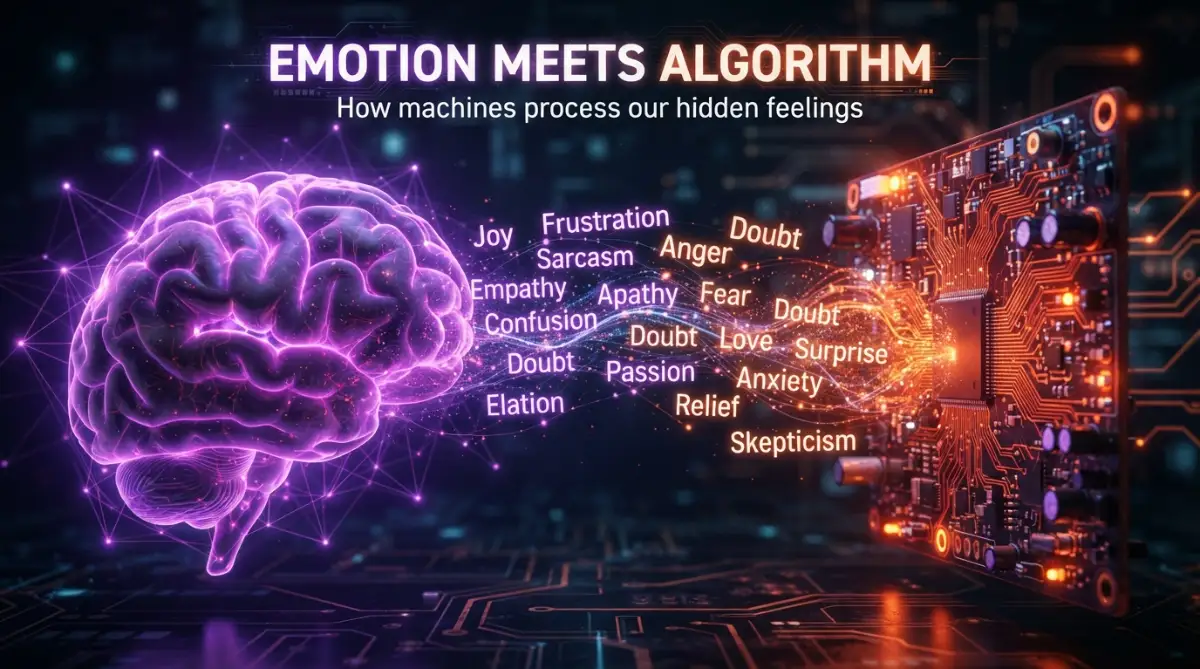
You might think that artificial intelligence is just a cold calculator. We expect it to act like a human, but we forget it does not have a heart or a soul. It only has data, patterns, and math. This massive disconnect between human feelings and machine logic is exactly why we often want to throw our phones across the room.
But here is the exciting truth. The technology is rapidly changing, and machines are finally learning how to read between the lines. They are learning to map out our feelings and decode what we actually mean.
The 30-Second Summary Box
- Bots do not have feelings: They just score your words like a math test to guess your mood.
- Sarcasm is the enemy: If you joke around when you are mad, the bot will take you literally and give you a terrible answer.
- Tell, do not ask: Always state your exact goal in the very first sentence so the machine does not have to guess what you want.
Behind the Screen: Decoding How AI Actually Reads Our Minds
So, how does a machine without a brain actually understand human feelings? It is not magic, and it is certainly not science fiction. It is all about recognizing hidden patterns in the words we use every single day.
When you type a sentence, you naturally include emotion, context, and a specific goal. The machine has to strip all of that down and rebuild it into a language it can digest. Let us look at exactly how this happens behind the scenes.
Step 1: Breaking Sentences into Tiny Puzzle Pieces
Machines do not read words the way you and I do. If you write, "I am absolutely thrilled about this," the AI does not instantly feel your excitement. Instead, it uses a process called tokenization.
Think of tokenization like taking a massive LEGO castle and breaking it down into individual blocks. The model chops your sentence into single words or even parts of words. This is the very first thing that happens when you hit send.

Once the sentence is chopped up, the machine assigns a specific number to every single piece. It essentially turns your beautiful, emotional sentence into a giant mathematical equation. This basic step is highly necessary because computers only understand numbers, not English letters.
Real Talk: How Bots Actually See Your Text
| What You Type | How The Bot Reads It |
| :--- | :--- |
| "I am so mad right now!" | User sentiment = -0.85 (Negative) |
| "Give me a refund." | Intent = Process_Return (Action) |
See? The machine does not care about your feelings at all; it just calculates the math hidden behind your words.
Step 2: Weighing the Good against the Bad (Sentiment Analysis)
Now that the machine has numbers, it needs to figure out the general mood of your message. This is where sentiment analysis comes into play. It is one of the most fascinating parts of modern machine learning.
The system maintains a massive internal dictionary where words carry emotional scores. For example, the word "fantastic" might have a heavily positive score, while "terrible" carries a deeply negative score. The machine adds up these scores to guess your current mood.
Watch this short video to see exactly how these models break down our feelings in real time. It makes everything click, so check it out and then keep reading below for the next step!
If the overall math points to a high positive number, the AI knows you are happy. If it drops into the negative zone, it knows you are upset or complaining. This simple scoring system helps the bot decide whether to reply with a cheerful tone or a serious apology.
Step 3: Catching the Hidden Context
Here is where things get incredibly complicated. Language is rarely straightforward. What happens when you use a positive word in a very negative way?
Imagine you text, "Oh, great. My phone battery just died again." A basic machine would see the word "great" and assume you are happy. It would completely miss your heavy sarcasm.
This is exactly why modern models use something called attention mechanisms. Instead of just looking at one word at a time, the system looks at the entire sentence at once. It pays special "attention" to how the words interact with each other.
By seeing "great" right next to "battery died," the model realizes the true meaning is actually negative. It understands the surrounding context. This is the exact technology that stops your smart assistant from playing happy music when you are clearly having a terrible day.
I used to think AI just looked for angry words like 'hate' or 'bad' to guess my mood. My biggest mistake was ignoring how much context matters, and once I realized that the machine looks at the whole sentence pattern, it completely changed how I write my prompts.
Step 4: Finding the True Goal (Intent Recognition)
Emotion is just how you feel, but intent is what you actually want to achieve. A natural language model must figure out your end goal to be truly helpful.
If you say, "My internet is so slow today, I can barely work," your emotion is clearly frustration. However, your true intent is getting technical support or a network reset. The AI has to separate the feeling from the action item.
It does this by searching for action verbs and specific nouns. In the example above, the system flags "internet," "slow," and "work." It compares these keywords against thousands of previous support tickets.
Within milliseconds, it realizes that people who type those specific words usually need a router restart. It skips past your frustration and directly offers the exact solution you need.
Myth vs Reality: What AI Can and Cannot Do
There are many wild rumors about how smart these systems truly are. Let us clear up some of the biggest misunderstandings right now.
Myth: The AI actually feels empathy for you when you are sad.
Reality: The AI feels absolutely nothing. It simply recognizes the pattern of sadness in your words and triggers a pre-written empathetic response.
Myth: Natural language models can read your mind through your camera.
Reality: Text-based models only know exactly what you type into the prompt box. They rely entirely on your written context.
Myth: Machines perfectly understand human sarcasm every single time.
Reality: Sarcasm remains one of the hardest challenges for AI. While context tracking helps, machines still fail to catch subtle jokes or deep irony.
How the Human Brain Compares to AI Processing
To make this completely clear, let us look at how you naturally process a conversation versus how a computer does it.
As you can see, the end result might look exactly the same. However, the journey to get there is entirely different. You use organic life experience, while the machine uses pure mathematics and probability.
Why Getting This Right Changes Everything
When a model successfully interprets human intent, the entire digital experience transforms. We stop fighting with our screens and start having actual, productive conversations.
Think about mental health chatbots. If someone reaches out in a moment of deep distress, a basic bot might offer a generic error message. That simple failure can cause serious harm to someone who needs help.
An advanced model, however, will detect the severe emotional weight of the words. It will instantly change its tone, drop the robotic act, and provide emergency contact numbers. This level of intent recognition literally saves lives.
The same applies to everyday business. E-commerce brands are heavily using this technology to read product reviews. They no longer have to read thousands of comments manually. The machine reads them all, groups the angry ones, highlights the happy ones, and tells the business owner exactly what to fix.
The Power of Giving Clear Context
Since we know that machines rely heavily on context, we can change the way we interact with them. You hold the power to make the AI work better for you.
If you want better answers from any AI tool, you must provide clear emotional signals. Do not just say, "Fix this code." Instead, explain your exact intent. Say, "I am trying to build a clean navigation bar, but this code keeps breaking on mobile devices."
By giving the machine both the problem and your end goal, you feed its intent recognition engine. You are handing it the exact puzzle pieces it needs to build your perfect answer.
Every single word you type acts as a powerful clue. The more descriptive your clues are, the faster the machine solves the mystery of your intent.
Navigating Slang, Idioms, and Cultural Nuance
One major roadblock for these systems is how wildly human language varies. English is not just one strict set of rules. We use strange idioms, regional slang, and cultural references that confuse machines deeply.
If you tell an AI, "I am feeling under the weather," a very basic system might try to give you a local rain forecast. It takes the phrase literally.
Advanced systems have to be trained on massive amounts of conversational data to learn these quirks. They study millions of social media posts, books, and movie scripts. Through this endless studying, they learn that "under the weather" equals sickness, and "spilling the tea" means sharing gossip.
This training is an ongoing, massive challenge. Language constantly changes. New slang appears on the internet every single week. The engineers behind these models have to constantly update the data so the machine does not fall behind modern trends.
Building Trust Through Accurate Responses
Developers spend millions of dollars trying to perfect this exact feeling. They know that a single tone-deaf response can make a user abandon an app forever. They heavily test these models against real human conversations to ensure the math aligns with human reality.
We are moving away from the era of frustrating, robotic chatbots. We are entering a phase where digital tools genuinely complement human workflow by accurately catching our subtle hints.
By understanding the math and the process behind the screen, you can stop getting frustrated. You now know exactly why the machine sometimes fails, and more importantly, you know exactly how it succeeds.
Getting The Best Out Of Emotional AI Algorithms
Now that we understand how the machine actually breaks down our words, we need to know how to use this to our advantage. The days of typing a single broken sentence and hoping for a miracle are over.
If you want the machine to accurately catch your intent, you have to guide it properly. Think of the algorithm like a highly intelligent assistant who just started working for you today. It has all the technical skills in the world, but it simply does not know your personal preferences yet.
You have to provide clear emotional guardrails. One of the best ways to do this is by using the Context Anchoring Technique. This simply means stating your end goal at the exact beginning of your message before you explain your feelings.
For instance, instead of saying, "My laptop screen is completely black and I am freaking out because I have a massive presentation tomorrow," you need to flip the structure.
You should say, "I urgently need technical support to fix a black laptop screen. I am highly stressed because I have a presentation soon." Notice the massive difference here. You anchored the intent first, and then you added the emotional context.
When you format your words this way, advanced natural language processing systems instantly categorize your ticket as a high-priority tech issue. They do not get confused by your emotional words, but they still register the urgency of your situation.
The Secret of Giving Actionable Clues
Another powerful trick is to separate your emotions from your desired actions. The machine loves clear action verbs.
If you are trying to manage your personal finances and you tell an AI, "I feel so overwhelmed by my credit card bills," it might just offer you a generic sympathetic response. It recognizes your stress, but it has no idea what you actually want it to do.
Instead, you need to be direct about your financial intent. If you want to know how debt consolidation affects your credit score, you must state that directly.
You can say, "I am stressed about my bills. Please explain the hidden truth behind debt consolidation and my credit score." By providing clear action verbs, you force the machine to stop guessing and start helping.
This exact same logic applies to professional workspaces. Developers often complain that AI coding tools give them the wrong answers. This usually happens because they do not explain their actual project goals.
My Secret Prompting Trick:
Whenever I need a bot to do something very specific, I use the "Act As" trick. Instead of saying, "Write an email to my boss," I say, "Act as a strict project manager and write a short email asking for a deadline extension." Giving the software a clear role stops it from guessing the vibe!
If you are leading a technical group, you should clearly state your working methods. Telling the bot that your team uses proven project management frameworks for software teams instantly gives the machine massive context. It will then adjust its answers to match your specific professional environment.
Leveraging Emotional Keywords for Better Results
You can actually trigger different responses simply by changing a few adjectives. Machine learning models assign heavy weight to specific emotional keywords.
If you want a highly detailed and serious answer, use formal, urgent words like "critical," "immediate," or "analyze." If you want a fun, creative brainstorming session, use words like "imagine," "fun," "casual," or "creative."
The model reads these adjectives and instantly adjusts its personality to match your energy. It is constantly trying to mirror the vibe you bring to the text box.
We see this happening in major industries right now. For example, artificial intelligence is transforming healthcare diagnostics simply by reading patient intake forms more accurately. By picking up on urgent emotional keywords from patients, these systems help doctors prioritize who needs immediate care.
You can apply this same professional precision to your everyday life. Stop treating the chat box like a basic search engine. Start treating it like a collaborative partner, and watch how quickly your digital experience improves.

The Silent Traps Ruining Your AI Conversations
Even with the best intentions, people constantly make simple communication mistakes that completely break the machine's logic. These small errors cause massive frustration and waste hours of our precious time.
When the machine fails to understand you, it is rarely a technical glitch. It is almost always a breakdown in how the context was originally provided. Let us look at the most common communication traps you need to avoid starting today.
The Danger of Sarcasm and Dry Humor
This is arguably the most common way to confuse a digital assistant. As humans, we use sarcasm naturally to express our annoyance or to make light of a bad situation.
Imagine your flight gets delayed for the third time, and you angrily tweet to the airline's automated bot, "Oh, wonderful! Another three hours sitting on this incredibly comfortable airport floor."

Your friends would instantly know you are furious. However, the machine only sees the words "wonderful" and "comfortable." It registers a highly positive sentiment score. The bot might actually reply with, "We are so glad you are enjoying your time with us!"
This kind of tone-deaf response makes people completely lose their minds. The Journal of Human-Computer Studies frequently notes that trust in digital systems drops dramatically when a machine misreads obvious negative emotions.
To avoid this, you must temporarily turn off your natural sarcasm. You have to be painfully literal. If you are upset, you must explicitly use words that indicate you are upset.
The Over-Explaining Trap (The Data Dump)
Another massive mistake is giving the system way too much unnecessary background information. People often treat chatbots like their personal therapists.
If you are trying to figure out a business strategy, you might start telling the AI about your childhood dreams, your recent argument with a business partner, and your tight budget. By the time you actually ask your question, the intent is completely buried.
When you dump too much data, the machine gets overwhelmed. It tries to process every single detail and completely misses the main point. It might give you advice on relationship counseling instead of business growth.
If your goal is to learn how to build a brand on a tight budget, keep the prompt focused strictly on branding and budgets. Cut out the personal drama.
Think of the machine like a taxi driver. You do not need to tell the driver your entire life story to get to the airport. You just need to give them the exact address.
Forgetting the Limitations of Digital Empathy
Many people fall into the trap of expecting genuine empathy from a screen. When we are lonely or highly stressed, a kind response from a machine can momentarily feel very comforting.
However, relying on a computer for emotional validation is a highly dangerous game. The machine does not actually care about your bad day. It is simply generating words that statistically match a comforting tone based on its training data.
If you lean too heavily on this artificial empathy, you will eventually hit a wall. The moment the machine gives a weird, out-of-context response to a sensitive topic, the illusion shatters. This sudden break in reality can leave you feeling more isolated than before.
Always remember that these models are tools, not companions. They are incredibly good at solving problems, organizing data, and generating ideas. They are terrible at being human.
The Chaos of Vague Expectations
Sometimes, we approach the text box without actually knowing what we want ourselves. If your prompt is vague, your answer will be equally useless.
Business owners do this constantly when trying to figure out their financial numbers. They might type, "Tell me about my business health," and then get frustrated when the AI gives a generic textbook definition of business health.
If they had been specific, the results would have been entirely different. If they asked the machine to clearly measure cac and ltv step by step, the AI would immediately generate a precise, actionable mathematical formula.
You always get exactly what you ask for. If you provide a weak, blurry question, you will receive a blurry answer. Taking just ten extra seconds to clarify your own thoughts before you type will save you massive amounts of frustration later on.
Ignoring the Power of Continuous Feedback
Finally, people often accept the first answer the machine gives them, even if it is completely wrong. They just close the app and assume the technology is useless.
These models are designed for continuous conversation. If the first answer misses your intent, you are supposed to correct it. You hold the power to steer the conversation back on track.
If the AI misunderstands you, simply say, "That is not what I meant. I am actually looking for X instead of Y." The model will instantly update its context and try again.
Successful teams know this perfectly. When remote startups use proven agile methodologies to skyrocket growth, they constantly iterate and improve their workflows. You must apply this exact same agile mindset to how you talk to machines.
Never settle for a bad answer. Push back, clarify your intent, and force the machine to give you the high-quality response you actually deserve.
Transforming Your Digital Experience Moving Forward
We are standing at a highly interesting point in technological history. The machines we use every day are finally learning how to read between the lines of human communication.
They are moving past rigid, cold commands and entering a space where they can genuinely map out what we want. This massive shift is completely changing how we interact with the digital world around us.
However, this technology will always be a two-way street. The algorithm can only interpret the words you give it. If you want a deeply empathetic, highly accurate response, you have to provide clear, intentional language.
By understanding how the tokenization process works, you know exactly why context matters. By understanding the pitfalls of sarcasm and over-explaining, you can completely avoid the most common digital frustrations.
You no longer have to feel like you are shouting at a brick wall. You now have the exact blueprint to make these digital tools work beautifully for your specific needs. The power to control the conversation is entirely in your hands.
I remember when I used to get so angry at my phone for misunderstanding my simple voice commands, feeling completely ignored by a piece of plastic. Once I realized that I just needed to adjust my phrasing and anchor my intent first, my entire daily workflow became incredibly smooth and stress-free.
Your Biggest Questions About Machine Emotion Answered
Can a computer genuinely feel human emotions?
No, a computer cannot feel any genuine emotions at all. It uses advanced mathematical scoring to recognize patterns in your text and simply mimics an empathetic response.
How do these models attempt to detect sarcasm?
Machines look for contradictions in a sentence using attention mechanisms. If you use a highly positive word like "great" next to a highly negative situation like "flat tire," it guesses you are being sarcastic.
Will these algorithms ever understand my intent perfectly?
While they are constantly improving, achieving absolute perfection is nearly impossible because human language is always changing. However, as they process more conversational data, their accuracy will continue to rise dramatically.
Why does my smart assistant completely ignore my bad mood?
Your assistant might fail to read your mood if your words are too vague or heavily reliant on local slang. To fix this, you need to use clear, direct emotional adjectives to trigger the right response system.
How can I make a customer service bot understand my problem faster?
Always state your main goal in the very first sentence before explaining any background details. Using clear action verbs heavily helps the bot map your intent and route you to the correct solution instantly.
Disclaimer: The information provided in this article is for educational and informational purposes only. While we strive to provide accurate explanations of artificial intelligence and language processing, technology evolves rapidly. Always consult official product documentation or professional technical support before making major decisions based on automated AI outputs.