
The Chaos of Managing Developers, Designers, and Marketers All at Once
Ever tried getting a developer, a designer, and a marketer to agree on one simple feature? It usually feels like watching three people try to drive the same car using different steering wheels. The marketer wants it launched yesterday, the designer is fighting over pixel sizes, and your lead backend dev is just threatening to quit. I have lived through this exact nightmare, and let me tell you—spreadsheets will not save you. Here is how you actually get them to play nice without pulling your hair out.
My team was working in complete silos, and no one knew what the marketing department was promising our early users on social media. I felt like a complete failure trying to hold this cross-functional team together. Every time I tried to fix a communication gap, another problem would pop up somewhere else.
This is the harsh reality for anyone trying to build software today. You bring together incredibly smart people with completely different skill sets, and suddenly, you are managing chaos. Developers think in logic and code, designers focus on user experience and aesthetics, and marketers care mostly about deadlines and messaging.
Getting all these different brains to work smoothly on one single goal feels like trying to herd cats. It is mentally exhausting to wake up every morning wondering which part of your project is going to fall apart next. You spend half your day putting out fires instead of actually building a great product.
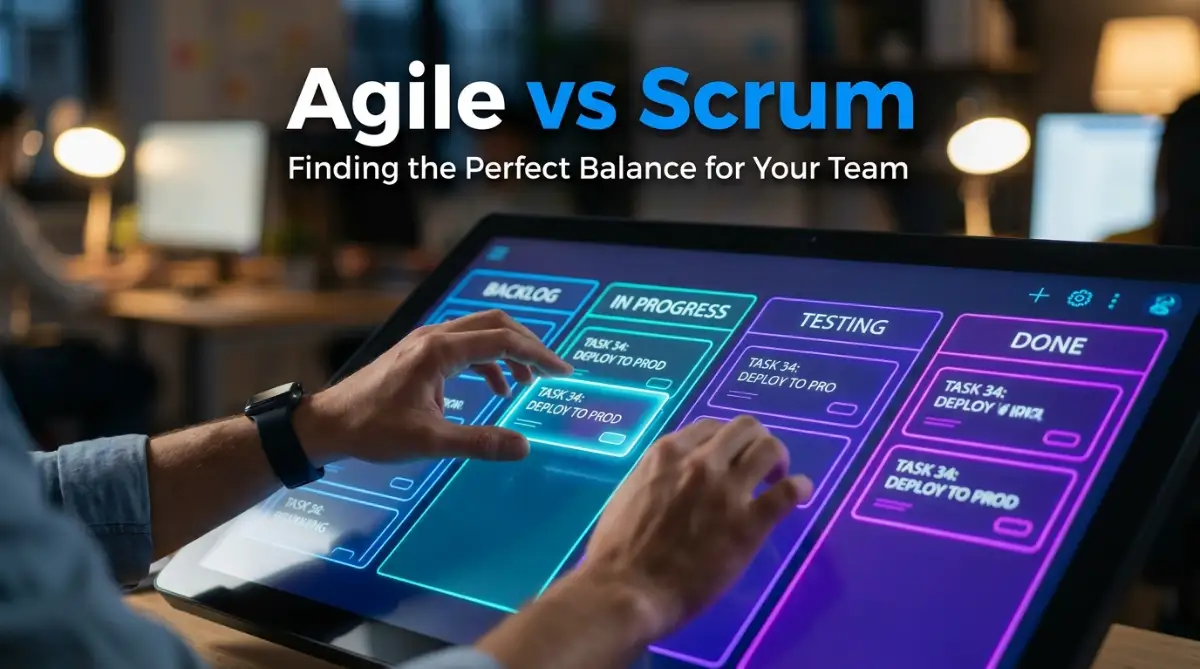
TL;DR: How to Stop the Team Chaos
- Stop the taps: Interrupting coders kills productivity. Switch to async text updates.
- Ditch the Waterfall: Old-school planning is way too slow for modern product launches.
- Use Visual Boards: Make sure marketers and devs are looking at the exact same reality.
- Be the Bouncer: Lock in your weekly tasks and say "no" to random mid-week changes.
Finding a System That Actually Works for Diverse Brains
You cannot solve a modern software problem with outdated management styles. When you have multiple departments working together, you need a highly adaptable system that speaks everyone's language. The goal is to create a single source of truth where a developer and a marketer can look at the same board and understand exactly what is happening.
We need to completely rethink how we organize our daily tasks. Let us explore some highly practical, science-backed methods to bring total clarity to your software development cycle.
The Psychology Behind Context Switching
Before picking any specific system, you have to understand how the human brain processes information at work. Psychologists call it "context switching," and it is the absolute biggest enemy of your software team. When a developer is writing complex code, they are in a deep state of mental focus.
If a marketer interrupts them to ask about a button color, it takes that developer about 23 minutes to get back into their deep focus zone. A good project management framework completely eliminates these random interruptions. It replaces annoying shoulder-taps with clear, visual updates that anyone can check at any time.
Real Talk: How to Stop the "Hey, got a minute?" Interruption
- The Bad Habit: A marketer taps an engineer's shoulder to ask about a button color.
- The Result: The engineer loses their coding flow and takes 25 minutes to get back on track.
- The Fix: Make a strict rule: "If it is not on our visual board, it does not exist." Force everyone to drop their questions into a shared digital card, not a direct chat message.
By protecting your team's attention span, you instantly boost their daily productivity and overall happiness. You stop treating people like machines and start respecting their unique working styles.
Moving Beyond the Traditional Waterfall Trap
Many older companies still use the Waterfall method, where one phase must finish completely before the next one starts. The design team does all their work, hands it over to the developers, and walks away. This sounds highly organized on paper, but it is a massive disaster for modern cross-functional teams.
In the real world, requirements change constantly based on user feedback or technical limits. If you use Waterfall, finding a bug during the final testing phase means you have to tear down months of hard work. It creates a rigid, unforgiving environment that punishes team creativity and slows down your product launch.
We need systems that embrace change rather than fighting it. You need a setup that allows your marketing team to adjust their launch strategy while the developers are still actively writing the code.
Visualizing the Workflow Chaos with Kanban
Imagine a busy restaurant kitchen during the evening dinner rush. The chefs do not sit in a meeting to discuss every single order; they just look at a board showing what needs to be cooked right now. Kanban works exactly like this for your software team.
It is a visual board divided into simple columns like "To Do," "In Progress," "Review," and "Done." Every single feature or bug is a small card that moves from left to right across this board. This method is incredibly powerful for cross-functional teams because it requires zero technical knowledge to understand.
The Magic of Work-In-Progress Limits
The secret sauce of Kanban is setting a strict limit on how many tasks can be in the "In Progress" column at once. If your developers are only allowed to work on three things simultaneously, it forces the whole team to finish old tasks before starting new ones.
This prevents your designers from dumping fifty new mockups onto the engineering team. It creates a smooth, predictable flow of work that protects everyone from getting overwhelmed.
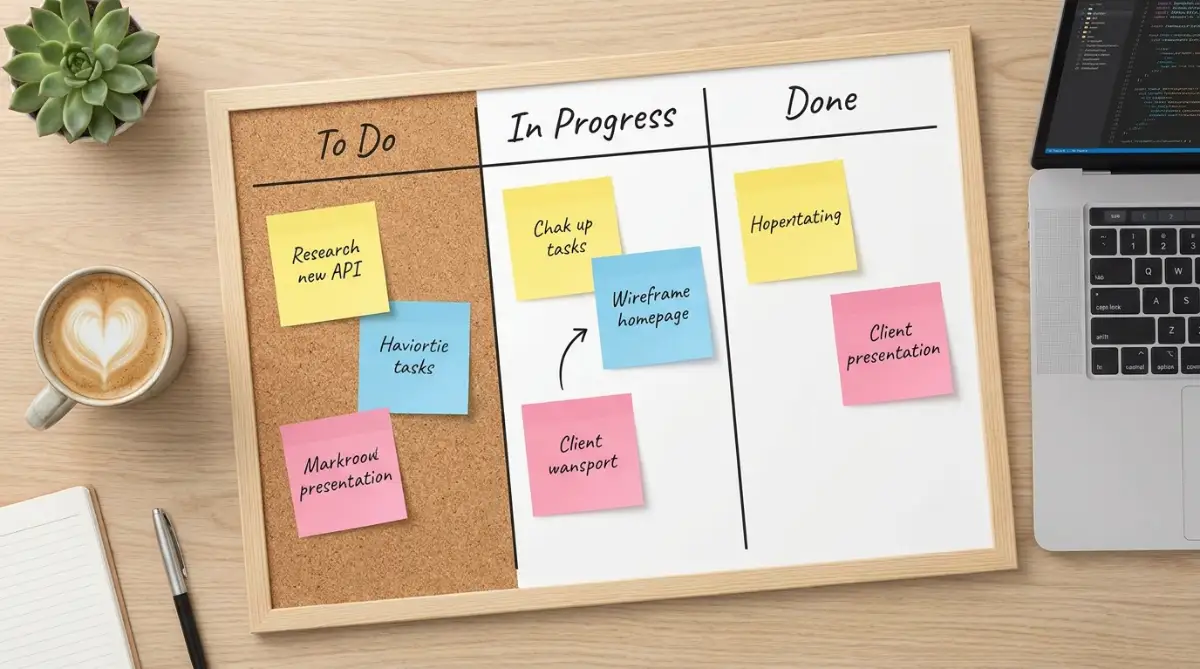
Watch This Quick Explanation
If you want to see exactly how top companies structure their visual boards to prevent team burnout, watch this short breakdown below.
Structuring Time with Focused Sprints
Sometimes, just visualizing the work is not enough to keep a large team moving fast. If your marketing team needs specific features to launch a new campaign by a certain date, you need predictability. This is where Scrum becomes incredibly useful for software companies.
Scrum breaks your massive project down into short, highly focused periods called "Sprints," which usually last about two weeks. Before the Sprint starts, the entire cross-functional team sits down and agrees on exactly what they will finish in that time frame.
Once the Sprint begins, the tasks are locked in, and no one is allowed to add new work to the team's plate. This gives your developers a protective bubble to just put their heads down and build.
My Pro Tip: I used to think more meetings meant better team communication, so I scheduled hour-long daily syncs for everyone. I learned the hard way that forcing developers into long morning meetings actually kills their coding momentum; switching to a quick, 5-minute asynchronous text update completely changed our team's energy.
Comparing the Options for Your Team
To make this super easy to understand, let us look at how different styles compare when managing a cross-functional group. Every team is different, so picking the right match is very important.
Myth vs Reality in Software Development
There are so many misconceptions about how software should be built, especially when non-technical people are involved. Let us clear up some of the biggest myths that might be holding your team back.
Myth: The project manager needs to know how to write code to lead a software team.
Reality: A great manager focuses on removing roadblocks and improving communication, not writing lines of code. Your job is to make sure the designer and the developer actually talk to each other clearly.
Myth: If a project is falling behind, you should just add more developers to the team.
Reality: Adding new people to a late project actually makes it slower. The new members need time to learn the system, which pulls your best developers away from their current work to train them.
Real-Life Scenario: Building a Payment Gateway
Let us walk through a practical example of how a good framework fixes a massive headache. Imagine your company wants to add a new Stripe payment gateway to your mobile app. Without a proper system, the product manager just tells the developer to "build a payment page."
The developer builds a highly secure, but incredibly ugly payment form. The designer gets angry because it does not match the company branding. The marketer panics because there is no place to put the new discount codes they already advertised.
Now, let us look at this exact same scenario using a properly planned Agile framework.
During the planning phase, the whole cross-functional team looks at the task together. The marketer requests the discount code box right away. The designer sketches a quick wireframe that includes the exact layout.
The developer looks at the design and confirms that Stripe's API easily supports those specific discount codes. All of these requirements are added to a single digital card on your shared project board.
When the developer starts coding, they already know exactly what the final result needs to look like. The designer can check the test environment to approve the colors, and the marketer can prepare their email campaign with total confidence. There is no guessing, no arguing, and absolutely zero wasted time.
The "Shape Up" Method for Burned-Out Teams
If your team is sick of endless task lists and stressful two-week sprints, there is a very interesting alternative. The creators of Basecamp introduced a framework called "Shape Up" that totally changes how teams build software. Instead of managing tiny, individual tasks, they focus on higher-level problem-solving.
In this framework, you work in six-week cycles. You give a small cross-functional team (maybe one designer and two developers) a specific problem to solve, like "Make the checkout process faster." You do not give them a huge list of exact instructions.
You just give them the goal, the boundaries, and six full weeks to figure it out completely on their own. This requires a very high level of trust, but it completely removes micromanagement from the equation.
Your smart team members feel highly respected and motivated because they get to make their own decisions. They are not just mindless factory workers clearing tickets; they are actual problem solvers doing meaningful work.
Aligning Team Goals with Business Reality
The biggest challenge in a cross-functional setup is that each department has completely different metrics for success. The engineering team wants highly stable, bug-free code, which takes a lot of time. The marketing team wants to push new features fast to beat the competitors.
A great project management framework acts as a clear bridge between these competing goals. It forces the company leaders to prioritize what is actually important right now. If speed is the current priority, the board will reflect that, and developers will know it is okay to use temporary solutions.
If stability is the priority, the marketing team can look at the board and understand why the launch is taking an extra three weeks. Everything is completely transparent.
Transparency is the ultimate cure for workplace anxiety. When people do not know what is happening in other departments, they start making negative assumptions. By keeping all work visible in one highly organized system, you build deep trust and a much happier team culture
Next-Level Strategies for Long-Term Team Alignment
Setting up a visual board or scheduling a two-week sprint is just the starting line. The real magic happens when you build sustainable habits that your team actually wants to keep using. You have to move past the basic rules and focus on the deep psychology of how different experts collaborate.
A great system should feel invisible. It should support your team's natural workflow instead of forcing them into rigid, uncomfortable boxes. Let us look at some advanced methods to keep your developers, designers, and marketers working in perfect harmony over the long haul.
The Power of the "Definition of Ready"
Most delays in software development happen before the coding even begins. A marketer might drop a quick idea onto the shared board, assuming the engineering team knows exactly what they mean. The developer then picks up this half-finished idea and has to guess how it should actually work.
To stop this massive headache, you need to create a strict "Definition of Ready" (DoR). This is a simple checklist that every single task must pass before a developer is allowed to touch it. For example, a task is only "Ready" if it includes final design files, clear user stories, and approved copy from the marketing team.
When you enforce this rule, you completely eliminate the guesswork. Developers stop wasting hours waiting for answers, and designers learn to provide complete packages from the start. It is very similar to how you must prepare everything properly when you create your first digital product; poor planning always leads to a poor launch.
Shifting to Asynchronous Communication
Modern offices are completely addicted to instant messaging and video calls. If a project manager wants an update, they immediately ping the lead engineer on Slack. This constant interruption completely destroys a programmer's deep focus.
You need to actively protect your team's attention span by moving toward asynchronous communication. This means team members leave detailed updates on the task card itself, allowing others to read it whenever they have free time. According to the experts studying team dynamics at the Project Management Institute, written updates reduce team anxiety and improve overall project clarity.
Instead of holding a 45-minute status meeting every single morning, ask everyone to write a quick three-sentence update before noon. Your developers will thank you, and your team's output will double simply because people finally have the quiet time they need to think.
Hosting Blameless Retrospectives
Things will eventually go wrong, no matter how good your framework is. A server will crash, a marketing email will go out too early, or a major bug will slip past the testing phase. The way you handle these failures determines whether your team grows stronger or falls apart.
You must introduce the concept of the blameless retrospective. After a failure, gather the cross-functional team not to point fingers, but to examine the broken process. If a marketer promised a feature that the developers could not deliver, do not yell at the marketer.
Instead, ask the group: "Where did our communication system fail, and how do we prevent this exact scenario next time?" This approach builds deep psychological safety. If you want to learn more about how emotional safety impacts code quality, the Scrum Alliance resources provide excellent insights into building trust among technical workers.
Cross-Shadowing for Deep Empathy
The biggest wall between departments is a simple lack of empathy. Marketers often think developers are just slow, and developers often think marketers only care about flashy colors. You can completely break this wall down with a simple exercise called cross-shadowing.
Once a month, have a UI designer sit next to a backend developer for just two hours while they fix a bug. In the next month, have a developer sit with the marketing lead while they build an ad campaign. They do not need to do the work; they just need to watch and ask questions.
This creates a massive shift in perspective. Suddenly, the marketer understands exactly why a "simple button change" actually takes three days of database routing. Just like understanding the science of phone batteries helps you protect your device, understanding a co-worker's daily struggles helps you protect their time and energy.

The Silent Traps That Destroy Cross-Functional Teams
Even with the best intentions, managing diverse groups of people can easily turn into a complete nightmare. I have seen incredibly talented companies completely self-destruct simply because they misunderstood how a framework is supposed to be used. Let us walk through the most dangerous pitfalls you must avoid at all costs.
The "Zombie Agile" Trap
This is by far the most common disease in modern software companies. Management reads a book about Agile, buys an expensive software tool, and renames all their regular meetings to "ceremonies." However, they do not actually change the way they treat their employees.
They still demand strict, unchangeable deadlines while expecting developers to handle massive, sudden changes in the plan. This creates a highly toxic environment known as Zombie Agile. The team goes through the motions of standing up for daily meetings, but inside, everyone is completely miserable and frustrated.
When you use a framework just to micromanage your staff, you lose your best talent. Senior engineers will quickly spot this fake system and leave your company for a place that actually respects their workflow.
Buying Software to Fix Bad Culture
A project management tool like Jira, Asana, or Trello will never fix a broken team culture. Many managers make the fatal mistake of thinking that buying a premium software subscription will automatically organize their messy team.
If your marketing department and your engineering department secretly hate each other, a colorful digital board will not fix that relationship. It is very much like trying to stop persistent wi-fi drops by just buying a new phone; if the router is broken, the problem will remain. You have to fix the human communication issues first, and only then introduce the software to support those new habits.
Ignoring Technical Debt for Marketing Wins
Your marketing team always wants bright, shiny new features to show off to the customers. Because they often talk the loudest in planning meetings, it is very easy to prioritize their requests over everything else. This leads to a massive, hidden danger called technical debt.
When developers are rushed to build new features, they write messy, temporary code just to meet the deadline. Over time, this messy code piles up in the background until the entire application becomes slow and unstable. The Atlassian Agile guides constantly warn that ignoring this backend maintenance will eventually bring your entire product to a complete halt.
You must actively protect your developers' time. For every single planning cycle, reserve at least 20% of your team's energy exclusively for fixing old bugs and cleaning up the database. If you do not give them this time, your software will eventually collapse under its own weight.
Punishing Honest Time Estimates
Developers are notoriously bad at guessing exactly how long a task will take. Software engineering is a process of discovery, and you often do not know how hard a problem is until you start typing the code. The worst mistake a manager can make is punishing an engineer for a wrong estimate.
If an engineer says a task will take three days, and it actually takes six, you cannot yell at them. If you punish them for being wrong, they will just start lying to you. Next time, they will say every single task takes three weeks just to protect themselves from your anger.
This completely destroys your ability to plan anything accurately. You must treat estimates as soft guesses, not blood oaths. Create an environment where people feel totally comfortable saying, "This is much harder than I thought, I need more time."
Your Roadmap to a Stress-Free Team Culture
We have covered a lot of ground, from the deep psychology of context switching to the hidden dangers of toxic planning habits. The truth is, managing a cross-functional team does not have to be a miserable, anxiety-filled experience. When you finally align everyone under a system that respects their unique skills, work actually becomes fun again.
You stop fighting against your own coworkers and start fighting together against the actual problems in your market. It takes patience to build this kind of trust, but the massive boost in productivity is absolutely worth the effort. Let us look at a simple plan to get your team on track.
The 30-Day Alignment Checklist
You cannot change your entire company culture overnight. If you try to force too many new rules at once, your team will actively rebel against you. Much like deciding to start a writing business, you need to take small, calculated steps to ensure long-term success.
Week 1: The Audit Phase
Do not change anything yet. Just sit down with your designers, developers, and marketers individually. Ask them one simple question: "What is the most frustrating part of your day?" Write down every single pain point they mention.
Week 2: Setting the Boundaries
Introduce the concept of strict work-in-progress limits. Tell the team that for the next week, no one is allowed to start a new task until they completely finish their current one. Watch how quickly the chaos starts to calm down.
Week 3: The First Visual Board
Set up a very simple digital board with only three columns: To Do, Doing, and Done. Do not add any complicated tags or automated rules yet. Just get everyone used to looking at the same screen every single morning.
Week 4: The Blameless Review
At the end of the month, order some good food and bring the whole team into a room. Look at the board together and ask what worked and what felt annoying. Adjust the system based entirely on their honest feedback.
I remember how totally hopeless I felt when my team was constantly arguing over missed deadlines and broken features. Once I stopped trying to force everyone into a rigid box and just focused on building clear, visual trust, everything changed for the better. You have the exact same power to turn your stressed-out group into a highly confident, unstoppable software team starting today!
Common Questions About Software Team Collaboration
What is the biggest challenge when developers and marketers work together?
The biggest challenge is always the difference in timelines and expectations. Marketers usually work on fixed, calendar-based deadlines for campaigns, while developers face unpredictable technical roadblocks that make exact deadlines very hard to hit. Bridging this gap requires extreme transparency and a visual project board.
How do we choose between Scrum and Kanban for our specific team?
If your team handles a lot of sudden changes, customer support tickets, or continuous updates, Kanban is your best choice because it flows naturally. However, if you are building a massive new product from scratch and need highly predictable feature releases, the structured sprints of Scrum will work much better.
Why do my developers hate our daily update meetings?
Developers hate daily stand-up meetings because it forces them to break their deep concentration just to report on their status. Every time you interrupt a programmer, it takes them nearly half an hour to get back into their coding zone. Switching to written, asynchronous updates usually solves this frustration immediately.
Can a non-technical person successfully manage a software team?
Absolutely, a non-technical manager can be incredibly successful if they focus entirely on communication and removing roadblocks. You do not need to understand the code; you just need to ensure the developer has exactly what they need from the design and marketing departments to do their job properly.
How do we handle marketing changes when developers are already coding?
You should create a strict policy that once a sprint or a coding cycle begins, the core requirements are totally locked in. If the marketing team wants a major change, they must add it to the backlog for the next planning cycle. This protects your engineers from constant, stressful interruptions.
Disclaimer: The strategies and methodologies discussed in this article are for informational and educational purposes only. Project management results can vary significantly depending on your specific team size, company culture, and industry requirements. Always consult with your internal leadership and team members before making drastic changes to your organizational workflow.