
The Silent Weight of Monthly Bills: How High Debt Steals Your Peace of Mind
Ever looked at your paycheck and wondered where it all went before the month even started? Yeah, me too. High debt has a sneaky way of making good money disappear, leaving you stressed over everyday expenses like groceries or a flat tire. Let's skip the guilt trips and the complicated financial jargon. Instead, let's talk about real, simple math and practical steps to get your cash flow back on track today. You don't need a finance degree to fix this; you just need a clear plan.
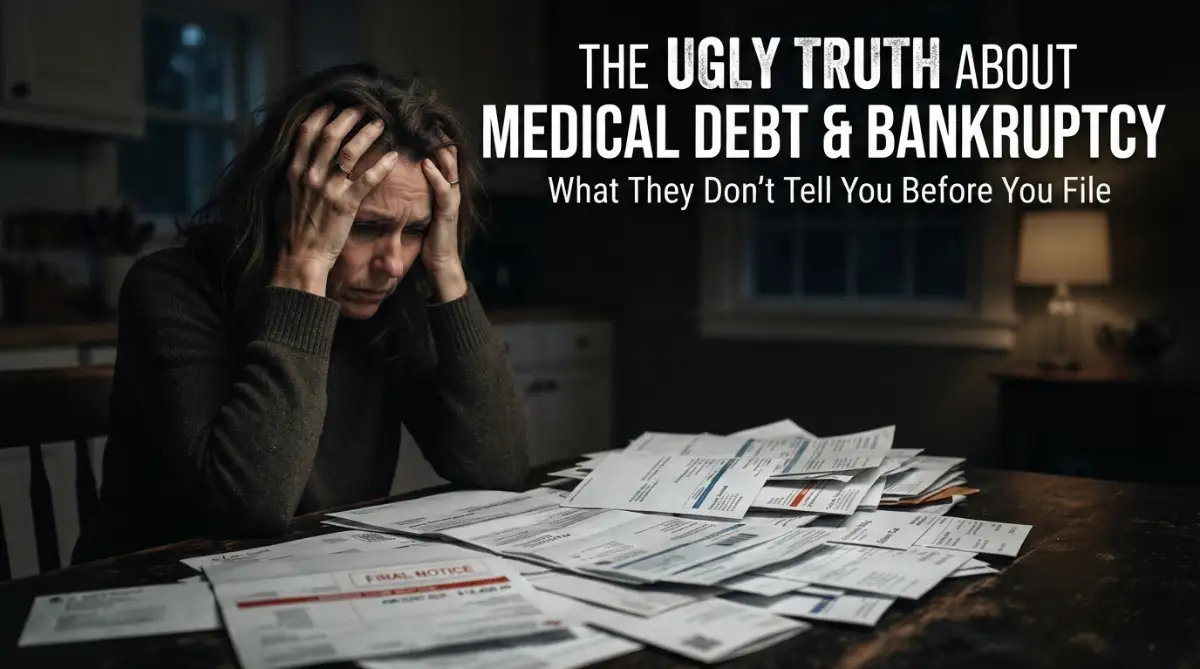
High debt does not just empty your bank account at the end of the month. It slowly eats away at your mental health, draining your everyday happiness and confidence. You wake up with a heavy chest, wondering how you will possibly cover the upcoming electric bill. A single unexpected expense, like a broken refrigerator or a flat tire, can easily send you into a full-blown panic attack. You start viewing every small problem as a massive financial disaster.
This constant, nagging stress makes it nearly impossible to sleep well at night. You start avoiding phone calls from unknown numbers, terrified that a debt collector is on the other end of the line. It literally feels like you are drowning in a stormy ocean, and the safe shoreline keeps getting further and further away. Your daily thoughts are consumed by due dates, minimum payments, and interest rates.
The good news is that this stressful situation is completely reversible with the right plan. You do not need a fancy degree in economics to fix your financial life. You just need a practical, realistic roadmap that you can start following today.

Actionable Takeaways Before You Read:
- Lower the Cars or Fix the Bridge: You only have two choices to fix your debt-to-income (DTI) ratio—pay down balances or increase your monthly income.
- Stop Paying Just the Minimum: Minimum payments keep you trapped. Paying even $20 extra goes straight to the principal balance.
- Pick a Lane: Choose the Debt Snowball (for quick emotional wins) or the Debt Avalanche (to save the most on interest). Just pick one and stick to it.
- Pause the Plastic: Take your cards out of your wallet today to stop the bleeding while you build your safety net.
The Real Formula: How to Shrink Your Debt and Grow Your Income
Before you can effectively fix a problem, you need to deeply understand how it actually works. Your debt-to-income ratio is basically a simple math fraction that banks use to judge your financial health. They want to see how much of your monthly paycheck goes directly toward paying off your existing debts. If that number is too high, lenders view you as a very risky customer.
Quick DTI Reality Check: The 50/30/20 Rule in Action
To show you exactly how banks look at your numbers, here is a breakdown for someone making $4,000 a month:
| Monthly Income | Debt Payments (Car, Cards, Loans) | DTI Ratio | Lender's View |
| :--- | :--- | :--- | :--- |
| $4,000 | $800 | 20% | Excellent (Easy Approval) |
| $4,000 | $1,600 | 40% | Borderline (Approval with high rates) |
| $4,000 | $2,200 | 55% | Danger Zone (Likely Rejected) |
Pro Tip: Your rent or mortgage counts toward this math, but your electric bill and groceries do not!
Think of your monthly income as a sturdy wooden bridge. Your monthly debt payments are heavy cars driving across that bridge. If too many heavy cars drive onto the bridge at the same time, the bridge will eventually collapse under the pressure. Lenders want to make sure your financial bridge is strong enough to handle a new loan without breaking.
To fix this ratio, you really only have two logical options available to you. You either need to reduce the number of heavy cars on your bridge, or you need to build a much stronger bridge. In financial terms, this means you must aggressively pay down your debt or actively increase your monthly income. The absolute best approach is doing both of these things at the exact same time.
Tactic 1: Restructure Your Existing Monthly Payments
The fastest way to lower your ratio is not necessarily paying off an entire loan immediately. Sometimes, simply lowering your required monthly payment does the exact same trick for your ratio. You can actively negotiate with your credit card companies to lower your current interest rates. A lower interest rate directly means a lower minimum payment each month.
You can simply call the customer service number on the back of your credit card. Politely inform them that you have been a loyal customer and are considering transferring your balance to a competitor. Very often, the representative will suddenly offer you a reduced interest rate just to keep your business. This simple five-minute phone call can instantly reduce your monthly financial burden.
Another excellent option is consolidating your multiple debts into one single personal loan. If you have five credit cards with high interest, combine them into one loan with a lower rate. This strategy not only lowers your overall monthly payment, but it also makes your life much simpler. You will only have to remember one due date instead of five.
Tactic 2: Adopt the Debt Avalanche or Snowball Strategy

You need a proven system to start wiping out your balances permanently. The Debt Snowball method focuses on paying off your smallest balances first, regardless of the interest rate. You pay the minimum on everything else, and throw all extra cash at the smallest debt. Once that small debt is gone, you take that payment and roll it into the next smallest debt.
This method is incredibly powerful because it gives you quick psychological wins. When you finally see an account hit a zero balance, you feel a massive surge of motivation. You realize that you actually have the power to defeat your financial problems.
On the other hand, the Debt Avalanche method focuses strictly on the math. You list your debts from the highest interest rate down to the lowest interest rate. You aggressively attack the debt with the highest interest first, while paying minimums on the rest. This method will technically save you the most money in interest charges over time.
I remember trying to pay every single debt equally, which just left me feeling frustrated and stuck. My biggest realization was that I needed to focus all my extra energy on just one target at a time to actually see real progress. Choosing one specific payoff method completely changed my financial momentum.
Myth vs Reality: The Truth About Minimum Payments
Myth: As long as you make your minimum payments on time, your financial health is perfectly fine.
Reality: Minimum payments are a clever trap designed by credit card companies to keep you in debt forever.
When you only pay the minimum amount requested, most of your money simply goes toward interest charges. The actual principal balance barely moves down at all. This means you could spend decades paying off a simple shopping trip. To actually lower your ratio, you must always pay more than the minimum requirement.
Tactic 3: Temporarily Boost Your Income Stream
Remember the bridge analogy from earlier? Sometimes you just need to build a stronger bridge by bringing in more money each month. We live in an era where making extra money on the side has never been more accessible. You do not have to commit to a second full-time job to see a noticeable difference.
You can easily offer your existing skills on freelance platforms during your free evenings. Whether you know how to design logos, write articles, or edit short videos, someone is willing to pay for it. Driving for a rideshare service or delivering groceries on weekends is another highly flexible way to boost your cash flow.
Watch This Expert Breakdown!
If you are still feeling a little confused about exactly how lenders calculate your numbers, you need to watch this quick explanation. The video below breaks down the exact math formula using a simple, real-life example that anyone can easily follow.
When you increase your monthly income, your debt-to-income ratio naturally goes down instantly. Even an extra $500 a month can completely change how a bank views your financial profile. You can then use that extra $500 to aggressively pay down your balances, creating a powerful double-effect.
Tactic 4: Pause All Unnecessary Borrowing

This might sound like very obvious advice, but it is deeply important to remember. You cannot dig your way out of a hole if you keep holding onto the shovel. While you are actively trying to fix your ratio, you must completely stop taking on any new debts.
Put your credit cards in a drawer and take them entirely out of your physical wallet. Remove your saved card information from your favorite online shopping websites to prevent impulse buying. If you want to buy something new, force yourself to use a debit card or physical cash.
When you use physical cash, you actually feel the money leaving your hands. This physical action triggers a psychological response that makes you spend much less overall. Every time you decline a new loan or skip a credit purchase, you are protecting your future financial peace.
Real-Life Scenario: The Power of Budget Tracking
Let us look at a practical example of how tracking your money changes everything. Imagine someone named David who makes $4,000 every single month. He assumed he had absolutely no extra money left over to pay down his loans. He felt completely stuck and frustrated with his situation.
One day, David decided to print out his last three months of bank statements. He sat down with a bright yellow highlighter and marked every single non-essential purchase. He was absolutely shocked to discover he was spending $400 a month on takeout food and forgotten digital subscriptions. He had no idea his hard-earned money was quietly leaking out of his bank account.
By simply canceling three phantom subscriptions and cooking meals at home, David instantly freed up $300 a month. He did not have to get a second job or ask for a raise to find this money. He immediately applied that $300 to his highest interest credit card. Within just a few short months, his debt-to-income ratio significantly dropped.
Tactic 5: The Strategy of Forbearance or Deferment
Sometimes life hits you with an unexpected emergency, like a sudden medical issue or a job loss. During these highly stressful times, trying to manage your standard payments can feel completely impossible. In these specific situations, you can reach out to your lenders to ask for temporary relief programs.
Many student loan providers and mortgage companies offer specific deferment or forbearance options. This allows you to temporarily pause your monthly payments without permanently damaging your credit score. While interest might still add up, this gives you the breathing room needed to stabilize your income.
This is not a long-term strategy for building wealth or getting out of debt completely. However, it is an extremely smart defensive move to keep your ratio from completely exploding during a crisis. Always communicate directly with your lenders instead of just missing a payment silently.
A Simple Comparison to Help You Decide
To make things extremely clear, here is a quick breakdown of the two most popular debt payoff strategies.
Choosing either of these methods is infinitely better than having no plan at all. Pick the strategy that naturally fits your personal psychology and daily habits. The best financial plan is always the one that you will actually stick to consistently.
By taking these small, calculated steps, you are slowly reclaiming your financial independence. You are proving to yourself that your past mistakes do not have to dictate your future opportunities. Lowering your debt-to-income ratio is a marathon, not a sprint, but every single dollar paid off brings you closer to ultimate freedom.
Advanced Strategies to Outsmart Your Monthly Debts
Once you master the basic rules of money management, you need to step up your game. You are no longer just trying to survive the month; you are actively redesigning your financial future. The banks use very specific mathematical formulas to judge your worthiness, and you can absolutely learn how to play their game to your advantage.
One of the most effective hidden strategies is strategically stretching out your repayment terms on specific high-balance loans. Let us imagine you have a personal loan with a massive monthly payment that is destroying your debt-to-income ratio. If you completely refinance that loan to a longer term, your minimum monthly payment will instantly drop. This simple move immediately improves your ratio on paper, making you look much safer to new lenders.
However, you must be incredibly smart about this specific tactic. You are stretching the loan to lower the required monthly payment, but you should still try to pay the original higher amount whenever you have extra cash. You can learn more about how lenders view these numbers by exploring the consumer resources provided by the Consumer Financial Protection Bureau (CFPB), which explains the exact math behind loan approvals. This gives you the ultimate flexibility to pay less during a bad month, without ruining your financial profile.
The Magic of the Zero Percent Promotional Window
If you have a decent credit score but carry high balances, a balance transfer card can feel like a genuine lifesaver. These specific credit cards offer a promotional period where you pay zero interest for twelve to eighteen months. You simply move your high-interest debt over to this new card, and suddenly, every single penny you pay goes directly toward the actual principal balance.
This completely eliminates the heavy interest charges that normally eat up your monthly payments. Because the interest goes down to zero, the bank will automatically lower your required minimum monthly payment. This creates an instant, positive change in your debt-to-income calculations.
But you have to be extremely careful with these promotional offers. The bank is secretly hoping you will forget to pay off the balance before the zero percent window completely closes. If you fail to clear the balance in time, they will hit you with massive penalty interest rates. It is always wise to set up strict automatic payments so you never miss a deadline.
Leveraging Variable Income and Side Hustles Safely
We talked earlier about boosting your income to make your ratio look better. But you need to understand exactly how lenders actually view this extra money. If you just started driving for a delivery app last month, a mortgage lender will probably not count that money yet. Lenders generally want to see a stable history of side income before they officially add it to your gross monthly earnings.
If you are working a remote side job, you must report that money on your taxes for it to officially count. This proves to the bank that your new income stream is legitimate and reliable. While you are building up this extra income, make sure you are actively protecting your digital workspace. You can easily set up proper 7 proven cybersecurity protocols for remote workers to ensure your side business remains safe from online threats.
Even if a lender does not officially count your new side hustle income right away, it still helps you massively. You can use that untracked cash to aggressively pay down your existing credit cards. By lowering the debt side of the math equation, you naturally fix the ratio regardless of how they view your income.
Side Hustle Q&A: What Banks Actually Care About
- Q: I made $500 on Uber this month. Does this lower my DTI right away?
- A: Not on paper. Lenders usually want to see 1 to 2 years of consistent tax returns for gig work before they count it as "stable income."
- Q: So why bother if it doesn't count yet?
- A: Because you can take that uncounted $500, throw it directly at your credit card balance, and lower the debt side of your ratio immediately. That math always works in your favor!
Hacking Your Budget Without Feeling Deprived
You cannot fix your financial numbers if your everyday spending is completely out of control. Many people fail at budgeting because they try to cut out every single fun activity in their life. This extreme restriction usually leads to a massive spending binge a few weeks later. Instead of cutting everything, you should focus on eliminating the hidden expenses that bring you zero actual joy.
For example, many families lose hundreds of dollars a month on poorly structured insurance policies. You might be overpaying simply because you never bothered to shop around or bundle your services. If you have a growing family, you must learn how to handle major life changes, like adding a teen driver to your policy without going broke.
Sometimes, we spend money simply because we are feeling stressed, tired, or emotionally drained. Retail therapy is a very real psychological trap that keeps millions of people stuck in a cycle of borrowing. Interestingly, modern technology is now being designed to understand these spending triggers, and you might be surprised to learn how AI actually reads your true emotions to push targeted advertisements to your phone. Being aware of these digital marketing tricks helps you keep your wallet closed.

The Hidden Traps: Money Mistakes That Will Wreck Your Progress
When you are desperately trying to fix your financial life, it is incredibly easy to make emotional decisions. You might see a small bit of progress and suddenly think you have completely cured your bad money habits. But the journey to a healthy debt-to-income ratio is filled with dangerous traps that can instantly wipe out months of hard work.
One of the most heartbreaking mistakes I see people make is the "Double Debt" disaster. This happens when someone finally gets a consolidation loan to pay off all their credit cards. They feel a massive sense of relief because their monthly payment drops significantly. But instead of cutting up those old credit cards, they slowly start using them again for everyday purchases.
Within a year, they are now stuck paying the new consolidation loan, plus a brand new pile of credit card debt. They have effectively doubled their financial burden and absolutely destroyed their debt-to-income ratio in the process. You have to understand that the hidden costs of revolving credit lines will always sneak up on you if you do not change your actual spending behavior.
The Danger of Closing Old Credit Accounts
Another massive mistake people make is angrily calling the bank to close their credit cards the moment they hit a zero balance. Psychologically, this feels like a powerful victory against the banking system. You want to completely cut ties with the plastic card that caused you so much stress and anxiety.
However, closing an old account actually hurts your financial profile in two different ways. First, it completely wipes out a chunk of your available credit limit, which instantly spikes your credit utilization rate. Second, if that card is your oldest account, closing it shortens your total credit history length. The Federal Reserve offers detailed insights on how credit utilization and account history directly impact your overall financial standing.
Instead of closing the account, you should simply cut the physical card into pieces with scissors. Throw the plastic in the trash, but leave the actual account open on the bank's system. You can even lock the card through your mobile app so no new charges can ever go through. This smart move protects your credit score while completely removing the temptation to spend.
Sacrificing Your Emergency Fund for Quick Payoffs
When you get intensely focused on lowering your monthly payments, you might be tempted to use your entire savings account to pay off a loan. Sending a massive lump sum to the bank feels amazing for about five minutes. You watch the balance drop and feel proud of your aggressive financial move.
But if you drain your savings down to zero, you are walking on a very dangerous tightrope without a safety net. What happens if your car transmission suddenly blows up the very next week? Because you have no cash left, you will be forced to put that massive repair bill right back onto a high-interest credit card. You end up right back where you started, feeling deeply defeated.
You must always keep a starter emergency fund safely tucked away in a separate bank account. Even just one thousand dollars can protect you from the majority of everyday inconveniences. Proper protection is key to long-term wealth, which is exactly why understanding safety nets like how uninsured motorist coverage saves you is so incredibly important for your peace of mind.
Misunderstanding Federal Student Loan Structures
Student loans are often the largest chunk of a person's monthly debt, completely ruining their ratio before they even buy a house. Many borrowers make the mistake of leaving their student loans on the standard ten-year repayment plan. This standard plan demands the highest possible monthly payment, which absolutely crushes your debt-to-income calculations.
The government actually offers several income-driven repayment plans that tie your monthly bill directly to your current salary. If you are not making a lot of money right now, switching to one of these plans can drastically lower your required monthly payment. This one simple paperwork change can instantly improve your ratio for a mortgage application.
Furthermore, you should never ignore the possibility of having those loans legally wiped away. If you work in public service or education, you need to deeply understand the rules of the system. Spending an afternoon navigating student loan forgiveness requirements can literally save you hundreds of thousands of dollars over your lifetime.
Your Daily Blueprint for Long-Term Money Freedom
Fixing your financial numbers is not a one-time event; it is a permanent lifestyle change. You have to start viewing your money as a dedicated employee that works strictly for your benefit. When you give every single dollar a specific job, you stop wondering where your paycheck mysteriously disappeared to at the end of the month.
The best way to guarantee your success is to completely automate your good financial habits. Set up your bank accounts so that a portion of your paycheck automatically goes toward your highest-interest debt the morning you get paid. If you never actually see that money sitting in your checking account, you will never be tempted to spend it on useless things.
You should also schedule a specific "Money Date" with yourself every single week. Make a nice cup of coffee, sit down at your computer, and review all of your transactions for exactly fifteen minutes. This simple weekly habit forces you to face your financial reality and prevents small spending mistakes from turning into massive debt disasters. Organizations like the National Foundation for Credit Counseling (NFCC) constantly highlight that regular financial check-ins are the number one trait of debt-free individuals.
Remember that lowering your monthly obligations gives you the ultimate power of choice in your life. When you are not secretly terrified of missing a payment, you can finally take risks, change careers, or start a new business. Your lower debt-to-income ratio is simply a mathematical reflection of your newfound personal freedom. Stay patient with yourself, celebrate the small victories, and never stop pushing forward.
Answers to Your Most Urgent Money Questions
What is considered a healthy debt-to-income ratio for buying a home?
Most traditional mortgage lenders want to see your total ratio stay completely below 43 percent. However, to get the absolute best interest rates and easiest approvals, you should aim to keep your ratio under 36 percent. Keeping your numbers in this lower range proves that you have plenty of breathing room for unexpected expenses.
Do regular household utility bills count against my ratio?
No, your standard monthly living expenses like electricity, water, internet, and groceries are not included in this specific calculation. Lenders are only looking at officially reported debts like credit cards, auto loans, student loans, and child support payments. However, if a utility bill goes unpaid and goes to a collection agency, it will severely hurt your profile.
How fast will my ratio update after I pay off a credit card?
Your debt-to-income ratio is heavily dependent on what is actively showing up on your official credit report. Credit card companies typically report your new balances to the credit bureaus once every thirty days, usually right after your statement closes. Therefore, you should see a positive change in your official ratio within one to two months after paying off a big balance.
Does a high credit score mean I automatically have a good ratio?
Surprisingly, these are two completely different financial metrics that do not always match up. You can have a perfect history of making on-time payments (giving you a high credit score), but still have massive monthly minimums that consume your whole paycheck (giving you a terrible ratio). Lenders will always check both numbers to get the full story of your financial health.
Should I use my retirement savings to completely pay off my debt?
This is almost always a terrible idea that will severely hurt your long-term financial stability. Pulling money out of a retirement account usually triggers massive tax penalties, and you permanently lose the magic of compound interest. You are much better off temporarily picking up a side hustle or cutting your daily budget to find the extra cash.
I remember exactly how heavy my chest felt when my monthly bills completely outnumbered my paychecks, leaving me feeling trapped and hopeless. But the moment I stopped running away from the math and started applying these exact steps, the heavy fog of anxiety finally began to clear. You have the absolute power to rewrite your financial story starting today, and I promise you that the peace of mind waiting on the other side is entirely worth the effort.
Disclaimer: The information provided in this article is for educational and informational purposes only and should not be construed as professional financial advice. Every individual's financial situation is unique. Please consult with a certified financial planner, accountant, or legal professional before making any major financial decisions, taking on new debt, or significantly altering your repayment strategies.

![7 Hidden Ways Mandatory Forbearance Destroys Your Credit [Avoid These Mistakes]](https://vimex24.com/storage/uploads/blogs/1788962201_7-hidden-ways-mandatory-forbearance-destroys-your-credit-avoid-these-mistakes.webp)