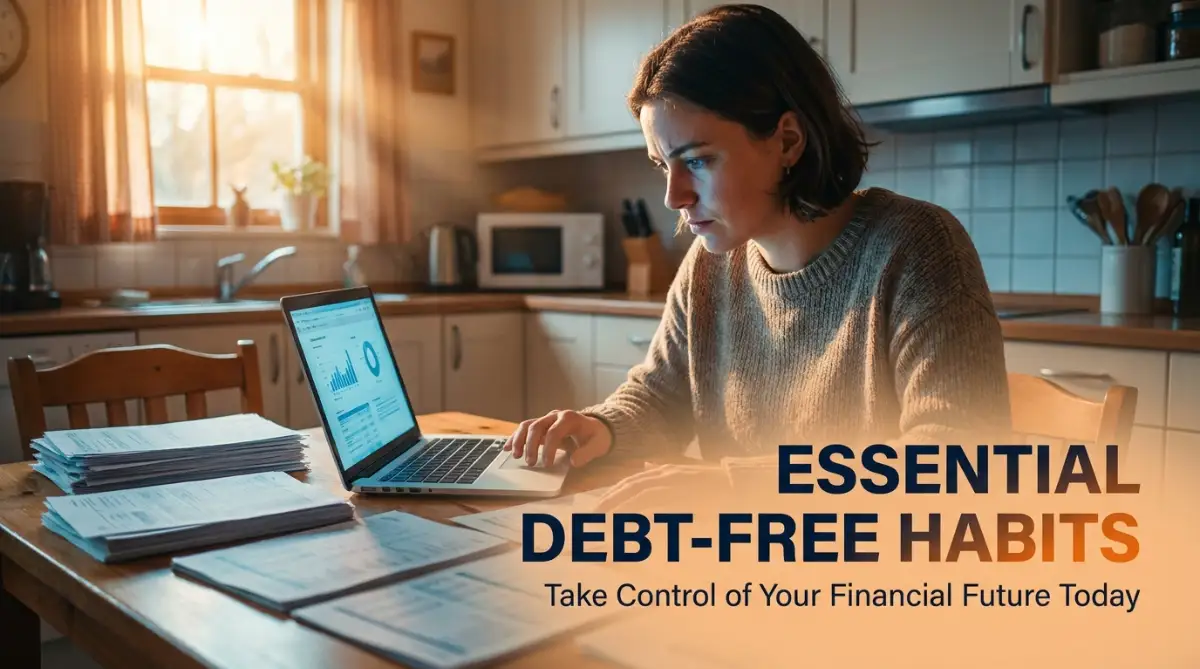
The Crushing Weight of Owed Money: My Silent Nightmare
ave you ever held your breath at the grocery store checkout, silently praying your card doesn't decline? I know that sickening feeling all too well. When you are buried under a mountain of bills, money stops being just numbers—it becomes a daily panic attack. But here is the good news: you do not have to live like this forever. Let me show you the exact, no-nonsense steps I used to break free from the debt trap.
I wanted the ground to open up and swallow me whole. I walked out of that store with nothing but deep shame and a ringing sound in my ears. I was drowning in a mix of maxed-out credit cards, a massive car loan, and personal debts that I kept ignoring.
My phone would light up with unknown numbers every single morning, and I knew exactly who was calling me. The anxiety was so intense that I actually stopped hanging out with my friends just to avoid spending a single extra dollar. I felt like a complete failure every time I looked at my bank app, wondering how I let my life get to this breaking point.
This is not just my personal story of poor money management. Millions of everyday people wake up every single morning feeling this exact same crushing weight on their chest. You probably know exactly what it is like to hold your breath at the checkout counter, silently praying your card goes through.
Financial stress steals your peace of mind and totally ruins your sleep schedule. Married couples fight endlessly over hidden spending, while individuals silently suffer from crippling panic attacks. It genuinely feels like you are running on a treadmill that keeps speeding up, but you never actually move forward.
💡 Quick Action Guide: Take Back Your Money
- Give Every Dollar a Job: Use a zero-based budget so your money stops mysteriously vanishing. Tell it exactly where to go.
- Save a $1,000 Buffer: Build a tiny emergency fund before aggressively paying off accounts to prevent yourself from using credit cards again.
- Automate the Process: Set up auto-transfers on payday so you do not have to rely on sheer willpower when you are tired.
- Try Micro-Payments: Pay small amounts weekly instead of monthly to actively cut down those nasty daily interest charges.
How to Escape the Trap: Actionable Moves for Real Change
Breaking out of this terrifying cycle does not happen by accident or pure luck. People who manage to clear massive amounts of owed money share very specific, repeatable behaviors. They do not just hope for a better future; they actively engineer it through daily discipline.
If you want to stop feeling like a hostage to your monthly payments, you need to completely rewire how you interact with your cash. Let us break down exactly how you can start taking back your power today.
Face the Ugly Math Without Blinking
The absolute hardest part of getting out of the red is simply admitting how deep the hole actually is. Most of us play a dangerous game of financial hide-and-seek. We avoid opening bank statements because looking at the actual numbers causes physical pain in our chest.
However, people who successfully eliminate what they owe never hide from the math. They drag every single unpaid bill, loan, and credit card balance out into the bright light. You cannot defeat an enemy if you refuse to look at it.
 Your Action Plan for Today: Grab a blank sheet of paper and write down every single person or company you owe money to. Write down the total balance, the minimum monthly payment, and the exact interest rate. Seeing it all in one place might make you want to cry, but it is the ultimate first step to taking control.
Shift Your Identity from "Spender" to "Manager"
We live in a society that constantly tells us to buy things to feel better about ourselves. When we feel sad, we buy new clothes. When we feel stressed, we order expensive takeout food.
People who destroy their financial burdens have learned to break this emotional connection to buying things. They no longer see spending money as a reward for hard work. Instead, they view themselves as managers of their own personal business, and their main goal is profit.
They find free ways to deal with their emotions. Walking in the park, reading books from the local library, or working out at home replaces the dopamine hit of online shopping. This simple mental shift saves them thousands of dollars over time.
Quick Q&A: How to Stop Emotional Spending
- Question: I always shop online when I feel stressed. How do I stop?
- Answer: Delete your saved credit card info from your browser and apps right now. Next, force a strict "24-hour waiting rule" on your shopping cart. You will be amazed at how quickly that burning urge to buy disappears after a good night's sleep.
Implement the "Zero-Based" Money System
You have probably tried making a budget before, only to abandon it three days later. The problem is usually that traditional budgets are too vague. High achievers in the personal finance space use something called a zero-based system.
This simply means that before the month even begins, every single dollar of your income is assigned a specific job. If you make three thousand dollars, you write a plan for exactly three thousand dollars. Income minus expenses must equal exactly zero.
This leaves absolutely no room for "mystery spending." When your money has clear instructions, it stops slipping through your fingers on random coffee runs or online subscriptions you forgot to cancel.
My Personal Pro Tip: I used to think I could outsmart my bad habits by just tracking my expenses in a spreadsheet after I already spent the money. I quickly realized that tracking the past does nothing if you do not actively plan for the future, so I started giving every single dollar a strict job before my paycheck even hit my account.
The Snowball vs. Avalanche Debate: Pick Your Weapon
When you finally decide to attack your balances aggressively, you need a specific mathematical strategy. You cannot just throw random amounts of extra money at random bills and hope for the best. Science and psychology offer two incredibly powerful methods.
The first is the Debt Snowball method. This focuses entirely on human psychology and motivation. You organize your balances from the smallest amount to the largest amount, completely ignoring the interest rates.
You pay the bare minimum on everything else, and throw every extra penny at the smallest balance. When you knock out that first small bill, your brain gets a massive hit of dopamine. That quick win gives you the emotional energy to attack the next one.
The second method is the Debt Avalanche. This is for people who are highly logical and driven by strict math. You organize your debts from the highest interest rate to the lowest interest rate.
Here is a highly recommended resource to help you decide:
If you are tired of wondering where your hard-earned cash disappears every month, this eye-opening video will completely change your perspective on budgeting and paying off balances fast.
By attacking the highest interest rate first, you technically save the most amount of money over time. However, it might take much longer to see an account completely close, which can sometimes hurt your motivation. Pick the method that fits your actual personality, not just what a textbook says.
Cheat Sheet: Snowball vs. Avalanche Method
| Strategy | How It Works | Best For... | The Big Benefit |
| :--- | :--- | :--- | :--- |
| Debt Snowball | Pay off the smallest balance first. | People who need quick wins to stay motivated. | Builds massive psychological momentum. |
| Debt Avalanche | Pay off the highest interest rate first. | Math-nerds who want to save every possible penny. | Saves the most money in the long run. |
Stop the Lifestyle Inflation Disease
Have you ever noticed that when you get a raise at work, your savings account never actually grows? This is a dangerous psychological trap called lifestyle inflation. As soon as we make more money, we subconsciously decide we "deserve" nicer things.
We upgrade our car, move to a more expensive apartment, or start buying brand-name groceries. People who clear their balances aggressively absolutely refuse to play this game.
When they get a bonus, a tax refund, or a raise, they do not increase their standard of living. They pretend that extra money does not even exist. They instantly transfer it straight toward their principal balances.
Myth vs. Reality in Debt Payoff
Build a Fortified Emergency Shield
It might sound completely backwards to save money while you are trying to pay off heavy balances. You might think, "Why would I let cash sit in a bank account earning nothing when I am paying high interest on my cards?"
The answer is simple: life will always throw unexpected problems at you. Your car will break down, your roof will leak, or you will suddenly need a medical procedure. If you do not have a cash shield ready for these moments, you will be forced to use your credit cards again.
This completely destroys your progress and breaks your spirit. Before you start throwing massive amounts of money at your balances, save up a starter emergency fund of one thousand dollars. It is not meant to be an investment; it is purely insurance against bad luck.
Automate the Pain Away
Relying on sheer willpower is a guaranteed way to fail. Willpower is like a muscle that gets completely exhausted by the end of a long workday. If you have to manually log into your accounts and transfer money to your creditors, you will eventually find an excuse to skip a payment.
Successful people take human error completely out of the equation. They set up aggressive, automatic transfers that happen the exact same day their paycheck arrives.
Out of sight, out of mind. By the time you wake up and check your banking app, the responsible decisions have already been made for you. You are forced to live on whatever is left over, which builds incredible resourcefulness.
Turn Free Time into a Financial Weapon
You cannot always cut your expenses enough to reach your goals quickly. There is a mathematical limit to how much you can save, but there is no limit to how much you can earn. Aggressive debt destroyers understand the massive power of a temporary side hustle.
They do not start side businesses to buy nicer clothes. They deliver pizzas, freelance online, or sell old items from their garage with one single purpose in mind. Every single penny earned outside of their normal job acts as a targeted missile against their principal balances.
This phase is rarely permanent. It is a season of extreme hard work meant to collapse the timeline of their financial struggle. They trade their current free time for permanent future freedom.
Learn to Say "No" Without Feeling Guilty
One of the biggest hidden obstacles to financial freedom is peer pressure. Your friends will invite you to expensive dinners, weekend trips, and costly entertainment events. Saying "no" can feel incredibly awkward and lonely.
However, you must realize that your true friends will understand your goals. You do not have to explain every detail of your financial mess. A simple, polite "I am working on some big financial goals right now and cannot make it" is a complete sentence.
Offer cheap or free alternatives. Invite them over for a homemade dinner instead of going to a fancy restaurant. If they judge you for trying to better your life, they are not the kind of people you need in your inner circle anyway.
Embrace the Power of Visual Motivation
Our brains are naturally wired to respond to visual progress. Staring at digital numbers on a screen rarely provides the emotional push we need to stay disciplined over many months. This is why highly successful individuals turn their progress into a physical piece of art.
They print out large tracking charts and stick them directly on their refrigerators or bedroom mirrors. Every time they make a payment, they grab a bold marker and color in a section of the chart.
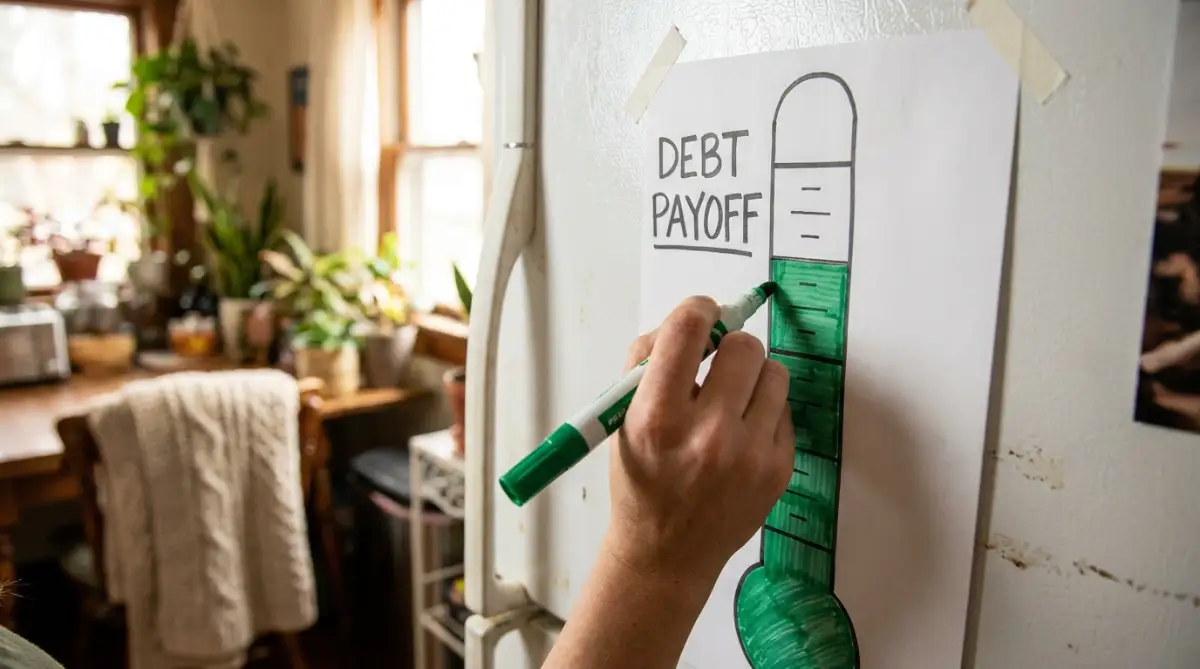
This simple act of coloring in a block provides a massive rush of satisfaction. It serves as a constant, daily reminder of exactly why they are packing their lunch instead of eating out. When things get incredibly hard, they can physically look at how far they have already come.
Stop Treating Symptoms and Cure the Disease
Many people make the critical mistake of thinking that their credit card balance is the actual problem. Your balance is just a symptom of the underlying disease. The real disease is a set of deeply ingrained habits and emotional triggers that dictate how you handle stress.
If you somehow won the lottery tomorrow and paid off everything instantly, you would likely be broke again very soon. This happens because the core behaviors never changed. You have to actively identify exactly what triggers you to spend money recklessly.
Do you shop when you are bored? Do you buy expensive gifts to show affection? Once you identify the specific trigger, you can create a healthy alternative action. True financial independence happens in the mind long before it ever shows up in your bank account.
Forgive Yourself for Past Mistakes
Guilt is a completely useless emotion when it comes to money. Beating yourself up for mistakes you made in the past will not magically put cash back into your wallet. In fact, heavy guilt often leads to even more emotional spending.
You made the best choices you could with the knowledge you had at the time. Now that you know better, you are simply choosing to do better. Give yourself the grace to leave the past behind you.
Your focus must remain locked on the steps right in front of you. Every time you skip a coffee run, cancel a useless subscription, or make an extra payment, you are actively building a completely new life. The journey will be difficult, but the absolute freedom waiting for you on the other side is worth every single sacrifice.
Mastering the Long Game: Pro Strategies for Financial Dominance
Once you have the basics down, you need to start playing financial chess instead of checkers. Paying off what you owe is not just about cutting back on your daily coffee habit. High achievers use advanced behavioral strategies to speed up their progress and protect their growing wealth.
One of the most effective moves is learning how to aggressively negotiate your current interest rates. Most people assume the number on their statement is completely set in stone. In reality, credit card companies would much rather lower your rate than watch you default on your payments completely.
You can simply call the customer service number on the back of your card and ask for the retention department. Tell them honestly that you are struggling with the high interest and are considering moving your balance to a competitor. According to guidelines from the Consumer Financial Protection Bureau, consumers have more power than they realize when dealing with massive financial institutions.
Another major secret is understanding exactly how your credit utilization impacts your overall financial health. When you constantly max out your accounts, you are bleeding money through hidden fees and crushing interest charges. You must actively educate yourself on the hidden costs of revolving credit lines destroying your wealth so you can avoid these expensive mistakes.
The Power of Micro-Payments
Most normal budgeting advice tells you to make one large payment at the end of the month. However, making weekly or even daily micro-payments can completely hack the system in your favor. Interest on most accounts is calculated on a daily average balance.
By sending fifty dollars every single Friday instead of two hundred dollars at the end of the month, you actively reduce the principal faster. This means the bank has less money to charge you daily interest on. It sounds like a tiny change, but it mathematically saves you a massive amount of cash over the life of the loan.
This micro-payment strategy also keeps your goals at the very front of your mind. When you interact with your budget every few days, you are much less likely to make an impulsive purchase on the weekend. You start treating your personal bank account with the exact same respect as a professional business ledger.
Leveraging Government and Institutional Programs
Sometimes, pure willpower is not enough to clear massive institutional burdens. If you are drowning under heavy educational loans, you need to look beyond basic budgeting. There are highly specific federal programs designed to wipe out these balances if you meet the right criteria.
You should immediately research the hidden secrets to navigating student loan forgiveness requirements to see if your career path qualifies you for relief. Teachers, nurses, and government workers often leave thousands of dollars on the table simply because they never applied for these programs.
Do not let complicated paperwork scare you away from massive financial relief. Set aside an entire Saturday morning, gather all your official documents, and start making phone calls to your loan servicers. Taking advantage of legal loopholes is exactly what wealthy people do to protect their money.
Protecting Your Side Income Streams
We talked earlier about starting a side hustle to generate extra cash for your payments. If you are doing freelance work or taking on remote projects, you must treat your digital workspace like a fortress. A single hacked account can wipe out months of your hard-earned progress.
If you work from home to make extra money, you absolutely need to implement proven cybersecurity protocols for remote workers. Losing your freelance income because a scammer locked you out of your laptop is a completely preventable tragedy.
Always keep your side hustle money in a completely separate checking account. The moment you get paid, immediately transfer a portion for taxes and send the rest directly to your highest interest balance. Never let that extra money sit in your main account, because it will slowly disappear on random everyday expenses.

Dangerous Traps That Will Destroy Your Progress
The journey to financial freedom is basically a minefield filled with emotional and mathematical traps. Even the most disciplined people can ruin their progress if they are not actively watching out for these common pitfalls. Let us explore the exact mistakes that force people right back into the red.
Trap 1: The "I Deserve a Reward" Mentality
This is the absolute biggest killer of financial momentum. You work incredibly hard for six months, you pay off a massive credit card, and you feel amazing. Suddenly, your brain tries to convince you that you "deserve" a fancy vacation or an expensive dinner to celebrate your hard work.
You end up putting that expensive celebration right back on the exact same credit card you just paid off. This behavior completely resets your progress and destroys your confidence. You must find free or incredibly cheap ways to celebrate your financial milestones.
Cook a special meal at home, take a day off work to just relax, or go for a hike with your friends. True freedom is the ultimate reward, and you cannot buy it at a luxury store.
Trap 2: Ignoring Major Life Risks
Many people get so obsessed with paying off their balances that they completely cancel their safety nets. They lower their auto insurance limits or skip health checkups just to save a few extra dollars a month. This is the definition of stepping over a dollar to pick up a penny.
For example, if you get into a major car accident with someone who has no insurance, your medical bills could instantly bankrupt you. You should clearly understand how uninsured motorist coverage saves you from falling right back into massive financial trouble.
The same logic applies to your growing family. If you have a child who just got their license, do not ignore the massive risk they bring to your financial stability. Learn the secrets to adding a teen driver to your policy safely so a simple fender bender does not ruin your entire payoff plan.
Trap 3: Falling for Quick Fix Scams
When the pressure becomes unbearable, human beings naturally look for a magic escape door. You will see late-night commercials promising to "wipe away your balances instantly" or "settle your accounts for pennies on the dollar." These offers are almost always highly predatory schemes designed to steal your remaining cash.
According to warnings from the Federal Trade Commission (FTC), many of these debt settlement companies charge massive upfront fees and actually tell you to stop paying your bills. This totally destroys your credit score and often leads to brutal lawsuits from your original banks.
There are no magic wands or secret government bailout programs for personal credit card habits. True financial repair requires intense personal discipline, structural changes to your daily routine, and a lot of patience. Any company that promises to fix your life overnight is just trying to profit from your panic.
Trap 4: Closing Accounts Prematurely
There is an amazing feeling that comes with finally hitting a zero balance on a toxic account. Your first instinct will probably be to call the bank and close the account forever so you never use it again. However, doing this can actually hurt you in the short term.
A huge part of your credit score is based on the average age of your accounts and your total available credit limit. When you close your oldest card, you instantly shrink your total available credit, which makes your utilization ratio spike.
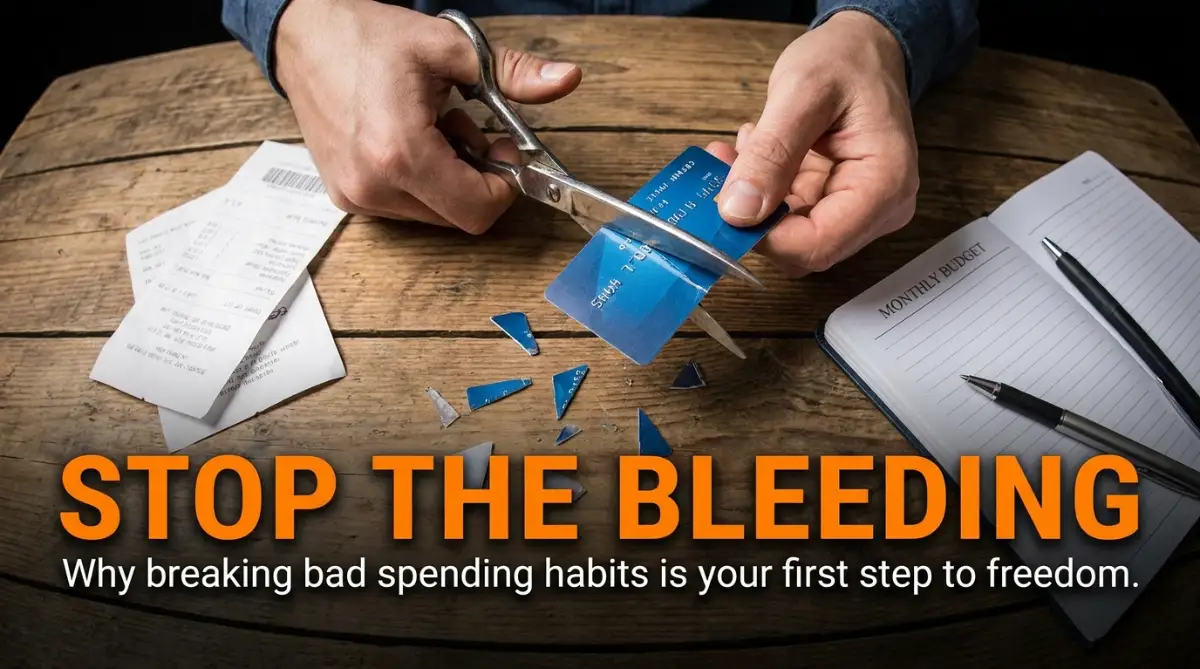
Instead of closing the account, simply cut the physical plastic card into tiny pieces and throw it in the trash. Delete the card information from your phone and all your online shopping accounts. The account stays open and helps your score, but you physically cannot use it to make stupid late-night purchases.
Your Blueprint for Lasting Financial Freedom
Getting out of a massive financial hole is a brutal test of your personal character. It forces you to completely strip away your ego and look honestly at the person in the mirror. You have to admit your past failures, but more importantly, you have to actively take responsibility for your own future.
The habits we have discussed here are not just temporary fixes for a bad month. Budgeting before the month begins, ignoring lifestyle inflation, and negotiating fiercely are skills that will build generational wealth once your balances are finally gone.
Think of this intense payoff period as financial boot camp. The heavy resistance you feel right now is exactly what builds the mental muscles you need to become genuinely wealthy. When you no longer have hundreds of dollars leaving your account every month for past mistakes, your ability to build real wealth skyrockets.
A Daily Checklist to Keep You on Track
To make sure you actually implement these ideas, you need to turn them into a daily routine. Information without execution is just entertainment. Start adopting these non-negotiable daily actions to lock in your success:
- Morning Audit: Check your bank balance every single morning before you look at social media.
- The 24-Hour Rule: Force yourself to wait a full 24 hours before buying anything that is not basic food or shelter.
- Track the Wins: Color in your visual progress chart the exact moment a payment clears your account.
- Consume Good Data: Listen to financial podcasts or read money blogs instead of listening to music on your commute.
By immersing yourself completely in this new lifestyle, you leave absolutely no room for your old, destructive habits to sneak back in. You are actively building an invisible wall around your future peace of mind.
I know exactly how impossible this whole journey feels right now because I used to cry in my car over my own unpaid bills. But I promise you, the incredible feeling of waking up without owing a single dime to anyone is worth every single sacrifice you will make. Start with just one small step today, and refuse to look backward.
Honest Answers to Your Biggest Money Questions
Does paying off a loan early hurt my credit score?
Sometimes your score might drop a few points right after you pay off a big installment loan. This happens because the account is marked as closed, which slightly changes your credit mix. However, the temporary drop is completely harmless, and the massive amount of money you save on interest is far more important than a temporary score change.
Should I stop investing for retirement while clearing my balances?
If your employer offers a free money match on your retirement contributions, you should always take that match because it is a guaranteed return on investment. Beyond that specific match, pause all other investing until your high-interest accounts are completely wiped out. Earning seven percent in the stock market does not help you if you are paying twenty-five percent interest to a bank.
What should I do if I cannot even afford my minimum payments?
If your basic living expenses are completely consuming your income, you need to call your lenders immediately before you miss a payment. Many banks have specialized hardship programs that will temporarily lower your interest rate or pause your payments without destroying your record. You must communicate with them proactively, because ignoring their calls will only trigger aggressive collection tactics.
Is it a good idea to use a home equity loan to consolidate everything?
Moving unsecured credit card balances to a loan tied directly to your house is incredibly dangerous. If you lose your job and cannot make the new payments, the bank can literally take your family home away from you. You are simply moving the mess around instead of actually fixing the spending habits that created the problem in the first place.
How do I deal with a partner who refuses to stop overspending?
Money arguments are the leading cause of massive relationship problems and divorce. You have to sit down for a completely calm, honest conversation about your shared future goals, not just attack their recent purchases. Consider seeking advice from a licensed financial therapist who can help you both communicate without pointing fingers or placing blame.
Disclaimer: The information provided in this article is for educational and informational purposes only and does not constitute professional financial, legal, or tax advice. Every individual's financial situation is entirely unique. Always consult with a certified financial planner or a licensed professional before making major decisions regarding your personal wealth, insurance policies, or debt management strategies.

![7 Hidden Ways Mandatory Forbearance Destroys Your Credit [Avoid These Mistakes]](https://vimex24.com/storage/uploads/blogs/1788962201_7-hidden-ways-mandatory-forbearance-destroys-your-credit-avoid-these-mistakes.webp)