The Shocking Moment I Realized My Money Was Disappearing
I used to think I was playing it safe. Every morning, I would check my bank app, see my savings sitting there, and feel pretty good about myself. I skipped vacations, cooked at home, and did everything the "experts" told me to do. But then I noticed something scary at the grocery store—my money was still there in the app, but it was buying way less food than it did just a year ago. Let me share how I realized my bank account was secretly leaking value, and exactly how I stopped it before it drained my entire safety net.
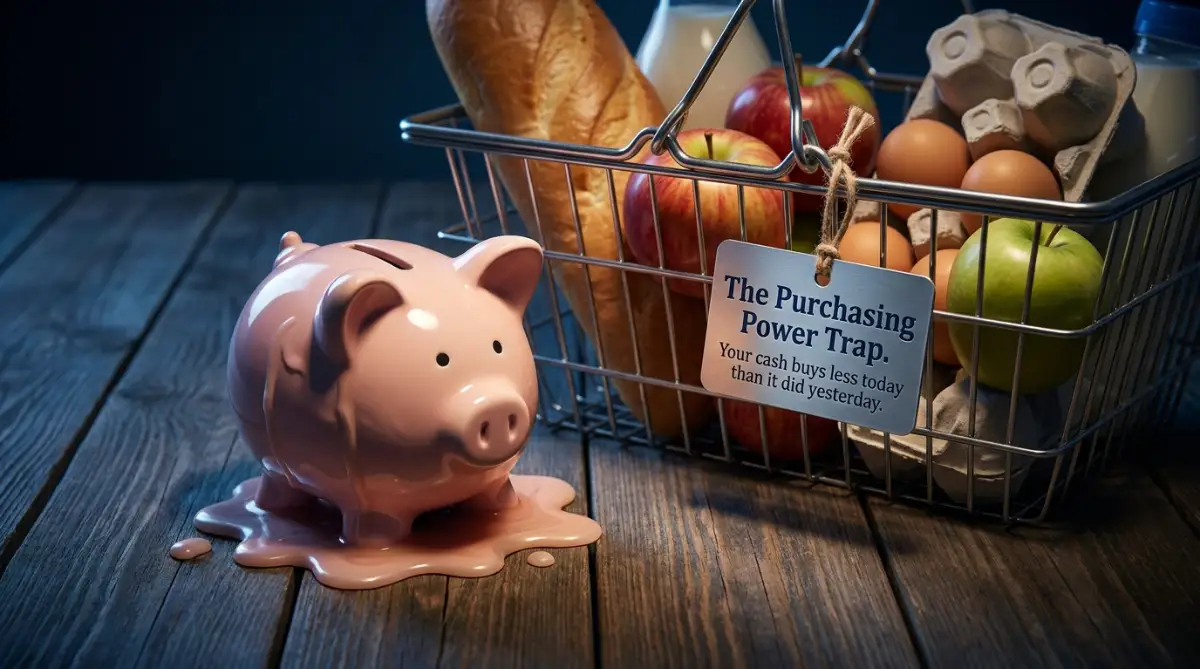
It started with the basic things, like my weekly trips to the local grocery store. A basket of food that used to cost me a very reasonable amount suddenly felt like a massive luxury purchase. I would stand at the checkout counter, staring at the receipt in complete disbelief, wondering how milk, eggs, and bread had suddenly become premium items. It felt like an invisible thief was reaching into my wallet and stealing my cash while I was not looking.
This invisible thief was actively ruining my peace of mind. Every time I filled up my car with gas or paid my monthly utility bills, I felt a heavy weight in my chest. Families everywhere are dealing with this exact same nightmare right now. You try so hard to build a safety net, but that net feels weaker and weaker with each passing day.

When everything around you costs more, but your paycheck and savings stay flat, you are basically moving backward. This constant financial pressure makes people feel trapped, anxious, and completely hopeless about their future goals. The dream of buying a home, taking a nice family vacation, or just retiring comfortably starts to feel like an impossible fantasy.
The Short Version: How to Stop the Money Drain
- Check the raw math: If your current bank pays you 1% interest and prices around you go up by 4%, you are losing money every single day.
- Ditch the dead accounts: Move your emergency cash from standard local banks to online high-yield accounts today.
- Stop hiding physical cash: Keeping money under your mattress means it eats 100% of the rising price tags.
- Attack high-interest debt first: Pay off your 25% credit cards before trying to save large piles of cash.
The Invisible Thief: How Rising Prices Steal Your Wealth
To truly understand what is happening to your bank account right now, we need to talk about purchasing power. Purchasing power simply means how many physical things you can actually buy with a specific amount of money. If you have one hundred dollars today, you expect it to buy a certain amount of goods.
But when the cost of living goes up across the entire country, that same one hundred dollars suddenly buys much less. Your money has not physically vanished, but its ability to buy things has severely dropped. This is the core problem that most standard banks completely ignore when they tell you to save more.
Let us imagine a very simple real-life scenario to make this crystal clear. Imagine you put ten thousand dollars into a basic checking account, completely untouched. The bank gives you a tiny fraction of a percent in interest, which is basically nothing. Meanwhile, the general cost of living shoots up by five percent over the next twelve months.
At the end of those twelve months, your banking app still says you have ten thousand dollars. You might even feel proud that you did not spend it. But because everything around you now costs five percent more, your money has actually lost its strength. You would need ten thousand five hundred dollars just to buy the exact same things you could have bought a year ago.
Pro Tip: I learned the hard way that ignoring this hidden math meant I was basically taking a heavy pay cut every single month without even realizing it. I now regularly check the national inflation percentage and compare it directly to my bank's interest rate so I know exactly how much real buying power I am losing or gaining.
Watch This Powerful Breakdown Before You Save Another Penny
If you want to completely change the way you look at your bank account, you must understand this simple math trick. Watch this short, eye-opening video below to see exactly how the wealthy protect their cash from vanishing into thin air.
The Big Bank Illusion
Most big traditional banks rely on your lack of financial education. They want you to keep your hard-earned cash sitting idle in their extremely low-paying accounts. While they pay you pennies in interest, they are taking your exact same money and lending it out to other people at much higher rates.
They are making a massive profit off your cash, while your cash is actively losing value. It is a highly profitable game for them, and a very losing game for the average saver. You are taking all the risk of losing purchasing power, while they reap all the massive rewards.
Myth vs. Reality: The Savings Trap
Let us break down a common myth that keeps so many hard-working people completely stuck.
The Myth: If my bank account balance never goes down, I am not losing any money.
The Reality: If the cost of groceries, rent, and healthcare goes up faster than your bank pays you interest, you are absolutely losing money every single day.
You must train your brain to stop looking down at the absolute number on your screen. Instead, you need to start looking around at what that number can actually buy in the real world. That is the only true measure of your personal wealth.
How to Calculate Your Real Money Growth
To take back control of your financial life, you need to learn a very simple formula. You have a "Nominal Interest Rate" and a "Real Interest Rate." Do not let these fancy terms scare you; they are actually very easy to understand.
- Nominal Interest Rate: This is the shiny, attractive number your bank advertises on their front door to get you inside.
- Real Interest Rate: This is what you actually earn after you subtract the rising cost of living.
As you can clearly see in the table above, the only number that actually matters is your real rate of return. If that final number is negative, you are slowly bleeding cash.
My Wake-Up Call with Real Numbers
Last year, I had $5,000 sitting in an old bank account making 0.01% interest. I earned a sad 50 cents for the whole year. Meanwhile, my usual grocery bill jumped by about $40 a month. I was literally paying the bank to hold my money while my buying power tanked. Once I moved that $5,000 to an online account paying 4.5%, I started making over $18 a month just for letting it sit there. That pays for my Netflix and a coffee, and it took me exactly ten minutes to set up.
Why Good Budgeting Is Not Enough Anymore
Many financial experts will tell you that the simple solution to rising prices is just to budget better. They tell you to cut out your morning coffee, cancel your favorite streaming services, and stop eating at nice restaurants. While cutting unnecessary waste is always a smart move, you cannot simply budget your way out of a massive economic problem.
You can clip all the grocery coupons in the world, but if the base price of chicken doubles, those coupons will not save you. There is a hard limit to how much you can cut from your daily life before you become completely miserable. You cannot stop buying medicine, you cannot stop paying for electricity, and you definitely cannot stop eating.
Instead of just focusing on extreme cutting, you need to shift your focus to extreme protection. You have to put your savings into vehicles that actually fight back against the rising tide. Your money needs to work just as hard as you do.
Myth vs. Fact: Moving Your Money Online
- The Myth: Online bank accounts are sketchy and might run away with my money.
- The Fact: As long as they are FDIC insured, your money is backed by the government up to $250,000, exactly like your local brick-and-mortar bank down the street.
- The Myth: It takes weeks of paperwork to transfer my cash.
- The Fact: I linked my old checking account to my new high-yield savings account in five minutes using my phone. The money moved over safely in just two days.
Moving Your Money Out of the Danger Zone
The absolute first step to stopping the financial bleeding is to do a complete audit of where your cash currently lives. Open up all your banking apps and check exactly what interest rate you are earning today. If that number starts with a zero point something, you need to make a drastic change immediately.
Online high-yield accounts are one of the easiest ways to give your money a quick fighting chance. Because these modern online institutions do not have physical branches to pay for, they can afford to give you a much larger slice of the pie. Moving your emergency fund from a dead traditional bank to a high-paying online account takes about ten minutes, but it can save you thousands of dollars in lost value over time.
Do not let the fear of technology or change keep you trapped in a bad banking relationship. Your current bank will not reward you for your long-term loyalty. They will only continue to pay you pennies while the world gets more expensive around you.
Understanding the Psychology of Spending
When people see prices rising rapidly everywhere they look, a very strange psychological shift happens. Sometimes, people actually start spending their savings much faster. They think, "If this car is going to be more expensive next month, I better buy it right now today."
While this logic makes sense for absolute necessities, it can absolutely destroy your long-term safety net if you apply it to everything. This panic-buying mentality drains your cash reserves exactly when you need them the most. You must stay incredibly calm and avoid making huge emotional purchases out of pure fear.
The goal is not to spend your money before it loses value. The goal is to grow your money faster than it loses value. That single mindset shift is what separates the people who struggle from the people who thrive during tough economic times.
The Real Cost of Doing Nothing
You might be thinking that moving your money around sounds like too much confusing work. You might think it is easier to just leave things exactly as they are and hope the situation gets better on its own. I completely understand that feeling of exhaustion.
But I want you to truly visualize what happens if you do absolutely nothing. Imagine looking at your bank account five years from now. The number might be slightly bigger because you saved a little bit from your paychecks. But imagine that rent has doubled, groceries have tripled, and gas prices are completely out of control.
That money you worked so incredibly hard to save will barely cover a few months of basic living expenses. That is the real, terrifying cost of doing nothing today. Taking an hour this weekend to reorganize your financial life is a very small price to pay for your future peace of mind. You have the power to stop the invisible thief, but you have to take the first step yourself.
Next-Level Strategies to Outsmart the Silent Money Drain
We have already established that leaving your cash in a dead checking account is a massive financial risk. Now, we need to shift our focus from playing defense to playing smart offense. You do not need a fancy Wall Street degree to protect your wealth.
You just need a few highly effective strategies that the wealthy use every single day. One of my favorite methods to beat rising prices safely is called the "Certificate of Deposit Ladder," or CD Ladder for short. This strategy sounds complicated, but it is actually incredibly simple and highly effective.
Instead of locking all your savings into one single account for a long time, you break your money into smaller chunks. You then place these chunks into different accounts that mature at different times. This gives you a continuous, rolling access to your cash while earning much higher interest rates.
The Rolling Cash Flow Technique
Imagine you have a solid emergency fund that you want to protect from losing its buying power. You take a portion of it and put it into a three-month account, another portion into a six-month account, and another into a twelve-month account. Every few months, one of those accounts opens up, giving you penalty-free access to your cash if you have an emergency.
If you do not need the money right then, you simply reinvest it into a new, higher-paying account. This keeps your money actively working for you without locking you out of your own safety net. It is a brilliant way to track national price index data and ensure your interest rates keep up with the economy.
Exploring Government-Backed Protection
Another extremely smart move is looking into government-issued bonds that are specifically designed to fight this exact problem. These are often called Series I-Bonds or Inflation-Protected Securities. When the cost of living goes up, the interest rate on these specific bonds automatically goes up to match it.
This means the government is basically guaranteeing that this portion of your money will not lose its real-world value. Reading official government bond resources is a great way to understand how these safe tools work. You cannot put all your money here because there are annual limits, but it is a fantastic place for long-term safety.
Shifting Your Mindset: From Saver to Owner
Eventually, if you want to truly outpace an expensive economy, you have to transition from just saving paper money to owning real things. Paper money can be printed endlessly, which constantly lowers its value over time. Real assets, like real estate, businesses, or broad market index funds, generally hold their value because they are limited and produce real-world value.
You do not need to buy a massive apartment building to start owning assets. You can start extremely small by investing in fractional shares or simple index funds that track successful companies. When everything gets more expensive, these companies usually raise their prices, which means their value goes up alongside the economy.
The Power of Creating Extra Income Flow
Sometimes, simply moving your money around is not quite enough to bridge the gap in your household budget. In these moments, generating a new stream of income becomes an absolute necessity for your peace of mind. Starting a small online business or a weekend side hustle can completely change your financial picture.
If you decide to take this path, learning how to build a brand on a tight budget is incredibly helpful. You want to start small, validate your ideas, and avoid taking on huge debts just to start a side project. Think of this extra income as a dedicated shield; every extra dollar you make can go straight into your high-yield accounts to fight the money drain.
Managing your personal life requires the same intense organization that successful companies use. For instance, business leaders rely on project management frameworks for software teams to stay highly efficient. You should absolutely apply this same level of strict organization to your family budget and investment tracking.

The Dangerous Traps That Will Empty Your Pockets
Whenever the economy gets tough and grocery prices skyrocket, human panic usually sets in. When people panic about their financial future, they tend to make highly emotional decisions that actually hurt them deeply in the long run. Let us talk about the most common traps people fall into so you can completely avoid them.
Trap 1: The Mattress Hoarding Illusion
I completely understand the deep psychological comfort of holding physical cash in your hands. When the banking world feels confusing, some people withdraw massive amounts of money and hide it safely in their homes. They think keeping it away from the digital world makes it perfectly safe from all harm.
However, physical cash hidden in a drawer is actually the most vulnerable money you own. It earns absolute zero interest, meaning it absorbs the full, brutal impact of every single price increase in the economy. Ten thousand dollars sitting in a shoebox for five years will naturally lose a huge percentage of its true buying power.
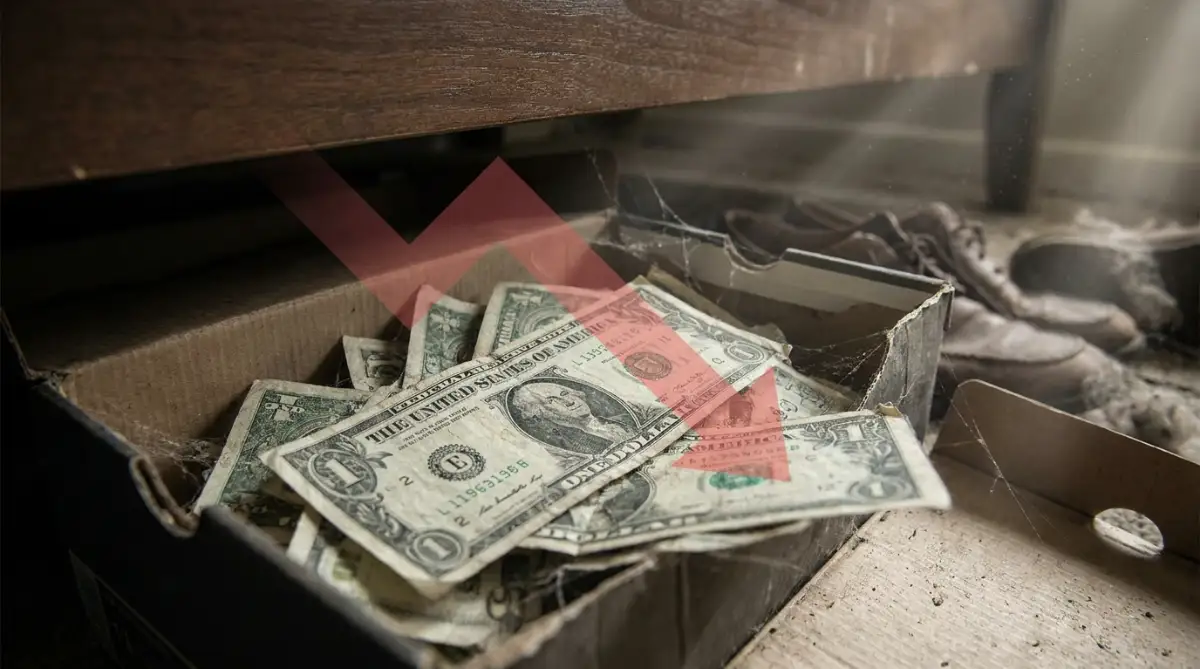
Instead of hoarding physical cash, look into federal deposit insurance rules to understand how safely your money is protected in a proper banking institution. The government highly regulates these accounts to ensure your digital money is backed up and secure.
Trap 2: Ignoring High-Interest Debt
This is probably the most destructive mistake you can ever make during an expensive economic period. Many people try to save massive amounts of cash in a bank account while simultaneously carrying huge balances on their credit cards. They feel safe seeing cash in the bank, completely ignoring the fire burning in their debt.
If your bank pays you a generous four percent interest, but your credit card company charges you twenty-five percent, you are losing the game horribly. The math is simple; the debt is eating your wealth much faster than your savings can grow. If you are feeling overwhelmed by multiple loan payments, understanding debt consolidation can be a massive lifesaver.
You must attack high-interest debt with everything you have. Treat credit card balances as a complete financial emergency, because carrying that debt makes everything else you buy significantly more expensive.
Trap 3: Taking Wild Investment Risks
On the opposite side of the spectrum, some people realize their bank account is losing value and decide to panic-invest. They throw their hard-earned emergency funds into extremely volatile things like unknown cryptocurrencies or trendy internet stocks. They are desperately chasing massive returns to beat the rising cost of groceries.
This is incredibly dangerous because emergency money needs to be entirely stable and accessible. If your car engine explodes or you face a sudden medical bill, you cannot wait for a crashed stock market to magically recover. You must keep your safety net in boring, stable, and highly liquid accounts.
Trap 4: Refusing to Track the Right Numbers
Many folks just cross their fingers, close their eyes, and hope their salary will eventually catch up to their living expenses. They stop looking at their budgets because the numbers simply cause too much mental anxiety. But ignoring a massive financial leak never, ever fixes the leak.
Large corporations use highly specific metrics to measure cac and ltv to track their exact profit margins perfectly. You need to treat your household with the exact same level of professional respect and observation. Track exactly what you spend on food, gas, and utilities every single month so you can adjust your habits before it is too late.
When adjusting your family plans, you must be extremely flexible and willing to change directions quickly. Just like successful tech companies use agile methodologies to skyrocket remote startup growth, you must constantly test new budgeting tricks and adapt to the current economic weather.
Your New Financial Blueprint for a Brighter Future
We have covered a massive amount of ground today, and I know financial topics can feel quite heavy. But I want you to take a very deep breath and look at the positive side of everything we just discussed. You are now equipped with knowledge that the vast majority of normal people simply do not have.
You now understand that leaving your cash idle in a traditional checking account is secretly draining your wealth. You know exactly how to calculate your real interest rate so you never get fooled by tricky bank marketing again. Most importantly, you know how to safely move your funds to places where they can actually fight back.
Your Action Plan for Tomorrow Morning
Do not wait for the perfect moment to fix your financial life, because that perfect moment will simply never arrive. Open your laptop tomorrow morning, log into your banking portals, and write down the exact interest rates you are earning right now. If that number is unacceptably low, spend just fifteen minutes researching top-rated online high-yield accounts.
Next, take a hard look at your debts. Make a strict, aggressive plan to eliminate anything that carries a double-digit interest rate. Following clear consumer protection guidelines for emergency savings will help you balance paying off debt while keeping a strong safety net.
You are no longer a victim of a confusing economy. You are the chief executive officer of your own financial life, and you have the complete power to turn this ship around. Small, consistent steps taken today will mathematically compound into massive security for your future family.
Common Questions About Protecting Your Money
Will the cost of everyday living ever go back down?
Historically, overall prices rarely drop back down to where they used to be, which is a process known as deflation. Instead, the goal of national banks is simply to slow down the speed at which prices continue to rise. This is exactly why waiting for things to get cheap again is a bad idea; you must grow your income and savings to match the new normal.
Is a standard savings account completely useless now?
Standard accounts at traditional brick-and-mortar banks are not entirely useless, but they serve a very limited purpose. They are great for holding money you need to spend this exact week to pay your regular bills. However, for any money you plan to keep longer than thirty days, those accounts are actively hurting your overall net worth.
How much physical cash should I keep hidden at home?
While having a tiny bit of physical cash on hand for extreme weather emergencies or power outages is very smart, it should be minimal. Keep just enough to buy groceries or gas for three to five days if credit card machines stop working. Anything more than that is completely unprotected from theft, fire, and the constant loss of real buying power.
Can buying a house protect my wealth from losing value?
Yes, purchasing real estate is often considered one of the best historical shields against a rising cost of living. When you lock in a fixed-rate mortgage, your monthly housing payment stays exactly the same, even if the world around you gets wildly expensive. Plus, as the local currency loses value, the actual price of your physical property usually goes up in response.
Should I stop contributing to my retirement to hold more cash?
Stopping your long-term retirement investments to hoard cash is generally a huge mistake that costs you dearly later in life. Retirement accounts are usually invested in assets that grow faster than the cost of living over several decades. Only pause these contributions if you are facing a massive, immediate crisis where you cannot afford basic food or shelter.
I genuinely hope my personal journey and these practical steps help you sleep a little better tonight. My biggest wish is that you take action today, protect your hard-earned money, and build a beautiful, stress-free future for your family.
Disclaimer: The information provided in this article is for educational and informational purposes only and does not constitute financial, investment, or legal advice. I am sharing my personal experiences and general market knowledge. Always conduct your own research and consider consulting with a certified financial planner or professional advisor before making any major financial decisions, investments, or changes to your banking setup. Neither the author nor the website takes responsibility for any financial losses or damages resulting from the use of this information.

![7 Hidden Ways Mandatory Forbearance Destroys Your Credit [Avoid These Mistakes]](https://vimex24.com/storage/uploads/blogs/1788962201_7-hidden-ways-mandatory-forbearance-destroys-your-credit-avoid-these-mistakes.webp)