
Why Thinking About Solar Costs Gave Me Sleepless Nights
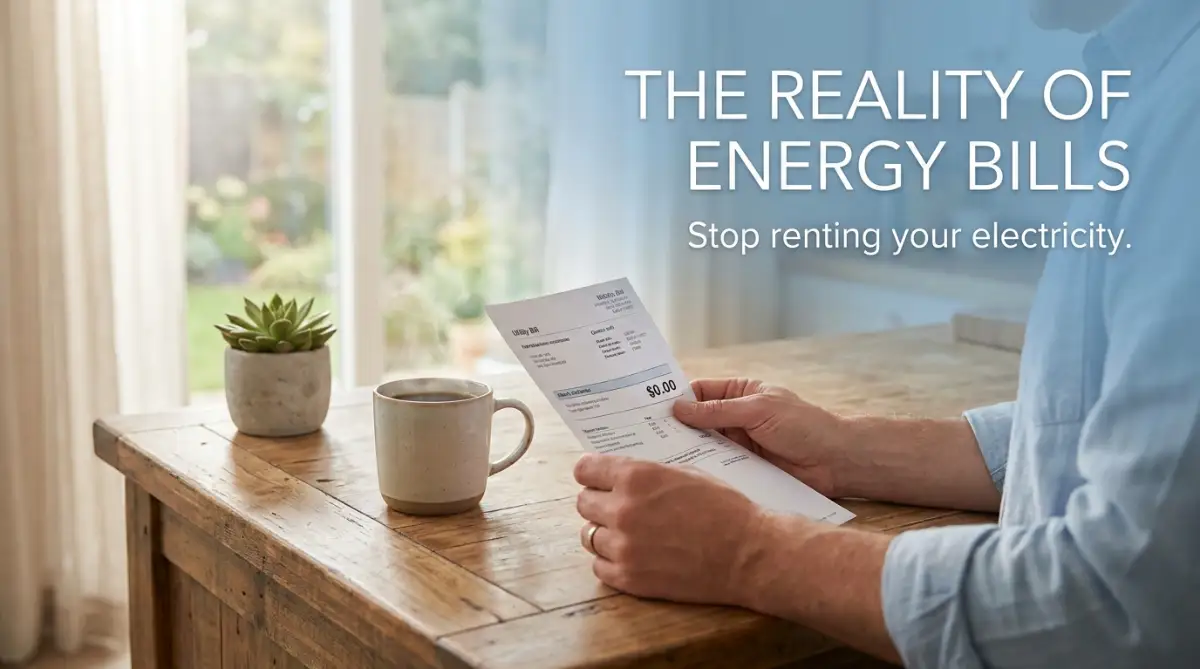
Opening my electric bill last July felt like a bad joke. The number staring back at me was so high I genuinely thought they made a typo. That sudden panic sent me down a massive rabbit hole into the world of home solar panels. I just wanted to know one simple thing: does putting glass on my roof actually save me money, or is it just a clever sales trick? Let me show you what I found, completely skipping the annoying sales pitch.
I started researching solar energy that very night, thinking it would be my magic ticket to financial freedom. But when I got my first estimate from a local installation company, the initial quote completely terrified me. I felt incredibly overwhelmed by the massive upfront numbers, the confusing industry jargon, and the aggressive sales tactics. I just wanted to know if this massive expense would actually put money back into my pocket, but nobody would give me a straight answer.
You deserve to know the honest math behind home energy systems without listening to a biased sales pitch. Today, we are going to break down every single penny of this process together. I will help you understand exactly what you are paying for and how those shiny panels on your roof actually translate to cold, hard cash in your bank account over time.
Quick Hits Before We Start:
- The true cost: You are paying for a lot more than just the glass on your roof; installation labor and company profits make up nearly half the bill.
- The magic of net metering: Your power company acts like a virtual battery, letting you trade extra daytime sunshine for nighttime electricity.
- Roof health first: Never install a brand new power setup on top of old, rotting shingles, or you will double your costs later.
- Hidden traps: Always watch out for predatory loan fees that secretly hike up your total price.
Decoding the True Price Tag of Sun Power
Let us rip the band-aid off and look at exactly where your money goes when you decide to upgrade your roof. Buying a solar energy setup is very similar to buying a brand-new car, meaning the sticker price includes a lot of different moving parts. You are not just paying for the glass panels.
The physical equipment only makes up about half of the total price you see on your estimate. The actual solar panels are the most obvious expense, but you also have to buy inverters, which act as the brain of your entire setup. Inverters take the raw energy absorbed from the sun and convert it into the specific type of electricity your television and refrigerator can actually use.
Along with the panels and inverters, you have the mounting hardware that securely attaches everything to your roof. You definitely want high-quality racking systems so your expensive new tech does not blow away during a massive storm. These physical components are fixed costs, meaning they generally cost the same no matter where you live.
The other half of your quote goes toward something the industry calls "soft costs." This includes the hard labor of the professional installation crew who will be climbing around on your roof. It also covers the mountain of confusing permits and inspection fees required by your local city government.
Finally, soft costs cover the profit margin and marketing budget of the solar company you choose to hire. This is exactly why getting quotes from multiple different companies can show wildly different final numbers. Understanding this breakdown is the absolute best way to protect yourself from being overcharged.
The $20,000 Cheat Sheet: Where Does The Cash Go?
To give you a clearer picture, here is a rough breakdown of a standard $20,000 setup:
- Hardware (Panels, Inverters, Racking): ~$9,000 (You are paying for the physical tech)
- Installation Labor: ~$2,000 (Paying the crew on your roof)
- Permits & Paperwork: ~$1,000 (City fees)
- Company Profit & Marketing: ~$8,000 (This is why shopping around saves you thousands!)
- When you see it laid out like this, you realize how much room there is to negotiate the price down.
A Quick Reality Check on "Free Solar"
Myth: You can get solar panels installed on your house for absolutely zero dollars and never pay an electric bill again.
Reality: So-called "free solar" programs are actually just sneaky leasing agreements. You allow a company to put their panels on your roof, and you buy the power back from them at a slightly lower rate. You do not own the system, and it adds zero value to your property.
The Math Behind Your Break-Even Point
Now that we know what you are paying for, we need to figure out when you actually get your money back. The break-even point is the exact moment your total savings on electricity bills completely cancel out your initial setup cost. This is the most important calculation you will ever make as a homeowner looking into renewable energy.
I remember trying to calculate this on my own and getting hopelessly lost in spreadsheets.
Here is a personal lesson I learned the hard way. When I first calculated my potential payback period, I forgot to factor in the annual rate increases from my utility company. Always remember that grid electricity gets more expensive every single year, meaning your solar panels become increasingly valuable as time goes on.
To find your personal break-even point, you first need to take your total system cost and subtract any government tax incentives available in your area. Many places offer massive tax credits that instantly wipe out a huge chunk of your starting expense. Once you have that final net cost, look at your average annual electricity bill.
If your final system cost is $15,000 and you currently spend $1,500 a year on grid power, your basic break-even point is ten years. However, this simple math does not include the fact that your $1,500 bill will likely increase significantly over the next decade. Because of inflation and grid maintenance fees, your true break-even moment usually happens much sooner than you expect.
After you hit that magical milestone, every single kilowatt your system produces is pure profit. It is like finally paying off your mortgage and living in your house without a monthly payment.
Real-World Math: My Neighbor's Setup
Let me give you a quick, real-world example. My neighbor John spent exactly $16,500 after his federal tax credits cleared. Before the panels, his local utility was charging him roughly $160 a month. In just a little over eight years, the money he saves every month will totally pay off his starting cost. Everything his roof generates after that year-eight mark stays right in his wallet.
How Net Metering Spins Your Meter Backward
The biggest secret to massive long-term savings is a brilliant concept called net metering. Think of net metering as a special savings account managed by your local utility provider. When the sun is shining brightly during the day, your roof is likely producing way more power than you can actually use.
Instead of letting that precious energy go to waste, your system automatically sends the extra power straight back into the public grid. Your utility company then gives you energy credits for every single drop of power you send them.
This brilliant mechanism completely changes how you pay for power.
Here is an amazing breakdown of exactly how this energy exchange works.
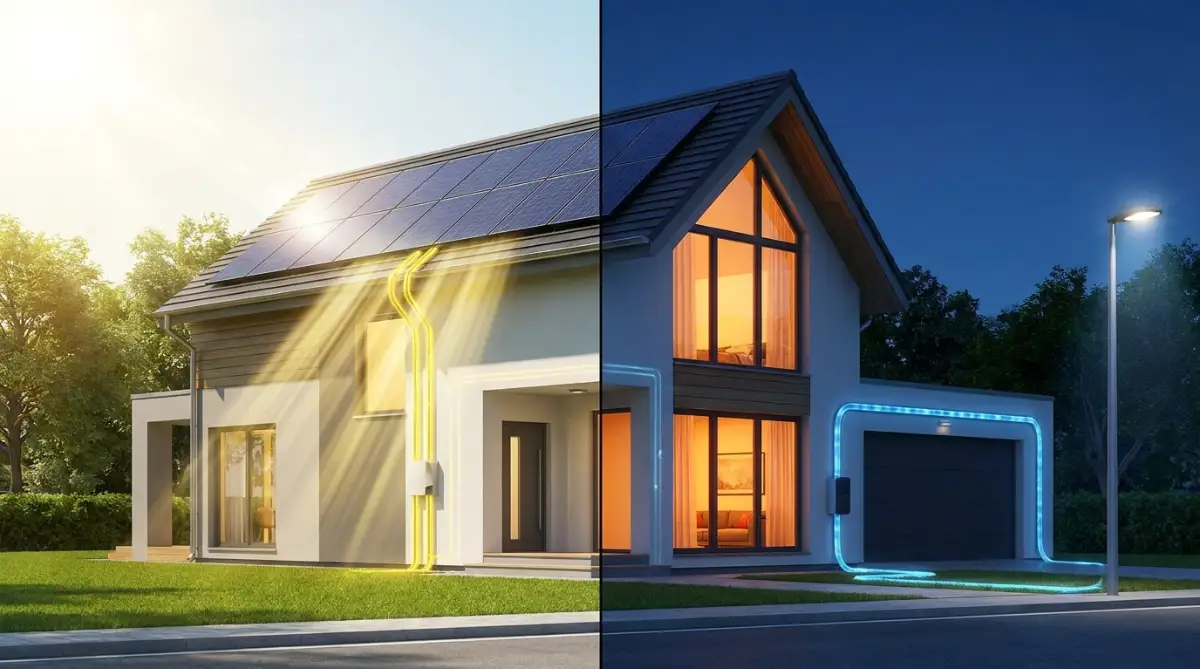
When the sun goes down and your family turns on the lights and television, your panels stop producing power. You start pulling energy from the public grid just like a normal house would. However, instead of paying cash for this nighttime electricity, you simply cash in the credits you earned earlier in the day.
If your roof produces enough extra energy during the summer, you can actually build up a massive stockpile of credits. You can then use those banked credits during the dark, gloomy winter months when your panels produce less power. This seamless exchange is exactly how people end up with a utility bill that says zero dollars.
The Great Battery Debate
When I talk to my neighbors about renewable energy, they almost always ask if they need to buy giant batteries. Battery storage systems are becoming incredibly popular, but they add a massive amount of money to your initial quote. You need to understand exactly what a battery does before you agree to buy one.
If you have a strong net metering program in your area, you probably do not need a battery right away. The public grid effectively acts as your giant, invisible battery by storing your credits. You just use the grid as your backup power source when the sun goes down.
However, standard grid-tied panels will automatically shut off if there is a neighborhood power outage. This happens because sending power into a dead grid could electrocute the repair workers trying to fix the lines. If you live in an area with constant storms and frequent blackouts, a battery becomes an amazing investment for your family.
A battery allows you to store your own extra daylight power right inside your garage. When the neighborhood goes totally dark, your house will stay beautifully lit, and your refrigerator will keep running perfectly. It provides an incredible sense of security, but you have to weigh that peace of mind against the high starting cost.
Quick Comparison: Grid-Tied vs Battery Storage
Property Value and the Hidden Financial Perks
One of the most exciting aspects of this investment is how it completely transforms the value of your real estate. We always hear about remodeling kitchens or adding a new bathroom to boost property value. Surprisingly, upgrading your energy system is one of the smartest home improvements you can possibly make for resale value.
When home buyers are looking at potential properties, they are terrified of high hidden costs and expensive utility bills. If they see a house that basically comes with free electricity built right into the roof, they will eagerly pay a premium price. Multiple real estate studies show that homes with owned energy systems sell significantly faster and for much more money.
The best part is that you get to enjoy the monthly utility savings while you live there, and then cash out the increased home value when you sell. It is a rare double financial win that very few home upgrades can actually offer. Just make sure you actually own the hardware, because buyers absolutely hate taking over messy lease agreements.
Maintenance Reality and Longevity
Another major fear holding people back is the worry that these systems will break down constantly and cost a fortune to fix. You might be imagining yourself climbing up a ladder every single weekend with a bucket of soapy water. The reality is that modern hardware is incredibly durable and shockingly boring to maintain.
There are zero moving parts on your roof, which means there is almost nothing that can easily break down from friction or wear. Good quality glass panels are designed to easily survive massive hail storms, heavy snow loads, and extreme hurricane winds. Unless you live next to an extremely dusty highway, the regular rain is usually enough to keep the glass perfectly clean.
Most premium panels come with a massive performance warranty that guarantees excellent energy production for decades. The only piece of equipment you might need to replace eventually is the main inverter, which works hard every single day. Even with a future inverter replacement, the math still overwhelmingly favors the homeowner in the long run.
Pro-Level Strategies to Maximize Your Solar Returns
Now that you understand the basic math and equipment, we need to talk about maximizing your daily energy production. Buying a high-end energy system is very similar to buying a brand-new sports car. If you do not know how to drive it properly, you are never going to get the best performance out of your investment.
Many homeowners think they can just flip a switch after installation and forget about their roof completely. However, a few simple lifestyle tweaks can dramatically increase the amount of money you save every single month. The biggest secret in the renewable energy community is learning how to perfectly time your heavy electricity usage.
Most utility companies use something called "Time of Use" billing, meaning electricity costs much more during busy evening hours. To beat this system, you should try running your heavy appliances like washing machines and dishwashers during the middle of the day. This simple habit ensures you are directly using the free power your roof is generating right in that exact moment.
By shifting your power usage to the daytime, you avoid buying expensive grid electricity when everyone else in your neighborhood comes home from work. It is a completely free habit change that instantly boosts your daily financial returns.
The Overlooked Power of a Home Energy Audit
Before you even finalize your equipment contract, you need to look at how your house currently holds inside air. I always tell my friends that putting a massive power plant on a poorly insulated house is like pouring expensive water into a leaky bucket. If your windows and attic are letting all your cold air escape, your new equipment will simply work overtime just to cool down your front yard.
You should absolutely schedule a professional energy assessment to find hidden air leaks around your doors and ductwork. The official home energy audit guidelines from the Department of Energy offer incredible advice on how to seal up your living space tightly. Spending a few hundred dollars on fresh insulation can actually reduce the total number of expensive panels you need to buy.
When your home naturally holds its internal temperature better, your overall power demands drop significantly. This means you can buy a slightly smaller, more affordable system and still achieve that beautiful zero-dollar utility bill.
Understanding Your System's Hardworking Brain
Your rooftop glass might get all the attention, but the real hero of your setup is hiding on the side of your house. The inverter is essentially the central brain that translates raw sunshine into usable power for your television and refrigerator. Because it processes electricity all day long, it naturally takes on a lot more wear and tear than the glass above.
To keep your savings completely predictable, you need to understand exactly how this central brain functions over time. If you want to dive deeper into this specific topic, I highly recommend reading about the hidden secrets of solar inverters to understand their specific maintenance needs. Knowing how to read your inverter's warning lights can save you from a massive unexpected repair bill down the road.
Weatherproofing Your Roof Revenue
Another massive factor in your long-term success is how you handle seasonal weather changes in your specific climate. While natural rain does a decent job of washing away light summer dust, extreme seasons require a bit more attention. Heavy snow accumulation or thick autumn leaves can completely block the sun and instantly stop your daily power production.
You do not need to become a professional roof cleaner, but you do need a seasonal strategy. Taking a few proactive measures, like learning how to winter proof your solar panels, ensures your system keeps generating valuable credits even in the cold. A little bit of seasonal awareness guarantees that your investment keeps working hard for you all year long.
Heartbreaking Blunders That Can Ruin Your Investment
I have seen incredibly smart homeowners make terrible financial decisions simply because they rushed the installation process. The renewable energy industry is filled with aggressive salespeople who will intentionally hide long-term risks just to secure a quick commission. If you fall for these common traps, your dream of energy independence can quickly turn into a stressful financial nightmare.
Let us walk through some real-life scenarios that often catch innocent families completely off guard. By learning from the mistakes of others, you can confidently protect your home and your bank account.
The Roof Replacement Disaster
Imagine happily paying thousands of dollars to install a massive, beautiful power array on top of your home. You start enjoying your lower bills, but two years later, you notice a massive water stain on your living room ceiling. Your original roof shingles were secretly rotting away, and now the entire structure is completely failing under the weight of your new equipment.
This is the single most expensive mistake a homeowner can possibly make.
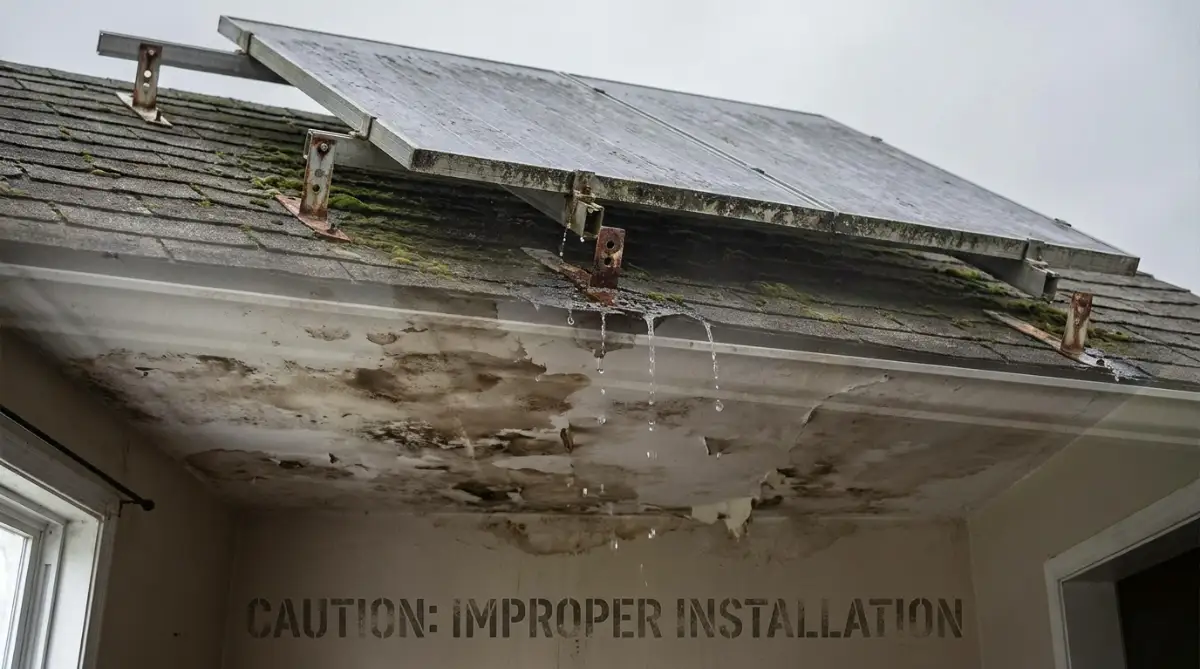
To fix this nightmare, you have to pay a specialized crew to completely remove every single panel and wire from your house. Then, you have to pay a separate roofing contractor to replace the bad shingles, and finally pay the tech crew again to reinstall the equipment.
This double-labor disaster will instantly wipe out years of your hard-earned power savings. You should always have an independent roofing inspector check your shingles before you ever sign a panel contract. If your roof is getting old, replace the shingles first; sometimes you can even bundle the roofing and technology costs together for a better loan rate.
The Predatory Financing Trap
Unless you have a massive pile of cash sitting in a bank account, you will likely need to finance this home upgrade. Unfortunately, some installation companies partner with shady lenders who hide massive "dealer fees" deep inside the loan paperwork. These hidden fees can secretly inflate your total purchase price by twenty or even thirty percent without you realizing it.
These toxic loans are designed to look attractive with low monthly payments, but the hidden fees will destroy your overall return on investment. It is very similar to how young adults get trapped by unfair university debt; if you want to understand how bad loans trap you, look at how student loan traps manipulate interest rates. Always demand a "cash price" quote alongside the financed quote so you can see exactly how much the loan is secretly costing you.
Before signing any long-term financial agreement, you should always check the Federal Trade Commission's guide on solar energy scams. They provide incredible resources to help average consumers identify predatory lending practices before it is too late. Taking your quote to a local credit union for an independent home improvement loan is almost always a safer financial choice.
Ignoring the Shading Reality
Another brutal mistake happens when homeowners rely purely on satellite images for their production estimates. A salesperson sitting in an office might look at a digital map of your house and promise you massive energy returns. However, that satellite image does not show how the giant oak tree in your neighbor's yard casts a massive shadow over your roof every afternoon.
Even a small shadow covering just a fraction of your array can drastically choke the power output of your entire system. The National Renewable Energy Laboratory (NREL) has extensive research showing how even minor shading issues completely disrupt energy flow. You must insist that your installer physically visits your property to measure the exact sun angles and potential tree growth.
Failing to Track the Right Metrics
Many people treat this process as a one-time purchase, completely ignoring the performance data after the installation crew leaves. If you are not actively monitoring your monthly production apps, a broken wire could halt your power generation for weeks without you noticing. By the time you get your massive utility bill in the mail, you have already lost hundreds of dollars in missing credits.
You need to treat your home power plant exactly like a small business asset. Just as business owners rely on proven metrics to measure ROI, you need to check your energy app at least once a week. Setting a simple calendar reminder to check your production numbers ensures you catch minor technical glitches before they become expensive problems.
Managing a massive home upgrade also requires a solid plan of action so you do not get overwhelmed by permits and inspections. You can actually apply professional organization strategies, much like project management frameworks, to keep your contractors strictly on schedule. Staying organized and vigilant is the ultimate secret to a stress-free transition.
Your Action Plan for Energy Freedom
Making the leap to renewable home energy is absolutely one of the most rewarding decisions you can ever make for your family. It gives you incredible protection against inflation, directly increases your property value, and significantly reduces your daily living stress. However, you now know that achieving these amazing benefits requires careful planning, deep research, and avoiding common industry traps.
Start your journey by auditing your home's natural efficiency and carefully reviewing your current power bills. Get at least three different quotes from local, highly-rated installation companies, and firmly demand a complete breakdown of every single fee. Never let an aggressive salesperson rush you into signing a twenty-year financial contract on the spot.
Take your time to understand the warranty terms, inspect your current roof health, and secure fair financing from a trusted local bank. When you approach this process with patience and education, you completely remove the fear from the equation. You get to take back total control of your household budget while making a genuinely positive impact on the environment.
Every time I hear my air conditioner running during a blazing hot afternoon, I smile knowing that the sun is paying for it. I genuinely want you to experience that exact same feeling of financial relief and complete peace of mind. Start looking at your roof today not just as a cover for the rain, but as your family's personal engine for long-term wealth.
Common Questions About Home Energy Upgrades
Do solar panels increase my property taxes?
In most areas, adding a renewable energy setup significantly increases your home's market value, which normally triggers higher property taxes. However, many states have specific property tax exemptions for renewable energy upgrades. This means you get to enjoy the boosted resale value without paying extra taxes to the local government while you live there.
How long does it actually take for the system to pay for itself?
The average homeowner typically sees a complete return on their initial money within seven to nine years. This timeframe heavily depends on your local electricity rates, the size of your system, and available federal tax incentives. Because utility companies raise their prices constantly, your actual payback period might happen much faster than you originally calculated.
Will I still get a monthly bill from my electric company?
Yes, you will almost always receive a monthly statement from your grid provider, even if your power usage is completely offset. Most utility grids charge a small, mandatory "connection fee" just to keep your house tied to their infrastructure. However, instead of a massive three-hundred-dollar bill, you will likely only pay a ten or fifteen-dollar connection charge each month.
Can my Homeowners Association (HOA) legally stop me from upgrading?
Many homeowners worry that their strict HOA will block them from putting shiny glass on their beautiful roofs. Fortunately, many regions have implemented strict "solar access laws" that legally prevent HOAs from banning renewable energy installations outright. They might ask you to keep the design neat and tidy, but they generally cannot stop you from generating your own free power.
Disclaimer: The information provided in this article is for educational and informational purposes only and does not constitute financial, legal, or tax advice. Energy rates, government incentives, and installation costs vary significantly by location and individual circumstances. Always consult with a certified financial advisor and licensed local contractors before making any major home improvement or financial decisions.

![5 Simple Steps to Winter-Proof Your Solar Panels [Save Money]](https://vimex24.com/storage/uploads/blogs/1785503524_5-simple-steps-to-winter-proof-your-solar-panels-save-money.webp)
![5 Hidden Secrets of Solar Inverters [Step-by-Step Guide]](https://vimex24.com/storage/uploads/blogs/1785490845_5-hidden-secrets-of-solar-inverters-step-by-step-guide.webp)