The Cold Hard Truth: My Personal Winter Solar Struggle
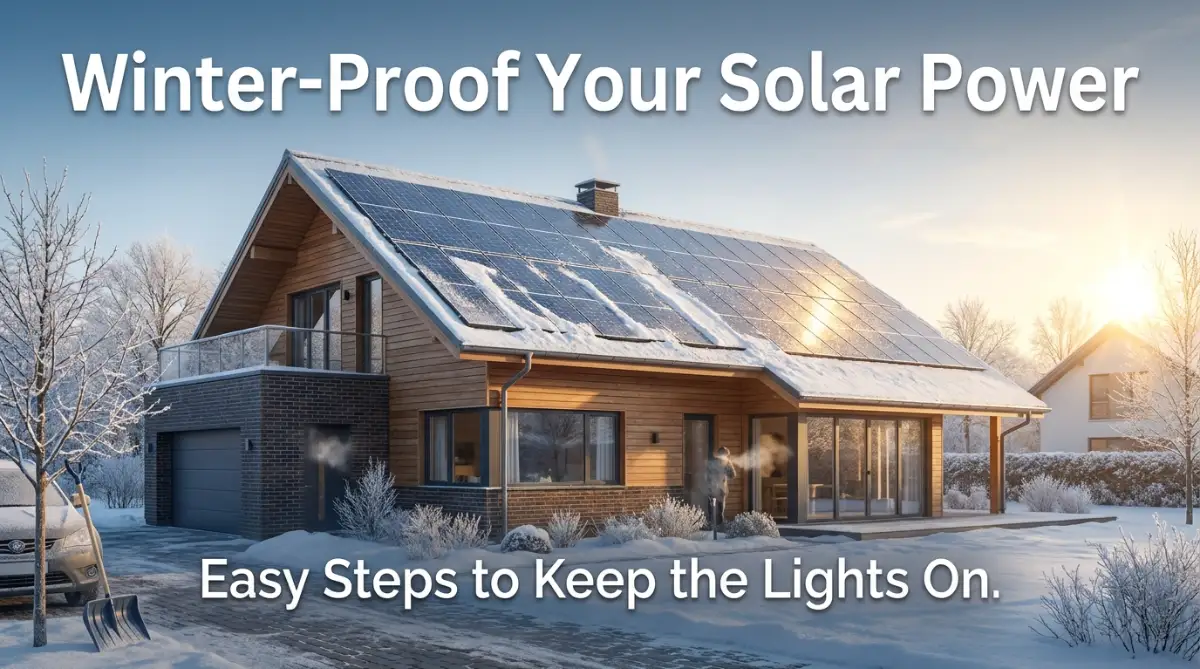
So, there I was, staring at a massive sheet of ice covering my roof while my energy app happily showed zero power. If you own solar panels, you probably know that gut-dropping feeling when winter hits hard. I had no backup plan, freezing toes, and a completely dead battery bank. Let me show you exactly how I fixed my setup so you never have to freeze in the dark.
My batteries were completely drained, and I had no idea how to safely clear the snow without breaking the glass. I stood there in the cold, feeling completely helpless and realizing I was totally unprepared for winter. It was a lesson I learned the hard way, and I do not want you to go through the same stress.
Many homeowners face this exact panic every single year when the first big freeze hits. You invest thousands of dollars into clean energy, expecting peace of mind and lower utility bills. But when the temperatures drop, winter storms can threaten your entire investment in a matter of hours.
Understanding how your setup reacts to freezing weather is the first step toward true energy security. With a few simple checks, you can stop winter damage before it even starts.
Quick Checklist: Winter-Proofing Your Solar Setup
- Tilt it up: Shift panels to a 45-55 degree angle so heavy snow slides right off.
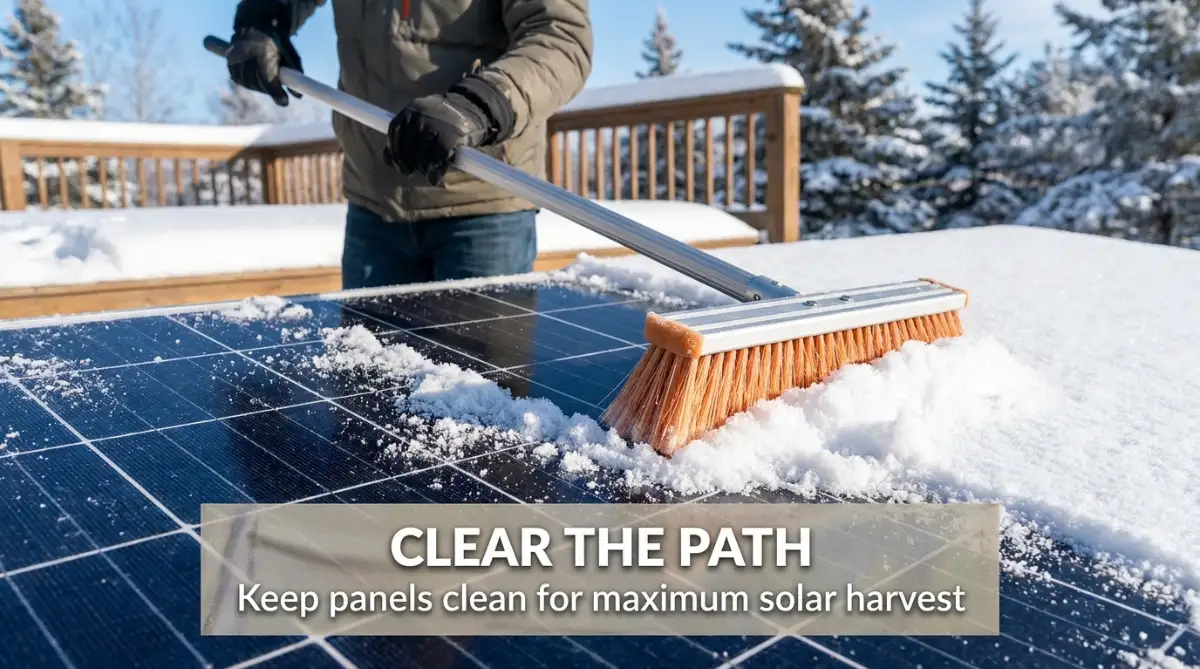
- Skip the shovel: Only use soft foam brooms to clear your roof. Scratched glass ruins panels forever.
- Warm up the batteries: Get your power banks off the freezing concrete floor and use a thermal mat.
- Check the connections: Winter winds easily loosen cables. Zip-tie everything down before the first freeze hits.
Adapting to the Winter Sun: Changing Your Solar Panel Angle
The winter sun rides much lower in the sky compared to the bright summer months. Because of this change, your solar panels might not catch sunlight as effectively as they do in July.
If you have an adjustable mounting rack, changing the angle is a great way to boost your daily energy output. By tilting your panels steeper, you allow them to face the low winter sun directly.
To understand how simple adjustments help, consider these general recommendations:
- Summer Angle: Keep panels flatter, around 15 to 25 degrees, because the sun is high.
- Winter Angle: Tilt panels much steeper, around 45 to 55 degrees, to capture the low-lying sun.
Quick Tilt Cheat Sheet
Let's make this super simple. Here is the exact cheat sheet I use for my own roof:
| Season | Ideal Panel Angle | Why it Works |
|---|---|---|
| Summer | 15° to 25° | Catches the high midday sun perfectly. |
| Fall / Spring | 30° to 40° | A balanced middle ground. |
| Winter | 45° to 55° | Grabs low sunlight and helps snow slide off easily! |
This simple tilt does more than just capture extra sunlight for your home. A steeper angle helps snow slide right off the panels naturally using gravity.
You will not have to climb up on a cold ladder as often to clean them. Check your solar manufacturer manual to see if your roof mounts can be safely adjusted.
Clearing the Ice and Snow: Safe Roof Maintenance Methods
When a heavy winter storm passes, a thick blanket of snow will completely block light from reaching your solar cells. While solar panels are slick and naturally warm up to melt snow, heavy storms can build up fast.
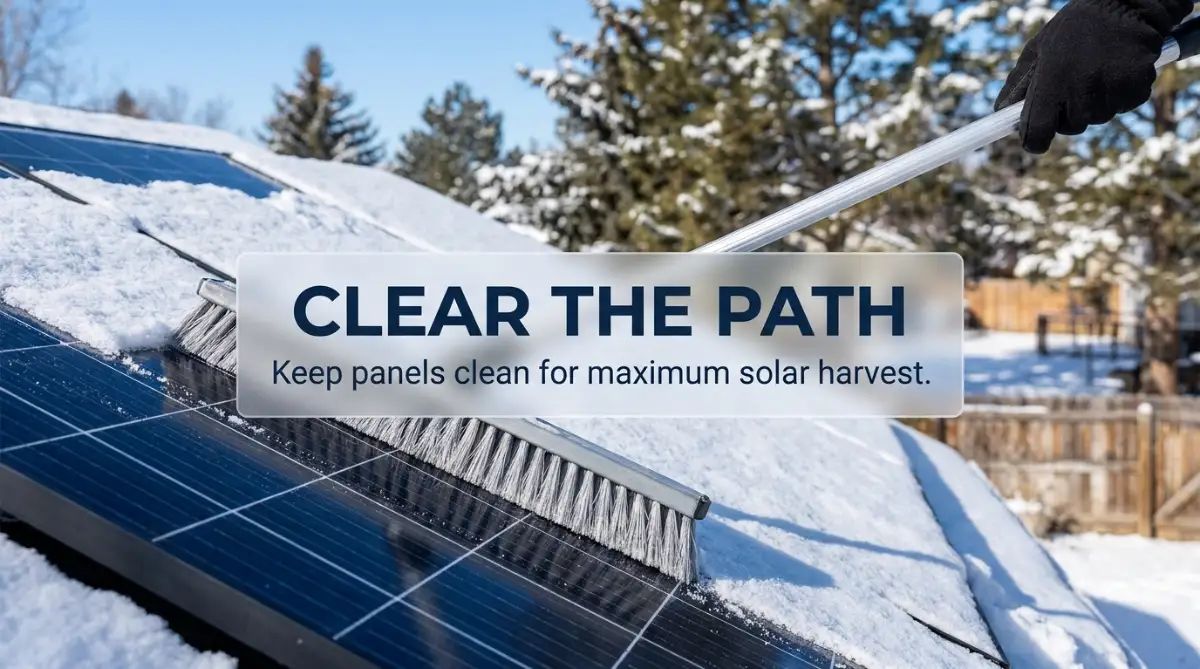
You must never use sharp metal shovels or hard plastic rakes to clear your panels. These harsh tools can easily scratch the tempered glass, causing permanent damage to your system.
Instead, invest in a specialized soft-bristle solar rake or a foam snow broom. These tools let you gently pull the loose snow down from the safety of the ground.
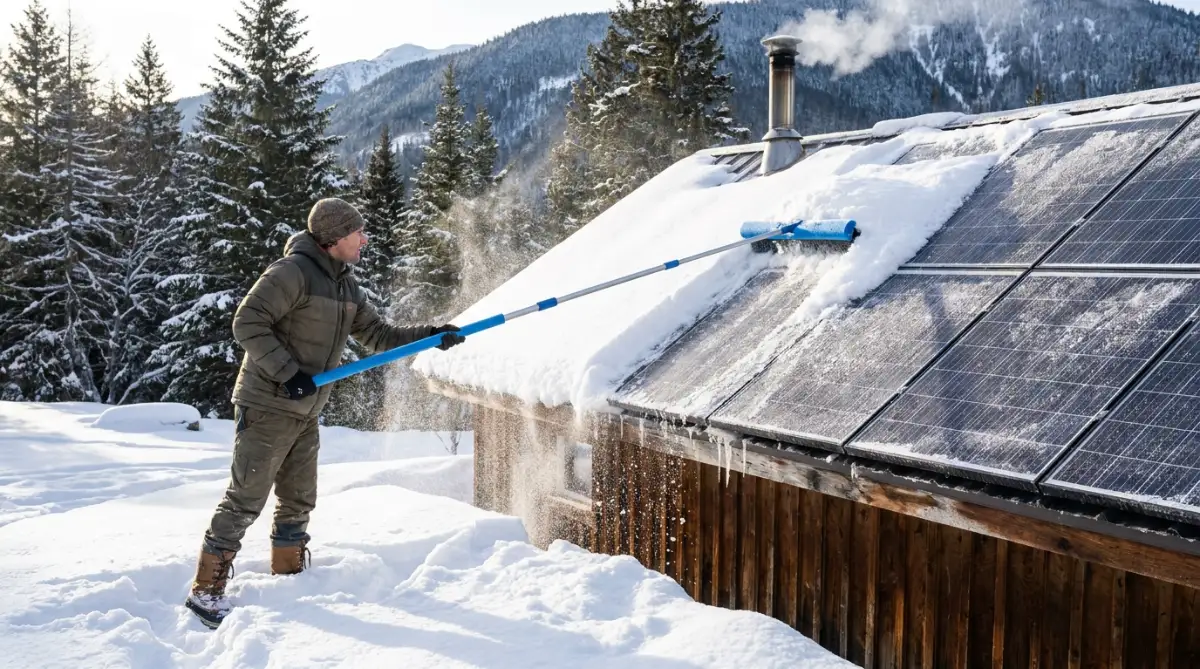
If the snow is light, you can often just let the sun do the work for you. But if a thick sheet of ice forms, it is best to wait for a warmer afternoon rather than scraping the glass.
If you want to see exactly how to clear heavy snow from your roof without risking your safety or damaging your expensive setup, watch this helpful demonstration.
This quick video guide shows the exact tools and techniques you need to keep your panels clean all winter long.
Shielding the Heart of Your System: Battery Protection in Freezing Weather
Cold temperatures are the ultimate enemy of residential battery storage systems. Most lithium-ion batteries lose their ability to hold a charge when the temperature drops below freezing.
If your battery bank is kept in an unheated garage or an outdoor shed, you must take action. Extremely cold temperatures can cause permanent damage to the chemistry inside the battery cells.
You can build a simple insulated enclosure around your battery bank to trap the natural heat it produces. Alternatively, you can install a small, low-wattage heating mat designed specifically for battery systems.
Myth vs. Fact: Cold Weather Batteries
Myth: Wrapping your battery tightly in a heavy blanket keeps it perfectly warm and safe.
Fact: Batteries need proper ventilation, even in freezing weather. A thermal enclosure with a tiny, thermostat-controlled heating pad (around 12 to 20 watts) is the safest way to keep the chemistry active without creating a fire hazard.
Always make sure your batteries are kept in a dry space away from melting snow or condensation. Keeping them warm ensures they will keep your lights on during a sudden winter blackout.
My Personal Winter Realization: I used to think my garage was warm enough for my solar battery bank until I checked the temperature logs during a winter storm. I realized the cold was draining my backup power twice as fast, which prompted me to insulate the walls immediately. I highly recommend placing a cheap digital thermometer near your batteries so you can monitor them closely.
Securing the Framework: Inspecting Wires and Roof Mounts
Winter winds and heavy snow loads put an incredible physical stress on your solar racking. Before the first freeze, you should do a thorough visual inspection of your entire system.
Look closely for any loose bolts, sagging wires, or cracked mounting brackets. The freezing and thawing cycle can cause metal to expand and contract, loosening important connections.
Make sure all electrical wires are tucked away safely and are not dragging on your roof. Slipping ice sheets can snag loose wires and tear them completely out of their sockets.
If you notice any loose cables, use outdoor-rated zip ties to secure them tightly to the metal frame. This quick check prevents major electrical failures when the weather turns bad.
Maximizing Energy Efficiency Inside Your Home
When solar production drops during short winter days, you must manage your home energy use wisely. Running heavy appliances during the peak daylight hours helps you use solar power directly.
This keeps you from draining your valuable battery storage before the sun goes down. Try to wash your clothes or run the dishwasher around noon when the sun is brightest.
You should also switch out any old, power-hungry lightbulbs for energy-efficient LED options. Small changes in your daily habits can add up to huge energy savings over the winter.
Defeating the Cold: Myths About Winter Solar Efficiency
Many people believe that solar panels do not work at all when the temperature drops. This is actually a huge misunderstanding of how solar technology works.
In fact, solar panels are highly efficient in cold weather because electronics perform better when they are cool. As long as sunlight can reach the clean glass, your panels will produce excellent power.
The real challenge in winter is not the cold air itself, but the shorter days and the physical snow blockages. Once you clear the snow, your system can perform beautifully even on a freezing afternoon.
Do not let common myths discourage you from relying on your solar setup during the winter months. With the right preparation, your system is fully capable of handling the coldest days of the year.
Preparing for the Worst: Creating a Winter Emergency Plan
No matter how well you prepare, extreme winter blizzards can still cause unexpected power outages. It is wise to have a clear emergency backup plan in place for your household.
Keep a manual backup generator ready to assist your solar system if the clouds linger for several days. Make sure your emergency generator is fueled up and tested before the storm hits.
You should also keep a detailed list of local solar repair technicians handy in case of a system failure. Trying to fix a complex electrical issue yourself in the middle of a blizzard is highly dangerous.
By planning ahead, you can protect your family and stay perfectly calm during any major winter storm. Energy independence means being ready for any weather situation.
Preventing Ice Dam Build-up on Your Solar Array
An unexpected threat during cold weather is the formation of ice dams right below your solar panels. When snow on the panels melts and runs down, it can quickly freeze again at the colder edge of your roof.
This creates a heavy barrier of ice that traps water underneath your shingles. Over time, this trapped water can seep into your attic and cause major structural damage.
To prevent this, ensure your attic is properly insulated and ventilated to keep your roof temperature even. You can also install self-regulating heat cables along the lower edge of your roof to melt ice paths.
These cables keep the runoff water flowing safely into your gutters. Protecting your roof is just as important as protecting the solar system itself.
Understanding Your Inverter Performance in Freezing Weather
Your solar inverter is the brain of your entire system, turning raw sunlight into usable home electricity. Most modern inverters are built to withstand cold conditions, but they still have limits.
Extreme sub-zero temperatures can sometimes cause the electronic display screens to freeze or become laggy. In rare cases, the sensitive internal relays can get stuck due to freezing humidity.
Keep an eye on your inverter system during extreme cold snaps to make sure no error codes appear. If your inverter is installed outdoors, consider building a simple wooden shield to protect it from freezing winds.
This simple shield blocks drifting snow from packing into the cooling vents of the unit. Keeping the cooling vents clear allows the unit to regulate its internal temperature safely.
How Heavy Snow Loads Affect Roof Safety and Engineering
Solar panels are incredibly tough, but they add extra weight to your home roof structure. When you add a foot of wet, heavy snow on top of those panels, the total weight increases fast.
Most modern home roofs are engineered to support this load, but older homes might need a safety check. It is always smart to understand the weight limits of your roof structure before winter begins.
If you hear creaking sounds or notice sagging ceilings during a heavy winter storm, take it seriously. Do not attempt to climb onto a snowy, icy roof yourself to relieve the weight.
Instead, call a professional roof contractor who has the safety gear to handle heavy snow loads. Your personal safety is always the highest priority during any severe weather event.
Keeping Your Monitoring App Online During Winter Storms
Your solar monitoring system relies on a steady internet connection to send alerts and daily data. During major winter storms, local power lines and internet towers can go down unexpectedly.
If your home router loses power, you will lose the ability to track your system performance remotely. This can leave you in the dark about how much backup battery power you have left.
To avoid this, plug your home internet router into a small uninterruptible power supply. This keeps your Wi-Fi running for hours even if the main grid goes down.
Knowing your system status during a storm gives you the data you need to manage your energy. A small backup power supply for your router provides massive peace of mind.
When to Call a Certified Solar Technician
While simple maintenance like clearing loose snow is easy, some winter tasks require an expert. If you notice damaged wires, cracked glass, or smells of burning plastic, turn off your system immediately.
Never try to repair damaged high-voltage electrical lines on your own. A certified solar technician has the safety gear and training to solve complex problems safely.
Having a trusted technician inspect your system before winter can prevent emergency repair visits. Emergency service calls during a blizzard can be very expensive and hard to schedule.
A simple preventive check ensures your home stays warm and powered all season long. Taking care of your system today protects your wallet and your family tomorrow.
Simple Daily Habits for Winter Solar Success
Managing a solar home in winter is mostly about building simple, easy habits. Get into the habit of checking your battery levels every single evening before bed.
This helps you know if you need to conserve power during the night. You should also check the local weather forecast daily to prepare for upcoming cloudy stretches.
If you see a long winter storm is coming, charge your batteries to full capacity using grid power ahead of time. Most modern smart systems allow you to do this directly through your phone app.
These simple daily habits will help you get the absolute most out of your solar investment. With a little preparation, you can enjoy a warm, cozy home all winter long.
Advanced Winter Care: Deep Tactics for Top Solar Output
To get the absolute best performance from your home energy setup during freezing weather, you need to go beyond basic brushing. Many experienced off-grid homeowners use advanced techniques that help their panels produce power even on cloudy, gray winter days. These methods are easy to apply and will protect your investment over the long term.
One highly effective trick is learning to use the albedo effect to your advantage. This scientific concept simply means using the reflective power of surrounding white snow to bounce extra sunlight back onto your panels. If you want to understand the science of light reflection, you can read the official definition provided by the NASA Earth Observatory.
If you have ground-mounted solar arrays, keeping a clean patch of white snow right in front of them is actually helpful. The bright white snow acts like a giant natural mirror, directing extra rays onto your solar cells. This simple trick can boost your energy output by up to twenty percent on clear days.
Another smart move is upgrading to modern smart energy load shifters inside your home. These devices automatically monitor your home energy usage and direct electricity to your highest-need appliances first. This keeps your home running smoothly without putting too much strain on your storage setup.
For example, your smart controller can heat your water tank during the brief hours of peak midday sun. This prevents your system from wasting battery power on heating after the sun goes down. It is an incredibly efficient way to manage a limited winter power supply.
For those who rely on commercial property setups, reviewing your utility agreements is highly important before winter storms damage lines. If you operate solar on a leased business property, you should protect your finances by looking out for Understanding these legal details can save you from massive unexpected expenses during winter blackouts.
If you are planning to expand your winter setup with heavy-duty backup batteries, you might need to secure fast funding. Purchasing top-tier cold-weather lithium batteries can be expensive, but you can learn how to find safe low-interest unsecured loans fast to fund your winter upgrades without putting up your home as collateral. This keeps your family safe and warm during storms without draining your emergency savings.
When investing in winterizing your home systems, you are protecting your long-term family wealth. We work hard to build these setups, which is why we must protect them for the next generation. Just as you protect your physical house, you should protect your family future by knowing what actually happens to your assets if you die without a legal will to ensure your solar home remains in safe hands.
Finally, you should work with a professional to inspect your inverter settings. Many high-tech inverters have a special winter setting that helps them run more efficiently in cold air. You can check the guidelines on the U.S. Department of Energy website to see how grid-connected systems adapt to seasonal shifts.
This setting adjusts the internal voltage limits to prevent the system from shutting down during cold morning starts. A quick adjustment can significantly boost your daily winter solar production. It is a simple software tweak that makes a noticeable difference.
Severe Pitfalls: Winter Solar Mistakes That Can Damage Your System
When the temperature drops, homeowners often make hasty choices that can end up costing thousands of dollars in repairs. One of the most dangerous things you can do is pour warm or hot water onto frozen solar panels to melt ice. This is a massive mistake that many beginners make out of desperation.
The sudden, extreme temperature change causes thermal shock, which will instantly shatter the tempered glass of your panels. This mistake completely ruins your expensive panels and voids your manufacturer warranty on the spot. If ice is stuck to your panels, it is always best to let the sun melt it naturally.
Another common error is neglecting the heavy ice dams that form around your mounting brackets. When melting water pools and freezes underneath your solar racks, it expands with incredible physical force. This pressure can easily crack your roof tiles or damage the solar frame.
This expanding ice can bend the metal mounts and rip your roof shingles right out of place. Always make sure your roof valleys and gutters are clean so that melting water has a clear path to drain away. Keeping your gutters clear prevents ice from building up under the panels.
If you find yourself facing high repair costs due to winter storm damage, do not panic. You can research smart ways to borrow money without assets safely to cover emergency repairs without putting your home at risk. Acting quickly prevents water leaks from damaging your attic and causing even bigger headaches.
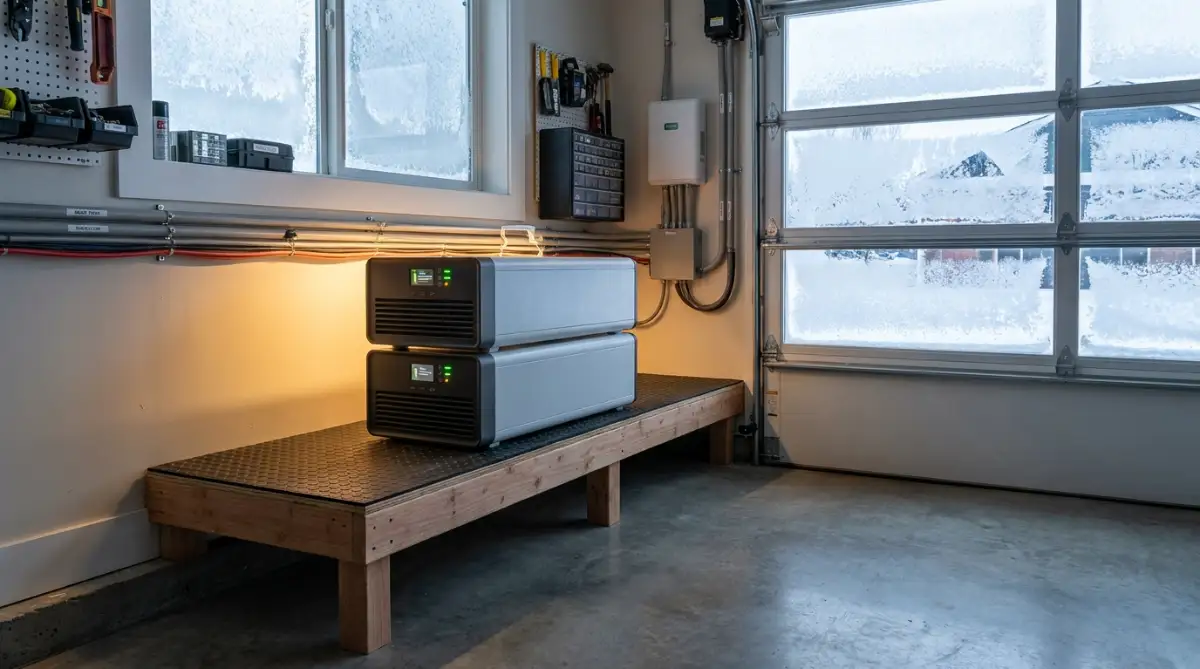
Many people also make the mistake of leaving their home backup batteries on bare concrete floors in cold garages. Concrete draws heat away from battery packs at an incredibly fast rate, draining their stored power overnight. This can leave you stranded without backup power when you need it most.
Always place your battery banks on elevated wooden shelves or rubber mats to protect them from the cold floor. This simple physical barrier keeps the battery chemistry warm and running efficiently. It is an easy fix that costs almost nothing but saves a lot of energy.
Finally, do not rely solely on automatic software updates to protect your system during heavy winter blizzards. Sometimes, a major winter storm will knock out your internet connection, leaving your solar system unable to communicate with the grid. This makes physical, manual checks even more important.
Before the cold season starts, check your system manually to make sure all components are working together smoothly. Being proactive is the best way to avoid a cold, dark night without power. A little preparation goes a long way.
Your Plan for Year-Round Solar Resilience
Preparing your home solar setup for winter might seem like a lot of work, but the peace of mind is worth every bit of effort. By taking small, deliberate steps today, you can protect your wallet and ensure your family stays warm and safe. Your clean energy system is a powerful tool for self-reliance, and it is fully capable of handling whatever weather comes your way.
Remember that you do not have to do everything all at once. Start by adjusting your panel angles, check your battery temperatures, and make sure you have the right soft-clearing tools ready. Over time, these tasks will become a natural part of your home maintenance routine.
You have the power to protect your home energy system and take charge of your utility bills. By staying informed and taking consistent care of your equipment, you can achieve true energy independence. Let your solar setup work for you all year long.
To learn more about how solar technology is advancing to handle extreme weather, you can read the research published by the National Renewable Energy Laboratory. Their studies show that cold-weather solar performance is continually improving with new technology. Staying updated on these trends helps you make better decisions for your home.
My Personal Closing Message to You: I know how scary it can be to face a freezing winter storm when you are relying on a new home energy setup. But I promise you that taking just an hour this weekend to check your system will make a world of difference. Trust your preparation, take action today, and keep your lights shining bright!
Solving Your Winter Solar Worries: Common Questions
Can solar panels generate electricity when they are completely covered in snow?
No, solar panels cannot produce power if a thick blanket of snow blocks all light from reaching the silicon cells. However, even a tiny sliver of exposed glass can warm up the panel and cause the snow to slide off naturally. It is best to use a soft foam rake to clear them after a heavy storm.
How cold does it have to be to damage a home solar battery?
Most standard lithium-ion home batteries will start losing efficiency once the temperature drops below freezing. If the temperature inside your battery drops below zero, the internal electronics may disable charging to prevent permanent damage. Keeping them in an insulated or semi-heated garage is the easiest way to avoid this issue.
Is it safe to use a regular broom to clear snow off my solar array?
Using a standard household broom is generally not recommended because the stiff bristles can hold onto dirt and scratch the glass surface. These tiny scratches can build up over time and permanently reduce your overall solar efficiency. Always use a soft foam squeegee or a specialized solar snow rake.
Do I need to turn off my solar system during a heavy winter blizzard?
No, you do not need to shut down your system during a typical winter storm. Modern solar inverters are built with smart sensors that will automatically pause power production if the panels get completely covered. Once the storm passes and the panels are clear, the system will start up again on its own.
How much energy production will I lose during the winter months?
On average, most homeowners see a drop of thirty to fifty percent in their solar output during the peak of winter. This drop is mainly caused by shorter daylight hours and lower sun angles rather than the cold weather itself. You can easily offset this loss by adjusting your panel tilt and practicing energy efficiency inside your home.
Disclaimer
This blog post is provided for informational and educational purposes only. Working with home electrical systems, climbing onto roofs, and managing high-voltage solar batteries can be dangerous. Always consult with a licensed, certified solar installer or professional electrician before making physical changes to your system or electrical setup. We are not liable for any physical damage, personal injuries, or financial losses that may result from following the tips in this guide.


![5 Hidden Secrets of Solar Inverters [Step-by-Step Guide]](https://vimex24.com/storage/uploads/blogs/1785490845_5-hidden-secrets-of-solar-inverters-step-by-step-guide.webp)