
The Real Struggle of Needing Money When You Have No Collateral
Getting hit with a surprise bill is stressful enough, but it is ten times worse when you do not own a home or car to use as collateral. I know how it feels to think the entire banking system is locked against you just because you rent your home. Let's look at how you can safely get the cash you need using modern, asset-free pathways that won't ruin your financial future.
The feeling of helplessness in these moments can be incredibly heavy. You feel trapped because traditional financial systems often turn their backs on people who do not have big assets. It feels like the entire system is built only for those who are already wealthy, leaving everyday people to struggle in the dark.
Why Finding the Right Financial Help Is So Difficult
- Falling for predatory payday loan traps: Many people desperate for quick cash turn to high-interest payday lenders. These lenders charge high fees that trap borrowers in a long cycle of debt.
- Believing online loan scams: The internet is full of fake lenders promising instant cash with no credit checks. They often steal your personal data or charge upfront fees and then disappear.
- Using high-fee credit card cash advances: Drawing cash from credit cards seems easy but comes with massive fees. The interest starts piling up instantly, making it hard to pay back.
- Lacking clear and honest guidance: Most online articles focus on mortgages or secured loans. They leave readers with zero practical advice on how to get help when they do not own property.
How Financial Stress Harms Your Peace of Min
- Constant stress and anxiety: Not knowing where to find emergency funds keeps you awake at night. This stress hurts your daily focus and physical health.
- Loss of personal confidence: Being rejected by traditional banks makes you feel like you are failing financially. It hurts your self-esteem even when you work very hard.
When you do not have physical assets like property, the borrowing market looks scary. Traditional financial systems were built on the idea of physical security. Banks want to know that if you cannot pay them back, they can take your property to recover their money.
But today, millions of hard-working people rent their homes and do not own major physical assets. This does not mean they are not trustworthy borrowers who pay their bills on time.
Thankfully, the modern financial world is changing. With the rise of digital finance and alternative credit systems, you no longer need physical assets to secure a loan. You can borrow money based on your income, your digital reputation, or your track record of paying bills. Let us explore how you can navigate this space safely and confidently.
⚡ Emergency Blueprint: Getting Approved Without Collateral
- Look at Credit Unions first: These local non-profits are often way more flexible and offer cheaper rates than big national banks.
- Try Peer-to-Peer (P2P): Bypass traditional institutions by borrowing directly from regular investors who pool their money online.
- Use Co-Signers carefully: Adding a trusted friend with good credit to your loan can unlock lower rates, but always protect their trust by paying on time.
- Watch the APR, not just monthly costs: Some loans hide high fees in the contract. Always look at the Annual Percentage Rate to see the real cost.
Smart and Safe Methods to Get a Loan Without Pledging Assets
Now that we understand the problem, let us look at real solutions. You do not need to feel stuck just because you do not own a house or a car. There are modern pathways designed to help you get the funds you need.
We will look at three practical methods you can use today. These methods rely on your trust, your income, and modern financial platforms.
Step 1: Use Unsecured Personal Loans from Community Credit Unions
An unsecured personal loan is a loan that does not require any collateral. Instead of looking at your assets, lenders look at your credit history and your income. They want to see if you have a steady habit of paying back what you borrow.
To understand this, think of a local credit union as a helpful neighbor. Unlike big national banks, credit unions are non-profit organizations owned by their members. They often have more flexible rules and want to help the local community.
How to Prepare Your Application
If you want to apply for an unsecured loan, start by gathering your proof of income. This includes your recent pay stubs, tax documents, and bank statements. Lenders want to see a steady flow of money coming into your account every month.
Next, check your credit report for any mistakes. Sometimes, simple errors on your report can lower your credit score. Fixing these small mistakes can boost your score and help you get approved quickly.
A Real-Life Example
Consider the story of Sarah, a graphic designer who rents her apartment. She needed $2,500 for an unexpected dental surgery but had no assets to use as collateral.
Instead of going to a payday lender, she went to her local credit union. Because she had a steady job and a clean history of paying her phone bill, they approved her for an unsecured personal loan. She paid a fair interest rate and settled the debt over twelve months without risking any property.
Step 2: Leverage Peer-to-Peer (P2P) Lending Networks
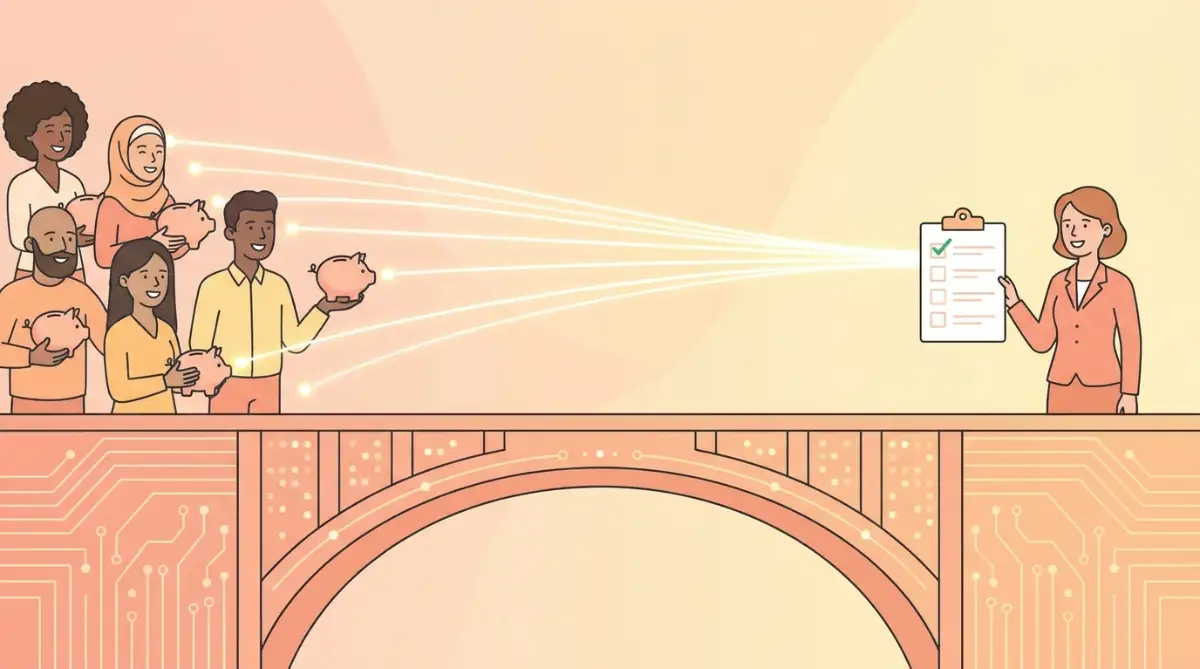
Peer-to-peer lending is a modern way of borrowing money online. Instead of borrowing from a bank, you borrow directly from other everyday people who want to invest their money.
Think of P2P lending like a digital matching service. The online platform connects people who have extra money with people who need a loan. This system removes the middleman, which often results in lower rates for you.
Building a Strong Borrower Profile
When you use a P2P platform, you must create a profile. Investors will look at this profile to decide if they want to fund your loan.
Be honest and clear about why you need the money. Explain your plan to pay it back step by step. When investors see a clear, honest plan, they are much more likely to fund your request.
The Power of Small Group Trust
P2P lending works because it spreads the risk. Instead of one person lending you $5,000, fifty different people might lend you $100 each.
This makes investors feel safer, and it makes it easier for you to get approved. It is a system built on mutual trust and modern technology, not on physical assets.
Step 3: Explore Reputation-Based and Modern Digital Borrowing
The financial market is evolving rapidly with the help of new technology. Today, many digital platforms use alternative data to measure your trust level. They do not just look at your traditional credit score.
These platforms look at how you pay your rent, your utility bills, and even your subscription services. If you pay your internet and phone bills on time every month, these systems recognize you as a safe borrower.
How Digital Finance Opens New Doors
This new way of looking at credit is a game changer for people without assets. It means your daily good habits can help you borrow money when you need it.
You can share your bank data securely with these modern platforms. They use smart software to read your cash flow and confirm that you can afford the loan payments.
Staying Safe in the Digital Space
Always make sure you are using well-known, regulated platforms. Look for apps and websites that have clear reviews and do not ask for hidden fees.
A safe lender will always tell you the exact interest rate and fees before you sign anything. Never sign a contract if you do not understand the terms completely.
Tips to Keep Your Borrowing Safe and Stress-Free
Borrowing money is an important step that requires careful planning. Even without assets, you must make sure you can manage the payments comfortably.
Here are some simple tips to help you stay on track and protect your financial health.
Create a Realistic Repayment Plan
Before you accept any loan, look closely at your monthly budget. Write down all your necessary expenses like rent, food, and utilities.
Subtract these costs from your monthly income to see how much money is left. Make sure your new loan payment fits easily into this leftover amount.
If the loan payment takes up all your leftover cash, it is too risky. Try to borrow a smaller amount or look for a longer payment term to lower the monthly cost.
Avoid the Temptation of Easy Cash
Some online apps make borrowing money look like a game. They offer instant cash with just a few clicks on your phone.
Always remember that borrowed money is not free money. Every dollar you borrow must be paid back with interest. Only borrow what you absolutely need for your emergency or specific plan.
Communicate with Your Lender
If you ever run into trouble paying your loan, do not ignore the problem. Contact your lender as soon as possible to explain your situation.
Most honest lenders will work with you to create a temporary payment plan. They prefer to help you pay it back slowly rather than have you default on the loan.
To Wrap Things Up
Borrowing money without physical assets is highly possible in today's financial world. By using credit unions, P2P networks, and reputation-based digital platforms, you can find the help you need.
Always focus on building your credit history and keeping a clean record of your monthly payments. With a careful plan and the right knowledge, you can manage your finances safely and build a stable future.
Advanced Borrowing Tactics and Long-Term Credit Growth
When you need to borrow money but do not have physical assets, you have to think outside the box. Traditional options might look limited, but modern financial tools offer powerful alternatives. We can look at smart, advanced methods that help you get approved without risking your home or car.
First, it helps to understand how modern lenders measure risk when there is no collateral on the table. You can research how financial institutions evaluate unsecured credit applications through trusted resources like the Consumer Financial Protection Bureau [1]. They look deeply at your repayment habits and structural debt ratios [1]. To get a better grasp of these basic terms, you can also read about how lenders define these terms on Investopedia [2].
If you want to view a wide range of current options in the financial market, you can compare different unsecured rates on Forbes Advisor [3]. These portals show how various online banks structure their rates for asset-free borrowers [3]. Now, let us check out the advanced steps to take your borrowing strategy to the next level.
Step 4: Using a Co-Signer to Unlock Better Loan Offers
If your credit score is not high enough to get an unsecured loan on your own, you can use a co-signer. A co-signer is a family member or close friend who agrees to take responsibility for the debt if you cannot pay it back.
This person must have a good credit history and a steady income to qualify. Their strong financial record acts as the safety net that the lender needs.
This method works well because it gives the bank the trust they are looking for. However, you must remember that this is a huge responsibility for your co-signer.
If you miss a payment, it will hurt their credit score just as much as yours. Always make sure you have a solid plan to pay the loan back on time.
If you are thinking about asking someone to co-sign for you, here is a quick look at the trade-offs:
If you are thinking about asking someone to co-sign for you, here is a quick look at the trade-offs:
Step 5: Applying for a Personal Line of Credit Instead of a Lump-Sum Loan
Many people do not know the difference between a traditional personal loan and a personal line of credit. A traditional loan gives you all the money at once, and you start paying interest on the whole amount.
A personal line of credit is different because it works more like a credit card. You get approved for a specific limit, but you only borrow what you need when you need it.
You only pay interest on the exact amount of money you draw from the line of credit. This is a very smart way to manage your expenses without taking on too much debt.
For example, if you get approved for $5,000 but only spend $1,000, you pay interest only on that $1,000. This saves you a lot of money in the long run.
Which One Fits Your Needs?
- Go with a Personal Loan if: You need a single, set amount of cash right now for a specific expense (like a $2,500 dental bill) and want predictable monthly payments.
- Go with a Line of Credit if: You have ongoing, unpredictable costs (like a home project or medical treatments) and want the flexibility to only borrow and pay interest on what you actually spend.
How to Maintain Financial Health and Keep Borrowing Doors Open
Borrowing money successfully without assets is not just about getting approved once. It is about building a strong financial reputation that lasts for years.
To do this, you must build good habits that show lenders you are a low-risk borrower. Your payment history is the most important factor in this process.
Always pay your utility bills, phone bills, and credit cards on time every single month. Set up automatic payments so you never forget a due date.
Another excellent way to protect your financial future is to establish a backup fund. Having cash reserves keeps you from needing high-interest loans when things go wrong. If you want to start this journey, you can read our step-by-step guide on how to build a bulletproof emergency fund fast.
You should also keep your credit utilization ratio as low as possible. This ratio is the amount of credit you are using compared to your total credit limit.
Keep this number below thirty percent to show lenders that you do not rely too heavily on debt. Over time, these habits will make you a highly attractive borrower to any bank.

Dangerous Mistakes to Avoid When Borrowing Without Assets
When you are looking for money without collateral, it is easy to make quick decisions out of panic. These choices can lead to severe financial damage that takes years to fix.
Let us look at the most common mistakes people make and how you can avoid them.
Mistake 1: Ignoring the Annual Percentage Rate (APR)
Many borrowers only look at the monthly payment amount when they take out a loan. They forget to check the Annual Percentage Rate, which shows the real cost of the loan including all fees.
Some lenders hide high fees in the contract, making the loan much more expensive than it looks. Always read the fine print and compare the APR of different lenders.
Mistake 2: Borrowing More Than You Can Comfortably Repay
It is tempting to accept the maximum amount a lender offers you. However, just because a bank says you can borrow a certain amount does not mean you should.
Always base your loan size on your actual budget, not on what the lender approves. Borrowing too much will strain your monthly budget and increase your stress levels.
Mistake 3: Applying to Too Many Lenders at the Same Time
When people need money quickly, they often submit applications to five or six different banks at once. They think this will increase their chances of getting approved.
In reality, every time you submit a formal application, it triggers a hard inquiry on your credit report. Too many hard inquiries in a short period will lower your credit score and make you look desperate to lenders. To avoid these traps, you can learn more about the ultimate guide to getting approved and the personal loan mistakes you must avoid.
Mistake 4: Overlooking Smart Debt Consolidation Options
If you already have multiple high-interest debts, borrowing more money might make things worse. Instead, you should look into combining your debts into one single payment with a lower rate.
This process can save you money and simplify your monthly budget. If you are struggling with multiple bills, check out our guide on how to consolidate multiple debts without hurting your credit score.
Mistake 5: Failing to Prepare for Missed Payments
Life is unpredictable, and sometimes you might struggle to make a payment on time. The worst thing you can do in this situation is to ignore your lender.
Missing payments without communicating will damage your credit score quickly and lead to collections. If you are facing this issue, you should read our article on what happens if you miss a personal loan EMI payment and how to fix it.
The Real Cost of These Borrowing Mistakes
If you do not avoid these pitfalls, the consequences can be highly damaging to your life. Your credit score will drop, making it almost impossible to rent an apartment, buy a car, or get a credit card.
Debt collection agencies might start calling you daily, which causes extreme mental stress. You might even face legal action, which can lead to wage garnishment.
By staying educated and making slow, careful decisions, you can protect yourself from these terrible outcomes. Safe borrowing is all about patience, research, and self-discipline.
Your Roadmap to Confident and Asset-Free Borrowing
Taking control of your finances without owning physical assets is a journey that requires time and knowledge. The modern financial space has opened up amazing opportunities for everyday people to borrow safely.
You do not need to own a home or a pile of gold to be respected by lenders. Your honesty, steady habits, and smart choices are the most valuable assets you have. is the best
By using the methods we discussed, you can handle emergencies and fund your goals without unnecessary risk. Take a deep breath and look at your options with a calm mind.
Start by checking your credit score today and looking for small ways to improve it. You have the power to build a bright and secure financial future starting right now.
Disclaimer
This article is for informational and educational purposes only. It does not constitute professional financial, investment, or legal advice. Borrowing money carries risks, and you should always consult with a certified financial advisor before making major financial decisions.
![7 Hidden Benefits of Dollar-Cost Averaging in a Crashing Market [Step-by-Step]](https://vimex24.com/storage/uploads/blogs/1786093381_7-hidden-benefits-of-dollar-cost-averaging-in-a-crashing-market-step-by-step.webp)
![7 Proven Secrets to Master Digital Asset Taxes [Step-by-Step]](https://vimex24.com/storage/uploads/blogs/1786079646_7-proven-secrets-to-master-digital-asset-taxes-step-by-step.webp)
![5 Hidden Signs of Market Volatility Every Investor Must Watch [Protect Your Cash]](https://vimex24.com/storage/uploads/blogs/1786022814_5-hidden-signs-of-market-volatility-every-investor-must-watch-protect-your-cash.webp)