
The Silent Nightmare of Holding Digital Wealth
Let's be honest—keeping track of your crypto transactions can feel like a total nightmare. One day you buy a few coins, and the next you are buried in confusing spreadsheets trying to figure out what you actually owe. I spent months worrying about tax audits before I finally figured out a simple way to clear up the mess. Here is exactly how you can clean up your records, protect your sanity, and keep your investments completely safe without losing your mind.
Regular people face this exact same terrifying reality every single day. We buy a few tokens, maybe swap some coins on a decentralized app, and suddenly we are expected to be professional accountants. The mental peace you used to enjoy gets completely destroyed by the constant worry of a surprise government audit. You lie awake at night wondering if that one simple wallet transfer from months ago is going to trigger a massive penalty.
Let me ask you a simple question. Have you ever tried to track down the exact purchase price of a token you bought months ago, only to realize the exchange no longer exists? This is the exact moment when most people throw their hands up in total defeat. It feels like playing a high-stakes game where nobody bothered to explain the rules.
But you do not have to live in this state of constant financial anxiety anymore. There are clear, logical, and highly effective ways to organize this chaos and take your life back. By understanding the core mechanics of how these assets are viewed by authorities, you can instantly strip away the fear. Let us break down the exact strategies you need to find absolute clarity.

📌 Quick Cheat Sheet: Keep Your Crypto Investments Safe & Clean
- Moving isn’t Selling: Simply transferring coins between your own wallets is non-taxable. Just keep a clear record of the move so your software doesn't get confused.
- Swap = Tax: Trading one crypto directly for another (like swapping BTC for ETH) is viewed as a sale. You must track the price change.
- Patience Wins: Holding your assets for over a year can slash your tax bill by nearly half compared to selling quickly.
- Automate the Boredom: Stop using messy spreadsheets. Connect your accounts to a trusted, read-only tracking app to let technology do the heavy lifting.
Untangling the Mess: Your Blueprint for Complete Financial Clarity
If you want to permanently remove the stress of tracking your digital investments, you need a predictable system. You cannot rely on random screenshots or messy notebooks to protect your wealth. We have to look at this process logically, separating the noise from the actual facts.
Identifying What Actually Counts as a Taxable Event
The biggest source of confusion for most people is figuring out which actions actually matter. Not every single button you click on a digital exchange requires a report to the authorities. You have to clearly distinguish between simply moving your money and actually triggering a recognizable event.
Buying a digital asset with standard paper money is generally completely safe and requires no immediate reporting. You are simply exchanging one form of currency for a digital holding. The real complications begin the moment you decide to dispose of that holding. Disposing of an asset means you are trading it for another token, selling it for cash, or using it to buy goods.
Whenever you trade one digital token directly for a completely different token, authorities view this as a sale. You are technically selling the first token at its current market value, and then immediately buying the second one. This imaginary "sale" means you have to calculate exactly how much profit or loss you made on the first token.
Let me give you a quick, real-life scenario of how this actually plays out:
- Step A: You bought 1 Ethereum (ETH) for $2,000.
- Step B: Months later, ETH goes up to $3,000. You swap it directly for Solana (SOL).
- The Reality: Even though you did not cash out to your bank account, you just made a $1,000 profit in the eyes of the law. You must report that $1,000 gain on your tax forms.
Myth vs. Reality: The Wallet Transfer Illusion
Let us clear up a massive misunderstanding that causes unnecessary panic for thousands of people.
The Myth: Moving your digital tokens from a central exchange into your own private hardware wallet creates a massive reporting obligation.
The Reality: Simply transferring your own assets between different wallets that you personally control is not a taxable event.
Think of it exactly like moving a hundred-dollar bill from your left pocket to your right pocket. You still own the exact same amount of value, and nothing was sold or traded. However, you absolutely must keep detailed records of these movements. If you lose track of the transfer, tax software might mistakenly assume you sold the asset, causing a false tax bill.

Mastering the Art of Strategic Record-Keeping
You can no longer rely on memory to manage a modern digital portfolio. Blockchain networks operate twenty-four hours a day, generating massive amounts of data that a human brain simply cannot retain. You need to leverage smart tools that automatically pull your historical data.
Most major exchanges allow you to download a complete history of your account in a simple CSV spreadsheet file. You should make it a strict habit to download these files at the end of every single month. Waiting until the end of the reporting season means you will likely forget why certain transactions even happened.
For those using decentralized networks, you will need to utilize specialized portfolio tracking software. These programs connect directly to your public addresses and read the data safely without ever touching your actual money.
Pro Tip: I once lost track of a specific decentralized exchange wallet because I forgot to write down the network I was using, costing me hours of painful searching. Now, I keep a simple, encrypted digital notepad where I list every single public address I interact with, saving me from endless frustration.
The Psychology of Holding: Why Patience Pays Off
One of the most effective strategies for reducing your financial burden is incredibly simple, yet highly ignored. The length of time you hold onto a digital asset drastically changes how you are treated by the authorities. This is where the concept of long-term holding becomes your best friend.
Here is a simple look at how much you can save just by holding onto your coins:
- The Quick Seller (Held for 11 months): You make $10,000 profit. Since it is short-term, you might pay your standard income tax rate (let's say 22%, which is $2,200).
- The Patient Investor (Held for 13 months): You make the same $10,000 profit. Since you held for over a year, you qualify for long-term rates (often 15%, meaning you pay only $1,500).
- My Advice: If you are close to the one-year mark, just wait a few extra weeks before selling. It can save you hundreds, if not thousands, of dollars.
Stop Overpaying! Watch This Breakdown:
Before we explore the math behind holding periods, you need to understand how the experts view these timelines. This incredible breakdown will completely shift your perspective on when to sell your assets.
[Insert YouTube Video Link Here]
When you buy a token and sell it very quickly, usually in less than twelve months, you are hit with short-term rates. These rates are often identical to the taxes you pay on your regular day job salary. This means a massive chunk of your hard-earned trading profits gets instantly wiped out by high percentages.
However, if you can simply wait and hold that asset for longer than twelve months, the magic happens. Your investment officially qualifies for long-term rates, which are significantly lower in almost every jurisdiction. The government actually rewards you financially for being a stable, patient investor rather than a chaotic day trader.
Navigating Airdrops, Staking, and Unexpected Income
The digital economy creates entirely new ways to earn money that confuse traditional reporting methods. You might wake up one morning to find free tokens dropped directly into your wallet. This is known as an airdrop, and unfortunately, it is rarely considered truly "free" by the authorities.
When you receive an airdrop, you are generally required to report the market value of those tokens on the exact day you received them. This is treated as ordinary income, just like a bonus from your boss. If you hold those free tokens and sell them later, you then have to calculate the separate profit or loss based on their changing value.
Staking your assets to secure a network works in a highly similar fashion. When you lock up your tokens and receive regular reward payouts, those rewards are usually viewed as immediate income. You must track the price of the token at the exact moment the reward hits your wallet.
The Essential "Taxable vs. Non-Taxable" Checklist
To make your life significantly easier, you should memorize how everyday actions are categorized. Keep this simple logic in your mind whenever you log into your accounts.
Deciphering the "First In, First Out" Rule
If you buy small amounts of the same digital asset every week, selling them becomes a mathematical puzzle. Imagine you have a basket filled with apples that you bought on different days for different prices. When you reach in to sell one apple, how do you know which price history belongs to the apple you grabbed?
The most common and widely accepted accounting method for this is called "First In, First Out" (FIFO). This rule assumes that the very first token you originally purchased is also the first token you are selling today.
Let us say you bought one token in January for fifty dollars, and another identical token in March for one hundred dollars. If you decide to sell one token in December, the FIFO method forces you to use the fifty-dollar January price as your starting point. This method is generally the safest route to take to avoid angering auditors, though it requires meticulous historical tracking.
Dealing with Network Gas Fees and Deductions
Every time you do anything on a decentralized network, you are forced to pay a transaction fee to the computer validators. These are commonly known as network gas fees, and they can sometimes become painfully expensive. The good news is that these fees are not just lost money; they can actually help your overall calculations.
When you purchase an asset, the gas fee you paid can usually be added to the total cost basis of that asset. This means your initial purchase price mathematically looks higher on paper. Later, when you finally sell that asset, this higher starting price reduces your total calculated profit.
Similarly, the gas fees you pay to sell an asset can be subtracted directly from your final sale proceeds. Tracking these tiny network fees is incredibly tedious, but it legally lowers your overall burden. This is exactly why using an automated tracking software that reads blockchain data is totally necessary for active users.
The Danger of Ignoring Hard Forks
Sometimes, the developers behind a digital asset disagree on the future of the project, causing the blockchain to split in two. This event is called a hard fork, and it usually results in you magically owning a duplicate token on the new network. Many people ignore these duplicate tokens because they never actually asked for them.
However, if you have control over those new tokens and can actively sell them, they hold immediate value. Authorities generally expect you to claim this new value as ordinary income at the time you gained control of it. Ignoring a hard fork is dangerous because public blockchain ledgers permanently prove that you received the funds.
Seeking Professional Guidance Safely
There is absolutely no shame in admitting that this entire process is completely overwhelming. In fact, reaching out for professional help is the smartest decision a serious investor can make. The key is finding an advisor who actually understands the mechanics of decentralized finance and digital wallets.
When interviewing a potential accountant, ask them specifically how they handle liquidity pool transactions or token bridging. If they seem confused by the terminology, firmly walk away and find someone else. You need an expert who can confidently navigate block explorers, not just someone who knows how to fill out a standard form.
By taking complete control of your historical data and understanding the basic rules, you eliminate the fear of the unknown. You can finally stop dreading the financial reporting season and start focusing purely on growing your wealth safely. The peace of mind that comes from a perfectly clean ledger is truly priceless.
Taking Complete Control: Expert Strategies for Digital Wealth Protection
Once you understand the basic rules of your digital portfolio, it is time to level up your entire strategy. Moving from a beginner mindset to an advanced planner is like upgrading from a simple bicycle to a high-speed sports car. You need much better safety gear and a clear understanding of the road ahead. The wealthiest investors do not just react to their tax bills at the end of the reporting season. They actively plan their financial moves throughout the entire twelve-month cycle to legally minimize their burden.
Understanding these advanced rules can sometimes feel completely overwhelming to a normal person. It is honestly very similar to memorizing highly complex topics before a major college examination. However, once you grasp the underlying logic, you will never look at your portfolio the same way again. Let us break down a few powerful strategies that can save you thousands of dollars over your lifetime.
The Magic of Strategic Loss Harvesting
One of the most effective tools in your financial toolkit is a strategy known as tax-loss harvesting. This strategy turns your worst investment mistakes into highly valuable deductions. Imagine you bought a specific token for one thousand dollars, but the market crashed, and it is now worth only two hundred dollars.
If you simply hold onto that losing token, you just have a sad number on your screen. But if you intentionally sell that token, you officially "realize" an eight-hundred-dollar loss on paper. You can then use this specific loss to completely cancel out eight hundred dollars of profit you made on a different successful trade.
This simple move legally erases a massive chunk of your reporting obligations. According to established accounting principles for digital properties, utilizing your capital losses correctly is completely encouraged by the authorities. You just need to make sure you sell the losing asset before the final day of your reporting calendar.
The "Silo Method" for Digital Wallets
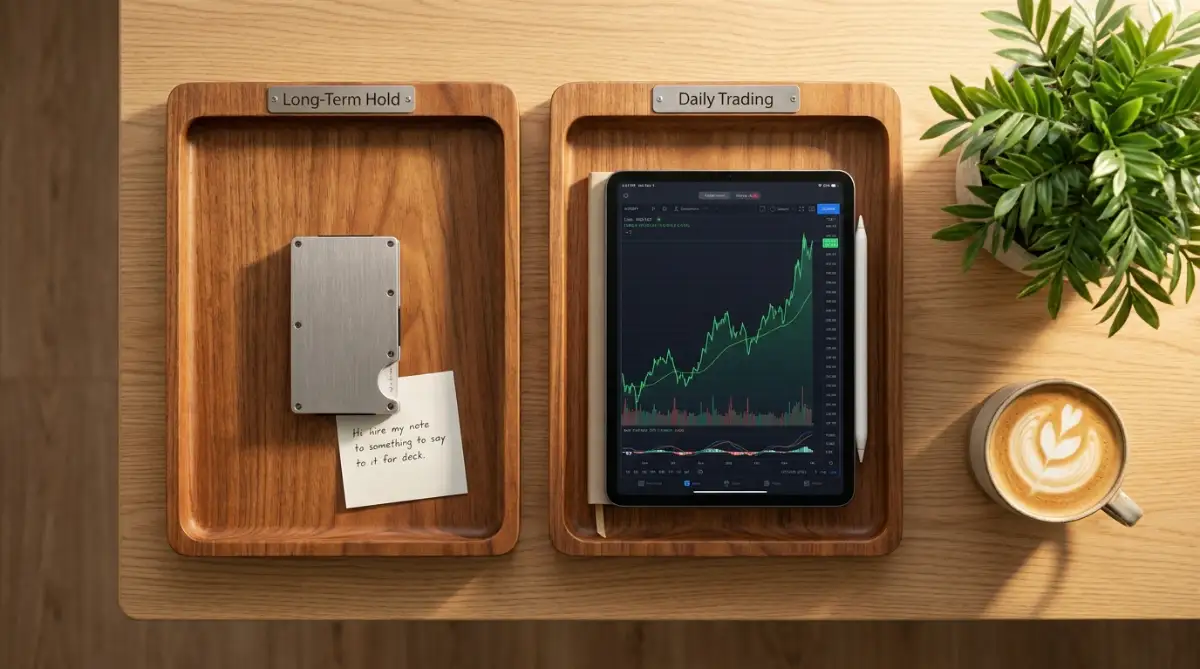
A major headache for everyday investors is mixing their long-term holdings with their daily trading funds. When you throw everything into one single digital address, the accounting math becomes incredibly messy. Remember the "First In, First Out" rule we discussed earlier?
If you mix old coins and new coins in one place, you lose the ability to choose which specific coins you are selling. This is why smart investors use the "Silo Method" to organize their digital wealth. You should keep your long-term investments completely isolated in a secure, offline hardware wallet.
You then use a completely different, separated exchange account strictly for your short-term daily trading. This physical separation allows you to clearly prove to an auditor exactly which batch of assets you decided to sell. Organizing your financial documentation properly is the absolute best defense against future headaches.
Leveraging Charitable Donations for Maximum Benefit
What happens if you bought an asset years ago for pennies, and it is now worth a small fortune? If you sell it directly for cash, you will immediately trigger a massive reporting event on all that profit. However, there is a brilliant, legal workaround that benefits both you and the world around you.
Many registered charitable organizations now accept direct transfers of digital assets. When you donate a highly appreciated token directly to a charity, you generally bypass the selling event completely. You do not pay any profit taxes, and you usually get to deduct the current market value of the donation from your ordinary income.
This is a phenomenal strategy if you are already planning to support a good cause. You just need to ensure the charity is legally recognized by the government before sending any funds. Planning these donations requires careful thought, much like writing a clear statement of intent for your future goals.
Automating Your API Connections Safely
Manually downloading spreadsheets every single month is a great start, but it eventually becomes extremely tedious. As your portfolio grows, you will likely interact with dozens of different decentralized applications and networks. The most efficient way to track this massive amount of data is by using automated software connections.
Most modern exchanges offer a feature called a "Read-Only API" key. This is essentially a special digital password that allows a tax software to view your transaction history. The beauty of a read-only key is that the software can never actually touch, move, or withdraw your actual money.
You simply plug these keys into a reputable portfolio tracker, and it automatically builds your financial history in real-time. Just remember to occasionally check on these connections to ensure they are still syncing correctly. Staring at broken data all night can easily push you into a state of deep exhaustion that ruins your sleep.

The Hidden Traps That Destroy Financial Peace
Even with the best intentions, ordinary people constantly fall into dangerous traps when managing their digital portfolios. These mistakes usually happen because people apply traditional banking logic to the completely different world of blockchain technology. The consequences of these simple errors can result in frozen accounts, massive penalties, or severe mental stress. Let us explore these dangerous pitfalls so you can actively avoid them in your own life.
The "Crypto-to-Crypto" Blind Spot
This is arguably the most common and financially devastating mistake a new investor can make. Many people honestly believe that they only owe the government money when they finally transfer cash back into their physical bank account. They will spend months trading Bitcoin for smaller tokens, bouncing between different assets, and generating massive profits on paper.
They think that as long as the money stays in the digital realm, it is invisible and safe. This is completely false and highly dangerous. Every single time you trade one digital asset directly for another, the authorities view it as a perfectly taxable sale.
If you make one hundred trades in a single day, you just created one hundred individual events that must be calculated and reported. Failing to report these intermediary trades is a massive red flag for automated auditing systems. You must track every single swap, no matter how small or insignificant it feels at the time.
Losing the Original "Cost Basis"
Your cost basis is simply the original amount of money you spent to acquire a specific asset, including any transaction fees. Knowing this exact number is the only way to accurately calculate your profit or loss when you eventually sell. Unfortunately, many investors completely lose track of this historical data.
They might buy tokens on a small, obscure exchange that eventually goes bankrupt and shuts down its servers. If you did not download your records before the shutdown, your purchase history is gone forever. When you eventually sell those tokens, the government might assume your original cost basis was zero dollars.
This means they will tax you on the entire total value of the sale, rather than just the profit you actually made. You must always maintain your own personal, offline backups of every single purchase. Relying entirely on a third-party website to store your critical financial history is a recipe for absolute disaster.
The Illusion of Total Network Anonymity
A very dangerous myth circulating on social media is the idea that digital networks are entirely anonymous. People believe that because their name is not attached to their digital wallet address, the government can never find them. This false sense of security leads individuals to intentionally hide their wealth, which is illegal.
The reality is that public blockchain ledgers are the most transparent financial systems ever created by mankind. Every single transaction is permanently recorded and visible to anyone with an internet connection. Government agencies actively employ advanced forensic blockchain analysis tools to trace the flow of money across the globe.
The moment you eventually transfer your funds to a centralized exchange to cash out, your identity is instantly linked to your entire wallet history. Do not try to play hide and seek with the authorities using a public ledger. Honesty and transparency are your best weapons for maintaining a peaceful, stress-free life.
Procrastinating Until the Final Deadline
Managing digital assets requires a clear, focused mind and plenty of physical energy. If you wait until the week before your reporting deadline to start organizing your files, you are going to panic. The sheer volume of missing data, broken API links, and confusing decentralized trades will completely overwhelm you.
When people panic, they make terrible estimates and file wildly inaccurate reports just to get the job done. This sloppy behavior practically guarantees a future audit, extending your anxiety for several more years. You should actually treat your health and focus as part of your financial strategy.
Take frequent breaks, eat well, and remember how much daily hydration you really need when you are doing intense screen work. You should be spending at least one hour every single month updating your portfolio trackers. Small, consistent efforts throughout the entire year completely eliminate the dreaded deadline panic.
Your Roadmap to Permanent Financial Clarity
We have covered an immense amount of ground today, but you are now equipped with the exact knowledge you need to succeed. You no longer have to fear the confusing world of digital asset reporting. By organizing your wallets, understanding taxable events, and utilizing smart loss-harvesting strategies, you hold all the power.
You can finally stop worrying about surprise letters in the mail and start enjoying the wealth you are building. To keep your momentum going, I want you to create a simple action plan for tomorrow morning. First, download all your historical transaction files from every exchange you have ever used.
Second, set up a secure digital folder on your computer strictly dedicated to your financial history. Finally, explore a reputable software tool that can help you read your public wallet addresses automatically. Taking these three small steps today will completely change your financial trajectory for the better.
I remember how utterly terrified I felt when I first tried to calculate my own digital trades years ago. But taking that first step to organize my messy data instantly gave me back my peace of mind, and I know it will do the exact same for you. You have absolutely got this, so take a deep breath and start building your financial clarity today.
Common Questions About Reporting Digital Assets
Do I have to report my digital portfolio if I didn't sell anything?
No, simply holding onto your digital assets does not create a reporting obligation. If you just bought tokens with regular money and kept them in a secure wallet, there is nothing to calculate yet. The reporting requirements only trigger when you sell, trade, or earn new income.
How do authorities track decentralized wallet activities?
Government agencies use highly sophisticated data analysis techniques and private contractors to monitor public ledgers. Because the blockchain is an open book, they simply follow the path of the tokens back to an exchange where your real identity is registered. It is incredibly easy for them to connect your public address to your real-world identity.
Can I offset my massive portfolio losses against my regular income?
Yes, in many jurisdictions, you can definitely use a portion of your digital asset losses to lower the taxes on your regular day job salary. However, there is usually a strict annual limit on exactly how much you can deduct from your ordinary income. Any remaining leftover losses can generally be rolled forward into the next reporting year.
What happens if I lost access to my hardware wallet completely?
If you permanently lose your password or physical device, those assets are generally considered completely gone. You can often claim this as a total casualty loss on your financial reports, depending on your local regulations. You must have strong proof of your original purchase and proof that the funds have never moved since you lost access.
Does transferring tokens between my own accounts trigger a reporting event?
Absolutely not. Moving your own digital property from an exchange into your own private hardware device is perfectly safe and non-taxable. You just need to keep a clear record of the transfer so your tracking software does not accidentally mark it as a sudden sale.
Disclaimer: The information provided in this blog post is strictly for educational and informational purposes only and does not constitute official financial, legal, or tax advice. Laws regarding digital assets vary heavily by jurisdiction and are subject to frequent changes. Always consult with a certified public accountant or qualified legal professional before making any major financial decisions.
![7 Hidden Benefits of Dollar-Cost Averaging in a Crashing Market [Step-by-Step]](https://vimex24.com/storage/uploads/blogs/1786093381_7-hidden-benefits-of-dollar-cost-averaging-in-a-crashing-market-step-by-step.webp)
![5 Hidden Signs of Market Volatility Every Investor Must Watch [Protect Your Cash]](https://vimex24.com/storage/uploads/blogs/1786022814_5-hidden-signs-of-market-volatility-every-investor-must-watch-protect-your-cash.webp)
![5 Hidden Truths About Decentralized Finance [The Ultimate Beginner Guide]](https://vimex24.com/storage/uploads/blogs/1785857471_5-hidden-truths-about-decentralized-finance-the-ultimate-beginner-guide.webp)