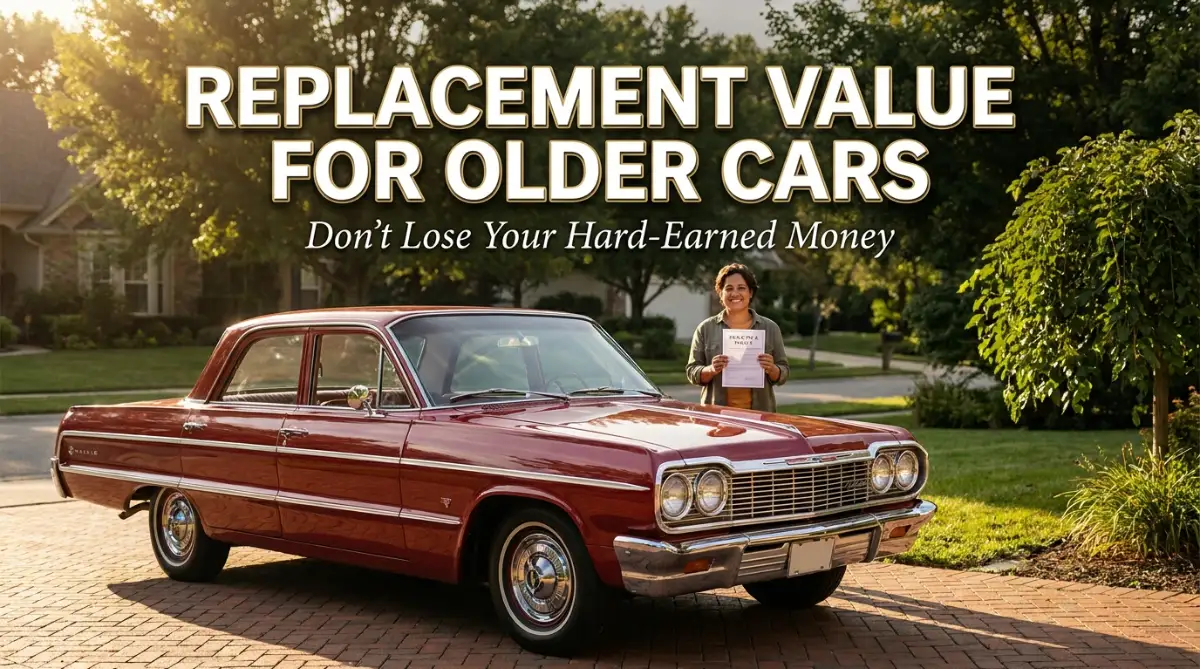
Waking Up to a Totaled Car and a Denied Reality
So, you crashed your older car, and the insurance company just offered you a payout that wouldn't even buy a decent bicycle. Trust me, I know how fast that sinks your heart. You paid your bills on time for years, but now that you actually need them, they treat your reliable daily driver like scrap metal. Let’s fix that and force them to pay you what your car is actually worth.
It barely covered the cost of a decent set of new tires, let alone a whole working vehicle. I felt completely cheated, angry, and honestly, a bit helpless against this massive corporation. I spent weeks calling adjusters, arguing about the real condition of my car, and losing sleep over how I would commute to work.
The hardest part was realizing that the company did not care about the thousands of dollars I spent on a new transmission just months before the crash. To them, my reliable daily driver was just a basic line item on a spreadsheet, subject to aggressive depreciation. I had to learn the hard way that standard policies are heavily stacked against anyone driving an aging ride.
Quick Action Plan: What You Need to Know
- Never accept the very first offer the insurance adjuster gives you.
- "Actual Cash Value" means they will aggressively subtract money for your car's age.
- Keep digital photos of all your mechanic receipts to prove your car was in top shape.
- You have the right to hire your own independent appraiser if their offer is too low.
Decoding the True Worth of Your Aging Ride
Many drivers wrongly assume that their policy will pay enough to easily buy the exact same model they just lost. To protect your wallet, we need to completely break down how insurance companies view the worth of your aging ride.
There is a massive difference between what your car is worth to you and what it is worth on paper. Let's look at exactly how to bridge that gap and secure a fair payout.
The Great Divide: Actual Cash Value vs. Replacement Cost
The biggest shock you will face during a claim comes down to one specific industry term. Almost all standard auto policies default to something called Actual Cash Value (ACV).
To put it simply, ACV is the price your car would sell for today, minus years of heavy depreciation. It is not the amount of money you need to go out and buy a replacement vehicle right now.
Replacement cost, on the other hand, covers the exact amount required to purchase a vehicle of the same make, model, and condition in today's open market. Sadly, getting replacement cost coverage for an older daily driver is extremely rare on standard policies.
Quick Reality Check: ACV vs. Replacement
- The Myth: Your insurance will hand you a check big enough to buy the exact same car today.
- The Fact: They hand you the "Actual Cash Value" (ACV). This means they look at your car's original price and subtract years of heavy depreciation.
- The Fix: You have to prove your car depreciated slower than average by showing them your pristine maintenance records.
A Quick Breakdown of Policy Types
To make things easy to understand, here is a simple comparison of how different policies handle your aging vehicle.
As you can see, standard policies will always look for the lowest possible number to pay you. If you want true peace of mind, you must be proactive before an accident happens.
Myth vs. Reality: The "Excellent Condition" Trap
The Myth: If you keep your older car in absolute showroom condition, the insurance company will automatically pay you top dollar if it gets totaled.
The Reality: The claims software does not care how often you washed it or how much you loved it. Unless you have documented proof of major mechanical upgrades, they will assign it an "average" condition rating to save money.
Building an Unbeatable Paper Trail
If you want to fight low payouts, your best weapon is hard evidence. You cannot just tell an adjuster that your older car was in great shape; you have to prove it with undeniable facts.
Start keeping a dedicated folder in your house for every single maintenance receipt, no matter how small. If you replace the alternator, keep the receipt. If you buy premium all-weather tires, scan the invoice into your phone immediately.

When the adjuster offers you a shockingly low payout, you can present this massive paper trail to demand a higher valuation. They are legally required to consider these recent upgrades, but only if you provide the physical proof.
My personal strategy is to take fresh photos of my car's interior and exterior every six months. I simply upload them to a free cloud drive with the current date, ensuring I have visual proof of its exact condition before any potential accident.
Watch This Expert Breakdown to Secure Your Claim:
If you are feeling overwhelmed by all these insurance terms, this quick video explains exactly how to document your vehicle's value so you never get cheated on a claim.
Mastering the Art of Appraisal
Sometimes, your pile of receipts is just not enough to change an adjuster's mind. This is exactly when you need to bring in an outside expert to level the playing field.
Almost every standard auto policy has an "Appraisal Clause" hidden deep in the fine print. This clause gives you the legal right to hire an independent appraiser if you disagree with the company's lowball offer.
An independent appraiser does not work for the insurance giant; they work strictly for you. They will thoroughly inspect your aging vehicle, look at the local market data, and write up a legally binding report of its true worth.
Yes, hiring an appraiser will cost you a few hundred dollars out of pocket. However, if their report forces the insurance company to increase your payout by thousands of dollars, it is an incredibly smart investment.
Fighting Back with Local Market Data
Adjusters often use national databases to determine the value of your car, which can be highly inaccurate. The price of a reliable older sedan in a snowy region might be much higher than in a warm, dry area.
You need to become your own private investigator and search the local market. Spend an afternoon looking at local dealership websites, used car lots, and private seller listings in your exact zip code.
Find at least three to five vehicles that match your older car's year, make, and mileage. Take clear screenshots of these listings and send them directly to your adjuster to prove that their offer cannot buy a replacement in your area.
They will try to argue that asking prices are not selling prices, but this strategy forces them to justify their low numbers. It shows them that you are an educated consumer who refuses to be bullied into a cheap settlement.
Knowing When to Walk Away or Negotiate
Negotiating with a massive financial institution can feel incredibly intimidating. They have teams of lawyers and specific scripts designed to make you give up and accept the first check they mail you.
You must remain calm, polite, and stubbornly persistent during every phone call. Never accept the very first offer they present, because it is universally designed to be the lowest possible amount.
Ask the adjuster to send you the exact valuation report they used to price your older vehicle. Read through it carefully, and look for missing features like leather seats, premium audio systems, or recent mechanical repairs they failed to include.
If they absolutely refuse to increase the payout, you can escalate the claim to a manager or file a complaint with your state's department of insurance. Most companies will suddenly become much more flexible the moment a state regulator gets involved.
The Real Cost of Keeping Your Totaled Car
Many people are so attached to their aging vehicles that they want to keep them even after a total loss. This is known as retaining the salvage title, and it comes with its own set of hidden financial traps.
If you decide to keep the wrecked car, the insurance company will deduct the salvage value from your final payout check. You will be left with significantly less money and a vehicle that is now legally very difficult to drive on public roads.
Getting a rebuilt title requires passing strict state safety inspections, which can be a massive headache. You also have to remember that most major insurance providers will refuse to offer anything more than basic liability coverage on a rebuilt vehicle.
Unless you are a skilled mechanic with a home garage full of tools, keeping a totaled older car is rarely a smart financial move. It is usually much better to take the full payout, fight for a higher appraisal, and move on to a safer, working vehicle.
Why Liability-Only Coverage Might Be a Trap
As vehicles age, many drivers drop their collision and comprehensive coverage to save a little money on their monthly bills. They assume the car is so old that paying for full protection is just a waste of cash.
While this might seem smart at first, it completely removes your own insurance company from the fight if someone else hits you. You will have to deal directly with the at-fault driver's shady, low-budget insurance provider completely on your own.
Having full coverage on an older car means your own company will handle the fight for you and pay you out directly. They will then use their massive legal resources to recover the money from the other driver's company later.
I always tell my friends to look at the exact cost difference before dropping full coverage. If keeping comprehensive protection only costs an extra ten dollars a month, the legal protection and peace of mind are absolutely worth keeping.
Expanding Your Search for the Right Policy
If you drive a genuinely well-maintained older vehicle, you should not settle for standard, generic coverage. It is time to start shopping around for providers that actually respect the true value of aging cars.
Look for specialty insurance companies that offer agreed value policies, even for non-classic daily drivers. These policies require you to submit photos and an appraisal upfront, but they guarantee a specific payout number if the car is destroyed.
You can also look into policies that offer specific riders for custom parts or expensive aftermarket equipment. If you put a heavy-duty suspension on your older truck, a custom parts rider ensures you get paid back for that exact upgrade.
Do not be afraid to switch providers if your current company refuses to offer fair terms for your specific vehicle. Loyalty means nothing to these massive corporations, so you should only give your money to a company that guarantees the exact protection you need.
Insider Strategies to Maximize Your Payout
When you are fighting a massive corporation over the true worth of your aging vehicle, you cannot just rely on good luck. You need a specific game plan to force their hand and demand a fair settlement.
Most adjusters count on the fact that average drivers do not understand their legal rights during a dispute. By utilizing a few highly effective strategies, you can easily turn the tables and take control of the negotiation.
The Power of the Independent Umpire System
We already talked about hiring an independent appraiser to evaluate your wrecked car. But what happens if your appraiser and the insurance company's appraiser completely disagree on the final number?
This is where a little-known process called the "umpire system" comes into play. According to most standard policies, if the two appraisers cannot reach an agreement, they must mutually select a neutral third party known as an umpire.
The umpire reviews the reports from both sides, looks at the hard evidence, and makes a final, binding decision. This process is deeply rooted in consumer protection laws, and you can read more about how legal arbitration and appraisal clauses work to protect average citizens.
Insurance companies absolutely hate going to an umpire because it takes the control completely out of their hands. In many cases, simply threatening to invoke the umpire clause is enough to make an adjuster magically increase their offer.
Triggering a State Regulatory Investigation
If your provider is acting in bad faith, delaying your claim, or offering a truly insulting payout, you have a powerful government ally. Every single state has a Department of Insurance designed specifically to regulate these massive corporations.
When you file an official, written complaint with your state commissioner, the insurance company is legally required to respond within a strict timeline. They can no longer ignore your phone calls or send you generic automated emails.
You can find the exact contact information for your local regulator through the National Association of Insurance Commissioners. The moment a state investigator contacts the claims department, your file gets bumped up to a senior manager.
These managers want to avoid state fines at all costs, so they are suddenly much more willing to negotiate a fair actual cash value. It costs you absolutely nothing to file this complaint, and it is one of the strongest weapons in your arsenal.
Outsmarting Automated Valuation Software
Today, almost no human actually sits down and calculates what your old car is worth by hand. Instead, massive financial institutions feed your vehicle's data into third-party software programs to spit out a lowball number.
These programs intentionally search for the cheapest possible comparable vehicles in your area, often pulling data from shady buy-here-pay-here lots. It is fascinating and slightly terrifying how machines are trained to minimize human payouts, much like how AI actually reads your true emotions to analyze consumer behavior.
To beat the software, you have to find errors in the highly detailed valuation report they generate. Ask your adjuster for the full, unedited market valuation packet, which is usually around twenty pages long.
Go through it with a highlighter and look for missing trim levels, incorrect mileage, or missing optional packages like towing hitches or sunroofs. Finding just two or three errors in their automated data can instantly increase your settlement by hundreds of dollars.
A Real-Life Example From My Own Experience:
Last year, a buddy of mine got a terrible offer for his totaled 2012 Honda Civic. The insurance software listed his car as having "basic cloth seats" and completely missed his factory sunroof. By emailing them a quick photo of his leather interior and roof glass, they had to rerun the software. That single email bumped his final check up by $850. Always double-check their math!
Protecting Your Evidence from Digital Disasters
Earlier, I mentioned how important it is to keep a massive paper trail of every oil change, tire rotation, and mechanical repair. However, keeping physical receipts in a glovebox is a terrible idea if the car gets crushed in an accident or heavily flooded.
You need to scan every single document and store it securely in a cloud drive the moment you pay the mechanic. Treat these receipts like sensitive financial documents, because they literally represent cash in your pocket during a total loss claim.
If you travel often or handle your personal business on the go, make sure your digital storage is highly secure. Implementing solid cybersecurity protocols for remote workers ensures your private financial evidence is never lost, hacked, or accidentally deleted.
Pro Tip: I learned this the hard way when my old laptop crashed, taking five years of car maintenance records with it. Now, I simply snap a photo of the receipt on my phone before I even leave the mechanic's parking lot, and it automatically syncs to a secure backup folder.
Disastrous Traps That Will Ruin Your Settlement
Even if you have the best evidence in the world, one wrong move during the negotiation phase can destroy your chances of getting a fair payout. The claims process is an emotional rollercoaster, and companies rely on your exhaustion to trick you into making mistakes.
Let's explore the most common psychological and financial traps that drivers fall into when trying to replace an aging vehicle. Avoiding these pitfalls is the only way to protect your hard-earned money.
The Friday Afternoon Desperation Trap
Adjusters love to call on a Friday afternoon when you are tired, stressed, and just want to enjoy your weekend. They will offer you a lowball settlement and casually mention that they are cutting off your rental car coverage in 48 hours.

This creates a massive sense of artificial urgency, making you panic about how you will get to work on Monday morning. Out of pure desperation, you verbally agree to their terrible offer just to get the process over with.
Once you accept that low check, you might find yourself desperately borrowing money to buy a replacement vehicle. Relying on high-interest credit cards to cover the gap is extremely dangerous, as the hidden costs of revolving credit lines can quickly destroy your personal wealth.
You must hold your ground, refuse the first offer, and demand an extension on your rental car if they are purposely delaying a fair negotiation.
Leaving Tax and Title Money on the Table
One of the biggest secrets the insurance industry keeps from you involves the hidden costs of buying a new ride. When your older car is totaled, the settlement check should not just cover the raw metal and tires.
In most states, the provider is legally obligated to pay for the sales tax, title transfer fees, and registration costs of a replacement vehicle. If the local sales tax is eight percent, and your car is valued at ten thousand dollars, that is an extra eight hundred dollars they owe you!
Adjusters will almost never offer this extra money voluntarily unless you specifically demand it in writing. Always check your state's specific insurance regulations to see exactly what hidden fees you are entitled to collect. For a deeper understanding of fair market valuation, you can study the consumer valuation methods used by Kelley Blue Book, which outline how taxes and fees apply to real-world pricing.
The Liability-Only Nightmare Scenario
As we discussed earlier, dropping full coverage on an older car is a massive gamble. But the danger becomes even worse when you are involved in a hit-and-run, or the person who hits you has no active policy.
If you only carry basic liability, your own company will refuse to help you recover a single dime for your totaled vehicle. You will be stuck paying out of pocket for a completely destroyed car that was not even your fault.
This is exactly why carrying specific protection against uninsured drivers is incredibly important. Learning how uninsured motorist coverage saves you can mean the difference between getting a brand-new check or walking away with absolutely nothing.
Never assume your car is "too old" to justify this specific type of safety net. The few extra dollars a month is worth the total peace of mind.
The Teenage Driver Transfer Mistake
Many parents take their well-maintained older cars and pass them down to their teenagers when they get a license. Because the car is old, parents often forget to update the insurance policy to reflect the true value of the vehicle in the hands of a high-risk driver.
If your teen gets into an accident and totals that aging family sedan, the provider will fight the payout aggressively if the policy was not structured correctly. They will claim the vehicle was subjected to extreme wear and tear by an inexperienced driver.
If you plan to hand over the keys to an older vehicle, you must do it the right way. Understanding the secrets to adding a teen driver to your policy ensures the car's replacement value is fully protected despite the increased risk.
Your Action Plan for Tomorrow Morning
Dealing with a totaled older vehicle is never a fun experience, but you are no longer in the dark. You now have the exact blueprint to fight back against lowball offers, unfair automated software, and aggressive adjusters.
The most important thing you can do right now is gather your paperwork and take a proactive stance. Do not wait for an accident to happen before you start proving how much your daily driver is truly worth.
Create your digital folder tonight, snap some fresh photos of your interior, and upload your most recent mechanic receipts. If you are currently fighting a claim, write a polite but firm email to your adjuster demanding the full valuation report and mentioning your intent to hire an appraiser.
I know exactly how overwhelming and frustrating this battle can feel, especially when you are just trying to get back on your feet. But remember, every single dollar you fight for is a dollar that belongs in your pocket, so stand tall, use your evidence, and demand the fair treatment you absolutely deserve!
Frequently Asked Questions About Totaled Car Payouts
Can I actually negotiate the actual cash value of my car?
Yes, absolutely! The first number an adjuster gives you is just an initial offer, not a final legal decision. By providing local dealership prices, maintenance records, and photos, you can successfully force them to increase that number.
Does my insurance cover a rental car if my old car is totaled?
This depends entirely on your specific policy, but you usually need to have "rental reimbursement coverage" added before the crash. If you have it, they will pay for a rental car, but usually only for a few days after they make their initial settlement offer.
How do adjusters calculate such heavy depreciation on older vehicles?
They use massive third-party software databases that look at the exact age, mileage, and average local wear-and-tear of similar models. Sadly, they assume your car is in "average" or "poor" condition unless you provide hard evidence proving it was maintained perfectly.
What happens if I owe more on my loan than the totaled car is actually worth?
If the payout is lower than your loan balance, you are personally responsible for paying the difference to the bank out of pocket. The only way to avoid this specific nightmare is if you purchased Gap Insurance when you originally financed the vehicle.
Can I buy my wrecked car back from the insurance company?
Yes, this is called retaining the salvage vehicle. The company will simply deduct the scrap value of the car from your final check, and you keep the broken vehicle, but it will be very hard to legally drive or insure again.
Disclaimer: This article is for informational and educational purposes only and does not constitute official legal, financial, or certified insurance advice. Policy terms, state laws, and appraisal regulations vary heavily by location. Always consult with a licensed insurance agent or legal professional in your specific state before making any final decisions regarding claims, settlements, or coverage changes.
![The Ultimate Guide to Surviving Estate Settlements [Step-by-Step]](https://vimex24.com/storage/uploads/blogs/1789115850_the-ultimate-guide-to-surviving-estate-settlements-step-by-step.webp)
![7 Hidden Secrets to Navigating Complex Estate Payouts [Avoid Family Drama]](https://vimex24.com/storage/uploads/blogs/1789114950_7-hidden-secrets-to-navigating-complex-estate-payouts-avoid-family-drama.webp)