
The Devastating Shock of a Rejected Claim
Let's be brutally honest. You pay your premiums every single month, thinking your family is 100% safe. But then, a thick envelope arrives in the mail with two terrifying words: "Claim Denied." It happens way more often than you think, and usually over a silly paperwork mistake. I want to show you exactly how these massive companies find loopholes to reject your payout, and how you can shut them down before they even try.
My uncle had paid his premiums religiously for over a decade, believing he was leaving behind a secure safety net for his two young daughters. But in the blink of an eye, that promised financial security vanished into thin air over a minor paperwork discrepancy. I felt a crushing mix of anger, confusion, and deep sorrow for my cousins who were now left with nothing.
That painful experience opened my eyes to a terrifying reality that millions of average people face every single day. We buy these policies to buy peace of mind. We trust that if the absolute worst happens, our loved ones will have the money they need to pay for funerals, clear outstanding debts, and keep a roof over their heads.
Yet, countless families are completely blindsided when they file a claim during their most vulnerable moments, only to be met with endless investigations and eventual rejection. It completely destroys their mental peace and financial stability. Everyday people are forced to set up crowdfunding campaigns or take out high-interest loans just to survive after a breadwinner passes away.
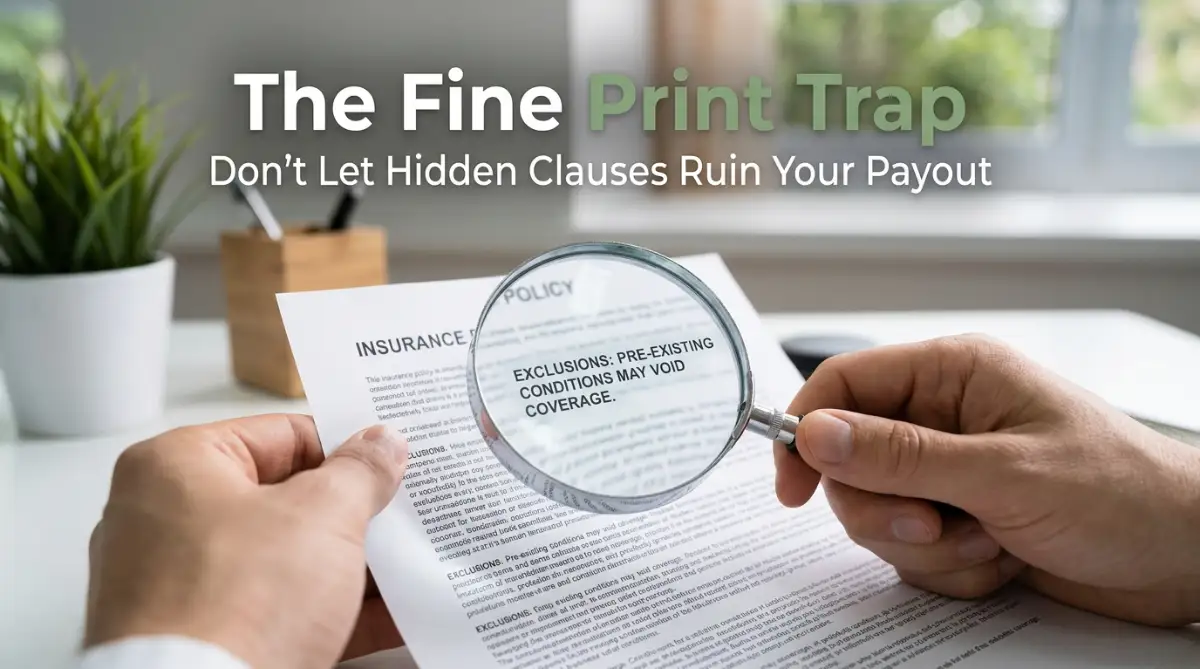
The Bottom Line: Don't Let Them Win
- Honesty is non-negotiable: Even a tiny white lie on your application gives them an excuse to say no.
- Beware the two-year window: The "contestability period" is their favorite time to dig into your medical past.
- Never trust the mail: Set your monthly payments to auto-pay. A missed 30-day window means game over.
- Update your paperwork: If you had a baby, bought a house, or got a divorce, call your agent today to update your beneficiaries.
The Silent Triggers That Sabotage Your Financial Safety Net
The truth is, insurance companies are businesses first, and they have entire teams dedicated to scrutinizing every single detail of a claim. They look for any legitimate reason to withhold a payout. If you do not understand the rules of their game, you and your family are at a massive disadvantage.
Let us break down the exact reasons why these rejections happen and how you can safeguard your policy right now. We need to look at the practical, undeniable facts behind these corporate decisions.
The Big Insurance Myth vs. The Ugly Reality
- What you probably think: "I filled out the form, paid my bill, and now I am totally covered."
- The harsh reality: "The first two years are a testing phase. Make one tiny mistake about your health history, and they have the legal right to cancel everything."
- Do not let a forgotten doctor's visit from five years ago ruin your family's future.
The Application Trap: Material Misrepresentation
When you first apply for a policy, you are asked a mountain of questions about your medical history, your lifestyle, and your habits. This initial application is the foundation of your entire contract. If there is a single inaccuracy on this form, it can trigger what the industry calls "material misrepresentation."
Many people make innocent mistakes during this process. You might forget to mention a minor surgery you had a decade ago, or you might underestimate your weight by a few pounds. Sometimes, people intentionally hide a smoking habit to secure a cheaper monthly rate.
If the insurance company discovers these discrepancies after you pass away, they have the legal right to void the entire policy. They will argue that if they had known the absolute truth, they would have charged you more or denied your application entirely. This means your family gets nothing but a refund of the premiums paid.

The Invisible Danger of the Contestability Period
Most people assume that once they sign the papers and pay their first bill, they are fully protected. This is a very dangerous assumption. Almost every standard policy includes a strict window of time known as the contestability period.
This period usually lasts for the first two years after the policy goes into effect. If the policyholder passes away within this specific timeframe, the insurance company will automatically launch a massive, highly detailed investigation. They will pull your complete medical records, interview your doctors, and review your pharmacy history.
Pro Tip: I used to think that just paying the monthly bill was enough to keep my family safe from investigations. My biggest realization was that you must actively request a copy of your own medical records to ensure your doctor's notes match exactly what you told the insurance company.
If they find any inconsistency during this two-year window, they will deny the payout. It does not matter if the hidden medical issue had absolutely nothing to do with the actual cause of death. For example, if you hid a history of high cholesterol, but you tragically pass away in a car accident within the first two years, they can still deny the claim based on the initial lie.
How to Beat the Contestability Trap
- Always over-disclose: If you are unsure whether an illness is important, mention it anyway.
- Double-check agent work: Sometimes insurance agents rush through the application to secure their commission. Always read the final copy before signing.
- Keep your own records: Maintain a personal file of your medical history so you can answer application questions accurately.
The Catastrophe of Missed Payments and Lapsed Policies
Life gets busy, and financial emergencies happen to everyone. You might switch bank accounts, get a new credit card, or simply forget to mail a check. Unfortunately, missing a premium payment is one of the most common reasons families lose their benefits.
When you stop paying, your policy will eventually lapse. Once a policy lapses, the contract is legally broken, and the insurance company owes you absolutely nothing. However, you do have a small safety net built into the system.
Most companies offer a standard 30-day grace period. If you miss your due date, you have about a month to catch up on the payment without losing your coverage. If the policyholder passes away during this grace period, the company will still pay the death benefit, but they will deduct the owed premium from the final check.
The nightmare begins when that grace period expires. If a tragedy strikes on day 32, the family will face a swift and completely legal denial.
My 3-Minute Grace Period Fix
Instead of worrying about missed mail or a forgotten check, do this right now:
- Call your bank and set up an automatic draft.
- Link a backup credit card to your insurance account.
- Ask your agent to add a "Waiver of Premium" rider in case you ever get disabled.
- It takes exactly three minutes, but it guarantees your policy never drops when you need it most.
Watch This Helpful Breakdown on Policy Lapses
Understanding how grace periods work can literally save your family's financial future. Check out this excellent video that perfectly explains how to prevent an accidental policy lapse before it is too late.
Navigating the Complex Web of Exclusions
Even if your application is flawless and your payments are always on time, your policy is not a blank check. Every single contract comes with a list of specific exclusions. These are defined scenarios where the insurance company refuses to pay out.
The most well-known of these is the suicide clause. Similar to the contestability period, this clause typically lasts for the first two years of the policy. If the insured person takes their own life during this time, the beneficiaries will only receive a refund of the premiums paid, not the full death benefit.
But there are many other hidden exclusions that catch families off guard.
- Dangerous Hobbies: If you die while participating in an extremely risky activity like skydiving, scuba diving, or private aviation, your claim might be denied unless you specifically bought a rider for those activities.
- Illegal Acts: If the death occurs while the policyholder is committing a crime, the company will refuse the payout.
- Acts of War: Many policies exclude deaths that happen in war zones or as a result of international conflicts.
You have to sit down and read the fine print of your specific document. Knowing what is excluded gives you the power to buy extra coverage if you need it.
The Disaster of Outdated Beneficiary Designations
Sometimes, the insurance company is perfectly willing to pay, but they legally cannot give the money to the right person. This happens because the policyholder made a critical mistake with their beneficiary paperwork.
Imagine a man who buys a policy in his twenties and lists his parents as the beneficiaries. Ten years later, he gets married and has three children. If he forgets to update his policy documents and suddenly passes away, the money will legally go to his parents, not his wife and kids.
This creates massive family disputes and legal battles. The insurance company will freeze the payout until the courts figure out who rightfully deserves the money. This legal process can take years, leaving the immediate family without any financial support to pay for basic living expenses.
Similarly, if you list a minor child as your primary beneficiary, the company cannot legally hand a massive check to an eight-year-old. The court will have to step in and appoint a legal guardian to manage the funds, which eats up time and money in legal fees.
Unmasking Myths About Life Insurance Payouts
There is a lot of bad advice floating around the internet regarding how claims actually work. Many people fail to prepare their families because they believe these common myths. Let us look at the facts.
You need to have an open, honest conversation with the people you are trying to protect. They need to know exactly where the documents are stored, what company holds the policy, and what steps they need to take.
Failing to Provide Adequate Documentation
When it is time to file a claim, the insurance company will demand very specific paperwork. The most important document is the original, certified death certificate. A simple photocopy will not work.
The family also needs to fill out detailed claim forms. If the death happened overseas, the process becomes significantly harder. The insurance company will require translated and internationally verified documents, which can take months to secure.
If the cause of death is listed as "pending" or "under investigation" on the death certificate, the insurance company will pause the entire process. They will not release a single dollar until the local coroner or medical examiner provides an official, finalized cause of death. They do this to ensure the death does not fall under any of their policy exclusions.
Taking Action Today to Protect Your Loved Ones
Reading about these rejections can feel overwhelming, but you actually have a lot of control over this situation. You just have to be proactive.
Start by pulling your policy out of the drawer tonight. Read through the declaration page and make sure your name, age, and health class are listed perfectly. Check your beneficiary designations and make sure they reflect your current life situation.
Set up an automatic bank transfer for your monthly premiums. This simple step completely removes the risk of a forgotten payment and an accidental policy lapse.
If you are worried that you might have made a mistake on your original application, contact your insurance agent. It is always better to correct an error while you are still alive than to leave a hidden bomb for your family to deal with later.

By understanding these hidden rules, you strip away the insurance company's power to deny your family. You transform a fragile piece of paper into an unbreakable promise of financial security. Do not wait for a tragedy to test your safety net; secure it today so your loved ones never have to face a sudden denial.
Expert-Level Safeguards for Your Financial Safety Net
Let us move past the basic rules and talk about how financial professionals protect their own families. Most average buyers treat their policy like a heavy piece of furniture. They buy it, put it in a dusty filing cabinet, and completely forget about it.
That "set and forget" mentality is exactly what insurance companies rely on to deny claims later. You need to treat your coverage like a living, breathing financial plan. I want to share some incredibly effective strategies that most agents will simply never tell you about.
One of the biggest secrets in the industry is requesting an "in-force illustration" every single year. This is a highly detailed document specifically for permanent coverage plans. It shows you the exact current health of your cash value and your death benefit.
Sometimes, economic shifts or changing interest rates can cause your policy to underperform. If you are not paying attention, your account might slowly bleed out its cash value. By reviewing this illustration annually, you can adjust your payments before the company sends a sudden cancellation warning.
Think of this document like a doctor’s checkup for your money. Catching a small issue early completely prevents a massive disaster down the road. Just as modern companies use proven metrics to measure customer acquisition costs and lifetime value to stay profitable, you must actively measure the value of your policy over time.
The Power of the "When I Am Gone" Blueprint
Another massive safeguard is creating a detailed legacy folder for your loved ones. This should never be just a random stack of confusing legal papers. You need to organize it so clearly that a teenager could understand exactly what to do.
Include the exact policy number, the specific agent's contact details, and a clear list of all your outstanding debts. For example, if you are currently understanding how debt consolidation affects your credit score, your family needs to know exactly which loans need to be paid off first with the payout money.
You must also sit down and have a brutally honest conversation with your primary beneficiaries. It is incredibly uncomfortable to talk about your own passing, but it is an act of deep love. They need to know where the physical documents are safely hidden and what steps they must take on the very first day.
If you want to understand the exact legal rights your family holds during this process, you can study the consumer guidelines provided by the Legal Information Institute at Cornell Law School. Knowing the law strips away the fear of dealing with corporate lawyers.
Mastering the Art of Beneficiary Updates
Let us look at a heartbreaking real-life scenario that happens thousands of times a year. Imagine a man named David who gets married and names his new wife as his sole beneficiary. Ten years later, they go through a bitter divorce, and he eventually marries someone else.
David assumes that because he has a new legal wife, the insurance money will automatically go to her. He never bothers to formally update his insurance contract. When David passes away, his new family is left with absolutely nothing because the legal paperwork still pointed to his ex-wife.
You must review your beneficiaries after every major life event. Did you have a new baby? Did you buy a new house? Did someone in your family pass away? Any of these events require an immediate call to your insurance provider.
Managing a family's financial future requires extreme flexibility and constant attention. It is very similar to how successful tech teams use agile methodologies to skyrocket remote startup growth when facing unexpected daily challenges. You have to adapt your strategy as your life changes.

The Most Dangerous Traps Policyholders Fall Into
Why do smart, hardworking people still lose their money to big corporations? They fall into invisible traps that are hidden deep inside the fine print. We need to expose these common mistakes so you never become a victim of their system.
The most terrifying mistake you can make is relying completely on your employer's group coverage. Yes, getting free or heavily discounted coverage through your job feels amazing. It gives you a false sense of security that your family is fully protected.
But what happens if you suddenly get laid off during a bad economy? Or what if you become too sick to work and have to quit? That shiny company coverage vanishes the exact moment your employment ends. You are left completely unprotected right when your health is declining.
By the time you try to buy a private policy, your new health issues might make it wildly expensive or entirely impossible to get approved. You always need a private, personal policy that you control 100%, regardless of where you work.
The Hidden Medical Database Secret
Another massive danger is trying to hide information or simply guessing your medical history during the application process. People often estimate their weight, forget to mention an old anxiety prescription, or hide a smoking habit to get cheaper monthly rates.
You might think the insurance company will never find out about a clinic visit from five years ago. You are entirely wrong. Today, insurance investigators use massive digital databases, and artificial intelligence is transforming healthcare diagnostics to review your entire medical past in just a few seconds.
Before you ever sign an application, you should request your own personal consumer file from the Medical Information Bureau (MIB). This is the exact database insurers use to check your background. If you find errors on your record, fix them before you apply, or your family will face a guaranteed rejection letter.
The Disaster of the "Accidental Death" Illusion
Many folks try to save money by purchasing something called an "Accidental Death and Dismemberment" (AD&D) policy. These plans are heavily advertised on television because they cost just a few dollars a month. They promise massive payouts and look like a great deal on paper.
Here is the brutal reality: these policies only pay out if you die in a very specific, highly unusual accident. If you pass away peacefully in your sleep, suffer a sudden heart attack, or lose a battle with cancer, your family gets absolutely nothing.
People buy these cheap plans thinking they have full traditional coverage. When the tragedy happens, the family files a claim, only to discover the horrifying truth. Always read the exact definition of your coverage.
Even if you are currently focused on saving money and building a brand on a tight budget without fear, never cut corners on the quality of your family's safety net. A cheap policy that denies your claim is completely worthless.
The Silent Killer of Expired Payment Methods
Sometimes the biggest disasters happen from the smallest mistakes. Imagine you set up an automatic monthly payment using your favorite credit card. Everything runs smoothly for three years, and you stop checking the bills.
Then, your credit card naturally expires, and the bank sends you a new one with a different security code. You forget to update the insurance company with your new card details. Your next monthly payment completely fails.
The insurance company sends a warning letter, but it goes to your old apartment because you forgot to update your mailing address too. After 30 days, your policy quietly lapses and dies. Organizing your personal documents requires strict discipline. Think of it like applying proven project management frameworks for software teams to your personal life.
Always link your payments directly to a stable checking account rather than a debit or credit card that will eventually expire. If you ever feel an insurer is acting unfairly or hiding behind confusing payment rules, you have the right to file a formal complaint with the Consumer Financial Protection Bureau.
Your Master Action Plan for Total Peace of Mind
We have covered some heavy and emotional topics today. Reading about corporate greed and rejected payouts can feel incredibly overwhelming. But I want you to walk away from this article feeling deeply empowered, not scared.
You now possess the insider knowledge to protect your loved ones from the exact traps that destroy so many families. You know how to read the fine print, how to update your legal documents, and how to outsmart the strict contestability period.
Do not wait for next week or next month to take action. Make a firm promise to yourself right now. Tomorrow morning, pick up your phone and call your insurance agent to request a full review of your account.
Your Quick Defense Checklist:
- Verify Your People: Check your primary and backup beneficiaries today.
- Audit Your Health: Make sure your current application perfectly matches your doctor's official records.
- Automate Safely: Connect your monthly payments directly to your main bank account routing number.
My journey through my family’s painful rejection taught me that hope is not a financial strategy. I took complete control of my paperwork, asked the hard questions, and locked in a secure future for the people I love most. You have the exact same power to build an unbreakable wall of protection around your family starting today.
Common Questions About Securing Your Payout
Can an insurance company legally deny a claim after two years?
Yes, they absolutely can. While the strict contestability period ends after two years, they can still deny your claim if you stop paying your premiums or if you die from a specific cause excluded in your contract. You must always read your specific policy exclusions carefully.
What happens if my beneficiary never knows about the policy?
If your family does not know the policy exists, they will not file a claim. The insurance company usually will not actively search for your family to hand them a check. Eventually, the unclaimed money is handed over to the state government.
How long does an insurance company have to investigate a death?
Most companies have a legal obligation to process a clean claim within 30 to 60 days. However, if they suspect fraud or if the death happened during the first two years, they can delay the payout for several months to conduct a deep investigation.
Can a policy be canceled without notifying the person paying for it?
Legally, an insurance company must send a formal written notice before canceling your coverage for missed payments. However, if you move to a new house and forget to update your mailing address, you might never see that warning letter before losing your benefits.
Do insurance companies really check medical records after someone dies?
Yes, they do this very aggressively if the death occurs early in the policy timeline. They will request records from every doctor, hospital, and pharmacy you visited to see if you lied on your original application.
Disclaimer: The information provided in this article is for educational and informational purposes only and does not constitute financial, legal, or professional insurance advice. Insurance policies vary widely based on individual circumstances and state laws. Always consult with a licensed insurance agent or certified financial advisor before making any decisions regarding your personal coverage. We are not responsible for any actions taken based on the contents of this blog post.
![The Ultimate Guide to Surviving Estate Settlements [Step-by-Step]](https://vimex24.com/storage/uploads/blogs/1789115850_the-ultimate-guide-to-surviving-estate-settlements-step-by-step.webp)
![7 Hidden Secrets to Navigating Complex Estate Payouts [Avoid Family Drama]](https://vimex24.com/storage/uploads/blogs/1789114950_7-hidden-secrets-to-navigating-complex-estate-payouts-avoid-family-drama.webp)