The Silent Financial Nightmare No One Warns You About
Let me be entirely honest with you: signing your name on a family member's loan is like handing them a loaded gun pointed right at your own bank account. I learned this the hard way when a single phone call from a debt collector turned my quiet Tuesday dinner into a total panic attack. My sibling missed their payments, and suddenly, my hard-earned credit score was bleeding out. If you are thinking about helping a loved one out by co-signing, stop right now and read this first.
They promised me they would make every single payment on time, and I completely trusted them. Now, here I was, dealing with angry phone calls and demanding letters for money I simply did not have. My own credit score, which I spent over a decade carefully building, was dropping fast.
I felt completely trapped, deeply betrayed, and entirely helpless in a situation I never fully understood. Every time my phone rang, a wave of panic washed over me. I found myself checking my banking apps obsessively, terrified that a sudden garnishment would wipe out my own savings.
We could not even sit across from each other at the dinner table without the invisible weight of that unpaid debt sitting between us. People talk about helping family as a noble thing to do, but nobody warns you about the psychological torment of becoming a human shield for someone else's financial mistakes.
You spend your days feeling angry at them for missing payments, and then feeling guilty for being angry at your own blood. It completely destroys your mental peace, making you question your own judgment and every financial decision you have ever made.
Quick Takeaways Before You Sign Anything:
- You take 100% of the risk: The bank is not using you as a backup; they hold you fully responsible for the entire debt if things go wrong.
- Your borrowing power freezes: The loan shows up on your report right away, stopping you from getting your own mortgage or car loan.
- Tax bombs are real: If the bank writes off the unpaid debt, the IRS might send you the massive tax bill.
- Gift cash instead: If you truly want to help, give a one-time cash gift you can comfortably afford to lose. Never mix your signature with family drama.
What Actually Happens When You Sign On The Dotted Line
When a relative asks you to help them secure funding, they usually frame it as a simple formality. They might tell you that the bank just needs a second signature to push the paperwork through.
However, this is completely false and incredibly dangerous. By putting your name on that contract, you are not just giving a character reference. You are legally telling the bank that you will take 100% responsibility for the entire borrowed amount if things go wrong.
To make things perfectly clear, let us look at exactly how banks view this arrangement. They do not care about your family dynamic, your personal promises, or who actually spent the money.
Myth vs Reality of Family Loans
As you can see, the gap between what we believe and what the law states is massive. Banks require a second signature because the primary borrower is already deemed too risky to trust. By stepping in, you are taking on a risk that a massive financial institution flat-out refused to take.
The Real Cost of a "Small" Missed Payment (A Quick Breakdown):
- Original Missed Payment: $350
- Late Fees Piled On: $45 to $85 almost instantly.
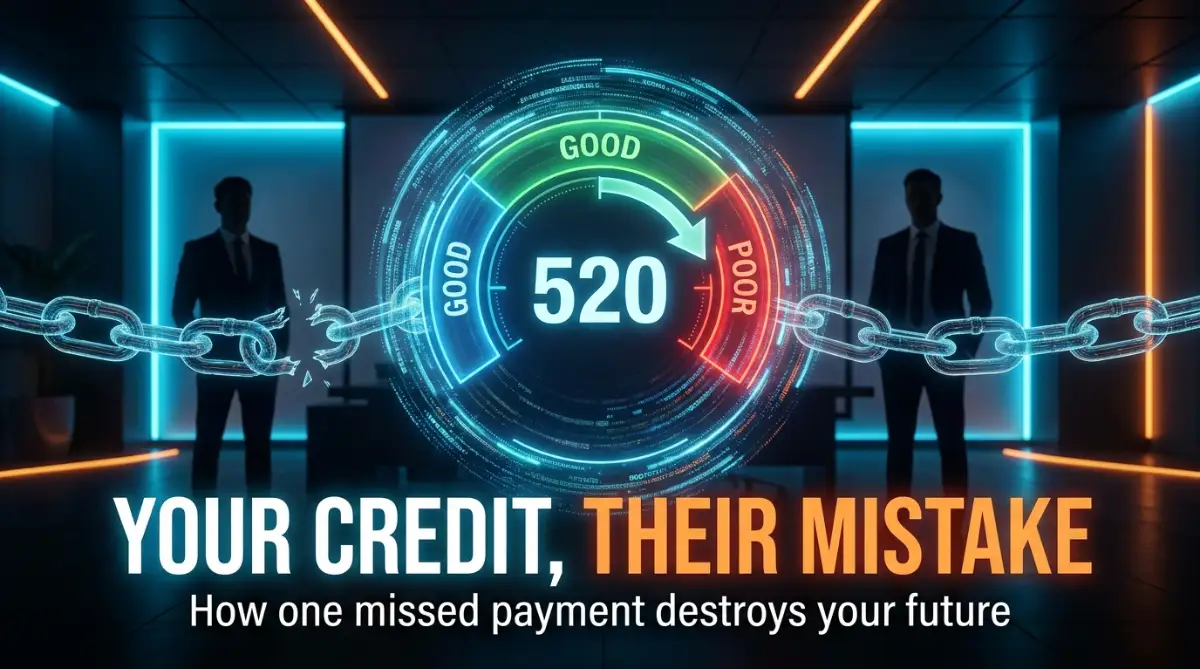
- Credit Score Drop: Up to 110 points within 30 days.
- The Hidden Price Tag: Because your credit tanked, your own future auto loan rate jumps from 5% to 12%, costing you thousands of dollars extra. Your relative's tiny mistake just became your massive financial burden.
How Your Credit Score Becomes Collateral Damage
Most people think their credit profile is safe as long as they pay their own bills on time. Unfortunately, the moment that loan gets approved, the entire borrowed amount appears on your personal credit report.
This means your overall credit utilization shoots up immediately. Even if your relative makes every payment perfectly on time, your ability to borrow money for yourself is heavily restricted.
If they start paying late, the situation turns into an absolute disaster. A single payment that is 30 days late can drop your excellent credit score by over 100 points in an instant.
I quickly realized my terrible mistake when I tried to apply for a small auto loan and got rejected instantly. My advice is to always check your credit report the very next day after you co-sign, because the bank treats that new debt as if it belongs entirely to you.

Rebuilding a damaged credit profile can take years of hard work. You might find yourself paying much higher interest rates on your own credit cards just because of someone else's careless behavior.
The Debt-to-Income Trap That Freezes Your Life
One of the most overlooked dangers is how this affects your Debt-to-Income (DTI) ratio. Lenders use this specific math formula to decide if you can afford to take on new monthly payments.
When you attach your name to a family member's financial obligation, their monthly payment gets added to your personal DTI ratio. Even if they are paying it themselves from their own checking account, the bank counts it against you.
Let us say you want to buy a new house or refinance your current mortgage. The mortgage lender will look at your profile, see this large personal loan, and decide you are stretched too thin.
Watch this breakdown to understand exactly how lenders view your financial profile when you take on extra liabilities.
You could easily be denied your dream home simply because you wanted to help your cousin buy a used car. You are essentially freezing your own financial progress to help someone else move forward.
This creates a massive roadblock for your own life goals. You are putting your own family's security on hold for a debt that gives you absolutely no personal benefit.
The Threat of Collection Agencies and Legal Action
When an account goes into default, the original lender will eventually sell the debt to a collection agency. These agencies are aggressive, relentless, and they do not care about your personal stories.
They will call your workplace, send letters to your home, and constantly harass you for the money. Because your name is on the legal agreement, they have every right to target you directly.
In many cases, it is actually easier for them to collect from you than from the original borrower. If you have a steady job, a house, and money in the bank, you become their primary target.
They can take you to court, sue you for the remaining balance, and even ask a judge to garnish your hard-earned wages. Imagine opening your paycheck and seeing a massive chunk missing because your relative decided to stop paying their bills.
Your bank accounts can be frozen, and liens can be placed on your personal property. The legal nightmare can drag on for months, costing you thousands of dollars in attorney fees just to defend yourself.
The Psychological Breakdown of Trust
Money changes people, especially when they feel cornered or embarrassed about their failures. When a relative falls behind on their obligations, they often stop communicating altogether.
They might ignore your texts, send your calls to voicemail, and actively avoid you at social events. You are suddenly forced into the extremely uncomfortable role of being a debt collector for your own family.
Having to beg your brother or sister to make their payment so your credit does not get ruined is a humiliating experience. The resentment builds up incredibly fast on both sides.
You feel used and deeply unappreciated for putting your own neck on the line to help them. They feel judged, ashamed, and often lash out defensively when you bring up the topic.
This toxic dynamic has destroyed countless marriages, broken up tight-knit families, and ended lifelong sibling relationships. You have to ask yourself if risking a lifelong bond is really worth a temporary financial favor.
Hidden Tax Bombs You Never Expected
Even if you manage to negotiate a settlement with the bank, the nightmare might not be over. Let us pretend the bank agrees to forgive a portion of the unpaid balance just to close the account.
Most people breathe a sigh of relief, thinking they are finally free from the burden. However, the government views canceled debt as taxable income.
At the end of the year, you might receive a special tax form stating that you now owe taxes on the money the bank forgave. Because you are legally liable for the contract, the IRS can hold you responsible for paying those taxes.
This means you could be hit with a massive, unexpected tax bill in April for money you never even touched. It is a harsh reality that proves how deeply intertwined you become with the primary borrower's financial mess.
Why Good Intentions Lead to Bad Outcomes
However, we often fail to recognize why they need a co-signer in the very first place. Lenders use complex algorithms and years of historical data to determine who is likely to default.
If a professional institution decides someone is too risky to lend money to, they are usually right. By ignoring the bank's warning signs, you are betting your own financial stability against highly accurate statistical models.
You are assuming that your family member will magically develop perfect money habits just because you helped them. In reality, enabling their poor financial choices often prevents them from learning how to manage their resources properly.
They have no real skin in the game because they know you will suffer the consequences if they fail. This lack of personal accountability makes it incredibly easy for them to walk away when times get tough.
Setting Healthy Boundaries with Loved Ones
Learning to say no is one of the hardest but most important skills in personal finance. When a relative asks for your signature, you need to have a clear and honest conversation right away.
You can offer to help them in other ways that do not put your own future at risk. For example, you might help them review their budget, look for extra work, or figure out how to cut unnecessary expenses.
If you truly want to give them money, it is much safer to simply gift them cash if you can afford it. Gifting money means you know exactly how much you are losing, and there are no hidden surprises later.
If you cannot afford to give them the cash directly, you definitely cannot afford to co-sign a loan for them. It is much better to deal with a few days of awkwardness now than years of legal battles and broken trust later.
Protecting your own financial house must always be your top priority. You cannot pour from an empty cup, and you cannot save a drowning person if they pull you under the water with them.
Smart Strategies to Protect Your Money and Relationships
If you are currently feeling pressured to put your name on someone else's paperwork, you need a solid game plan. You do not have to completely turn your back on your loved ones, but you must protect your own future first.
There are actually several highly effective ways to support a struggling family member without putting your own hard-earned money at risk. I want to share some incredibly practical methods that keep your finances safe while still showing you care.
These are not just wild theories, but proven strategies that financial experts use to handle awkward family money requests. By shifting your approach, you can avoid a massive disaster and actually help your relative become more independent.
The "Direct Gift" Alternative
If you have some extra savings and truly want to help, the absolute safest route is simply giving them the money as a one-time gift. You must make it entirely clear in your own mind that you will never see this money again.
When you hand over the cash, there are no complicated contracts, no hidden legal traps, and zero risk to your credit report. If they fail to manage the money well, your loss is strictly limited to that original amount.
According to guidelines from the Consumer Financial Protection Bureau on managing debt liabilities, keeping your name off official lending documents is the smartest way to avoid third-party collection efforts. You are essentially cutting out the middleman and removing the bank's power to ruin your life.
If you cannot comfortably afford to gift them the cash right now, that is a huge wake-up call. It simply means you absolutely do not have the financial stability to guarantee a massive bank note for them either.
Become Their Strategist, Not Their Bank
Sometimes, what your family member actually needs is clear guidance rather than a quick cash bailout. Many people who constantly ask for financial favors have terrible spending habits they refuse to address.
Instead of opening your wallet, offer to sit down with them at the kitchen table on a Saturday afternoon. Bring a notepad, a calculator, and ask them to openly share their monthly bills and bank statements with you.
You can help them find the leaks in their daily spending that are keeping them broke. Just like understanding the hidden costs of revolving credit lines destroying your wealth, they need to recognize how small daily habits create massive long-term damage.
If they get offended or refuse to show you their numbers, that is a massive red flag. Why should you trust them with your excellent credit history if they will not even trust you with their basic budget?
Explore Safer Alternatives Together
Before you even think about signing anything, force them to exhaust every single alternative option available. Many people ask their relatives for help simply because it feels like the easiest and least embarrassing path.
Have they tried applying for a secured credit card using their own small cash deposit? This is a fantastic way for them to slowly prove they can handle responsibility without dragging you into the mess.
If they are struggling with specific types of debt, they might qualify for specialized government relief programs. For example, guiding them through the secrets to navigating student loan forgiveness requirements could solve their problem entirely without costing you a single penny.
You can also encourage them to pick up a side job, sell items they no longer use, or downsize their living situation. Helping them find their own way out of the mud builds their confidence and teaches them true financial survival skills.

The Most Dangerous Traps We Fall Into
When emotions run high and a family member is crying on your couch, logic usually flies right out the window. We want to be the hero of the story, and this desire to help often blinds us to obvious warning signs.
People make the exact same mistakes over and over again because they believe their family is somehow different. I want to break down the worst psychological traps people fall into, so you can spot them before it is too late.
If you ignore these warnings, you are essentially jumping out of an airplane and hoping your partner remembered to pack the parachute. The damage happens fast, and the regret lasts a lifetime.
The Trap of Blind Emotional Trust
The biggest mistake you can make is assuming that love and loyalty will magically translate into responsible money management. You might think, "My brother is a great guy, he would never intentionally hurt me."
Being a nice person has absolutely nothing to do with being organized, disciplined, or mathematically capable of paying bills. You are confusing their good personality with their actual financial track record.
If their past behavior shows a history of late rent, unpaid tickets, or maxed-out credit cards, you cannot ignore those facts. According to the Federal Trade Commission guidelines on debt collection practices, collectors rely heavily on co-signers exactly because the primary borrower usually repeats their past bad behaviors.
You must force yourself to look at this request like a cold, calculating bank manager. If the numbers do not make sense, all the love in the world will not stop a default from happening.
Keeping Secrets from Your Partner
This is easily one of the most destructive choices a person can make in their marriage. Many people agree to help a sibling or parent, but they actively hide the paperwork from their own husband or wife.
They tell themselves it is not a big deal and the spouse never needs to know because the bills will be paid. This is financial infidelity, and it completely shatters the foundation of trust in a relationship.
Imagine the absolute shock on your spouse's face when they apply for a joint mortgage, only to discover a massive hidden debt under your name. When you hide these agreements, you are forcing your partner to share the massive risk without giving them a choice.
The "Sleep On It" Rule I Always Use:
Whenever a relative asks me for money or a signature, I force a mandatory 48-hour pause. I simply tell them, "I never make financial decisions on the spot. I will give you my final answer in two days." This cooling-off period kills the immediate emotional pressure and gives me the breathing room to look at their actual money habits, rather than feeling guilty over their tears.
Just as you would never hide the truths about outliving your term policy from your family, you must never hide new legal obligations. Total transparency at home is non-negotiable.
Failing to Demand Proof of Payment
Let us say you ignored the warnings and decided to put your signature on the dotted line anyway. The absolute worst thing you can do next is simply cross your fingers, look away, and hope for the best.
Most people never check the account status because they feel awkward acting like a strict parent. They wait until the bank sends them an aggressive late notice, and by then, the damage to their credit is already done.
If you take on this massive risk, you earn the absolute right to demand full transparency every single month. You must require them to send you a screenshot or a receipt proving the payment was made on time, every single time.
If they complain that you are being too controlling, remind them that your entire financial future is currently sitting in their hands. They lose the right to privacy regarding that specific bill the exact second you guarantee it for them.
Misunderstanding Your Legal Liability
Many people wrongly assume that if things go bad, they will only owe half of the money. They think the bank will politely ask the main borrower for their share first, and only come to you for the rest.
This is a dangerous fantasy that leaves good people completely bankrupt. Under the strict rules of joint liability, as explained by legal experts on joint and several liability contracts, the lender can demand 100% of the money directly from you immediately.

They do not have to chase the main borrower if they think you are an easier target with deeper pockets. You are not a backup plan; in the eyes of the law, you are the primary target if the money stops flowing.
Think about how risky it is when adding a teen driver to your policy without going broke. You know the teenager might crash, so you prepare for the worst. You must look at family loans with the exact same level of extreme caution.
Your Action Plan for True Peace of Mind
Navigating money issues with the people we love is never a simple or comfortable process. It requires a tremendous amount of courage, clear communication, and a strong sense of personal boundaries.
The main goal is to protect the relationships that matter most to you, while keeping your own financial house completely secure. You can be a supportive, loving family member without offering up your own credit score as a sacrifice.
By taking a step back and looking at the cold, hard facts, you actually save everyone from a future disaster. Let us talk about exactly how you can implement these boundaries starting today.
How to Say "No" Without Starting a War
The moment someone asks you for this massive favor, you need to have a script ready in your head. Do not give them a vague answer like "I will think about it," because that just gives them false hope.
You need to be firm, polite, and completely non-negotiable. You can simply say, "I love you very much, but I have a strict personal rule that I never mix debt with family."
If you blame your personal rule, it takes the sting out of the rejection. You are not saying you do not trust them; you are simply stating a hard boundary that you apply to everyone in your life.
If they try to guilt-trip you, hold your ground and calmly repeat your rule. A person who truly respects you will eventually understand, even if they are initially disappointed.
Offer Real Value Instead of Debt
Once you say no to the contract, immediately pivot the conversation to how you can genuinely help them right now. Offer to pay for an hour of professional financial counseling for them.
You could even cook them a week's worth of meals so they can save money on groceries to pay their own bills. Remind them that just like having uninsured motorist coverage saves you from sudden disaster, building an emergency fund of their own will protect them next time.
When you offer your time, energy, and wisdom instead of your signature, you are providing actual solutions. You are teaching them how to fish instead of just handing them a stolen fish.
A Friendly Word Before You Go
I know how terribly heavy it feels when someone you care about is begging for a lifeline. I used to feel incredibly guilty for protecting my own money, but I finally realized that destroying my own peace of mind helps absolutely no one.
Stay strong, trust your gut, and remember that real love does not demand you to risk your future. You have worked way too hard to build your life, and you absolutely deserve to keep it safe!
Common Questions About Helping Family Financially
Can I legally remove my name from a joint agreement later?
It is extremely difficult to simply remove your name once the ink is dry. The primary borrower usually has to completely refinance the entire amount under their own name, based strictly on their own income and credit. If their habits have not improved, no new bank will approve them, meaning you remain permanently stuck.
Will helping my relative actually improve my own credit score?
While perfect on-time payments do add a positive mark to your history, the heavy amount of new debt usually hurts you much more. It drastically increases your credit utilization and debt-to-income ratio. The tiny benefit you might get is never worth the massive risk of a single late payment destroying your score.
What happens to me if the person I helped files for bankruptcy?
If the primary borrower legally wipes out their debts through bankruptcy, the bank does not just forgive the money. The lender will immediately turn around and demand the entire remaining balance directly from you. Your relative might get a clean slate, but you will be left holding the entire burning bag.
Can I sue my family member if they stop paying?
Yes, you can technically take them to civil court to try and recover the money you were forced to pay. However, if they did not have the money to pay the bank, they certainly do not have the money to pay you. You will just waste more money on legal fees while completely destroying whatever is left of your family relationship.
Is there any truly safe way to co-sign?
Honestly, the only "safe" way to do this is to have the total loan amount sitting comfortably in your own savings account, ready to be spent. You must mentally treat the situation as if you are the one borrowing the money and paying it back. If you are not completely prepared to pay the entire bill yourself with zero resentment, do not sign.
Disclaimer: The information provided in this article is for educational and informational purposes only and should not be construed as professional financial, legal, or tax advice. Every individual's financial situation is entirely unique. Always consult with a certified financial planner or a qualified legal professional before entering into any binding contracts or making major financial decisions involving debt.