The Heavy Burden of Hospital Invoices on Your Shoulders
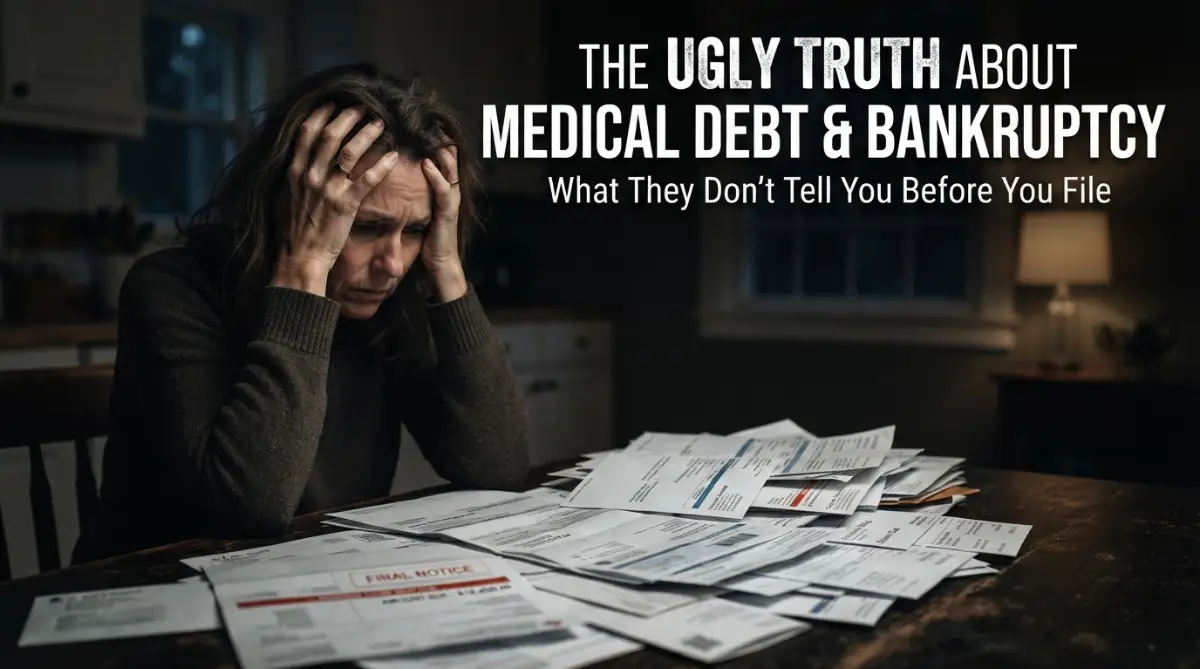
You open your mailbox, and there it is—another hospital bill with bold red letters demanding money you simply do not have. It feels like you are being punished just for getting sick, and trying to figure out a way out of this mess is enough to make anyone lose sleep. Let me show you how to stop the endless collection calls, protect your savings, and actually get your life back on track without losing everything you own.
The daily reality for ordinary people dealing with massive healthcare expenses is completely heartbreaking. Families are forced to choose between buying healthy groceries and sending small payments to the hospital just to keep the debt collectors away. The constant letters with red warning stamps bring intense anxiety into your living room, ruining the peace you should feel at home. It causes bitter arguments at the dinner table and steals your ability to sleep properly at night.

Quick Breakdown: What You Need To Know Right Now
- Medical debt is completely unsecured: This means you do not have to give up your house or car to pay it off, and courts wipe it out easily.
- The automatic stay is your best friend: Filing for legal help instantly drops a shield that stops all collection calls and letters by federal law.
- Protect your retirement at all costs: Never drain your 401(k) or IRA to pay hospital bills; the law already protects these funds from debt collectors.
- You can rebuild fast: Erasing massive health debts lowers your debt-to-income ratio, helping your credit score bounce back way faster than you might think.
How the Legal System Actually Views Your Health Expenses
When you start looking for a real way out of this mess, the legal language can easily make your head spin. But understanding how the court looks at your hospital invoices is the very first step toward getting your life back.
Understanding "Unsecured" Obligations
In the eyes of the law, your healthcare bills are placed in a specific category called unsecured debt. This simply means that the hospital or doctor did not require you to put up your house or car as collateral before treating you. If you buy a house and stop paying, the bank takes the house back. But a doctor cannot take back a surgery or a physical exam.
Because these bills are unsecured, they sit at the very bottom of the priority list when you file for legal protection. The court treats them exactly like credit card balances or personal loans. This is incredibly good news for you because unsecured obligations are usually the easiest to wipe out entirely. You do not need a special "medical bankruptcy" because no such thing exists in the legal system. Your healthcare expenses are just thrown into the general bucket of unsecured claims.
Here is a quick look at how the court actually ranks your debts, so you know exactly where you stand before making a move:
| Debt Type | What It Means For You | Will It Be Erased? |
|---|---|---|
| Unsecured (Medical Bills) | No collateral attached to the debt. | Yes, usually 100% wiped out. |
| Secured (Mortgage/Car) | Tied directly to property you own. | You must keep paying if you want to keep the items. |
| Priority (Taxes/Child Support) | Special protected government debts. | Rarely erased; you still have to pay these off. |
The Power of the Automatic Stay
One of the most immediate benefits of asking the court for help is a powerful tool known as the automatic stay. The exact second your paperwork is stamped by the court clerk, a legal wall drops down between you and your creditors. All collection efforts must stop immediately by federal law.

The annoying phone calls during dinner will finally end. The threatening letters will stop showing up in your mailbox. If a collection agency tries to garnish your wages or take money straight from your paycheck, the automatic stay blocks them completely. This rule gives you the breathing room you desperately need to organize your life without constant harassment.
If you are feeling completely lost about how courts handle different types of consumer debt, watching a clear visual breakdown can instantly relieve your anxiety. Check out this incredibly helpful explanation below to understand your rights before making any big decisions.
Choosing the Right Path to Financial Freedom
There is no single magic button to fix a broken bank account, but there are two main legal paths you can take to resolve the situation. Think of these paths as different tools in a toolbox, each designed for a specific financial situation.
The Complete Reset: Chapter 7 Explained
If you have very little income and barely enough money to cover your basic living expenses, this path is often the most effective. Chapter 7 is designed to be a complete wipeout of your qualifying debts. The process usually takes just a few months from start to finish.
Once the court approves your case, your eligible healthcare invoices are legally erased. The hospital cannot ever ask you for that money again. Many people worry they will lose everything they own if they choose this option. However, the law provides special protections called exemptions that usually allow you to keep your everyday items.
Your basic furniture, your daily clothing, and often your main vehicle are protected from being touched. The court is not interested in selling your kitchen table to pay a billionaire insurance company. They only look for highly valuable, unprotected assets like a second vacation home or an expensive boat. For the average person, this process simply hits the reset button and lets them start fresh.
The Reorganization Plan: Chapter 13 Basics
Sometimes, people make a decent income but are just too overwhelmed by massive bills to catch up. In this scenario, Chapter 13 acts like a court-ordered debt consolidation plan. Instead of wiping everything out immediately, you agree to a structured repayment plan that lasts a few years.
You make one single, manageable payment to a court trustee every month. The trustee then divides that money among the people you owe based on a strict legal formula. The best part is that you only pay what you can genuinely afford after your living expenses are calculated.
If your repayment plan only covers a small percentage of your total hospital bills by the end of the time limit, the remaining balance is completely forgiven. You walk away free and clear, even if you paid pennies on the dollar. This path is extremely helpful if you have a home with a lot of equity that you want to protect from being sold.
Common Myths vs Realities of Debt Relief
Rebuilding Your Life After the Court Process
Many people believe that taking this legal step will mark them with a permanent scarlet letter. They think their financial life is over and they will never own anything nice again. This is one of the biggest lies spread by collection agencies to keep you scared and paying.
The Immediate Aftermath
Once you receive your official discharge paper from a judge, a massive weight physically lifts off your shoulders. You can finally answer your phone without your stomach tying into knots. You can check your mail without fear of bad news.
Your credit report will definitely show a negative mark for a set period, but the impact starts fading much faster than people assume. Because your heavy debts are gone, your debt-to-income ratio instantly improves. Lenders actually start seeing you as less of a risk because you no longer owe thousands of dollars to doctors.
Taking Action to Restore Your Score
Rebuilding your financial reputation is a very practical and straightforward process. You start by getting a secured credit card from your local bank. You put down a small cash deposit and use the card strictly for basic things like groceries or gas.
You pay the balance off entirely every single month without fail. Slowly but surely, your credit score begins to climb back up. Within just a couple of years, many people are able to qualify for regular car loans and even decent mortgage rates.
My Pro Tip for Faster Recovery: Do not just sit around guessing when your credit is ready for a boost. Pull your free credit report exactly 90 days after your court case officially closes. If you spot old medical bills still showing a past-due balance, file a dispute right away. I always suggest grabbing a basic secured card from a local credit union rather than a massive bank—they are way more forgiving when you are starting fresh.
Actionable Steps to Take Right Now
If you are losing sleep over healthcare invoices today, you need to stop ignoring the problem and start gathering facts. The worst thing you can do is empty your retirement accounts to pay off a hospital. Retirement funds are almost always legally protected from creditors, so draining them is a terrible mistake.
Organize Your Paperwork
Start by collecting every single bill, statement, and collection letter in your house. Put them all into one big box so you know exactly what you are dealing with. Write down a list of your monthly living expenses, including rent, food, and utilities.
Do not try to hide any debts or transfer money to family members. The court looks very closely at your recent financial history, and moving money around looks incredibly suspicious. Transparency is your absolute best friend during this entire process.
Seek Proper Guidance
You should never try to navigate the legal system completely alone. Find a qualified, local professional who specializes in consumer finance laws. Most of them offer a totally free initial chat to look at your specific situation.
During this meeting, they will look at your income and tell you exactly which path makes the most sense for your family. Taking that first step to ask for help is always the scariest part. But once you realize there is a clear, legal way out of the darkness, you will finally be able to breathe again.
Smart Strategies to Keep Medical Bills Gone Forever
Getting your hospital invoices legally erased is an amazing feeling of relief. However, keeping your financial slate clean requires some strategic thinking for the long haul. Many people mistakenly believe the legal process is the end of the road.
In reality, the moment your court case closes is actually day one of your new financial life. You need to actively protect this fresh start so you never end up back in the same stressful situation.
Defending Yourself Against Zombie Debt
One of the biggest secrets in the collection industry is something called "zombie debt." This happens when old, legally erased healthcare bills suddenly come back from the dead to haunt you. Hospitals often sell massive lists of unpaid accounts to junk debt buyers for pennies on the dollar.
Sometimes, these third-party buyers do not update their records to see that a judge already cleared your balance. They might start calling you or sending threatening letters months after your case is officially over. If you do not know your rights, you might get scared and actually send them a payment.
Making even a tiny payment on a discharged debt is a massive mistake. It can accidentally restart the legal time limit and make you responsible for the whole balance again. Instead, keep your final court discharge papers in a safe place where you can grab them easily.
If a collector calls about an old hospital bill, simply tell them the debt was legally discharged. You can also send them a copy of your court order via certified mail. The Consumer Financial Protection Bureau's guidelines on medical debt clearly state that attempting to collect on discharged accounts is highly illegal.
Mastering Your Post-Discharge Credit Report
About three months after your legal paperwork is finalized, you need to pull your credit reports from all three major bureaus. You want to make absolutely sure that every single health-related account shows a zero balance. The status should clearly say "Discharged" and not "Charge-off" or "Past Due."
Credit bureaus make mistakes all the time, and a leftover hospital bill can drag your score down for no reason. If you see a medical invoice that was supposed to be wiped out, you must file a formal dispute immediately. You can do this online for free through the official credit reporting websites.
Simply upload a picture of your court papers as proof that the account is no longer valid. The bureaus have thirty days to investigate and remove the negative mark from your history. Being proactive about cleaning up these leftover errors is the fastest way to push your credit score back into the safe zone.
Building an Unbreakable Safety Net
Once the monthly burden of paying old hospital invoices is gone, you will suddenly have extra cash in your budget. It is very tempting to start spending that money on fun things to make up for the hard times. But your very first priority must be building an emergency savings fund.
Even a small emergency fund of one thousand dollars can stop you from relying on high-interest credit cards. You never know when another unexpected health issue or a car repair might pop up. Having cash on hand gives you complete control over your choices when bad things happen.
You also need to look deeply into your current safety nets to prevent future disasters. For instance, identifying hidden gaps in your health coverage can save you thousands if you ever need to visit the emergency room again. Taking the time to read the fine print on your insurance policy is boring, but it protects your wallet.
Similarly, if you are driving without proper protection, a simple fender bender can lead to massive physical therapy bills. Understanding how uninsured motorist coverage protections work can act as a financial shield. It pays your medical expenses if another driver hits you and runs away.
Dangerous Traps People Fall Into When Clearing Health Debts
When fear takes over, even the smartest people can make terrible financial decisions. Dealing with aggressive billing departments makes people panic, leading them to choose "quick fixes" that actually destroy their future. Knowing exactly what not to do is just as important as knowing your legal rights.
Emptying Your Hard-Earned Retirement Accounts
This is hands down the most heartbreaking mistake people make when trying to avoid the legal system. Someone will look at a giant hospital invoice and then look at their 401(k) or IRA savings. They think pulling money out of their retirement is the honorable thing to do to settle the balance.
What they do not realize is that retirement accounts are legally untouchable by almost all regular creditors. A hospital or a debt collector cannot force you to cash out your future to pay them today. When you pull that money out voluntarily, you trigger massive early withdrawal penalties and heavy income taxes.
According to the Internal Revenue Service rules on retirement withdrawals, you instantly lose a huge chunk of your money to the government. Worse yet, you just gave away money that was completely protected by federal law. Never set your own future on fire just to keep a debt collector warm.

Playing Favorites with the People You Owe
When folks realize they need legal protection, they sometimes try to act as their own financial manager. They might decide to completely pay off their favorite family doctor while completely ignoring their credit cards. They think this will keep the doctor happy while they wipe out their other obligations in court.
In the legal world, this is called a "preferential payment," and judges absolutely hate it. The court wants all of your creditors to be treated fairly and equally under the law. If you pay back a large sum to one specific doctor right before filing your paperwork, the court trustee will investigate.
The trustee actually has the power to sue that doctor to get the money back! They will take those funds and divide them equally among everyone you owe, causing massive embarrassment for you. Just stop paying all of your unsecured accounts at the same time once you decide to seek legal protection.
Dragging Family Members Down with You
Desperation often leads people to ask their loved ones for a massive bailout. A parent might ask their adult child to put a hospital bill on their personal credit card. Or, a sibling might co-sign a personal loan specifically to pay off a surgical center.
This is a terrible idea because it transfers the legal responsibility from you directly onto your family member. If you eventually have to file for legal relief, your debt gets wiped out, but the bank will instantly attack your family member for the money. If you want to understand this risk better, reading about the danger of co-signing a family loan will open your eyes.
You should never let your temporary medical crisis destroy the financial stability of the people who love you. The legal system exists precisely to help you handle this burden alone without ruining your family's credit scores. Keep your problems isolated to your own name so you can fix them cleanly.
Turning Unsecured Debt into a Secured Nightmare
As we discussed earlier, hospital invoices are basically IOUs without any collateral attached to them. Because they are unsecured, they are relatively easy to erase in front of a judge. But some people get scared of collection calls and make the fatal mistake of taking out a home equity line of credit (HELOC) to pay the hospital.
By using your house to pay off a medical bill, you just turned a harmless unsecured debt into a highly dangerous secured debt. If you lose your job next month and cannot pay that HELOC back, the bank will literally foreclose on your family home. You voluntarily attached a hospital bill to your physical roof.
Always keep medical debt in its proper, unsecured category. Never trade a piece of your home, your car, or your physical property to satisfy a hospital billing department. Even consumer advocate groups like the National Consumer Law Center constantly warn against moving debt from uncollateralized to collateralized accounts.
This rule applies to education expenses as well. If you are also struggling with massive student loans, never use your home equity to pay them down either. Protect the assets you actually need to survive every day.
Your Roadmap to Financial Peace of Mind
Navigating through massive healthcare invoices is one of the most stressful experiences a person can face. The constant ringing of the telephone and the endless stack of final notices can make you feel completely trapped. But as you have learned today, you actually hold a lot of power in this situation.
The legal system was designed specifically to give honest, hardworking people a second chance at life. You do not have to spend the next twenty years living in poverty just because you needed medical attention. By understanding the difference between secured and unsecured obligations, you can make extremely smart choices about your future.
Focus on Rebuilding and Looking Forward
Once you clear the hurdles, your main focus should be on building a solid foundation for the years ahead. Take the money you were previously throwing at collection agencies and start funding your savings accounts. Sit down every single month and track exactly where your dollars are going.
You also need to think about how to protect your family from future unexpected events. For example, planning around term life insurance ensures your loved ones are never left paying your expenses if the worst happens. Taking control of these adult responsibilities brings a massive sense of personal peace.
Remember that taking legal action to clear your debts is not a personal failure at all. It is simply a legal business decision to protect your family's ability to buy groceries and keep the lights on. Many of the most successful businesses in the world have used these exact same legal tools to restructure and survive.
I remember the exact moment my own debt was officially cleared by the judge. Walking out of that courthouse, the air actually felt lighter, and I finally smiled for the first time in months. Take a deep breath, gather your paperwork today, and take that brave first step toward getting your peaceful life back.
Top Questions People Ask About Healthcare Bills and Legal Relief
Can a hospital refuse to treat me if I legally wipe out my debt with them?
Federal law generally requires emergency rooms to stabilize any patient who comes through their doors, regardless of past unpaid bills. However, a private doctor's office or a non-emergency specialist can legally choose not to take you as a patient if you previously discharged a debt with them. Many people simply switch to a different healthcare network after their court case is closed to avoid any awkwardness.
Will my spouse be held responsible for my hospital invoices?
This depends entirely on where you live and how you filed your legal paperwork. If you live in a community property state, debts taken on during the marriage are usually shared, meaning your spouse might be targeted. In most other states, as long as your spouse did not sign any admission papers guaranteeing payment, their personal credit remains perfectly safe.
Do I absolutely need to hire a lawyer to do this?
Technically, you are allowed to file all the legal paperwork by yourself without an attorney. However, the court documents are extremely complicated, and making one small math mistake can get your entire case thrown out by the judge. Hiring a professional is highly recommended because they know exactly how to protect your car, your house, and your retirement accounts properly.
How long does the entire court process usually take?
If you qualify for a complete wipeout of your debts, the entire process usually takes about three to four months from the day you file. You will only have to attend one short, informal meeting with a court trustee, which usually lasts less than ten minutes. If you have to enter a structured repayment plan, the process will last anywhere from three to five years depending on your income.
Will this completely ruin my chances of renting a nice apartment?
Having a legal debt discharge on your record will definitely make some corporate landlords nervous at first. However, many independent landlords are very understanding if you explain that a sudden medical emergency caused the issue. In fact, some landlords prefer renting to people right after the court process because they know you have zero debt and cannot file for relief again for several years.
Disclaimer: The information provided in this blog post is for educational and informational purposes only and should not be construed as professional financial or legal advice. Everyone's financial situation is unique, and bankruptcy laws vary greatly by state and jurisdiction. We highly recommend consulting with a licensed bankruptcy attorney or a certified financial planner in your local area before making any major decisions regarding your personal debts.