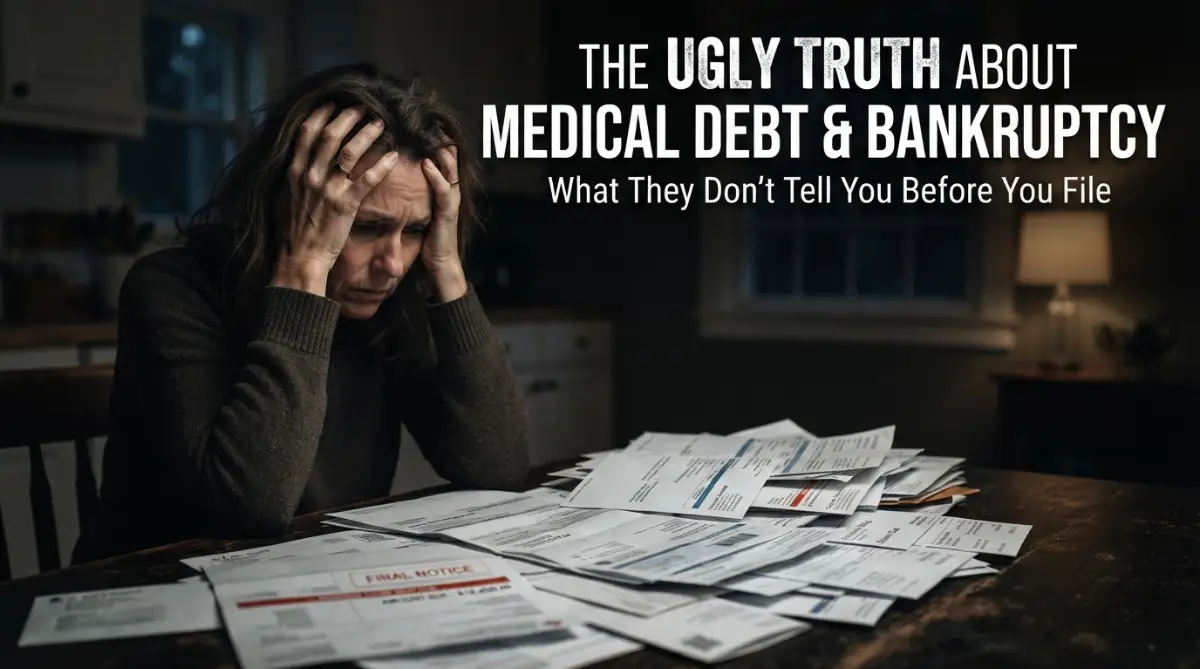
Waking Up to a Frozen Credit Profile: My Unexpected Nightmare
Getting that email about my loan being paused felt like a massive relief at first. I thought it was just a temporary break to help me get my bills sorted. But what nobody tells you is that a simple "forbearance" status acts like a hidden lock on your credit report. Suddenly, you can't buy a car, rent a decent apartment, or even get a standard credit card approved, and you are left wondering what went wrong.
But within a few short months, I realized this "help" had some serious strings attached. My credit score felt like it was locked inside a strange, dark room. I was planning to buy a new family car, but the sudden changes on my credit report left me totally paralyzed. I remember asking myself if I would ever qualify for a fair interest rate again.
My family and I were left completely in the dark, worrying constantly about our long-term financial security. The anxiety was incredibly heavy, making it hard to sleep at night. Everyday people are facing this exact same nightmare right now. You think you are protecting your cash flow, but instead, you are unknowingly risking your financial reputation.
This hidden trap completely destroys your mental peace because the rules are never explained clearly. People are constantly being denied for new apartments, affordable auto loans, and dream mortgages. The worst part is the feeling of absolute helplessness when a lender points out a tiny remark on your credit report. You feel like you are being punished for something you did not even ask for.

💡 Quick Summary: What You Need to Know
- A paused loan doesn't hurt your score directly, but it adds a "remark" that scares off new lenders.
- Mortgage and auto lenders treat a forbearance status exactly like a high-risk warning sign.
- Paying even $20 a month during a pause keeps interest from piling up and ruining your debt-to-income ratio.
- You often have to manually call your lender to make sure they remove the remark when regular payments start again.
Decoding the Forbearance Trap: How It Changes Your Financial DNA
Lenders often tell you that a forbearance program will not hurt your credit score directly. On the surface, that sounds like an amazing promise. But the reality of how the financial system works is entirely different.
When your payments are paused, credit bureaus do not mark your account as "late" or "missed." Instead, the lender places a very specific comment or "remark code" on your credit file. This tiny little comment is like a red flag waving in the wind.
Any time you apply for new credit, a human underwriter or an automated system reads that remark. They instantly see that you needed a break from your obligations. This makes them view you as a higher risk, even if your actual three-digit credit score never dropped a single point.

Think of your credit report as your financial resume. If an employer sees a massive gap in your work history, they will definitely ask hard questions. Borrowing money works the exact same way. When lenders see that forbearance remark, they instantly tighten their approval rules.
The Real-Life Impact on Your Future Borrowing Power
Let us look at a very common real-life scenario to make this easy to understand. Imagine a guy named John who wants to buy his first home. John has a great credit score of 750, which normally guarantees an amazing mortgage rate.
However, John accepted a mandatory forbearance on his student loans last year. When the mortgage underwriter reviews John's file, they spot the forbearance status. Suddenly, the bank refuses to approve the loan until John proves he can resume regular payments.
Let me share another quick example. My friend Sarah tried to rent a basic apartment in Texas while her student loans were paused. Her credit score was a solid 720. However, the landlord saw the forbearance mark, panicked, and demanded a security deposit equal to three months of rent instead of just one. The system treats a paused loan exactly like a giant warning sign, no matter how good your score looks on paper.
In many cases, mortgage giants require you to make at least three consecutive, on-time payments after a forbearance ends. Until you complete that waiting period, your dream of buying a house is completely paused. This waiting period is a massive roadblock that nobody warns you about.
It does not just stop at houses, either. Auto lenders and credit card companies use similar defensive strategies. If you apply for a new credit card while your current accounts are frozen, the algorithm will likely deny you. The system is designed to prevent you from taking on more debt when you cannot pay your current debt.
The Hidden Math of Accrued Interest
Another massive problem is what happens to your balance while you are not making payments. Mandatory forbearance stops the requirement to pay, but it rarely stops the interest from growing. Every single day, your loan balance gets a little bit bigger.
When the forbearance period finally ends, all that new interest is usually added to your principal balance. This causes your total debt to inflate dramatically. Because your debt is now higher, your monthly payments might actually increase.
This directly impacts a very important number called your Debt-to-Income (DTI) ratio. Your DTI ratio compares how much you owe every month to how much you earn. If your loan payments go up, your DTI shoots up as well.
A high DTI is one of the top reasons people get rejected for future loans. Even if your credit score is flawless, a lender will deny you if your monthly debt obligations are too high. You might find yourself trapped in a situation where you cannot refinance or consolidate because your numbers simply do not work anymore.
Myth vs. Reality: The Credit Score Illusion
Let us clear up some of the biggest lies circulating on the internet right now.
Myth: As long as my score is high, lenders do not care about a forbearance mark.
Reality: A high score only gets you in the front door. The underwriter will still read the fine print of your report, and a forbearance mark can easily cause a rejection.
Myth: Once the forbearance is over, the remark disappears instantly.
Reality: You usually have to call your lender and explicitly demand that they remove the comment. Sometimes, it takes months of frustrating phone calls to get your report scrubbed clean.
Myth: I cannot do anything to protect myself while my account is paused.
Reality: You actually have a lot of power to control the narrative.
Smart Actions to Protect Your Money Today
If you are currently stuck in this situation, you need an aggressive defense strategy. Do not just sit back and wait for the financial institutions to dictate your future. You must take matters into your own hands immediately.
First, you need to pull your official credit reports from all three major bureaus. You need to see exactly what language your lender is using to report your account. Look closely at the "comments" or "remarks" section under every single trade line.
If you find a remark that says "affected by natural disaster" or "in forbearance," write down the exact date it appeared. You need a paper trail to prove your timeline when you eventually apply for new credit.
Here is something I learned the hard way that you can use right now.
I completely ignored my credit reports for six months because I was terrified of what I might see. My personal Pro Tip: Set a recurring alarm on your phone for the 15th of every month to log into a free credit monitoring app. Checking your report takes exactly two minutes, and it gives you the power to catch errors before they ruin your next loan application.
The Strategy of Partial Payments
If you have any extra cash left over at the end of the month, do not just leave it sitting there. Try to make partial payments toward the principal balance of your paused loan. Even sending fifty dollars a month makes a massive difference.
Making partial payments prevents the interest from spiraling completely out of control. It also keeps your habit of paying bills active, so you do not experience a massive shock when regular payments resume.
More importantly, it looks fantastic to future lenders if they ask for your payment history. You can show them that even during a period of mandatory forbearance, you took financial responsibility. This shows great character, which can sometimes push a borderline loan approval in your favor.
Here is a quick breakdown of how your partial payments actually change the game:
- $0 paid: Your balance grows every day, and your debt-to-income (DTI) ratio gets worse, lowering your chances for future loans.
- $50 paid: Covers a good chunk of the interest and keeps your payment history looking active to underwriters.
- Full interest paid: Stops your loan balance from growing at all. This protects your credit profile entirely so you can qualify for your next big purchase without a headache.
navigating the Underwriting Maze
You need to understand that borrowing money is entirely about proving your stability. Lenders are terrified of risk, and they use highly complex formulas to protect their money. When you step out of a forbearance program, you have to rebuild their trust from scratch.
To do this, start gathering your financial documents long before you ever fill out a loan application. Create a physical folder with your recent pay stubs, tax returns, and bank statements. If a lender asks for proof of income, you want to hand it to them instantly.

You should also write a highly professional "Letter of Explanation." This is a simple, one-page document where you tell your story. Explain exactly why the forbearance happened, how you handled it, and why your finances are strong today.
Comparing Normal Status vs. Forbearance Status
To make this crystal clear, let us look at a simple comparison of how lenders treat you.
As you can see, the financial system treats you like a completely different person. The rules of the game change entirely, and you are forced to play on hard mode.
Communicating With Your Loan Servicer
Do not assume your loan servicer is your friend. They are a massive corporation focused entirely on collecting money and following regulations. You have to be proactive and aggressive when dealing with them.
Call their customer service department and ask very specific questions. Ask them exactly how long the forbearance remark will stay on your file after you resume payments. Demand to know their specific policy for updating the credit bureaus.
Always ask for a reference number for every single phone call. Write down the name of the representative you spoke with and the exact time of the call. If they make a mistake on your credit report later, this notebook will be your best weapon for a dispute.
Preparing for the "Payment Shock"
One of the biggest dangers of mandatory forbearance is the sudden return to reality. Let us say you have not paid your mortgage or student loans for a whole year. You get very used to having that extra money in your checking account.
When the pause ends, your budget is going to suffer a massive shock. Suddenly, you have to find hundreds of dollars every month to pay that bill again. If you are not prepared, you will immediately miss a payment.
A missed payment immediately after a forbearance ends is financially fatal. It drops your credit score by up to 100 points overnight. Lenders see this as absolute proof that you cannot handle your money.
To prevent this, start doing a "practice run" two months before the forbearance ends. Take the exact amount of your upcoming loan payment and transfer it to a separate savings account. Do not touch that money for anything else.
If you can survive the month without that cash, you are ready for the real payments to start. Plus, you just built a great little emergency fund with that saved money. This is exactly how smart people protect their credit score health.
Beyond the Basics: Expert Strategies to Reclaim Your Financial Power
Once you understand how lenders actually view a paused account, you need to take aggressive action. You cannot just wait around hoping the financial system will be kind to you. You have to force them to see you as a highly responsible borrower.
One of the smartest moves you can make involves a strategy called credit utilization manipulation. Your credit utilization is simply the amount of debt you owe compared to your total available credit limit. This single number holds a massive amount of power over your overall financial health.
When your loan is paused, your balances are not going down. This means your utilization stays high, which naturally suppresses your borrowing power. To fight back against this, you should try to lower your utilization on your other active accounts.
For example, if you have credit cards, pay those balances down as close to zero as possible before the statement closing date. By showing an extremely low balance on your credit cards, you prove to lenders that you are actively managing your debt. This can give your score a nice boost, helping offset the negative effects of your paused loans.
The Hidden Magic of the Goodwill Letter
If you are dealing with a stubborn remark code on your report, you should try writing a "Goodwill Letter." This is a completely free, highly effective tool that most ordinary people do not even know exists. A goodwill letter is a direct, emotional request to your lender asking them to remove a specific comment from your file.
You write a polite letter explaining the temporary hardship you faced and how you have successfully recovered. You highlight your past history of making on-time payments before the struggle began. You also explain exactly why you need that remark removed, like trying to qualify for a better housing situation.
Lenders are run by human beings, and sometimes a polite request lands on the right desk. According to the Federal Trade Commission guidelines on credit reporting, you always have the right to communicate directly with your data furnishers. While they are not legally forced to remove a correct remark, they often do it simply as a courtesy to keep you as a loyal customer.
Leveraging the Authorized User Strategy
If your credit profile feels completely frozen, you might need a little help from someone you deeply trust. Becoming an "Authorized User" on a family member’s old, perfectly managed credit card can work wonders. This strategy allows their excellent payment history to instantly appear on your personal credit report.
It is like borrowing their good financial reputation for a short amount of time. You do not even need to possess the physical plastic card to get the benefit. As long as the primary account holder keeps their balance low and pays on time, your profile gets a massive boost of positive data.
However, you must be extremely careful with this strategy. If you are mixing family relationships with money, things can get messy very quickly. Before you ask for this favor, you should understand the serious risks involved, similar to the dangers of co-signing a family loan. Only use this tactic if the primary account holder is incredibly responsible with their money.
Stacking Your Defensive Financial Paperwork
As you prepare to apply for new credit, you need to build a defensive wall of paperwork. Underwriters love documentation because it makes their job easier and safer. Do not wait for them to ask you for proof of your financial recovery.
Start building a physical folder containing your last six months of utility bills, rent receipts, and bank statements. If your main loan is paused, but you are paying every other bill perfectly on time, this proves you have steady cash flow. It shows that you are carefully navigating your personal student loan struggles while maintaining your other adult responsibilities.
You can even include a custom spreadsheet that outlines your exact monthly budget. When a loan officer sees a detailed budget, they instantly view you as a low-risk planner. They realize you are someone who actively tracks their money, rather than someone who just spends blindly.
Expanding Your Credit Mix Safely
Sometimes, the best way to prove your reliability is to successfully manage a completely new, very small account. This is called improving your "credit mix." Lenders want to see that you can juggle different types of financial obligations at the same time.
Consider taking out a very small credit-builder loan through a local credit union. These are designed specifically for people who need to prove their trustworthiness. The bank holds the money in a safe savings account while you make tiny, manageable monthly payments toward it.
Once the loan is paid off, they hand you the cash, and you get a string of perfect green checkmarks on your credit report. This strategy is incredibly safe because you are not actually taking on consumer debt to buy random things. You are simply paying a small fee to legally engineer a better financial reputation for yourself.

The Silent Wealth Killers: Actions That Keep You Trapped
When everyday people find themselves stuck in this financial maze, panic usually sets in. This panic leads to rushed decisions that can absolutely destroy whatever borrowing power they have left. The most dangerous mistakes often happen when you think you are doing the right thing.
The biggest trap people fall into is completely cutting off communication with their servicer. When you are stressed about money, it feels easier to just ignore the ringing phone and delete the emails. You tell yourself that you will deal with the problem next month when you have more cash.
This is exactly how a temporary pause turns into a permanent financial disaster. If your forbearance period ends and you do not answer the phone, the servicer will immediately report you as delinquent. That single missed payment will instantly wipe out years of hard work, dropping your score faster than a rock.
Instead of hiding, you have to face the problem head-on. Even if you cannot afford the full payment, you must pick up the phone and explain your situation. The Consumer Financial Protection Bureau explains clearly that lenders actually have multiple backup programs designed to keep you out of default. You just have to be brave enough to ask for them.
The Revenge Application Trap
Another massive mistake is what I call "revenge applying." Imagine you just got denied for a standard auto loan because of your account status. Your feelings are hurt, you feel embarrassed, and you desperately need a car to get to work.
In a moment of frustration, you apply for five different high-interest loans online, hoping just one of them says yes. This is the worst possible thing you can do. Every single application triggers a "hard inquiry" on your credit file.
When automated systems see a cluster of hard inquiries within a few days, they view you as financially desperate. This drops your score even further and guarantees that any lender who does approve you will charge a predatory interest rate. You are essentially punishing yourself because you let your emotions control your money.
If you get denied for a loan, you must take a deep breath and pause completely. Do not apply for anything else for at least six months. Use that waiting period to gather information, fix your report, and build a stronger defense.
The Illusion of Closing Old Accounts
Many people wrongly believe that closing accounts will magically "clean up" their financial profile. They think that having fewer open lines of credit makes them look less risky. This logic seems to make sense on the surface, but the math behind credit scoring works the exact opposite way.
When you close an old credit card, you instantly wipe out the available credit limit associated with it. As we discussed earlier, this causes your overall credit utilization percentage to shoot up immediately. Closing an account literally makes you look like you are maxing out your remaining cards.
Furthermore, you also lose the long, positive payment history attached to that old account. You are throwing away your own good track record. Just like you would never want to discover hidden gaps in your insurance plan when you need it most, you do not want to realize you accidentally deleted your own good history right before applying for a mortgage.
Keep your oldest accounts open and active, even if you only use them to buy a single cup of coffee every month. That small, consistent activity is the foundation of a rock-solid financial reputation.
Expecting the Financial System to Fix Itself
The final pitfall is pure passivity. You cannot assume that your lender will automatically remove the restrictive remarks the exact second your payments resume. The financial system is incredibly slow, messy, and prone to massive clerical errors.
If you do not aggressively monitor your own data, you will get left behind. I have seen people wait two years to apply for a home loan, only to find out their servicer never updated their status. They missed out on buying a home because they trusted a massive corporation to do the paperwork correctly.
You must act as your own private investigator. Whenever a major life event happens, you have to be ready to protect yourself. Whether you are recovering from a loan pause or figuring out immediate steps after a minor vehicular accident, documentation is your best friend.
Keep a detailed log of every single person you speak to at the bank. Request written confirmation letters whenever they promise to update your file. Never trust a verbal promise from a customer service representative when your future borrowing power is on the line.
Your Personal Roadmap to Financial Freedom
Rebuilding your borrowing power after a payment pause can feel like climbing a mountain with a heavy backpack. It is totally normal to feel a bit exhausted and overwhelmed by the strict rules of the banking industry. But you have to remember that you are entirely capable of turning this situation around.
Every single smart choice you make today builds a stronger foundation for your future. Think of this journey as a great opportunity to deeply understand how money actually works. You are learning the hidden language of lenders, and that knowledge is going to pay off massively in the long run.
By actively monitoring your reports, communicating loudly with your servicers, and protecting your active accounts, you are taking back your power. You are no longer just a passive number in a massive banking algorithm. You are a highly strategic borrower who knows exactly how to play the game to win.
This process requires patience, but the final reward is absolutely worth the effort. Imagine the incredible feeling of walking into a bank, handing them your clean paperwork, and getting instantly approved for your dream home or a reliable car. That level of financial peace is waiting for you just around the corner.
I know exactly how heavy and scary this financial burden can feel because I walked through this exact same fire myself. My biggest realization was that stepping up and taking control of my daily habits slowly melted all that anxiety away. You have the absolute power to rewrite your financial story, starting right now!
Common Questions About Protecting Your Credit Today
Will a forbearance completely ruin my chances of buying a house?
No, it will not completely ruin your chances, but it will definitely delay the process. Most major mortgage lenders require you to complete a strict waiting period of consecutive, on-time payments after your pause ends. Once you prove your stability during that waiting period, you can easily get approved for a home.
How long does the special remark code stay on my credit file?
The remark usually stays on your profile for the entire duration of the paused payment plan. Once you officially exit the program and resume your normal schedule, the lender should update the bureaus to remove it. If they forget, you will need to file a direct dispute to have it scrubbed.
Does paying extra money during a payment pause actually help?
Yes, making partial or extra payments is one of the smartest things you can do. It actively prevents massive amounts of daily interest from growing and being added to your main balance. It also looks incredibly impressive to future loan officers who review your history manually.
Can I legally dispute a forbearance mark if it lowers my score?
You cannot easily remove a remark if it is completely true and you actually agreed to the paused payments. However, if the lender placed the code on your account by mistake without your permission, you have every right to fight it. You should immediately file a formal dispute with all three major reporting bureaus.
Will my auto insurance rates go up if my credit takes a hit?
In many locations, auto insurance companies use your financial data to calculate your monthly premiums. If your profile suddenly shows higher risk due to loan issues, your car insurance rates might quietly increase. This is another major reason to fiercely protect your financial reputation at all times.
Disclaimer: The information provided in this article is for educational and informational purposes only and does not constitute professional financial, legal, or tax advice. Credit scoring models and lending policies are highly complex and change frequently. Always consult with a certified financial planner or a registered credit counselor before making any major decisions regarding your personal loans, debt management, or credit reports.