
The Sudden Shock: Surviving the Unexpected Crash
Nobody plans for a fender bender. One minute you're humming along to the radio, and the next, you're staring at a smashed bumper, totally blanking on what to do next. Instead of panicking over potential repair bills or insurance rate hikes, you just need a clear, no-nonsense plan to protect your wallet and your sanity right from the start.
We all think we know exactly how to handle a small bump on the road until it actually happens to us in real life. Suddenly, you are standing alone on the side of a noisy, busy street while angry cars are honking at you. Pure panic quickly sets in as your brain floods with stressful questions. You immediately worry about your monthly insurance rates going up, how much the mechanic will charge for repairs, and who is actually going to take the blame.
Most drivers feel completely helpless in these situations because nobody actively teaches us the exact practical steps to take right after a collision. We do not want complicated legal jargon or confusing advice from strangers. We just want a simple, clear, and actionable path to get our beloved car fixed and our normal lives back on track without losing extra money.
The honest truth is, how you choose to act in the first ten to fifteen minutes after a collision dictates the entire outcome of your future insurance claim. If you make the right, calculated moves, you can easily protect yourself from unfair blame and keep your hard-earned money perfectly safe.
Quick Action Summary: What to Do First
- Move to safety: Get your car out of active traffic immediately if there are no serious injuries.
- Snap smart photos: Take wide shots of the whole street and close-ups of the damages and license plates.
- Watch your words: Ask if everyone is okay, but never say "I'm sorry" at the scene.
- Skip the cash deal: Always file a police report to avoid hidden damage traps and fake injury claims later
Taking Immediate Control of the Collision Scene
Your very first reaction after a crash sets the tone for the entire recovery process. When the sound of the impact stops, your body is usually flooded with adrenaline. This natural chemical response makes it extremely hard to think logically or clearly.
The most important thing you can do right now is take a deep breath and quickly assess your physical safety. Before you even think about looking at the damage to your beautiful car, check yourself and your passengers for any immediate injuries. Even a low-speed fender bender can throw your body forward hard enough to cause silent harm.
Moving Out of Harm's Way
There is a huge misunderstanding among drivers regarding moving vehicles after a small crash. Many people strongly believe you must leave your cars frozen exactly where they crashed until the police arrive. This is actually a very dangerous myth that puts everyone at risk.
If the collision is minor and there are absolutely no serious injuries, you should move your vehicles to a safe shoulder or a nearby parking lot. Standing in the middle of active, moving traffic is essentially inviting a second, much deadlier accident to happen. Your life is always worth much more than a perfect crime-scene photo of a scratched bumper.
Once you are safely out of the main traffic lanes, turn on your hazard lights instantly. This bright flashing signal warns other busy drivers to slow down and stay away from your damaged vehicles. Setting up road flares or reflective triangles is also a fantastic idea if you happen to keep them in your trunk.
Myth vs. Fact: Moving Your Car After a Crash
- The Myth: You must leave your cars exactly where they crashed until the cops show up, no matter what.
- The Fact: If there are no injuries and the cars can drive, you are legally encouraged (and often required) to move them to the shoulder. Blocking active traffic is illegal in many states and highly dangerous.
The Art of Gathering Bulletproof Visual Evidence
Now that you are safe, your smartphone becomes the most powerful tool in your pocket. You need to treat your phone camera exactly like a professional detective’s notepad. Do not just snap one quick blurry picture and put your phone away.
You need to tell the complete visual story of the accident using your camera. Start by taking wide-angle shots that show the entire street, the weather conditions, and the exact position of both cars. These wide shots help insurance adjusters understand the complete environment of the crash.
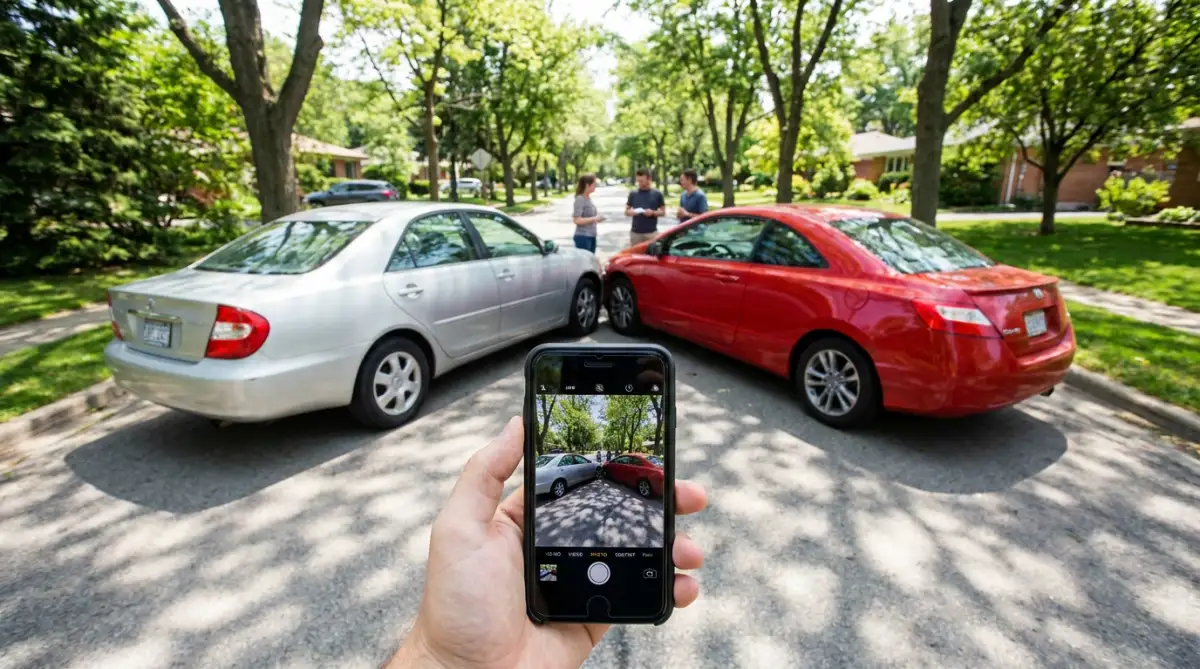
Next, move in for detailed close-up photos of all the physical damage. Photograph the scratched paint, the cracked taillights, and even the shattered glass scattered on the dark asphalt. Make absolutely sure to take a clear, readable photo of the other driver's license plate before they have a chance to drive away.
I learned a very hard lesson about evidence gathering during my first accident experience. My biggest regret was assuming I would perfectly remember every single detail about the crash scene later that evening. I highly recommend taking a quick, continuous video walking around both cars while explaining out loud what just happened. This simple recording trick saved my best friend's insurance claim a few months later when the other driver tried to lie.
Mastering the Information Exchange
Walking up to a complete stranger after a car crash can feel incredibly awkward and tense. Emotions are usually running very high, and people naturally want to defend themselves. Your goal here is to be entirely polite, calm, and strictly business-minded.
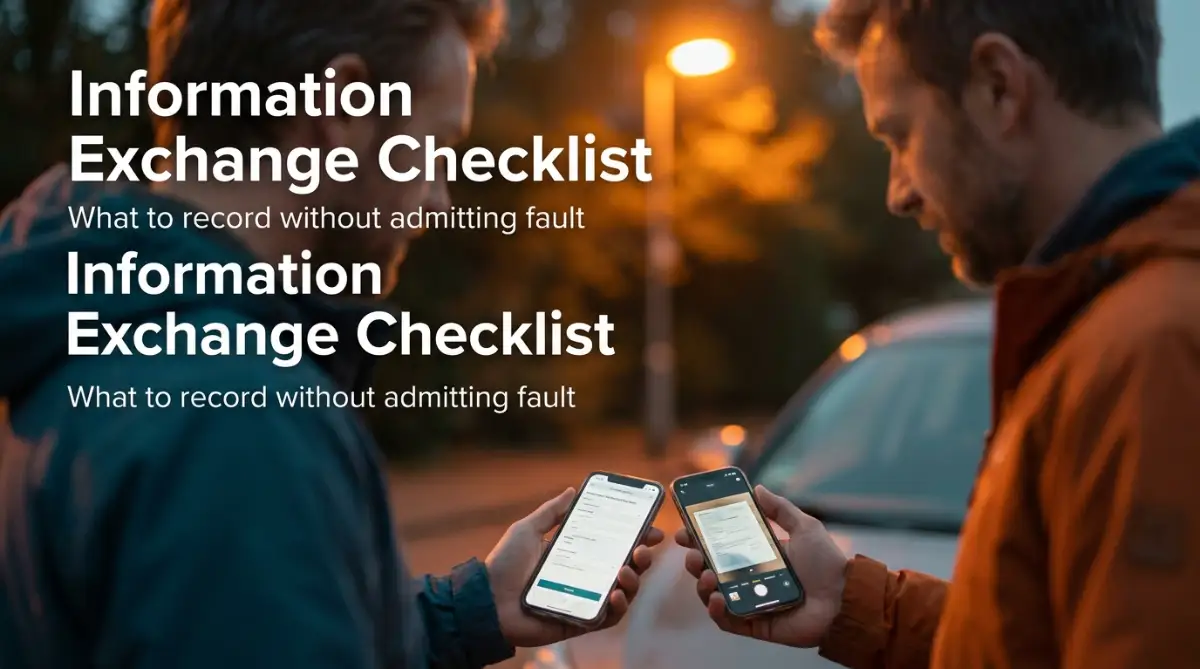
You need to ask for their full name, active phone number, and physical home address. More importantly, you must get their insurance company name and their specific policy number. Writing this down with a pen can lead to spelling mistakes, so simply ask if you can take a clear picture of their physical insurance card.
The Danger of Admitting Fault
When you are nervously talking to the other driver, watch your words very carefully. Human beings have a natural tendency to say "I am sorry" just to break the uncomfortable silence. However, apologizing at an accident scene can be legally interpreted as you fully admitting fault.
You can be polite and ask if they are hurt without ever apologizing for the actual crash. Let the trained police officers and professional insurance adjusters figure out who caused the problem. Your only job right now is to gather cold, hard facts.
Quick Guide: What to Say vs. What to Avoid
To make things incredibly easy to remember, I have created a simple comparison table. This will show you exactly how to communicate safely without risking your future insurance claim.
When and How to Involve Law Enforcement
Many drivers assume that calling the police for a minor bumper scratch is a complete waste of time. They worry that the local officers will be annoyed by such a small, insignificant problem. However, skipping the official police report is one of the most expensive mistakes you can ever make.
A formal police report acts as an unbiased, third-party record of exactly what happened. If the other driver completely changes their story tomorrow, this official document will instantly protect you. Always call the non-emergency police number if the accident is small and nobody is bleeding.
When the officer finally arrives, give them clear, factual, and direct answers. Do not guess the speed you were traveling, and do not make up details to sound completely innocent. If you honestly do not know the answer to the officer's question, simply saying "I am not sure" is the smartest response.
Navigating the First Call to Your Insurance Provider
Once the official police report is filed and you are resting safely at home, it is time to face the insurance company. This phone call can feel very intimidating, especially if you have never filed a claim before. You must report the incident promptly, usually within twenty-four hours, to stay perfectly compliant with your policy rules.
Before you pick up the phone to file a claim, watching a quick breakdown of what insurance adjusters actually look for can save you from accidentally denying your own coverage.
When you finally speak to your assigned claims adjuster, stick strictly to the documented facts. Tell them the exact time, the specific location, and the names of anyone involved. Avoid guessing how much the repairs will cost, because you are not a certified mechanic.
The insurance agent might pressure you to give a recorded statement right away. You have the right to organize your thoughts and politely schedule this recording for the next day. Being completely prepared ensures you do not accidentally say something that ruins your chances of a fair payout.
Refusing the "Under the Table" Settlement Trap
Often, the at-fault driver will beg you not to involve the giant insurance companies. They might pull out a thick stack of cash and offer to pay you directly for the visible damages. They usually claim that keeping it a secret will save both of you from annoying premium increases.
This sounds like a great, easy deal, but it is actually a massive trap. That small scratch on your bumper might just be hiding thousands of dollars in internal structural damage. If you accept their quick cash today and discover serious engine problems tomorrow, that friendly driver will suddenly block your phone number.
You also have zero guarantee that the other person is carrying a valid driver's license. Always trust the established, legal process instead of trusting a desperate stranger on the side of the road. Protecting your own financial future is always your top priority.
DisQuick Checklist: Signs of Hidden Damage to Check Right Away
Don't just look at the paint job. Look closer for these red flags:
- Do the doors, trunk, or hood feel stiff when you try to open them? (Sign of frame damage)
- Are there any neon green or reddish puddles forming under the engine? (Coolant or transmission fluid leak)
- Is your steering wheel pulling slightly to the left or right when you drive home? (Alignment issues)
covering the Hidden Mechanical Damages
Modern cars are incredibly complex machines packed with highly sensitive technology. A tiny bump that barely scratches your exterior paint can completely destroy the expensive parking sensors hidden underneath. Your vehicle's frame might also suffer microscopic bends that completely ruin your wheel alignment.
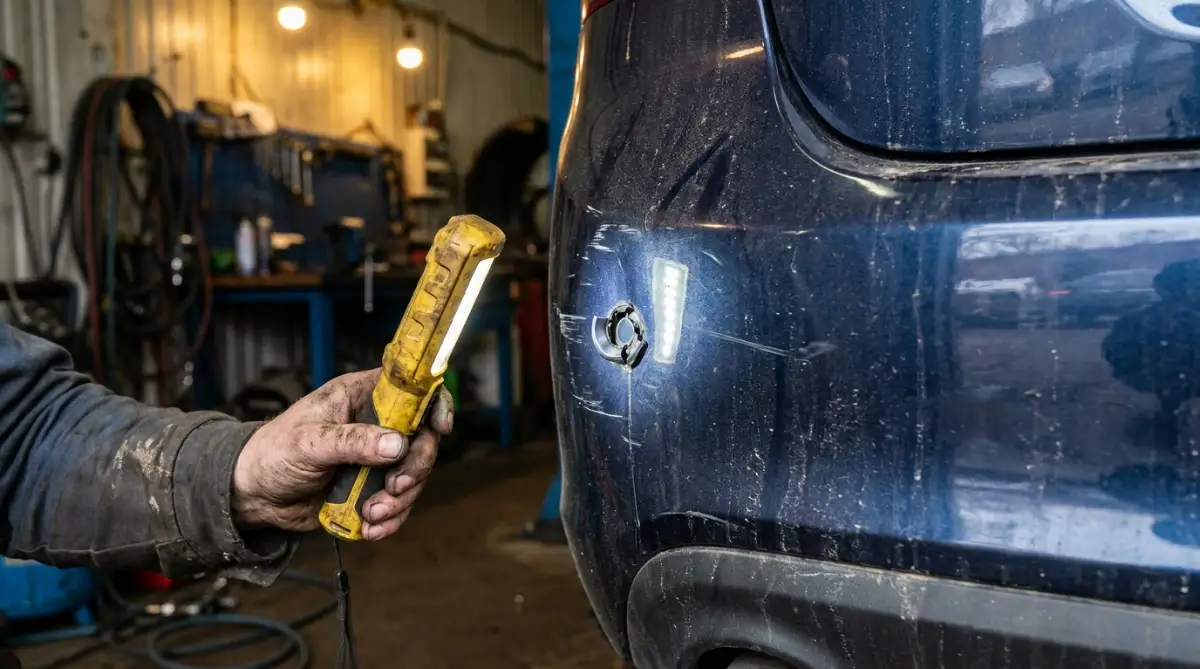
This is exactly why you must never judge a car crash merely by its outside appearance. Even if your car looks perfectly fine, you should take it to a trusted, certified mechanic for a deep diagnostic check. They will put the car on a specialized lift and look for hidden cracks or leaking fluids.
When searching for a good repair shop, remember that you are in charge of the final decision. Your insurance company might highly recommend their own partner shops, but you are not legally forced to use them. Always read local online reviews and ask your neighbors for honest mechanic recommendations.
The Importance of Seeking Immediate Medical Attention
Just like your car can hide severe internal damage, your body can heavily mask physical pain. The massive rush of adrenaline after a crash acts as a natural painkiller. You might feel totally energetic and healthy at the scene, only to wake up the next morning unable to move your neck.
Whiplash is incredibly common in low-speed rear-end collisions. The soft tissues in your neck forcefully stretch beyond their normal limits, causing deep muscle tears. If you wait a whole week to see a doctor, your insurance company will easily argue that your injuries were not caused by the crash.
Visiting an urgent care clinic or your primary doctor on the very same day creates a clear medical timeline. They will document your minor aches and completely rule out internal bleeding or mild concussions. This tiny bit of extra effort guarantees that your medical bills will be fully covered later.
Securing Strong Witness Statements
If there were people standing on the sidewalk who saw the entire crash, they are your best asset. Independent witnesses have no personal reason to lie, making their story highly valuable to the insurance adjusters. However, witnesses usually leave the scene quickly because they do not want to be involved in the drama.
You need to politely approach them immediately after making sure everyone is physically safe. Ask them nicely if they would be willing to share their name and a quick contact number. You do not need them to write a long essay right there on the street.
Just having their phone number allows your insurance company to call them later for a simple statement. A strong statement from a passing dog walker or a store owner can quickly end any annoying dispute about who ran the red light.
Organizing Your Post-Crash Paperwork
Handling an accident claim creates a massive mountain of confusing paperwork. You will receive police reports, medical bills, auto shop estimates, and letters from the insurance adjusters. If you just throw these important papers onto your kitchen table, you will quickly lose track of everything.
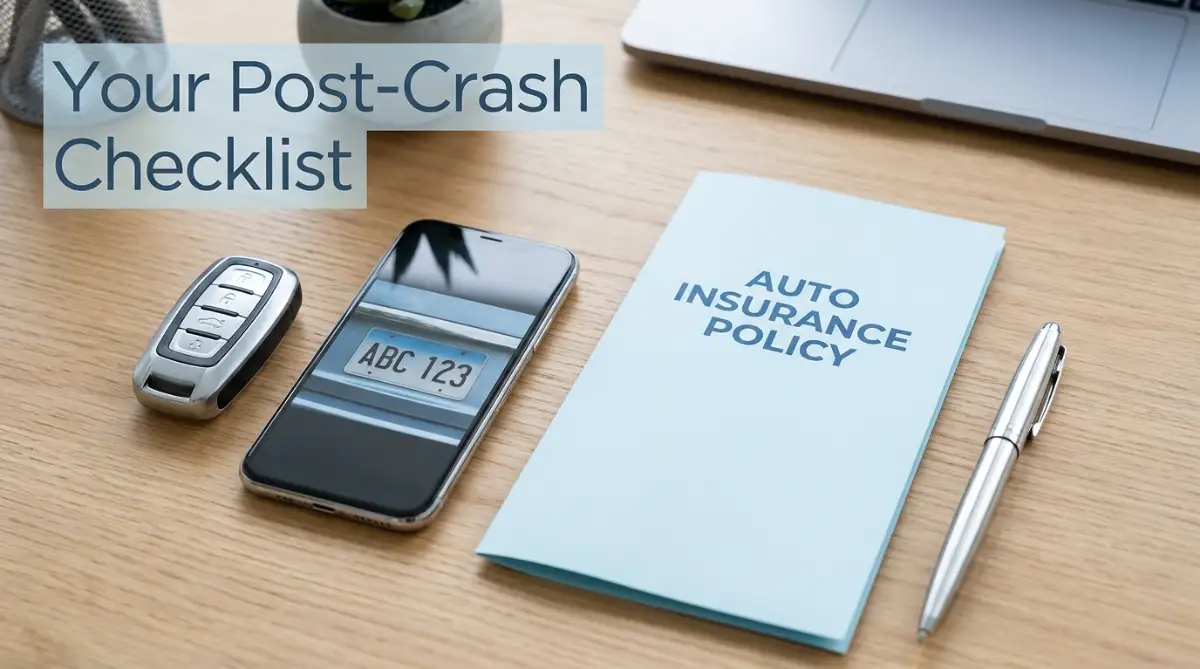
Go to the store and buy a simple, cheap folder to keep all your accident documents in one safe place. Print out the photos you took on your phone and keep a written log of every single phone call you make. Write down the name of the insurance agent you spoke to, the exact time of the call, and what was discussed.
Being highly organized shows the insurance company that you are serious and very hard to fool. When they see that you have a perfect record of every detail, they are much more likely to process your claim faster. Staying actively organized is the ultimate secret to protecting your total peace of mind during this stressful journey.
Next-Level Strategies to Protect Your Wallet
Now that you have safely survived the initial shock of the collision, it is time to think about your long-term financial protection. Most ordinary drivers simply follow whatever their insurance agent tells them to do. However, blindly trusting the insurance company can leave you paying out of pocket for things they should actually cover.
I want to share some incredibly smart, insider secrets that the big auto companies hope you never learn. These specific tactics will help you squeeze every single justified dollar out of your upcoming repair claim. By understanding how the system actually works, you will immediately shift from feeling like a helpless victim to becoming an educated negotiator.
Demanding Original Equipment Manufacturer (OEM) Parts
When you finally take your damaged vehicle to the mechanic, the insurance adjuster will write up a quick repair estimate. They usually base this initial payout on something called "aftermarket" replacement parts. These are generic, third-party car parts made by random companies, not by the brand that originally built your car.
Aftermarket parts are extremely cheap, which is exactly why the insurance companies love using them so much. Unfortunately, these generic parts often do not fit perfectly, and they can even void your car's original warranty. You have the absolute right to politely demand genuine OEM parts for your vehicle repairs.
If your adjuster tries to force you to accept cheap generic parts, you must push back firmly. Explain that you expect your vehicle to be restored to the exact condition it was in before the crash occurred. If you need more official information on how repair standards are legally regulated, you can read the consumer protection guidelines for auto repairs provided by federal regulators.
The Secret "Diminished Value" Claim
Here is a massive financial secret that completely blew my mind the first time I heard about it. Even if a master mechanic fixes your car perfectly, your vehicle has now permanently lost a huge chunk of its resale value. When you try to sell that car in the future, the buyer will see the accident history report and immediately demand a lower price.
This unfair loss in financial value is technically called "diminished value," and most drivers have zero clue they can actually ask for it. If the other driver was completely at fault, their insurance company owes you money for this invisible loss. You just have to be brave enough to formally ask them for a diminished value payout check.
You will likely need to hire an independent car appraiser to prove exactly how much value your vehicle lost due to the crash. Websites like Kelley Blue Book's guide on diminished value offer excellent overviews of how to calculate this hidden depreciation. Getting this extra check can easily save you thousands of dollars when you finally trade in your car.
Decoding Uninsured Motorist Scenarios
Sometimes, the person who bumps into your car will simply drive away, leaving you entirely alone on the dark road. Other times, they might stay, but you quickly discover they do not have an active insurance policy. This terrifying scenario leaves you wondering exactly who is going to pay for your expensive mechanic bills.
This is exactly where your own policy's backup features come into play to save your hard-earned money. If you have been paying close attention to your insurance paperwork, you should already have safety nets in place. Exploring how uninsured motorist coverage saves you is incredibly smart before you ever get into a crash.
Your own company will step in and cover your medical bills and repair costs without raising your rates aggressively. It is a fantastic safety feature that acts as a financial shield against completely irresponsible drivers on the road.
Managing the Hidden Stress of Unexpected Bills
Even when insurance covers the main repairs, a minor accident always brings annoying extra expenses. You might need to pay out of pocket for a rental car for a few weeks, or cover steep deductibles upfront. This sudden financial pressure can easily throw your perfectly planned monthly budget into pure chaos.
Many people panic and put these unexpected emergency expenses onto high-interest credit cards just to survive the week. This is a very dangerous habit that can spiral completely out of control before you even realize it. Understanding the hidden costs of revolving credit lines will stop you from creating a brand new debt crisis just to fix a scratched bumper.
If you are already managing a tight household budget, these sudden car expenses can feel incredibly overwhelming. I have seen families stress so much about a broken taillight that they miss their other important monthly payments. For example, if you are currently focused on navigating student loan forgiveness requirements, a sudden car repair bill should never derail your entire financial progress. Stay calm, use your emergency savings if needed, and wait patiently for the insurance reimbursement check.
The Expensive Traps That Ruin Your Claim
Knowing exactly what to do after a crash is only half the battle won. Knowing exactly what to avoid is often much more impactful for your long-term success. I have watched incredibly smart people make tiny, innocent mistakes that completely destroyed their chances of a fair insurance payout.
When you are stressed and tired, it is very easy to drop your guard and make emotional decisions. Insurance companies employ massive teams of highly trained investigators who are actively looking for reasons to deny your claim. You must navigate these tricky weeks with absolute caution and clear focus.
The Social Media Silence Rule
We live in an era where people share every single moment of their daily lives on the internet. It is totally natural to want to post a picture of your damaged car on Facebook to get sympathy from your closest friends. However, posting absolutely anything about your minor crash online is a massive legal trap.
Insurance adjusters will immediately search for your social media profiles the second you file a medical claim. If you claim that your neck hurts from the crash, but you post a smiling picture of yourself carrying heavy groceries, they will screenshot it immediately. They will use your own innocent weekend photos to confidently argue that you are completely faking your painful injuries.
Do yourself a massive favor and stay entirely off social media until your case is officially closed and paid. Do not post angry rants about the other driver, and do not discuss your physical therapy sessions on public forums. Silence is your best and strongest defense mechanism during an active insurance investigation.
Ignoring Delayed Physical Pain
We briefly talked earlier about the massive adrenaline rush masking your initial bodily pain at the crash scene. A major pitfall is assuming that if you feel fine on day three, you are completely out of the woods. Sometimes, deep soft tissue injuries take a full week to clearly show their painful symptoms.
If you start feeling sharp lower back pain five days after the crash, do not just take aspirin and ignore it. You must go back to your doctor immediately and relate this new pain directly back to the accident. For a deeper medical understanding of how these delayed injuries work, the Mayo Clinic's research on whiplash symptoms explains why soft tissue damage takes so long to appear.
If you tough it out and suffer in silence for a month, the insurance company will completely refuse to pay those late medical bills. They will boldly claim that you probably hurt your back doing yard work at home, not during the actual car crash. Always create a solid, undeniable paper trail with your medical provider.
Giving a Recorded Statement Unprepared
Within a few days of the crash, the other driver's insurance agent will probably call your cell phone. They will sound incredibly friendly, polite, and deeply concerned about your overall well-being. They will smoothly ask if you mind answering a few quick questions while they record the phone call for "quality purposes."
Never give a recorded statement to the opposing insurance company without preparing your exact answers first. Their specific questions are carefully designed by lawyers to make you accidentally admit partial fault for the collision. If they ask how fast you were going and you say, "I guess I was going a bit fast," they will use that exact recording to instantly reduce your final payout.
Politely tell them that you are not ready to provide a recorded statement at this specific moment. You can always ask them to send their questions in a formal email so you can review them carefully. Remember, their primary job is to protect their own company's money, not to help you get a fair deal.
Failing to Update Life and Family Policies
Surviving any kind of traffic collision, even a minor one, usually forces you to think deeply about your own mortality. It is a harsh wake-up call that unpredictable things can happen to good people on any random Tuesday. Many drivers completely forget to use this eye-opening moment to review their wider family safety nets.
If you realized during the crash that your family would struggle financially if you were badly hurt, it is time to check your policies. For instance, understanding the dangers of outliving your term policy is incredibly important for long-term peace of mind. A simple fender bender is the universe giving you a gentle reminder to get your personal paperwork in perfect order.
Also, if you had a younger family member in the car with you, this event might change how you view their driving future. When it is finally time for them to drive, you will want to know about adding a teen driver to your policy securely. Use this slightly stressful accident as a powerful motivation to become a much smarter, more prepared household.
Your Action Plan for a Stress-Free Tomorrow
Getting into a minor vehicular crash is absolutely never a fun experience for anyone involved. It eats up your free time, tests your patience, and forces you to deal with frustrating corporate systems. However, you now possess the exact knowledge required to handle this annoying situation like a true professional.
You no longer have to feel intimidated by aggressive insurance agents or confusing mechanic estimates. By staying perfectly calm at the scene, gathering undeniable visual evidence, and protecting your medical rights, you hold all the real power. You are fully capable of turning a messy, chaotic afternoon into a smoothly managed success story.
My biggest piece of advice to you today is to simply prepare your vehicle before anything bad ever happens. I always keep a fresh pen, a paper notepad, and an old disposable camera right inside my glovebox just in case my smartphone battery completely dies. Taking five minutes today to organize your car will instantly give you massive peace of mind for all your future road trips.
Common Questions About Post-Crash Situations
How long do I actually have to report a minor accident to my insurance?
Most major auto insurance policies require you to report any collision within a very strict 24 to 48-hour window. If you wait several weeks to tell them about the scratched bumper, they can legally deny your claim for taking too long. Always call them the very same day, even if you are just opening a preliminary file.
Will my monthly premium go up if the crash was not my fault?
In most states, your insurance company cannot legally raise your rates if another driver is proven to be 100% at fault. However, if you live in a "no-fault" state, any claim you make might slightly impact your future premium renewals. You should always ask your specific agent to explain your state's unique premium protection rules.
Can I legally drive my car if the bumper is hanging off?
You should never drive a vehicle if any exterior parts are dragging on the ground or blocking your headlights. Police officers can easily write you an expensive ticket for operating an unsafe vehicle on public roads. If your car has sharp, dangerous edges or leaking fluids, you must call a tow truck to move it safely.
Should I agree to skip the insurance if the other driver pays me cash?
Accepting a quick cash handshake deal on the side of the street is incredibly risky and almost always a bad idea. That small stack of cash will rarely cover the hidden internal damages a real mechanic will find later. You also completely lose your legal right to claim any delayed medical injuries if you hide the accident from the authorities.
Do I really need to call the police for a tiny parking lot scratch?
Even for a tiny scratch, having a completely neutral police officer document the scene is highly recommended. It instantly stops the other driver from going home and inventing a fake story about how you aggressively backed into them. A simple, basic police report is your absolute strongest shield against future insurance fraud.
Disclaimer: The information provided in this blog post is for general educational and informational purposes only and does not constitute official legal, medical, or financial advice. Insurance policies and local traffic laws vary significantly by state and country. Always consult directly with a licensed insurance agent, a certified mechanic, or a qualified legal professional regarding your specific personal situation before making any major financial decisions.
![7 Hidden Money Traps You Can Avoid With a Simple Policy Audit [Step-by-Step]](https://vimex24.com/storage/uploads/blogs/1788623141_7-hidden-money-traps-you-can-avoid-with-a-simple-policy-audit-step-by-step.webp)