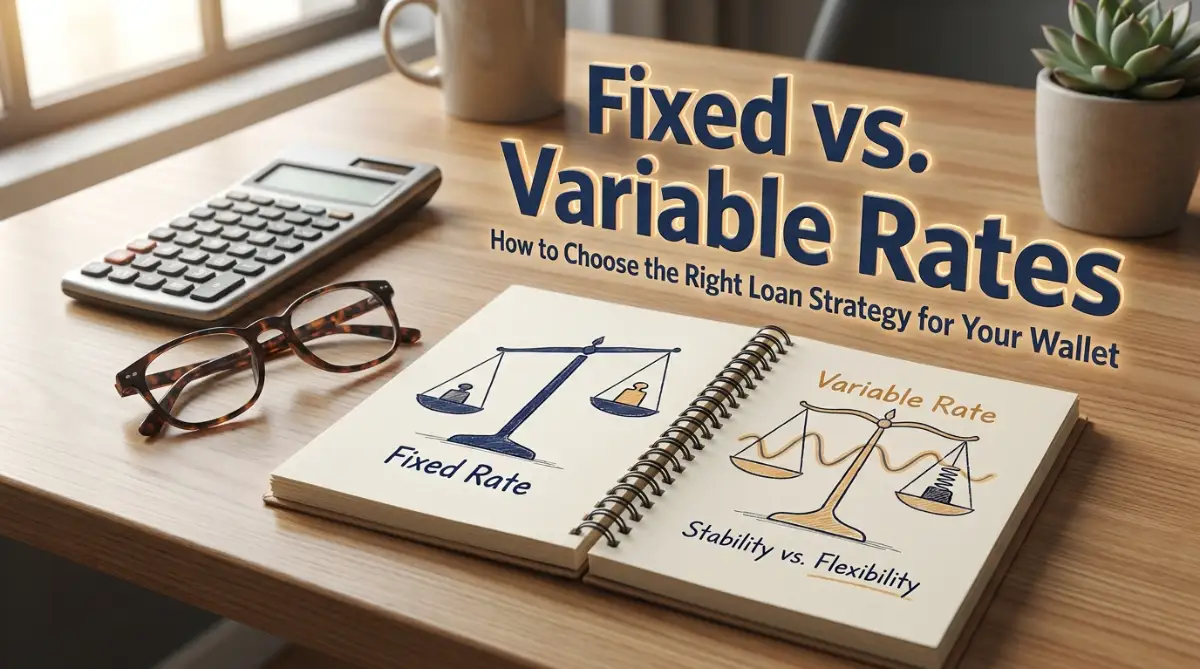
Why Choosing the Wrong Loan Rate Can Ruin Your Budget
"Picking a personal loan is easy, but choosing the wrong interest rate style can silently drain your bank account. If you don't know how fixed and variable rates actually impact your monthly bills, you might end up paying hundreds of dollars in unexpected costs. Let's look at how these rates work in the real world so you can keep your budget safe and stress-free."
I thought I was being smart by choosing a rate that started out very low. But I did not truly understand how that rate could change over time. It was a painful lesson that cost me a lot of sleepless nights and extra money.
I just wanted a simple way to pay off my debt without any scary surprises. Instead, I found myself checking my bank account every single morning with a heavy feeling in my chest. It felt like playing a game where the rules changed whenever the bank wanted.
Many people face this exact same struggle every single day when they look for a loan. You take out a personal loan to fix your home or cover a sudden emergency bill. You think you are making a smart move to help your family get ahead.
Then, the reality of shifting interest rates hits your monthly budget like a cold wave. One month you can easily afford the payment, but the next month you have to skip eating out. This constant worry wears you down and steals your daily peace of mind.
You start to worry about big financial markets that you cannot control at all. It is incredibly hard to plan your life when your biggest monthly bill keeps changing. You deserve to know exactly where your hard-earned money is going every single month.

### 📌 Quick Budget-Savers: Key Takeaways
- Predictability Wins: Fixed-rate loans guarantee your payments will never rise, making them the safest bet for tight, long-term family budgets.
- Lower Starting Costs: Variable-rate loans usually start with cheaper rates, but they carry the risk of rising if the national economy shifts.
- Always Check for Caps: Never sign a variable loan that doesn't have 'rate caps' to limit how high your monthly bills can climb.
- The Best Exit Plan: If you choose a variable rate, build a small 'rate shield' savings cushion to cover sudden payment spikes
The Complete Guide to Smart Interest Rate Decisions
Let us start by looking at the most predictable option you have. A fixed interest rate stays exactly the same from the day you sign your loan until the day you pay it off. This means your monthly payment will never change, no matter what happens in the world.
Imagine buying a cup of coffee for the exact same price every day for five years. That is the kind of peace of mind a fixed rate offers your monthly budget. You can set up automatic payments and completely forget about checking for changes.
This option is highly popular for people who love to plan their monthly spending. You know exactly how much money is leaving your account on the first of every month. There are no sudden shocks or hidden fees waiting for you in your mail.
The biggest benefit of a fixed rate is safety and easy budgeting. You can build a reliable long-term plan because your loan costs are locked in. This makes it much easier to save money for other important family goals.
However, this safety sometimes comes with a slightly higher starting cost. Banks often charge a premium rate to guarantee that your payments will not rise later. If general market interest rates drop, you will still be stuck paying your higher locked-in rate.
You might feel a bit left out if you see your friends getting cheaper loans later. To get a lower rate in that scenario, you would have to pay fees to refinance your loan. That is the main trade-off you must consider before choosing this path.
Now let us look at the other side of the coin. A variable interest rate is a rate that can move up and down over time. It is directly tied to a benchmark rate set by the central bank.
If the benchmark rate goes down, your monthly payment will usually drop as well. But if the benchmark rate climbs, your monthly bill will quickly follow it upward. It is a shifting system that requires you to stay alert and watch the market.
These loans usually start with a much lower rate than fixed-rate loans. This makes them look highly attractive to people who want to save money right away. But you must remember that this low price is not guaranteed to last forever.
The main reward of a variable rate is the chance to save money on interest. If market rates fall during your loan term, you get a cheaper loan without doing any extra work. This can put extra cash back into your pocket every single month.
The obvious risk is that your payments can rise to a level you cannot afford. If the economy changes quickly, your monthly bill might jump by fifty or a hundred dollars. This can easily throw your entire monthly budget out of balance.
You have to ask yourself if you can handle that kind of financial surprise. If a sudden increase in your bills will cause you stress, this option might not be right. It requires a strong stomach and some extra cash saved in your bank.
You might wonder how banks actually decide to change your variable rate. They use a simple formula that combines an index rate with their own margin. The index rate is the shifting part that depends on the national economy.
To put this in real numbers: if your loan is $10,000 with a 5% starting variable rate, your initial monthly interest is about $41. If inflation spikes and the index rate climbs by 2%, your rate becomes 7%, pushing your monthly interest cost to $58. Over a 5-year period, that small shift can cost you over $1,000 in extra interest alone
The margin is a fixed percentage that the bank adds to make a profit. For example, if the index is three percent and the margin is two percent, your rate is five percent. If the index rises to four percent, your new rate becomes six percent.
This formula is written clearly in your loan agreement before you sign it. You should always ask your lender how often they plan to review and adjust this rate. Some banks adjust it every month, while others do it once a year.
To protect borrowers, many variable loans come with special safety limits called caps. A rate cap sets a maximum limit on how high your interest rate can actually go. It also limits how much the rate can jump during a single adjustment period.
For example, a loan might have a lifetime cap of ten percent. This means your rate can never go above ten percent, even if the market goes crazy. Having a cap gives you a small safety net in a shifting economy.
Always read the fine print to see if your loan has these protective caps. If a variable loan has no caps at all, you are taking on a huge risk. You should search for a lender that offers these basic protections.
To make your choice easier, it helps to see how these two options compare directly. Each style serves a very different type of borrower and financial goal. Let us look at a simple breakdown of how they match up against each other.
Before we look at the comparison table, watch this helpful video that explains these loan rates in simple terms. It will make your decision much easier and save you from making a costly mistake.
[Insert YouTube Video Link Here]
Now, let us look at the key differences in a clear table format. This will help you see which option fits your personal style of managing money.
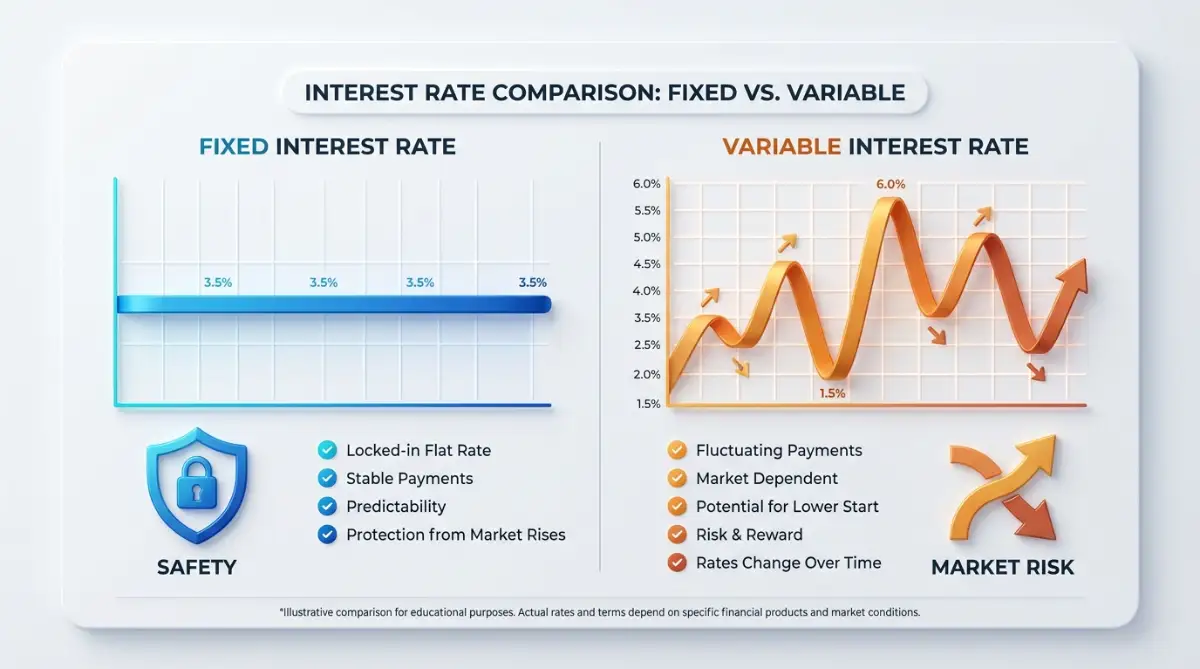
As you can see, both systems have clear trade-offs that you must think about. Your choice depends heavily on how much risk you are willing to take with your budget.
### Quick Decision Rule: Which One is Your Best Match?
- Choose Fixed if: Your monthly budget is strict, you plan to repay the loan over 3+ years, and you value a stress-free, predictable financial life.
- Choose Variable if: You plan to pay off the loan in under 18 months, you have a solid emergency fund, and current market rates are highly projected to drop
Let us look at two different people to see how these choices play out. Meet Sarah, who has a tight monthly budget and is raising two school-aged kids. She needs to know her exact expenses so she can pay for groceries and school clothes.
For Sarah, a fixed-rate loan is the best choice because it offers complete safety. Even if interest rates rise nationwide, her family budget remains safe and stable. She can sleep soundly knowing her loan bill will not change next month.
Now meet Alex, who has a flexible income and wants to pay off his loan very quickly. He plans to make extra payments every month to clear his debt in one year. He is not worried about short-term rate changes because his loan term is short.
For Alex, a variable-rate loan makes a lot of sense because of the lower starting rate. He can take advantage of the lower initial cost to pay down his principal balance faster. By the time the rate might rise, he will have already paid off most of his loan.
There are many myths out there that confuse people who need a loan. One common myth is that variable rates are always cheaper than fixed rates. While they start lower, they can quickly become more expensive if the market shifts upward [1].
Another myth is that fixed rates are always bad when interest rates are dropping. In reality, a fixed rate protects you from the stress of watching the news every day. The peace of mind you get is often worth paying a slightly higher rate.
You might also hear that you can easily switch between fixed and variable rates whenever you want. While some banks allow this, they often charge heavy fees to make the change. You should always make your choice assuming you will keep it for the whole loan term.
The length of your loan is another important piece of the puzzle you must look at. If you are taking out a short loan for one year, a variable rate is less risky. There is less time for market rates to make giant climbs that hurt your wallet.
But if you are signing a loan for five or seven years, a lot can change. The economy goes through many ups and downs over such a long period of time. In this case, a fixed rate is much safer because it shields you from long-term risks.
Always match your rate choice to the actual time it will take to pay off your debt. Long-term goals need high safety, while short-term goals can sometimes handle a bit of risk. Think about where you want to be financially in three to five years.
Before you sign any loan paper, you must talk openly with your lender. Ask them to show you the exact payment amounts for both fixed and variable options. This will help you see the real dollar difference between safety and risk.
You should also ask about any hidden fees that might apply to your loan. Some lenders charge extra fees if you pay off your fixed-rate loan ahead of schedule. Knowing these rules early will save you from paying unnecessary penalties later on.
Finally, ask the lender to explain how they calculate rate adjustments on their variable loans. If they cannot explain it in simple terms, you should look for a different bank. A good lender is always happy to make things clear for you.
If you decide to go with a variable rate, you need a smart plan to manage the risk. One great trick is to make payments as if you had a higher fixed rate. Take the extra cash you save and put it into a special emergency fund.
This creates a financial cushion that can absorb any sudden rate increases in the future. If rates go up, you simply draw from this fund to cover the extra cost. If rates stay low, you end up with a nice pile of savings.
It is a simple strategy that gives you the best of both worlds. You get the savings of a variable rate along with the security of a backup plan. It just takes a little bit of discipline to keep from spending that extra cash.
I once chose a variable loan because the starting rate looked so incredibly cheap. I did not build an emergency fund, and my payments jumped by fifty dollars a month just three months later. My biggest tip is to always build a small cash cushion before you choose any variable rate loan.
That simple mistake forced me to cut back on things I really loved just to pay my bill. I learned that a low starting rate is only a win if you are prepared for it to rise. Do not make the same mistake I made by chasing a cheap offer blindly.
Your credit history is another key factor that lenders look at when setting your rate. If you have an excellent credit score, you will get the best offers for both rate styles. Lenders see you as a safe partner and will give you lower starting points.
If your credit score needs some work, your interest rates will naturally be higher. In this case, a fixed rate might be even more important to protect your tight budget. You do not want to add market risks to an already expensive loan rate.
Take some time to check your credit report before you apply for any loan. Cleaning up small errors on your report can boost your score and lower your rate. This small effort can save you hundreds of dollars over the life of your loan.
Managing a loan is not just about choosing the right interest rate style. It is about building healthy habits that keep you out of financial trouble. Always borrow only what you truly need and avoid taking extra money just because it is offered.
Make sure your total monthly debt payments do not take up too much of your income. A safe rule is to keep all your debt bills under thirty percent of your take-home pay. This keeps you safe even if you experience a temporary loss of work.
Set up automatic reminders so you never miss a payment deadline. Missing a payment can damage your credit score and trigger expensive late fees. Consistently paying on time is the single best way to build a bright financial future.
In the end, the choice between fixed and variable rates comes down to your personal feelings about risk. Some people value peace of mind and predictability above everything else. Others are willing to watch the market closely if it means saving a few dollars.
There is no single correct answer that works for every single person. Look closely at your monthly income, your savings, and your future career plans. Choose the rate style that lets you sleep peacefully without worrying about tomorrow.
You now have the knowledge needed to make a smart and confident decision. Take your time, compare different offers, and ask the right questions. Your financial health is worth the extra time and effort you put into it.
Master-Level Strategies for Managing Long-Term Loan Rates
Managing your personal finances is a lot like sailing a boat on shifting waters. When you choose an interest rate style, you are setting your sails for the journey ahead. If you want to keep your balance over time, you need a smart plan that protects your cash flow from unexpected changes in the market.
The Art of Loan Timing and Market Tracking
Many smart borrowers do not just accept the first loan offer they see in the mail. They spend time watching how national interest rates move up and down before they apply. This practice of timing your loan can save you thousands of dollars over the life of your debt.
When national interest rates are low, it is usually the best time to lock in a fixed rate. This ensures that you keep that low price even if the general economy starts to struggle later on. You can check the official Federal Reserve Board website to see how national benchmark rates are currently moving.
If rates are high but expected to drop, a variable rate might look tempting. However, you should only take this path if you have a clear plan to refinance your debt later. Keeping a close eye on market trends helps you make active choices instead of reactive ones.
Creating a Personal Rate Shield
A personal rate shield is not a complex financial tool that you have to buy. It is simply a dedicated savings bucket designed to absorb sudden increases in your loan bills. If you have a variable rate, this shield is the best way to protect your mental peace.
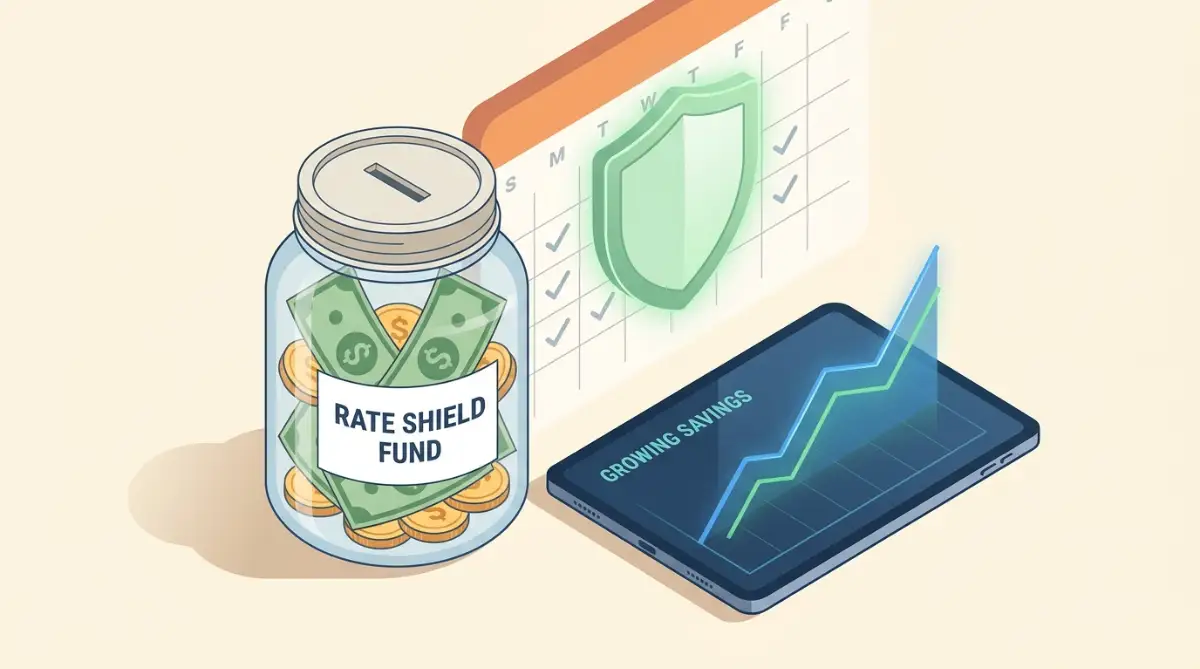
You can build this shield by setting aside a small percentage of your income each month. If your monthly loan payment goes up, you use this fund to cover the difference. This prevents you from having to pull money away from your food or utility budget.
Having this cash cushion also prevents you from falling behind on your payments. Lenders love to see borrowers who are prepared for changing economic seasons. It is a simple habit that turns a risky loan into a manageable monthly expense.
The Early Paydown Method
One of the best secrets to beating high interest costs is paying down your loan balance ahead of schedule. When you make extra payments, you directly reduce the principal balance of your debt. This means the bank has a smaller amount of money to charge interest on.
For a variable loan, this method is an excellent way to fight rising interest rates. If you reduce your principal quickly, even a rate hike will not hurt your budget as much. It is a highly active way to take control of your financial destiny.
Before you start doing this, make sure to read your loan contract carefully. Some lenders charge penalty fees if you pay off a fixed loan too early. Always ask your bank if they allow fee-free extra payments before you sign the paperwork.
Using Loans for Smart Home Value Protection
Many people use personal loans to fix up their properties and raise their home values. If you are taking out a loan for home repairs, you must plan your borrowing carefully. You do not want to take on a massive debt that your home value cannot support.
Before borrowing money for a house purchase or major repair, it is smart to learn how to spot house wrecking structural flaws at an open house. Knowing these issues beforehand keeps you from taking out massive loans for hidden damages. It is all about protecting your budget from unexpected structural surprises.
If you plan to use a personal loan to renovate and then sell your house, timing is everything. A successful renovation can help your property pass its inspection with flying colors. This is especially helpful when you are navigating your first home appraisal and handling a low valuation with your lender.
A Systematic Plan for Borrowing Success
To keep your finances running smoothly, you need a clean system to manage your bills. Think of your budget as a large machine with many moving parts that must work together. If one part slows down, the entire system can quickly experience problems.
Keep your payment systems simple and automated so you do not have to worry about dates. Set up your bank account to pay your loan bill the day after your paycheck arrives. This keeps your money moving smoothly without any manual effort or forgotten deadlines.
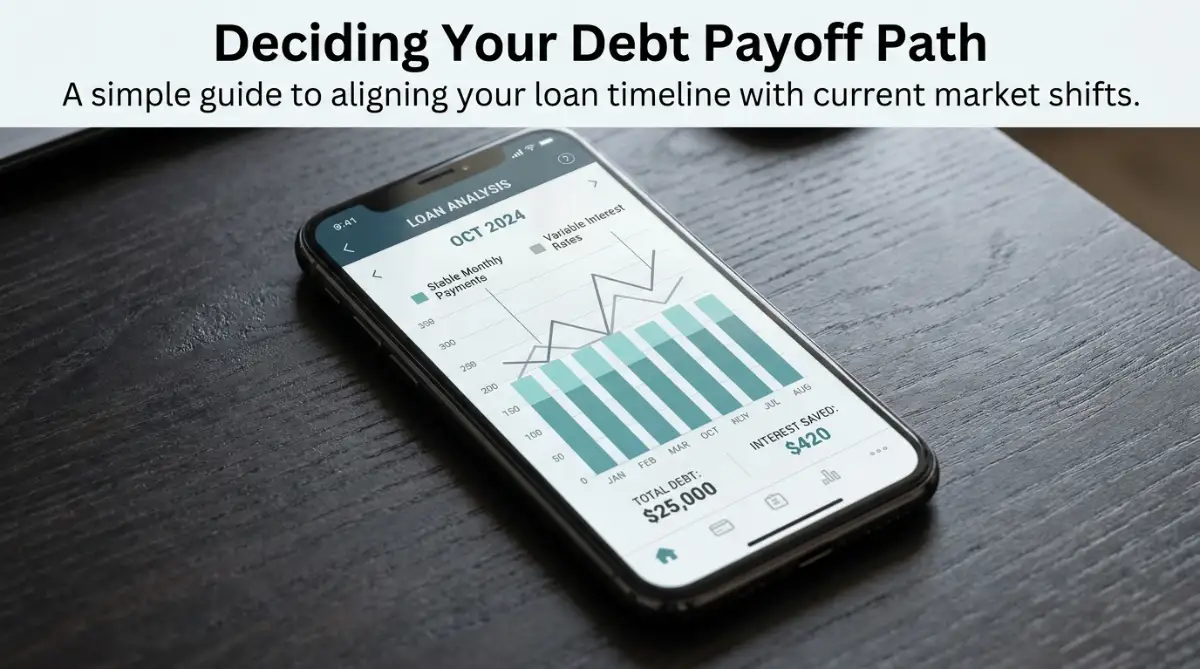
Dangerous Pitfalls That Can Break Your Personal Finances
When people shop for loans, they often get distracted by flashy advertisements. It is incredibly easy to make mistakes when you are looking at complex numbers and bank terms. If you do not watch out for these traps, you could end up trapped in a cycle of expensive debt.
Falling for the Charm of Initial Low Offers
The most common trap is choosing a loan based only on the starting interest rate. Many lenders offer ultra-low promotional rates to get you to sign the loan paper. These are often called teaser rates, and they do not last very long.
Once the promotional period ends, your variable rate can jump up significantly. If you only budgeted for the starting rate, you will struggle to pay the new monthly bill. Always ask your lender what the maximum possible rate will be after the promotion ends.
This trap causes immense stress for families who are already living paycheck to paycheck. They believe they found a cheap deal, only to see their bills skyrocket a few months later. You must look past the starting price and plan for the worst-case scenario.
Neglecting the True Cost of Shifting Rates
Another major mistake is assuming that interest rates will always stay low. The economy moves in cycles, and rates can climb rapidly when inflation rises. If you have a variable rate loan, you are fully exposed to these economic swings.
Some people ignore these trends because they think they can easily handle a small rate increase. But even a tiny two percent increase can add thousands of dollars to a long-term loan. This is money that could have gone toward your retirement or your children's education.
You must sit down and run the numbers for a high-rate scenario before you borrow. If a worst-case rate hike will make you miss payments, do not take the loan. It is far better to be safe with a fixed rate than to gamble with your financial stability.
Skipping the Fine Print on Refinancing Restrictions
Many borrowers take out variable loans with the hope of refinancing if rates go up. They think they can simply switch to a fixed rate whenever they want. However, refinancing is not always as easy or cheap as it sounds.
Refinancing a loan often requires you to pay application fees, closing costs, and administrative charges. If your credit score has dropped since you took out the loan, you might not even qualify for a better rate. You could find yourself stuck in a high-rate loan with no easy way out.
Always read the terms regarding refinancing and rate conversions before signing. Some loans have built-in options that let you lock in a fixed rate for a small fee. Knowing these rules in advance gives you a realistic exit plan if the market shifts.
Managing Complex Loan Decisions with Simple Thinking
Understanding all the math behind interest calculations can sometimes feel totally overwhelming. Lenders use complicated formulas and technical words to explain how your monthly payment changes. It can make a simple personal loan feel like an advanced science experiment.
Do not let complicated terms scare you into making a hasty decision. If a lender cannot explain your rate formula in plain English, walk away. You should only borrow money when you fully understand where every single dollar is going.
Taking Control of Your Debt Strategy Today
Choosing between a fixed and variable interest rate is one of the most important decisions you will make for your budget. A fixed rate offers you a steady path with no surprises, making it perfect for long-term security. A variable rate can save you money early on, but it requires you to be ready for shifting market waves.
The best financial path is the one that fits your personal lifestyle and comfort level. If you love predictability and hate surprises, lock in a fixed rate and do not look back. If you have extra cash to spare and plan to pay your loan off quickly, a variable rate can be a powerful tool.
To protect your family, you can visit the Consumer Financial Protection Bureau to learn more about your rights as a borrower. They offer free resources to help you spot unfair loan terms and avoid hidden bank fees. Taking the time to educate yourself is the ultimate way to build a secure financial future.
My personal journey taught me that financial peace of mind is worth more than a few saved dollars. I encourage you to look closely at your budget today and make a choice that truly protects your sleep. You have the power to take charge of your debt and build a bright, stress-free path forward.
Important Financial Disclaimer
The information provided in this article is for educational and informational purposes only. It does not constitute professional financial, investment, or legal advice. Interest rates, loan terms, and financial regulations can vary greatly depending on your location, lender, and individual credit profile. Always consult with a certified financial planner or a professional advisor before making any major borrowing or investment decisions.

![7 Hidden Ways Mandatory Forbearance Destroys Your Credit [Avoid These Mistakes]](https://vimex24.com/storage/uploads/blogs/1788962201_7-hidden-ways-mandatory-forbearance-destroys-your-credit-avoid-these-mistakes.webp)