
The Silent Heartbreak of a Beautiful but Broken Home
I almost bought a disaster once. You walk into an open house, see the shiny quartz countertops, the fresh paint, and immediately start planning where the couch will go. But here is the hard truth: fresh paint hides ugly secrets. Before you fall in love with a house and sign away your savings, you need to know how to spot the hidden structural nightmares. I am going to show you exactly how to look past the beautiful staging and protect your bank account.
But deep behind those freshly painted walls, a silent financial disaster is waiting to unfold. Underneath that new coat of paint, the concrete foundation is slowly splitting apart. The shifting soil below the property is unevenly sinking, pulling the entire wooden framing of the house along with it. Within just a few months of moving in, your dream sanctuary can easily turn into a source of endless anxiety and stress.
You lie awake at night listening to the strange, loud creaking sounds coming from the attic. You watch in horror as tiny, thin cracks begin to spread across your clean drywall like spiderwebs. Your hard-earned cash reserves start disappearing into a black hole of urgent repair bills. This is the painful, expensive reality that many unsuspecting home buyers experience when they focus only on cosmetic staging and ignore structural problems.
You do not have to fall into this stressful trap. By learning how to look past the beautiful furniture and temporary decorations, you can keep your family safe and save your bank account. Let us look at what is really happening beneath the surface of a house.
What You Need to Know Before Buying:
- Always test doors and windows—sticking frames mean sinking floors.
- Watch out for diagonal drywall cracks starting at door corners.
- Check the outside dirt—it should slope away from the house, never towards it.
- Do the quick "marble test" on hard floors to spot hidden foundation dips.
A Walkthrough of Structural Integrity: What Your Eyes Must Catch
When you enter an open house, you need to think like an inspector rather than a guest. The seller has spent time and money to hide the home’s flaws, which means you have to be extra observant. Let us walk through the key areas you need to inspect during your brief visit to protect yourself from buying a lemon.
The Warning of the Sticking Door
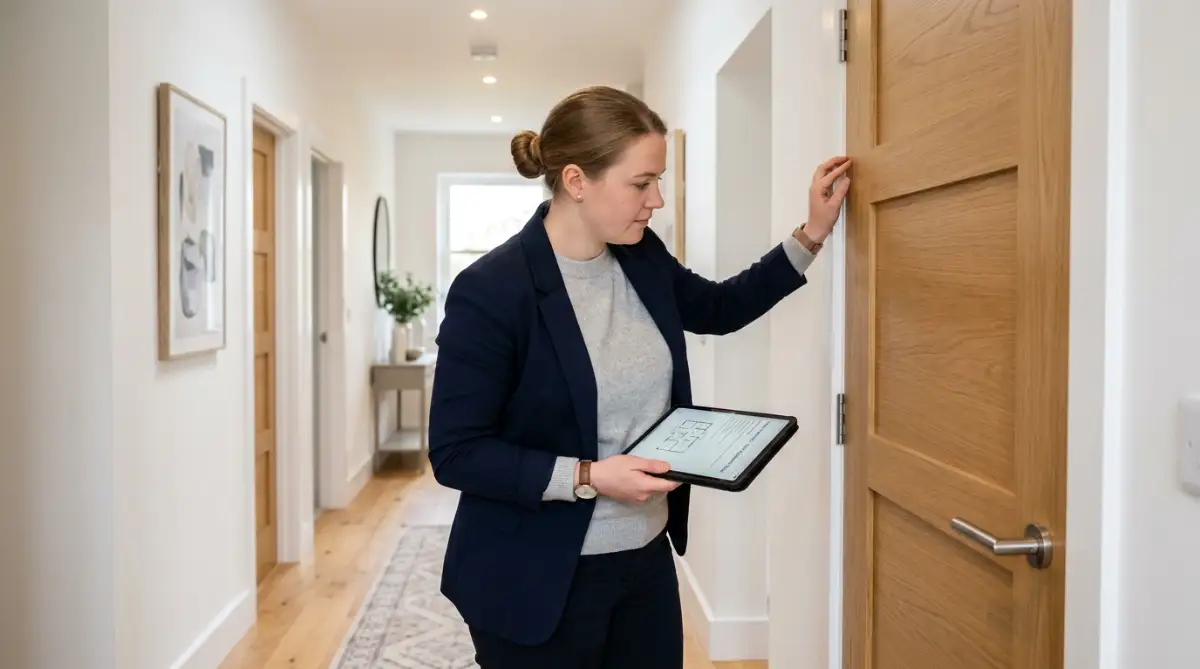
One of the easiest ways to spot a shifting foundation is by simply opening and closing the doors. Walk through every single room and test the bedroom, bathroom, and closet doors. If a door rubs against the top of the frame or sticks tightly when you try to open it, pay close attention.
Doors are hung in perfectly square wooden frames when a home is built. When the foundation below settles unevenly, those square frames distort. This slight tilt causes the doors to scrape against the wood, making them difficult to latch properly.
Do not let the real estate agent convince you that the wood has just expanded due to summer humidity. While humidity does affect wood, a door that refuses to close completely across multiple rooms is a clear sign of structural movement.
Decoding Drywall Cracks in the Corners
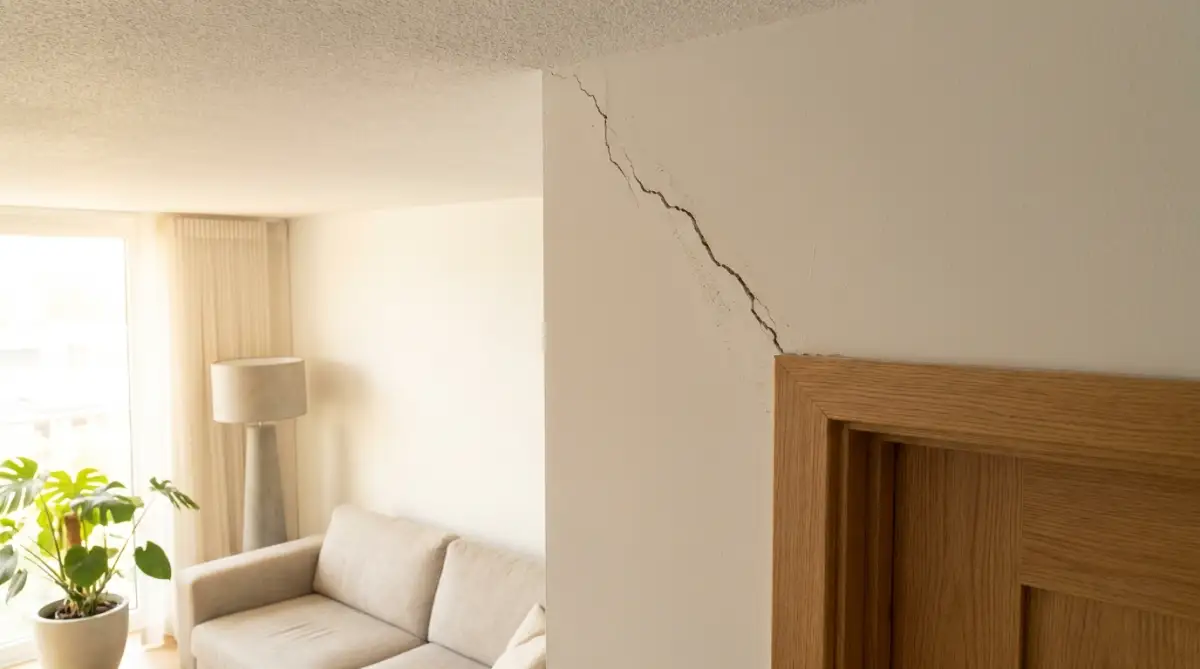
Drywall is a rigid material, which makes it highly sensitive to any shifting or twisting in the home's wooden frame. As you walk through the interior rooms, look up at the corners of the windows and the doorways. Look for diagonal cracks that start at the top corner of a frame and travel upward toward the ceiling.
Small, straight hairline cracks above a joint are sometimes just the result of normal settling or poor taping during construction. However, wide diagonal cracks are a strong indication that one side of the wall is sinking faster than the other.
Also, keep an eye out for horizontal cracks running along the area where the wall meets the ceiling. This separation indicates that the roof trusses may be lifting or pulling away from the interior load-bearing walls.
Spotting the Unwanted Baseboard Gaps
Another major clue lies right at your feet along the bottom of the walls. Look closely at the connection point between the baseboards and the finished flooring. In a structurally sound home, the wooden baseboard sits flush against the carpet, tile, or hardwood.
If you notice a visible gap where the floor seems to pull away from the wall, you are looking at a sagging floor joist. This gap often means the wooden support beams in the basement or crawlspace are starting to rot, warp, or bend under the weight of the house.
Unplanned repair costs like these can easily ruin your monthly budget. If you are caught off guard, you might find yourself searching for how to secure a bank loan without collateral to cover these urgent, high-cost repairs before they get worse.
Checking the Exterior Masonry and Brickwork
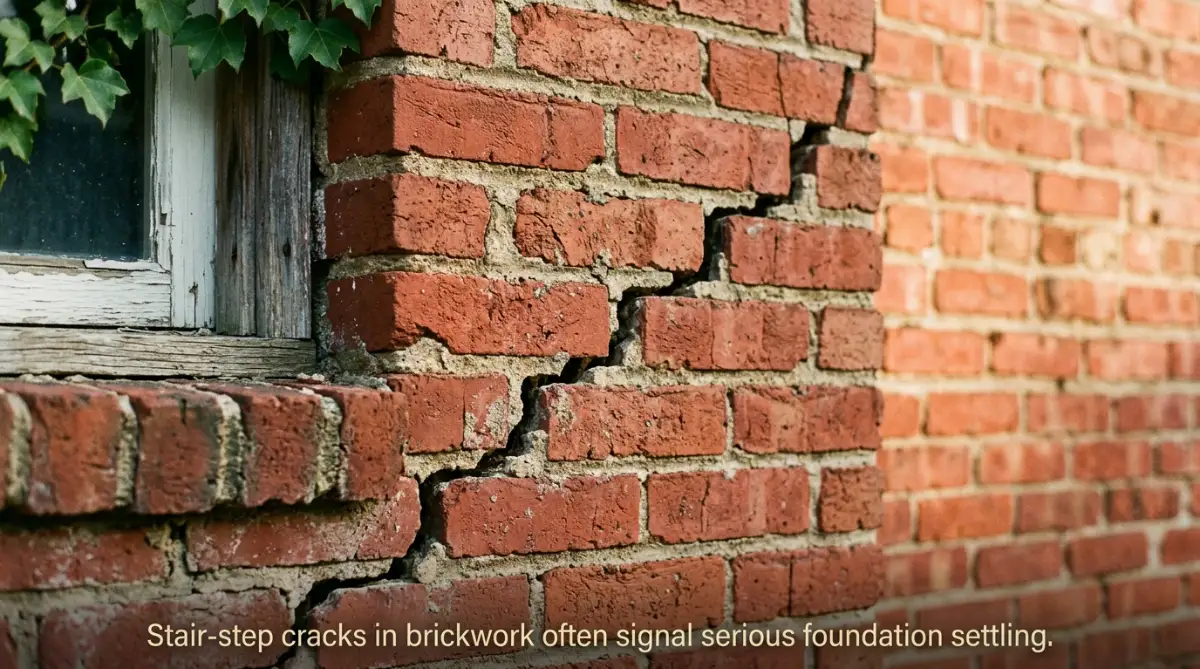
After you finish looking inside, take a slow walk around the outside perimeter of the building. Pay close attention to the mortar lines between the exterior bricks. If you see a stair-step pattern of cracks climbing up the brickwork, you are looking at a classic sign of foundation settling.
If the crack is wider than a quarter of an inch, or if the bricks on one side of the crack stick out further than the other side, the foundation has shifted significantly. This type of movement requires immediate attention from a professional structural engineer.
According to structural safety guidelines published by the International Association of Certified Home Inspectors (InterNACHI), cracks that are wider at the top than the bottom show that the foundation is falling away on the outer edges. Conversely, cracks that are wider at the bottom indicate that the center of the foundation is heaving upward.
Real-Life Repair Cost Reality Check
Wondering what happens if you ignore these warnings? Here is a quick look at average repair costs if things go wrong:
- Minor crack sealing: $250 - $800
- Fixing a sagging floor joist: $1,000 - $3,000
- Major foundation underpinning: $10,000 - $30,000+
- Trust me, paying a few hundred dollars for a home inspection now saves you thousands later.
The Importance of Proper Yard Grading
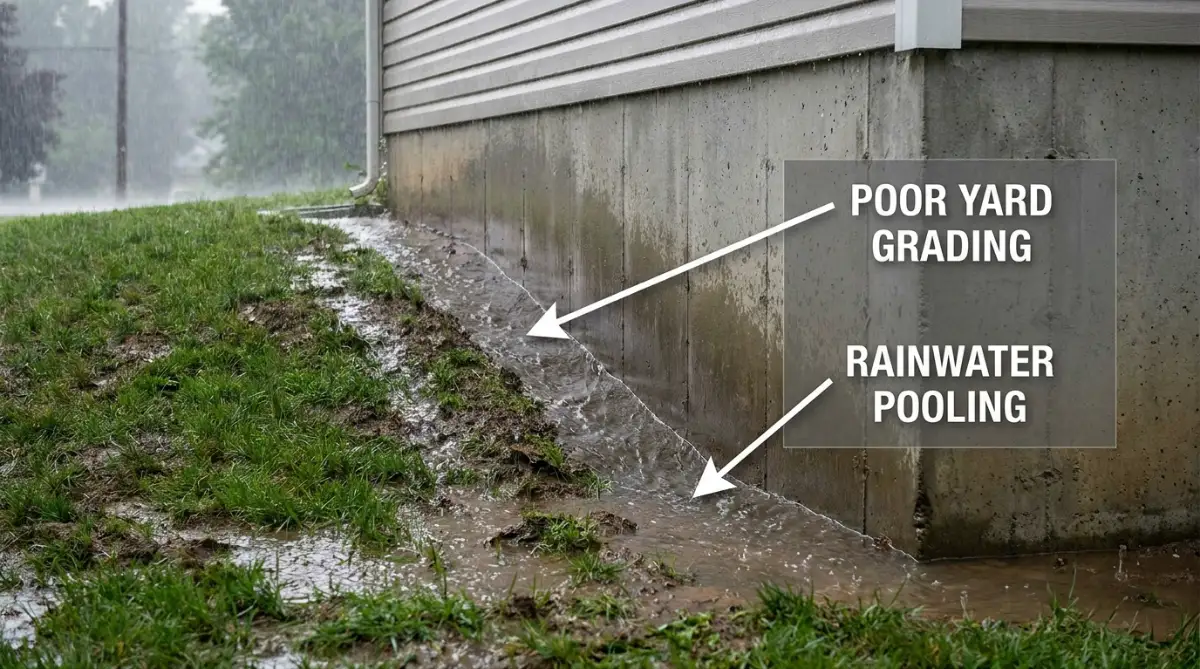
Water is the absolute worst enemy of a home's foundation. While standing in the yard, look at the slope of the ground immediately surrounding the house. The soil should slope gently away from the concrete foundation walls at a rate of six inches of drop over the first ten feet.
If the ground slopes toward the house, rainwater will pool directly against the basement walls. This water creates immense pressure, which eventually pushes the concrete inward and causes major horizontal cracks.
Also, look at the gutters and the downspout extensions. If the downspouts dump water right next to the foundation instead of carrying it five or six feet away, the soil underneath will soften and shift.
Common Myths vs. Home Realities
To help you stay focused during your visit, here is a quick guide comparing common assumptions with the actual structural realities:
- Myth: Freshly painted ceilings mean the home is clean and well-kept.
- Reality: Fresh paint is frequently used to cover up active water stains or ceiling plaster cracks.
- Myth: A stuck window is just old and needs a little bit of grease.
- Reality: Stuck windows usually mean the home’s frame is compressed due to sinking walls.
- Myth: Small basement wall cracks are always harmless concrete shrinkage.
- Reality: Shrinkage cracks are tiny and vertical; horizontal cracks indicate serious pressure issues.
Unlocking the Inspector's Mind: Hidden Diagnostic Tricks
To truly protect your wallet, you must go beyond what is easily visible. Professional home inspectors use subtle clues to evaluate a building's true health. You can use these exact same diagnostic methods yourself without carrying heavy or expensive testing gear.
The Simple Marble Test for Slanted Floors
When you are walking through the main living areas, find a room with hard floors, such as tile, hardwood, or laminate. Take a small, round marble or a golf ball out of your pocket and place it gently on the floor in the center of the room. Watch the ball closely to see if it immediately rolls in one direction.
If the marble rolls quickly toward a specific wall, the floor has a clear slope. While older houses often have slight slopes due to age, a major tilt indicates that the floor joists or the main support beams below have sagged or settled unevenly.
In some cases, the floor might even feel bouncy or soft when you walk heavily across the room. This springy sensation is a common warning sign of termite damage or joist decay in the crawlspace below.
My Go-To Open House Trick:
I always carry a regular glass marble in my pocket when touring a house. Real estate agents might look at you funny, but dropping a marble on a hardwood floor is the fastest, quietest way to spot a sinking foundation without saying a single word.
The Scent of Moisture and Hydrostatic Pressure
Your nose is one of your best tools for finding hidden water damage. When you go down into the basement or the crawlspace, take a deep breath. If you smell a strong, musty, or damp odor, there is active moisture getting into the space.
Look closely at the lower half of the basement walls for a white, powdery substance. This powder is called efflorescence, and it is made of salt deposits left behind when water evaporates through the concrete.
When soil around the house stays saturated with water, it creates immense pressure. This force pushes water directly through the porous concrete walls, weakening the foundation over time.
Evaluating the Roof Planes from the Curb
Before you even step inside the front door, stand across the street and take a long, careful look at the roofline. The ridge of the roof should be a perfectly straight, horizontal line.
If you notice a dip, sag, or curve along the ridge, the roof rafters or the main ridge beam may be cracked or overloaded. A sagging roofline can cost thousands of dollars to rebuild and often means the exterior walls are bowing outward under the weight.
According to structural safety resources from the U.S. Department of Housing and Urban Development (HUD), roof trusses that are modified without proper engineering approval can lead to sudden ceiling collapses. Always look up at the roof planes to make sure the structural lines are straight and true.
Blind Spots That Cost Thousands: Real Estate Pitfalls
It is very easy to make mistakes when you are excited about finding a new home. Buyers often overlook serious structural problems because they get distracted by beautiful styling or feel rushed by a busy real estate market.
Falling in Love with Cosmetic Staging
Sellers use professional staging to create a warm, inviting environment that appeals to your emotions. They burn scented candles to hide musty smells and hang large pieces of art to cover up diagonal wall cracks.
They might place a large area rug over a heavily cracked concrete slab or keep the basement lights dim to obscure water stains. Always look under rugs, behind hanging art pieces, and inside dark closets.
If you ignore these warnings and buy a home with major structural damage, the repair costs can wipe out your savings. Homeowners often have to search for how to get unsecured personal loans with bad credit safely just to pay for structural piers because their home equity has been completely ruined by the damage.
Assuming Newer Homes Are Structurally Perfect
Many buyers assume that if a house was built recently, it must be in perfect condition. This is a highly dangerous assumption that can lead to massive financial regret.
Modern home builders often work under tight deadlines, which can lead to rushed construction and poor quality control. Concrete foundations might be poured in freezing weather, or the soil underneath may not be compacted properly before the slab is laid down.
Even a home that is only a few years old can develop severe structural issues if the builder did not follow correct engineering guidelines. Never skip a professional inspection, no matter how new the property appears to be.
Empowering Your Home Buying Journey: Your Next Steps
Buying a home is one of the largest financial decisions you will ever make in your life. While cosmetic flaws like ugly wallpaper or outdated carpets are cheap and easy to fix, structural defects can easily cost tens of thousands of dollars to repair.
By keeping a calm mind and using the tips in this guide, you can walk into any open house with confidence. You now know how to look past the beautiful staging and spot the hidden warnings that others miss.
Your Open House Checklist
Here is a quick checklist of things to bring and do during your next walkthrough:
- Bring a flashlight to look into dark basement corners, attics, and crawlspaces.
- Carry a marble or golf ball to place on hard surfaces to check for unlevel floors.
- Test the doors and windows to make sure they open, close, and latch smoothly without sticking.
- Inspect the exterior brickwork for stair-step cracks in the mortar lines.
- Look at the yard slope to ensure the ground slopes away from the foundation walls to drain water safely.
If you find multiple warning signs during your visit, do not panic. You can use these issues as leverage to negotiate a lower buying price, or simply walk away from the deal before it is too late.
Stay patient, trust your observations, and always hire a licensed professional home inspector to do a complete evaluation before you sign the final purchase contract. Your financial peace of mind is worth the extra time and effort.
Disclaimer
This blog post is for educational and informational purposes only. It is designed to help buyers spot potential warning signs during a casual walkthrough. It is not a substitute for a professional home inspection completed by a licensed, certified structural engineer or home inspector. Always consult with qualified professionals before making any real estate purchasing decisions.