
The Hidden Fear of Hitting the Submit Button
Ever stared at a health insurance application and felt totally paralyzed? You are definitely not alone. For a long time, figuring out what underwriters actually want felt like trying to crack a secret code. You might worry that one minor doctor's visit from five years ago will automatically wreck your chances of getting affordable coverage. But here is the truth: the approval process is not based on luck or tricks. It is just a simple checklist. Once you see exactly what goes on behind the scenes, you can hit that submit button with total confidence.
I honestly thought my minor past health issues would automatically disqualify me from getting affordable protection. I kept wondering if a small doctor's visit from years ago was going to ruin my chances. Every single question on that form felt like a trap waiting to catch me off guard.
When you do not know how the system works, the waiting game becomes a nightmare. You check your email ten times a day, hoping for good news but expecting a rejection letter. The anxiety of being denied coverage is a heavy burden that many of us carry silently.
People often assume that insurance companies are just looking for excuses to say no. You might think they have a secret formula designed to keep average folks out of the system. This lack of transparency makes the process feel incredibly unfair to honest families who just want basic security.
But over time, I realized that the system is not actually a mysterious black box. There are clear rules, specific checks, and logical steps happening behind the scenes. Once you understand what the decision-makers are actually looking for, that massive cloud of fear completely disappears.
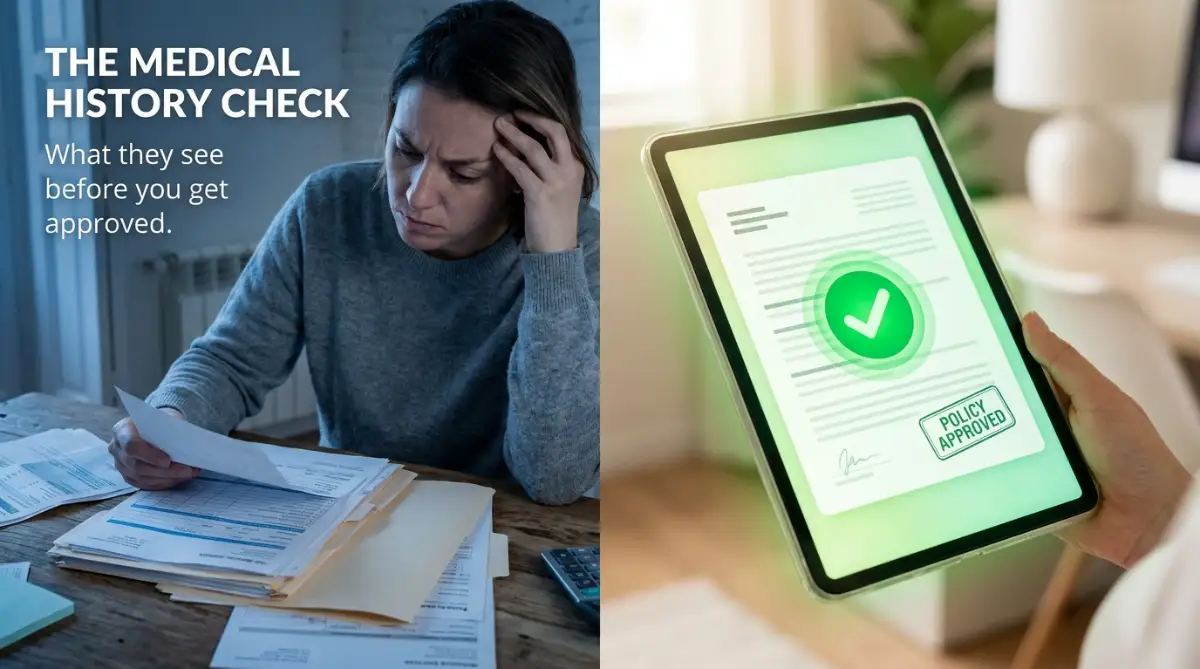
In a Rush? Here Are the Main Takeaways:
- Databases don't lie: Underwriters check your pharmacy records and MIB reports, so always be upfront about your past.
- Your habits matter: Things like your BMI, tobacco use, and even weekend hobbies play a big part in your final price.
- You can test the waters: Use an independent broker to submit an anonymous "trial application" if you have a tricky medical past.
- Never cancel too early: Always keep your current policy active until the new one is completely approved and in your hands.
The Reality Check: Decoding the Decision Makers
To solve this massive headache, we need to understand the people on the other side of the screen. These professionals are called underwriters, and their main job is to assess risk. They do not hate you, nor do they want to blindly reject your application.
They simply follow a very strict set of rules to determine how much risk you bring to the company. Think of them as financial detectives who are just trying to connect the dots of your medical background. If you give them a clear and honest picture, their job becomes much easier.
Let us break down exactly what happens to your file after you click submit. We will look at the real tools they use and the specific databases they check.
Myth vs Reality in Risk Assessment
Before we look at the specific steps, we need to clear up some major misunderstandings. People believe a lot of rumors about insurance applications that are simply not true. Let us look at a quick comparison to set the record straight.
By understanding these realities, you can approach your application with confidence instead of panic. Now, let us walk through the exact steps and checks these professionals perform on your file.
Step 1: The Deep Dive Into Your Medical Past
The very first thing an underwriter does is look at your current and past health status. They want to know if you have any pre-existing conditions that might require expensive treatments soon. This is not a personal judgment on your lifestyle, but purely a mathematical calculation.
They will thoroughly review the medical questionnaire you filled out during the application. Every single "yes" or "no" box you checked will be reviewed against actual medical records. If you said you have never had high blood pressure, they will verify that claim.
The Attending Physician Statement (APS)
If you have a complicated medical history, the underwriter will request an Attending Physician Statement. This is a direct report from your personal doctor explaining your current health condition. It provides the insurance company with detailed notes about your checkups, tests, and ongoing treatments.
Before you submit your application, watch this breakdown of how medical records actually impact your final approval.
The APS is incredibly powerful because it tells the real story of your health. If your doctor writes that you are actively managing a condition well, it works heavily in your favor. It shows the underwriter that you are responsible and taking your health seriously.
On the other hand, if the report shows you ignore your doctor's advice, that is a massive red flag. Insurance companies do not like unpredictable risks, especially when patients refuse to take their medications. Always be honest with your doctor, because their notes will eventually be read by an underwriter.
The Medical Information Bureau (MIB) Check
Many people do not know this, but there is actually a credit reporting agency for your medical history. It is called the Medical Information Bureau, and almost all major insurance companies use it. When you apply for coverage, the underwriter will pull your MIB report immediately.
This database tracks previously reported medical conditions, tests, and application histories. If you applied for insurance three years ago and mentioned asthma, it is in the MIB. If you try to hide that asthma on a new application today, the underwriter will instantly catch the lie.
Lying on an application is the fastest way to get completely banned from a coverage network. It is always better to be totally honest about your past health struggles. Honesty builds trust, and trust leads to better chances of getting your policy approved.

Quick Fact-Check: What the MIB Actually Knows About You
To give you a better idea of how the Medical Information Bureau works, here is a quick look at what they keep on file versus what stays private.
| They DO Track | They DO NOT Track |
| :--- | :--- |
| Your past insurance applications | Your credit score or credit card debt |
| Medical conditions you claimed before | Full medical records from your doctor |
| Hazardous hobbies you reported | Notes from your therapy sessions |
| Dates of past approvals or denials | How much you paid for treatments |
Step 2: The Pharmacy Database Investigation
You might think that paying for a prescription out of pocket keeps it off your record. Unfortunately, that is one of the biggest mistakes applicants make today. Underwriters have access to massive prescription databases that track almost every medication you have ever picked up.
Why Your Pill Bottles Matter
When they pull your pharmacy report, they are looking for specific clues about hidden illnesses. If you claim to have a completely clean bill of health but regularly refill heart medication, they will know. The medication you take tells a detailed story about what is happening inside your body.
They check the dosage amounts and how frequently you refill your prescriptions. High doses of certain painkillers or mental health medications often trigger a closer manual review of your file. They want to make sure these medications are not masking a much larger health problem.
The Red Flag Medications
Certain medications will instantly pause your application process for a deeper look. These include heavy narcotics, strong anti-depressants, and specialized treatments for chronic illnesses. If you take any of these, you should provide an explanation upfront in your application.
I once made the mistake of leaving out a minor doctor's visit and a short-term prescription, thinking it would save me money and time. The underwriter found it in the database within a day, and it delayed my approval by three long weeks while I had to write letters explaining the situation. Always over-communicate your medical history to avoid looking like you are hiding something.
By being proactive, you show the underwriter that you are organized and honest. Write a simple note explaining why you take a specific medication and how it helps you. This small effort can speed up your approval process by weeks.
Step 3: Analyzing Your Daily Lifestyle Choices
Your health is not just about genetics or viruses; it is heavily influenced by how you live. Underwriters spend a lot of time looking at your daily habits and lifestyle choices. They want to know what kind of risks you expose yourself to on a regular Monday morning.
Tobacco and Alcohol Consumption
This is the most common lifestyle factor that heavily impacts your final approval and pricing. If you smoke cigarettes, use chewing tobacco, or regularly vape, you are considered a high-risk applicant. Insurance companies know that tobacco use leads to severe, expensive health issues down the road.
They will often test your urine or blood for nicotine during the medical exam. Trying to quit smoking a week before the exam will not trick the system. If you are a smoker, simply admit it, pay the higher premium, and work on quitting later for a rate reduction.
Alcohol use is also closely monitored by the underwriting team. Having a glass of wine at dinner is perfectly fine, but a history of heavy drinking will raise concerns. If your medical records show liver issues combined with high alcohol use, your application might face rejection.
The BMI and Physical Health Calculation
Body Mass Index (BMI) is a tool underwriters use to measure your height-to-weight ratio. While many doctors argue that BMI is not a perfect system, insurance companies still rely on it heavily. It gives them a quick mathematical snapshot of your general physical condition.
If your BMI falls into the severely obese category, you present a higher risk for diabetes and heart disease. However, being slightly overweight will not automatically disqualify you from getting a good policy. Underwriters look at the big picture, combining your BMI with your blood pressure and cholesterol levels.
If you have a high BMI but excellent blood tests, you can still get highly favorable rates. This is why participating in the medical exam is actually a great opportunity to prove your overall health. It lets you show the exact numbers instead of relying on basic assumptions.

Step 4: Occupation and Dangerous Hobbies
What you do for fun and how you make a living play a massive role in your risk profile. An office worker who reads books on weekends has a very different risk level than a deep-sea welder who skydives. Underwriters categorize every single job into specific risk classes.
The Hazard of Your Paycheck
If your job requires you to work at extreme heights, handle explosive chemicals, or operate heavy machinery, expect more questions. The company wants to know the exact safety protocols your employer follows. They might ask you to fill out a special occupational questionnaire.
Do not try to make your dangerous job sound like a desk job. If you get injured at work and they find out you lied about your duties, they can cancel your policy. Honesty is your biggest shield when dealing with the insurance industry.
Weekend Warriors and Extreme Sports
Your hobbies can actually be more expensive than your medical history. If you love scuba diving, rock climbing, or amateur car racing, the underwriter will definitely take notice. These activities carry a high risk of sudden, severe injuries.
They will ask exactly how many times a year you participate in these extreme sports. They will also want to know if you are a certified professional or just a casual beginner. Sometimes, they will approve your health coverage but add a specific exclusion for your dangerous hobby.
This means if you get a cold, they pay the bill, but if you break your leg skydiving, you pay out of pocket. It is a fair compromise that allows thrill-seekers to still get basic health protection. Always read the fine print to see if your favorite weekend activity is excluded.
Step 5: Financial Stability and Fraud Prevention
You might wonder why a health underwriter cares about your money, but financial stability is a huge factor. They want to ensure you can actually afford the monthly premiums you are signing up for. If a person applies for a massive policy but has no income, it triggers a fraud alert.
Income Verification
Insurance companies use third-party data providers to verify your identity and basic financial footprint. They want to see a logical relationship between your lifestyle, your age, and your requested coverage. This prevents bad actors from using the system for financial gain.
If you are a freelance worker or self-employed, you might need to show extra proof of income. A simple tax return or a few bank statements is usually enough to clear this hurdle. It is a very standard procedure, so do not feel offended if they ask for financial documents.
The Final Mathematical Score
After gathering your medical records, pharmacy history, lifestyle data, and financial footprint, the underwriter builds a complete profile. They feed all this information into complex statistical models. These models calculate the exact probability of you needing major medical care in the near future.
You are eventually placed into a specific health classification group. The healthiest people go into the "Preferred Plus" category and get the absolute cheapest rates. Most average folks fall into the "Standard" category, which still provides excellent and affordable coverage.
If you have major health issues, you might be placed in a "Sub-standard" group with higher costs. But remember, being in a lower tier is still much better than having no protection at all. The goal is to get you approved and protected, no matter what category you fall into.
By understanding these exact steps, you can prepare your documents early and avoid unnecessary stress. You now know that underwriters are not working against you; they are simply following a highly detailed blueprint. Taking control of your application means providing clear, honest, and organized information from day one.
Mastering the Approval Game: Advanced Insider Strategies
Now that we know the basic rules of the game, I want to show you how to actively tip the scales in your favor. These are not tricks, but highly organized ways to present your medical history accurately. Taking control of your narrative is the best way to get a fast and favorable decision.
Think of this process like preparing for a massive job interview. You want to look your absolute best, have your answers ready, and show them exactly why you are a great candidate. A little bit of smart preparation can save you thousands of dollars in monthly premiums over the life of your policy.
If you just guess your medical history on the application, you are leaving your financial future up to pure chance. Instead, let us look at some professional strategies that independent agents use to get their clients approved quickly.
The Secret of the Trial Application
One of the most powerful tools you can use is called a preliminary or "trial" application. If you have a complicated medical history, do not just apply directly to a major company right away. Doing that leaves a permanent mark on your record if you get declined.
Instead, work with an independent insurance broker who can shop your medical profile anonymously. They take your health details, remove your name, and send the scenario to several different underwriters. The underwriters will then reply with an estimated rate class.
This allows you to see exactly how different companies view your specific health condition. Company A might decline you, while Company B might offer you a standard rate. This strategy completely removes the fear of rejection because your real name is never attached to the initial inquiry.
AInsider Tip: If you want to use the "trial application" strategy, don't try to do it yourself online. Look for an "Independent Broker" rather than a "Captive Agent." Captive agents work for just one specific insurance brand, while independent brokers have the software to shop your anonymous profile across dozens of different carriers at the same time.uditing Your Own Medical Profile
Before you ever speak to an insurance agent, you should know exactly what your medical files say about you. Doctors are humans, and they sometimes make administrative mistakes in your charts. If a nurse accidentally coded a minor chest cold as a serious lung issue, the underwriter will only see the scary code.
Take a few days to log into your primary care doctor's online patient portal. Review the notes from your last few physicals to see exactly what was documented. If you spot a blatant error, call the clinic and ask them to correct the record before you apply for coverage.
You also have a legal right to request your own consumer report from the Medical Information Bureau (MIB). Treat this just like checking your credit score before buying a house. Knowing what is in your file prevents you from getting caught off guard by an old, forgotten medical event.
Pre-Exam Preparation Protocols
If your policy requires a physical exam, how you treat your body in the 48 hours prior is incredibly important. The blood and urine tests are looking for elevated markers like high sugar, bad cholesterol, and liver enzymes. A simple weekend barbecue can completely ruin your test results on a Monday morning.
For two days before the exam, cut out all processed sugars, alcohol, and heavy red meats. Drink large amounts of water to flush out your system and make your veins easier for the nurse to find. The Centers for Disease Control and Prevention (CDC) consistently highlights how temporary hydration and dietary changes can temporarily stabilize blood pressure readings.
I once saw a perfectly healthy guy get a terrible insurance rating just because he did a heavy weightlifting workout the morning of his exam. Intense exercise actually spikes the protein levels in your blood and liver enzymes, which makes the underwriter think your organs are failing. Skip the gym for 24 hours, sleep well, and take the exam as early in the morning as possible.
The Power of a Doctor's Cover Letter
If you have a known condition like Type 2 Diabetes or manageable anxiety, do not let the underwriter guess how bad it is. Proactively ask your personal doctor to write a short cover letter explaining your current stability. This small piece of paper can work absolute wonders for your approval odds.
When an underwriter sees a doctor state that "the patient takes medication daily, exercises regularly, and has perfectly managed symptoms," their worry disappears. It proves you are responsible and actively working to maintain a healthy lifestyle. This kind of upfront honesty builds massive trust with the insurance company.
Always remember to read the fine print of your policy to avoid hidden gaps in your health insurance plan later on. Knowing exactly what your underwriter approved and what they excluded is the key to true financial security.

The Most Dangerous Application Pitfalls
While knowing what to do is helpful, knowing exactly what to avoid is what actually saves your application. People make completely avoidable mistakes every single day that result in immediate rejections. Let us look closely at the errors that can destroy your chances of getting affordable protection.
These mistakes do not just cause slight delays in the paperwork. They can trigger fraud alerts, permanently ban you from certain carriers, and leave your family completely exposed to medical bankruptcy. You must treat this application with the utmost seriousness.
The "I Forgot" Excuse Never Works
The single biggest mistake applicants make is leaving off a prescription because they think it was too long ago. Maybe you took an inhaler for a few weeks three years ago and honestly forgot about it. When the underwriter pulls your pharmacy database report and finds it, they do not assume you forgot.
They automatically assume you are trying to hide a chronic respiratory issue to get a cheaper rate. Insurance companies are heavily regulated by state laws, and they follow strict guidelines set by the National Association of Insurance Commissioners (NAIC). According to these standards, any mismatch in data is treated as potential fraud until proven otherwise.
If you are unsure about a date or a medication name, do not just guess and hit submit. Call your pharmacy and ask for a printout of your last five years of medication history. It takes five minutes to verify, but guessing incorrectly can delay your coverage for months.
Canceling Your Old Policy Too Early
This is a terrifying mistake that I have seen ruin perfectly good financial plans. You find a new health policy online that looks much cheaper, so you apply for it immediately. Assuming you will be approved, you call your current provider and cancel your active policy to save money this month.
What happens if the new underwriter finds an issue and denies your application? You are now left completely uninsured with no backup plan whatsoever. If you get into a car accident the very next day, you are paying out of pocket for the emergency room.
Just like you would never drop your auto insurance early because uninsured motorist coverage saves you from sudden disasters, never drop health coverage prematurely. Wait until you have the new policy physically in your hands and the first premium is paid. Only then should you safely cancel your old coverage.
Self-Diagnosing on Official Forms
Insurance applications ask very specific medical questions, and you should answer them exactly as they are written. A major trap people fall into is using dramatic medical terms for minor issues. If you sometimes get a headache after staring at a computer, do not check the box for "Chronic Migraines."
Unless a licensed doctor has officially diagnosed you with a condition, do not claim it on the form. If you check the migraine box, the underwriter will immediately pause the application and ask for neurological test results that you do not even have. You end up creating a massive investigative mess for a simple tension headache.
Just answer the questions honestly based strictly on what your actual medical records say. If your doctor told you that your blood pressure is "a little high today," that does not mean you have hypertension. Stick to the documented facts and avoid WebMD-style self-diagnosis.
Ignoring the Contestability Period
Many people believe that once they get the approval letter, they have successfully beaten the system forever. They think that if they hid a smoking habit and got away with it, they are totally safe. This is a massive financial illusion due to something called the contestability period.
Almost every health and life policy has a two-year window where the company can deeply investigate your original application if you file a major claim. If you get diagnosed with lung cancer in month fourteen, they will review everything. If they find out you were secretly buying tobacco before you applied, they will immediately cancel the policy.
They will simply refund your past premiums and walk away, leaving you with a half-million-dollar hospital bill. This kind of medical debt is exactly what forces ordinary families into situations where they can no longer afford student loans or basic housing. Complete honesty on day one is the only true way to protect your family's future.
Just as you would thoroughly check someone's financial history before co-signing a family loan, insurance companies will always check your past when money is on the line. Never try to outsmart a billion-dollar risk management corporation.
Your Action Plan for Guaranteed Peace of Mind
Getting your health coverage approved does not have to be a dark, scary experience. By now, you understand exactly how the underwriting process works from the inside out. You know what databases they check, why they ask specific questions, and how they calculate your final risk score.
This knowledge gives you a massive advantage over the average applicant who just clicks blindly through the forms. You are no longer at the mercy of a hidden system. You can now proactively gather your medical records, speak with your doctors, and present an incredibly strong, honest profile.
Do not let the fear of a past medical issue stop you from getting the security you deserve. Even if you have complex health challenges, there is almost always a policy designed to fit your exact situation. Start by requesting your medical records today, reviewing your pharmacy history, and finding a trusted independent agent to guide you.
Always remember that as life changes, your coverage needs will change too. Stay educated on the truths about outliving your term policy or health plan limits so you are never caught off guard. Keep your records clean, maintain a healthy lifestyle, and approach every application with total confidence.
I know firsthand how intimidating those endless forms can feel when your family's safety is on the line. My biggest piece of advice is to never let the fear of rejection delay you from simply trying. Take a deep breath, gather your exact medical facts, and submit your application with total honesty today.
Common Questions About Health Insurance Approvals
How long does health insurance underwriting usually take?
The timeline really depends on how complicated your medical history is. If you are young and healthy, automated algorithms can sometimes approve you in a few minutes. However, if they need to request notes from your doctor, it can easily take anywhere from three to six weeks.
Will a high BMI automatically get my application denied?
No, a high Body Mass Index will not usually trigger an automatic rejection on its own. Underwriters look at the full picture, including your blood pressure, cholesterol, and daily habits. If your lab results are completely normal despite your weight, you can still get a great approval rating.
Can underwriters see my past therapy or mental health visits?
Yes, they can see medications prescribed for mental health and general diagnostic codes submitted by your therapist. However, they cannot read the private, detailed notes of what you actually talked about during your therapy sessions. Seeking help for common anxiety or mild depression rarely stops you from getting solid coverage.
What happens if I accidentally make a mistake on my health application?
If you realize you made an honest mistake after submitting, call your insurance agent immediately. Proactively correcting an error looks much better than letting the underwriter find it on their own. Simple honest mistakes can easily be fixed without ruining your chances of approval.
Do I always have to take a medical exam for coverage?
Not anymore. Many companies now offer "no-exam" policies that rely entirely on digital background checks and pharmacy databases. If you are relatively healthy and under a certain age, you can completely skip the needles and blood tests.
Disclaimer: The information provided in this article is for general educational and informational purposes only and does not constitute professional medical, financial, or legal advice. Insurance policies, underwriting guidelines, and state regulations vary widely and change frequently. Always consult with a licensed insurance broker or qualified financial advisor regarding your specific situation before making any decisions about purchasing or canceling insurance coverage.