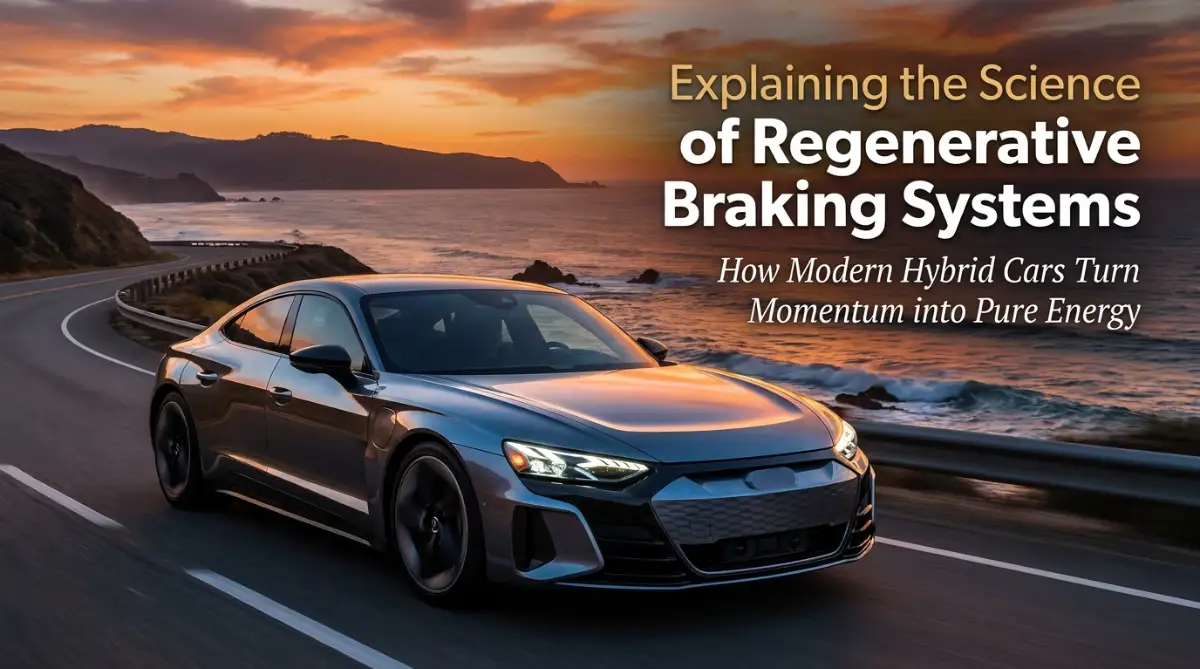
Why I Used to Hate Braking (And What Changed My Mind)
Every single time you press your car's brakes, you are basically burning cash. In a traditional gas car, all that stopping energy simply turns into hot, wasted friction dust. But when I switched to a hybrid, my whole perspective on daily driving changed. Instead of throwing away that momentum, my car now captures it and converts it into free battery power.
I felt this deep, frustrating sense of waste. My car was using so much fuel to build up speed, and then I was just throwing all that heavy momentum away as useless heat. It honestly felt like a giant flaw in how we designed machines. I found myself thinking about all the hard-earned money I was spending on regular brake pad replacements and wasted gas.
The worst part was the mechanical wear and tear. I was always worried about when the next expensive mechanic bill would arrive. Ordinary drivers face this same draining reality every single day. We are forced to accept that braking just means destroying parts to stop a heavy metal box.
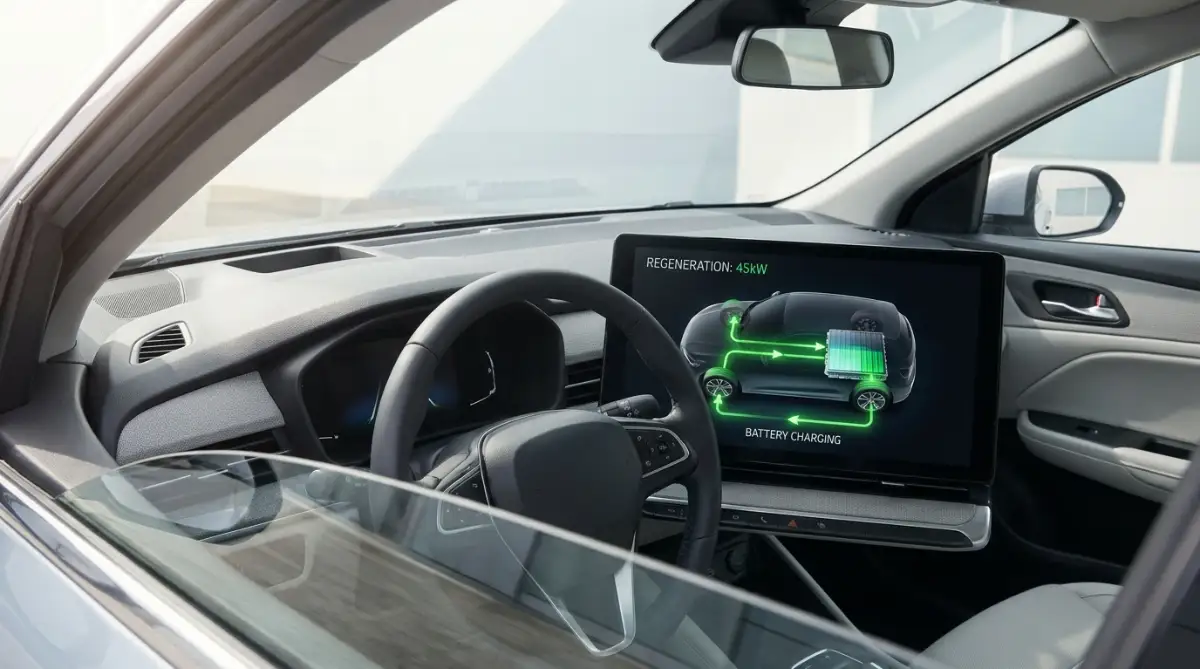
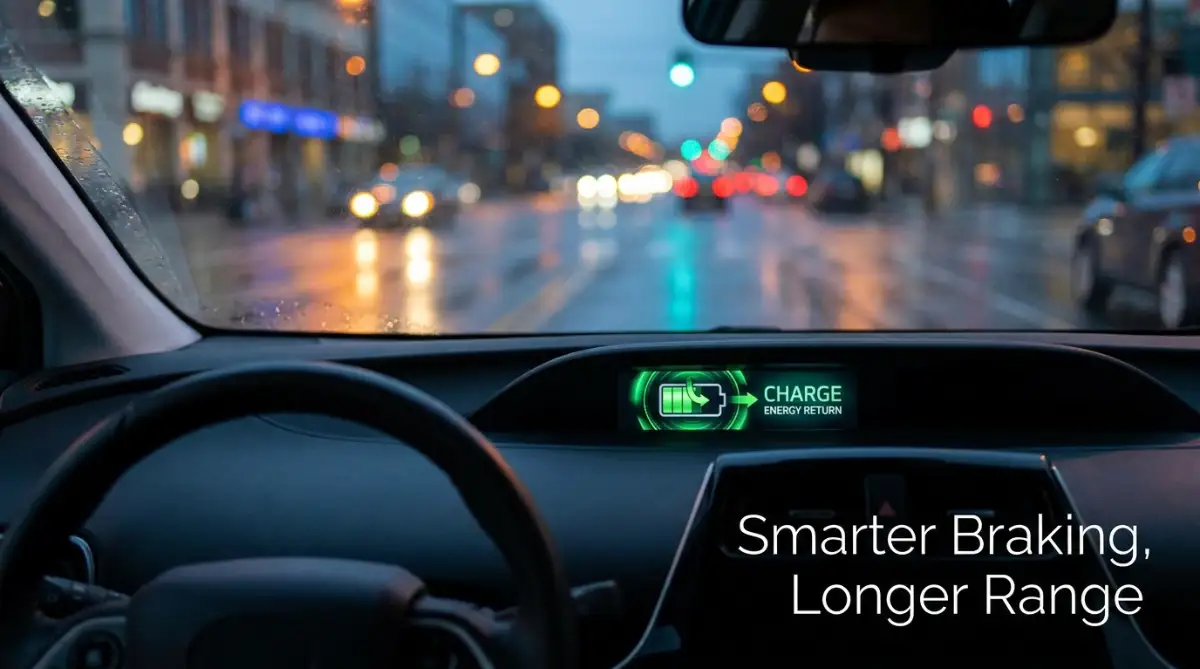
But everything changed completely when I finally drove a modern hybrid vehicle for the first time. I took my foot off the accelerator, and the car naturally began to slow down on its own. The dashboard lit up with a green glowing arrow, showing me that the battery was charging.
I was completely amazed. Instead of wasting that speed, the car was eating it up and turning it into free electricity. That personal realization sent me down a massive rabbit hole of automotive research. I needed to understand exactly how this brilliant technology functioned on a mechanical level.
Quick Takeaways: What You Need to Know
- Brake Early and Gently: Slow, gradual braking lets your electric generator capture the most energy. Hard, sudden stops waste power by forcing the car to use standard friction brakes.
- Never Use Neutral (N) at Lights: Putting your hybrid in Neutral completely disconnects the motor generator, preventing the battery from recharging and wearing down your brake pads.
- Pick the Right Tires: Cheap, sticky tires increase rolling resistance and can easily drop your hybrid's overall fuel economy by 5% or more.
The Invisible Magic of Turning Speed Into Power
To really understand what happens inside a hybrid vehicle, we have to look at the exact opposite of driving. When you press the gas pedal, the engine and the battery work together to push the car forward. They take stored energy and turn it into kinetic energy, which is just a fancy scientific term for the energy of motion.
In an older car, getting rid of that kinetic energy requires extreme physical friction. The brake calipers clamp down hard on spinning metal rotors. This action creates a massive amount of heat, which just floats away uselessly into the air.
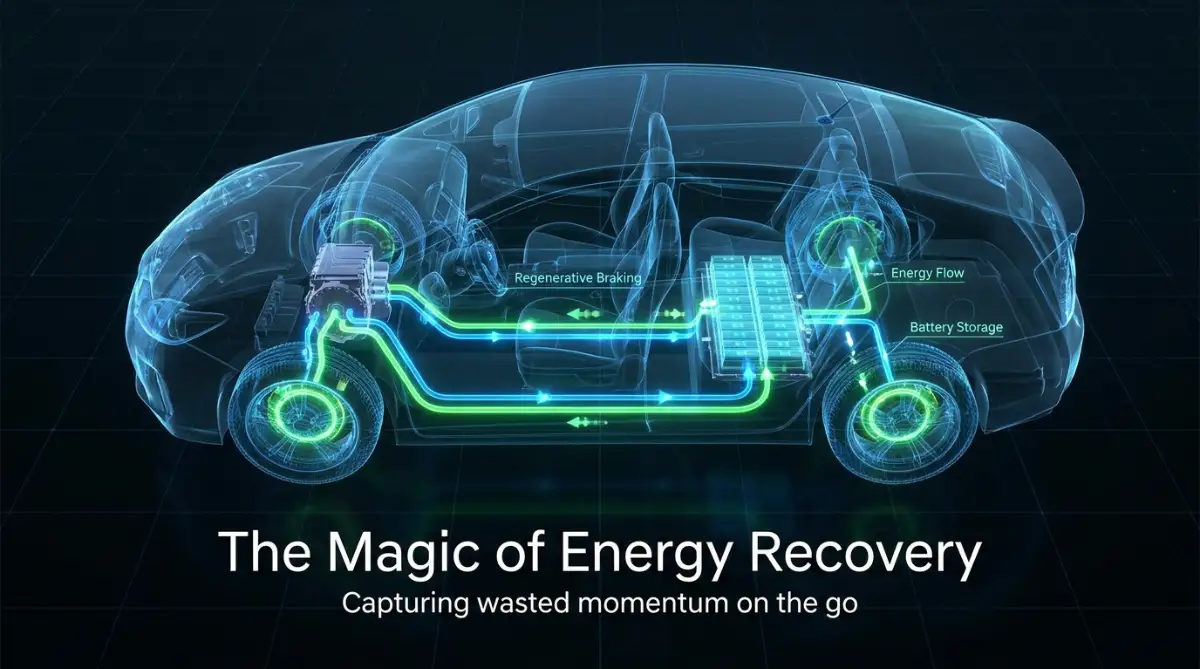
Regenerative braking completely changes this ancient concept. Instead of relying mostly on physical friction, hybrid cars use their electric motors as the primary stopping force. When you lift your foot off the gas or gently press the brake, the system reverses the role of the electric motor.
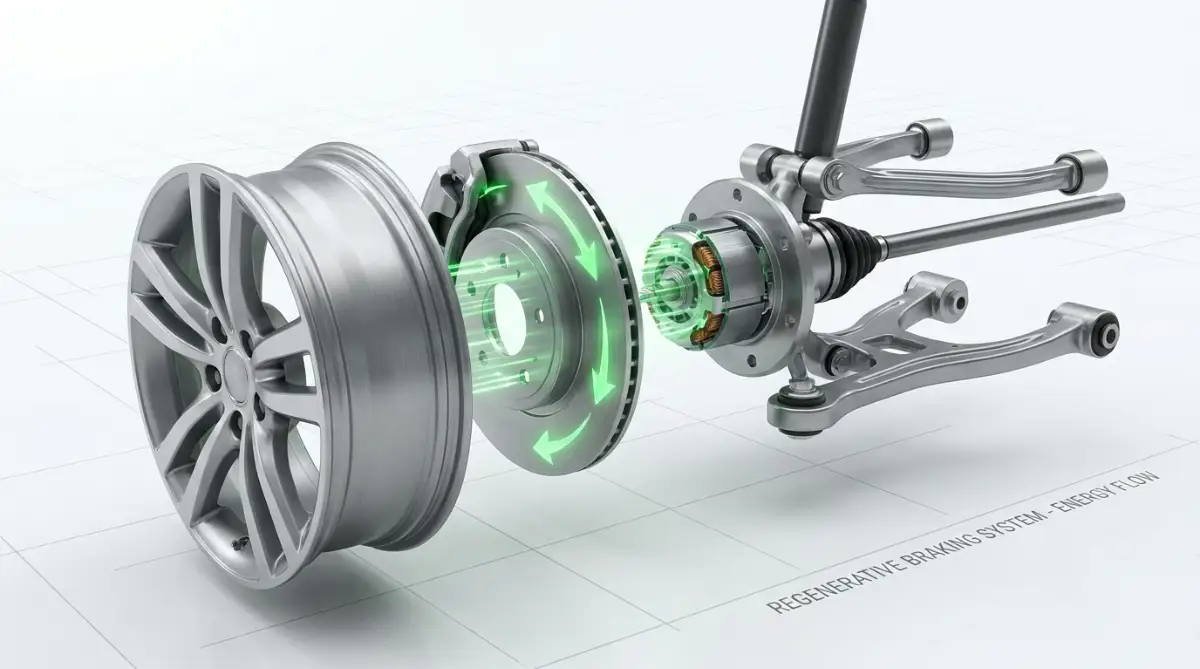
It stops pushing the wheels and starts acting as a powerful generator. The forward motion of the spinning wheels now turns the generator. Because turning a generator requires physical effort and resistance, it naturally forces the car to slow down.
Think of it like riding a bicycle through deep water. The resistance you feel against your legs is similar to the resistance the generator puts against the turning wheels. This creates a smooth, controlled stopping motion without needing to crush two pieces of metal together.
The Secret Role of the Inverter System
Now, simply generating electricity is only the first step of this amazing process. The electricity created by the spinning generator is raw and chaotic. Specifically, the motor produces Alternating Current (AC) electricity.
However, the large battery pack sitting in the back of your hybrid car only understands Direct Current (DC) electricity. If you tried to push that raw AC power directly into the battery, it would simply not work. This is where a highly intelligent component called the inverter steps in to save the day.
The inverter acts as a universal translator between the spinning motor and the battery pack. In a fraction of a second, the inverter grabs the AC power, smooths it out, and converts it into perfectly clean DC power.
This conversion process happens entirely in the background, faster than you can blink. As a driver, you never notice this complex electrical conversation happening under your seats. You just see the battery gauge go up on your dashboard.
Understanding this middle step helped me appreciate just how smart modern hybrid cars actually are. They are not just cars; they are highly advanced rolling power stations. The inverter ensures that not a single drop of recovered energy goes to waste.
How to Keep Your Inverter Healthy (My Quick Checks):
- Keep the vents clear: Your hybrid has air cooling vents (usually under the back seats or near the floorboards) for the battery and electrical system. Never block these with bags, coats, or floor mats.
- Listen for weird sounds: A healthy inverter makes a faint, high-pitched electrical hum during braking. If you hear a loud grinding or clicking instead, get it inspected immediately.
How the Battery Catches and Holds the Energy
Once the inverter does its heavy lifting, the energy needs a safe place to live. The hybrid battery pack is designed specifically to handle these sudden, powerful bursts of electrical energy.
When you brake aggressively from highway speeds, a massive amount of power rushes into the battery at once. The battery chemistry is perfectly balanced to absorb this shock without overheating or getting damaged.
The incoming electricity physically forces a chemical reaction inside the battery cells. It moves ions from one side of the battery to the other, packing them tightly together. When you eventually need to accelerate again, those ions rush back to their original spots, releasing the energy back to the wheels.
It is highly similar to winding up a spring-loaded toy car. When you pull the toy backward, you are storing your physical energy in a tightly coiled spring inside the toy. When you let go, the spring unwinds and the car shoots forward. The hybrid battery stores your braking momentum in a chemical "spring" and releases it when you press the gas.
Here is a quick piece of advice based on my own experience.
When I first got my hybrid, I used to brake extremely late and hard, thinking it would capture more energy. I quickly realized that slow, gradual braking actually allows the generator to capture the maximum amount of power. Hard, sudden stops force the car to use the old-school physical brakes, which totally defeats the purpose of the regenerative system.
Are you struggling to visualize how this energy flows through the car? Check out this incredible visual breakdown that completely changed how I look at driving.
[Insert YouTube Video Link Here]
The Smart Brain: Blending Friction and Regeneration
A major question many people ask is whether hybrid cars still have regular brakes. The answer is absolutely yes. Regenerative systems are incredibly smart, but they have physical limits.
If a dog runs out into the street and you slam on the brakes in a panic, the electric generator alone cannot stop a heavy vehicle fast enough. Safety is always the absolute priority for automotive engineers.
Because of this, hybrid cars use a highly intelligent computer system called brake blending. When you press the brake pedal gently, the computer tells the traditional physical brakes to stay asleep. It uses 100% regenerative braking to slow you down and capture energy.
However, if you press the pedal harder, the computer instantly realizes the generator cannot handle the demand. It seamlessly wakes up the physical brake calipers and squeezes the rotors to stop you quickly.
The transition between the electric generator and the physical brakes is so incredibly smooth that you can almost never feel it happening. The car makes thousands of calculations per second to figure out exactly how much friction is needed.
Myth vs Reality: Breaking Down Common Misunderstandings
There is a lot of strange misinformation floating around about hybrid vehicles and their braking habits. Let us clear up some of the most common confusion right now.
The Myth: Regenerative braking will eventually overcharge and explode the battery on a long downhill drive.
The Reality: The vehicle computer strictly monitors the battery level. If the battery becomes completely full, the car automatically shuts off the regenerative generator and switches entirely to the regular friction brakes.
The Myth: You have to manually turn the regeneration system on every time you start the car.
The Reality: The system is completely automatic and baked into the core design of the vehicle. You literally cannot turn it off, although some modern cars let you adjust how aggressive the automatic braking feels.
These intelligent safety checks ensure that you never have to worry about managing the system yourself. The car handles all the heavy thinking, leaving you free to just enjoy the drive.
Traditional vs Hybrid Stopping Power
To make things even clearer, let us look at exactly how a normal car compares to a hybrid when you need to slow down.
Looking at this simple breakdown, it becomes completely obvious why the older method is just outdated. We have been throwing away free power for over a century.
The Magic of One-Pedal Driving
As I continued driving my hybrid, I discovered one of the greatest benefits of this entire scientific process. It is a concept called one-pedal driving, and it completely transforms how you handle city traffic.
In heavily congested areas, you usually have to bounce your right foot between the gas and the brake hundreds of times. Your ankle gets tired, and the driving experience becomes physically annoying.
With a strong regenerative braking system, lifting your foot off the accelerator causes an immediate and noticeable dragging sensation. The car slows down heavily on its own, almost as if you were firmly pressing a traditional brake pedal.
If you time it perfectly, you can navigate an entire busy street without ever touching the actual brake pedal. You just press the gas to move, and lift off completely to stop. It turns driving in heavy traffic into a smooth, relaxed video game.
This feature alone greatly reduces driver fatigue on long commutes. Once your muscle memory adapts to the exact timing of the car slowing down, going back to a normal gas car feels incredibly strange and jerky. You start to feel like the gas car is running away from you when you let off the pedal.
How Weather and Temperature Affect the System
There is an interesting scientific reality about batteries that impacts how well this braking system works. Batteries are very much like humans; they have a specific temperature range where they feel comfortable and work their best.
On extremely cold winter mornings, the chemicals inside the hybrid battery pack become sluggish and slow. If the battery is too cold, it simply cannot accept a massive, sudden rush of electrical current from the regenerative brakes.
Because of this, the car's computer will intentionally limit the regenerative braking power when you first start driving in freezing weather. You will notice that the car relies much more on the traditional friction brakes for the first few miles.
As you drive, the normal flow of electricity gently warms up the battery pack. Once the internal temperature reaches a happy, optimal level, the computer opens the floodgates. Full regenerative braking is restored, and you are back to capturing maximum efficiency.
This thermal management is incredibly important for the long-term health of your vehicle. Pushing high-voltage electricity into a freezing cold battery would quickly destroy the internal cells.
The Massive Financial and Maintenance Benefits
We have talked extensively about the science, but let us look at how this beautiful technology impacts your wallet. The most obvious benefit is the massive reduction in daily fuel consumption.
Every time you capture energy going down a hill, you are getting free electricity. When the road flattens out, the car uses that captured electricity to drive forward, completely shutting off the gas engine. This exact cycle is why hybrid cars get such incredible fuel economy in city driving.
But there is a secondary financial benefit that many people overlook until they take their car to the mechanic. Because the electric generator does the vast majority of the slowing down, your physical brake pads are rarely used.
Many hybrid owners report driving well over 100,000 miles before needing to change their brake pads. The brake rotors do not warp from excessive heat, and the brake fluid does not degrade as quickly.
You are essentially eliminating one of the most common and expensive maintenance items associated with vehicle ownership. When you combine the daily fuel savings with the long-term maintenance savings, the technology easily pays for itself.
The science of turning wasted heat back into usable forward motion is truly one of the greatest automotive achievements of our time. It takes a frustrating daily loss and turns it into a continuous cycle of free energy.
Unlocking the Hidden Power of Your Hybrid (Pro-Level Strategies)
Getting the absolute best performance out of your hybrid car requires a slight shift in your daily driving mindset. When I first bought my vehicle, I drove it exactly like my old gas guzzler. I would speed up quickly and then slam the pedal down at the very last second.
I quickly realized I was completely missing out on the magical efficiency these cars offer. Driving a vehicle with an electric generator attached to the wheels is an entirely new skill. It is actually quite similar to training your brain to learn new habits. You have to actively rewire your muscle memory to succeed.
To truly master energy recovery, you need to become an anticipative driver. This means keeping your eyes focused far down the road rather than just staring at the bumper of the car directly in front of you.
The Art of the Gentle Lift
If you see a red traffic light sitting half a mile ahead, your immediate reaction should change. Instead of keeping your foot on the gas and waiting until you get close, simply lift your foot off the accelerator right away.
By gently letting off the pedal early, you allow the electric generator to engage softly. The car will begin to glide while steadily feeding clean, free electricity back into your battery pack. This single habit alone completely transformed my daily fuel economy.
When you look at government data on hybrid efficiency, you will see that early deceleration is the number one factor in saving fuel. You are essentially letting the weight of the vehicle do all the hard work for you.
Mastering the Dashboard Gamification
Most modern dashboards feature a digital display that grades your driving efficiency in real-time. My car actually grows little digital green leaves on the screen when I am capturing power correctly.
At first, I thought this was just a silly gimmick for kids. But I soon found myself treating my daily commute like a high-score video game. I started challenging myself to see how much power I could return to the battery on my way home from work.
This digital coaching is a brilliant psychological trick designed by engineers. It encourages you to naturally adopt the exact driving style the battery prefers. Paying attention to this screen will teach you exactly how hard to press the pedal for maximum energy capture.
Understanding the "B" Gear Shifter
Many new owners get confused by the mysterious "B" setting on their gear shifter. The letter B stands for Engine Braking, and it is a highly misunderstood feature.
When you shift into B mode, the car drastically increases the resistance of the electric generator. As soon as you let off the gas, the car slows down aggressively. Many people assume they should drive in B mode all the time to get the maximum amount of electricity.
However, this is actually a bad strategy for normal, flat city roads. Driving around town in B mode forces you to keep pressing the gas pedal just to maintain a normal speed. You end up wasting more power than you save.
The true purpose of B mode is for descending long, steep mountains. When driving down a massive hill, shifting into B mode prevents your car from rolling away dangerously fast. It safely controls your descent while pushing a massive wave of energy into the battery.
Planning your daily driving route to avoid unnecessary aggressive stops requires clear strategy. Think of it like crafting a clear and focused plan for your day; a little foresight saves a massive amount of wasted effort.
The Silent Traps Destroying Your Battery Life
Even with all this amazing technology, it is incredibly easy to make mistakes that ruin your efficiency. I have seen so many friends buy a brand-new hybrid and immediately complain about poor mileage.
They usually blame the car manufacturer, but the reality is that their driving habits are causing the problem. If you constantly push your hybrid battery to its absolute limits without letting it cool properly, it will eventually suffer.
The Danger of Shifting to Neutral
One of the most dangerous myths I hear is that shifting your car into Neutral (N) at a stoplight saves gas. In an older, traditional car, this might have been slightly true decades ago.
In a modern hybrid, shifting into Neutral is one of the worst things you can possibly do. When you put the car in Neutral, you completely disconnect the electric motor from the wheels.
This means the energy recovery system is entirely disabled. If you hit the brakes while in Neutral, the car is forced to use the physical metal brake pads. You instantly lose all the benefits of the smart generator. Always leave your car in Drive (D) when navigating normal traffic.
Ignoring Brake Fluid Maintenance
Because the electric generator does the heavy lifting, your physical brake pads might last for five or six years. This leads many drivers into a false sense of security regarding maintenance.
They assume that because the pads are fine, the entire system is perfectly healthy. This is a massive mistake. Brake fluid naturally absorbs moisture from the air over time, regardless of how often you stop the car.
If you ignore flushing the brake fluid, that trapped moisture will cause the internal metal lines to rust and fail. The chemical cooling system running through your battery pack is also incredibly sensitive.
Just as understanding your daily hydration needs keeps your organs functioning safely, the car's chemical coolant keeps the electrical components from overheating. You must follow the factory maintenance schedule for all fluids, even if the parts look brand new.
Using the Wrong Type of Tires
Hybrid vehicles are significantly heavier than normal cars because of the massive battery packs sitting under the seats. This extra weight puts a heavy demand on the tires.
When it comes time to replace the tires, many owners try to save money by buying the cheapest rubber available. Standard cheap tires have very high rolling resistance. This means they naturally grip the road too hard and fight against the forward motion of the car.
Here is a quick comparison showing what happened to my fuel economy and road feel when I tested cheap standard tires against proper low-rolling-resistance (LRR) tires over a three-month period:
| Tire Choice | Real-World Fuel Economy | Regenerative Braking Feel | Estimated Battery Range Impact |
| :--- | :--- | :--- | :--- |
| Standard Cheap Tires | 41 MPG | Heavy, slightly sluggish glide | Loses about 6% to 8% energy capture |
| Hybrid-Specific LRR Tires | 47 MPG | Smooth, free-rolling deceleration | Maximizes battery charging efficiency |
High rolling resistance ruins your energy recovery. The car has to use extra battery power just to overcome the sticky tires. You should always invest in Low Rolling Resistance (LRR) tires specifically designed for hybrid vehicles.
According to consumer vehicle testing results, having the correct tires can improve your battery range by a massive margin. Do not ruin a highly advanced rolling computer by putting cheap, incorrect shoes on it.
The Aggressive Last-Second Stop
I mentioned this briefly before, but it bears repeating because it is the most common failure. If you drive aggressively and slam on your pedal at the last second, you are bypassing the entire smart system.
The computer instantly recognizes that the electric generator cannot stop the heavy car in such a short distance. It violently wakes up the friction pads, creating terrible heat and zero electricity.
This habit creates a lot of unnecessary brake dust. When you review the environmental impact of reduced brake dust, you realize that smooth driving actually keeps our local air much cleaner. Every time you slam your foot down, you are throwing away free money and polluting the street.
Transforming Your Daily Commute
When driving in heavy gridlock, the silence of the electric motor actually reduces driver stress tremendously. You no longer feel that deep mental fatigue and mental burnout that comes from a vibrating, loud gas engine shaking your steering wheel.
You finally have a vehicle that works with you, rather than against you. The science of capturing momentum is no longer a futuristic dream; it is happening right under your feet every single day.
The beauty of this technology is that it rewards patience and awareness. The smoother and calmer you drive, the more money stays in your bank account. It is a brilliant financial loop that benefits everyone on the road.
By avoiding sudden movements, checking your tire pressure regularly, and letting the electric generator do the heavy work, your car will easily outlast your expectations. You are participating in a brilliant mechanical ballet every time you pull out of your driveway.
I honestly wish I had understood these simple mechanics years ago before I wasted thousands of dollars on normal brake repairs. Today, I actually smile when I see a red light ahead, knowing my car is about to catch a wave of free power. Take these simple habits, apply them to your morning commute tomorrow, and watch your fuel gauge stubbornly refuse to drop!
Common Questions About Hybrid Stopping Power
Will the regenerative system work if the battery is fully charged?
No, it will not. If your hybrid battery is completely at 100% capacity, the computer automatically disables the electric generator to protect the cells from overloading. The car will seamlessly switch to using your standard friction brake pads until the battery level drops to a safe level again.
Do I ever need to replace the regenerative braking system?
The regenerative system is permanently built directly into the main electric motor of the vehicle. It does not have disposable pads or rotors that wear out like a traditional setup. Unless the entire electric motor experiences a catastrophic failure, the energy recovery system will last the entire lifetime of the car.
Why does the braking feel jerky when I drive over a pothole?
When your tire loses contact with the road by hitting a bump or a pothole, the electric generator momentarily loses its grip on the spinning wheel. The safety computer instantly panics and switches to the physical brake pads to ensure you do not lose control. This sudden switch is what causes that brief, jerky feeling in the pedal.
Does weather affect how much energy I can capture?
Yes, extreme weather strongly impacts your efficiency. In freezing temperatures, the cold battery cannot accept high amounts of electricity safely, so the system limits your energy recovery. In addition, using the heater or air conditioner pulls power away from the system, slightly reducing your overall efficiency.
Can this system completely stop the car without me pressing the pedal?
In most standard hybrids, lifting your foot off the gas will slow you down heavily to about 3 or 4 miles per hour. However, it usually will not bring the vehicle to a complete, dead stop on its own. You will still need to gently press the physical pedal for the last few feet to hold the car in place at a traffic light.
Disclaimer: The information provided in this blog post is for educational and informational purposes only and does not constitute professional mechanical or automotive advice. Vehicle specifications and safety systems vary greatly by manufacturer and model year. Always consult your official owner's manual or a certified dealership mechanic before making changes to your driving habits or performing maintenance on your vehicle.
![5 Hidden Electric Car Costs [Avoid These Costly Traps]](https://vimex24.com/storage/uploads/blogs/1786008022_5-hidden-electric-car-costs-avoid-these-costly-traps.webp)