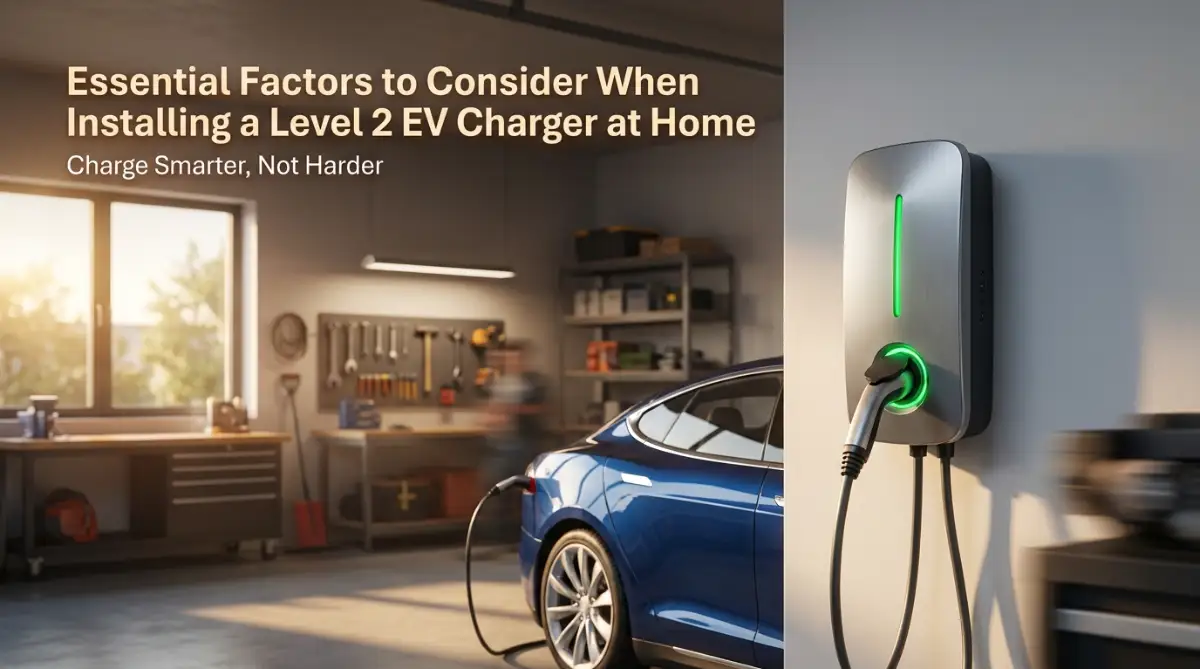
The Hidden Stress of Electric Car Ownership (And How to Fix It)
Buying an electric car feels like stepping into the future, but plugging it into a standard wall outlet in your garage quickly brings you back to a frustrating reality. Waiting hours on end just to get a few miles of battery range is exhausting and ruins the convenience of owning an EV. Here is exactly how to stop doing range math in your head and set up a reliable home charging station that actually fits your life.
But my excitement quickly turned into a daily struggle when I realized the reality of charging my car with the basic cord provided by the dealership. I thought the standard wall plug in my garage would be more than enough to keep my battery topped up for my daily commute.
I was completely wrong. Every morning started with a pit in my stomach as I checked my phone app, only to see the battery had gained a miserable 30 miles of range overnight.
The constant math in my head became entirely exhausting. I found myself mentally calculating if I had enough power to run out for groceries after work, or if I needed to detour to an expensive public fast-charger.
It felt like I had taken on a second job just managing my car's battery life. My daily routine was entirely hijacked by range anxiety, and the mental peace I expected from driving an electric vehicle was completely gone.
That is when I realized something had to change immediately if I wanted to actually enjoy my new car. I needed a real charging solution, not just a temporary patch.
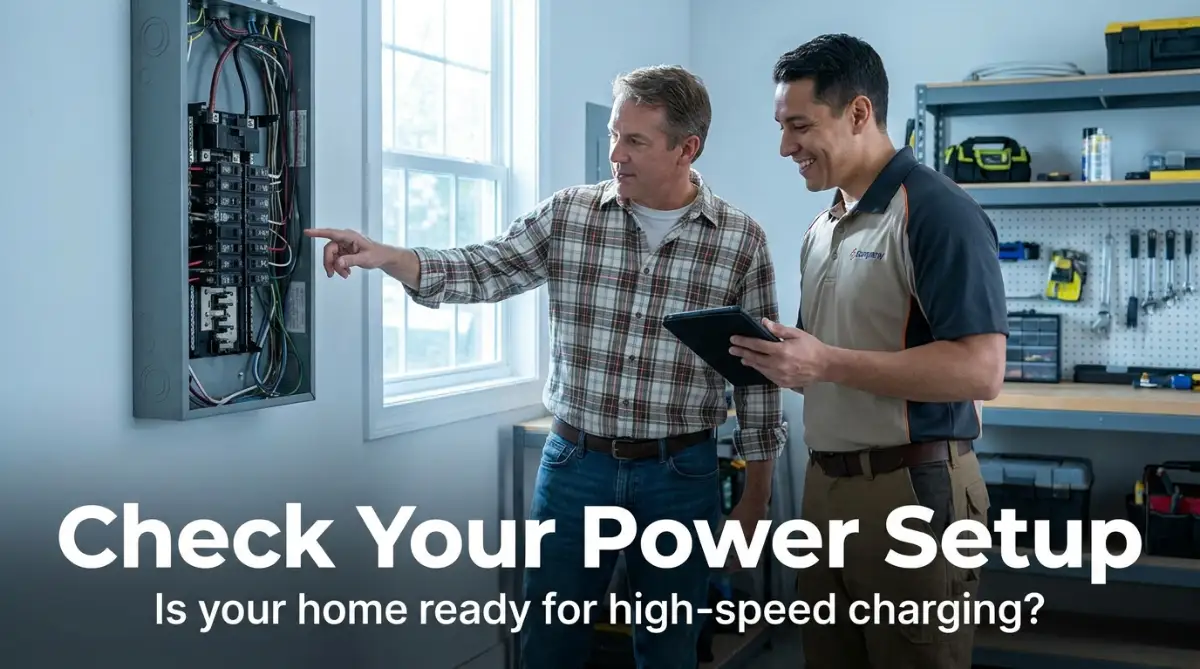
The reality of depending on a basic Level 1 charger is that it drains your energy long before it drains your car's battery. Normal people are modifying their entire daily schedules just to accommodate slow charging speeds.
You deserve to wake up every single morning with a full battery, ready to tackle whatever the day throws at you. You deserve the freedom to jump in your car for an unplanned weekend road trip without spending an hour plotting charging stops along the way.
Upgrading your home setup is the only way to get your peace of mind back. But jumping into a major electrical upgrade without a solid plan can lead to expensive mistakes, blown fuses, and endless frustration. Let's walk through exactly how to set up your home charging station the right way, without the unnecessary headaches.
In a Hurry? Here are the Key Takeaways:
- Level 1 Charging is Painfully Slow: Charging with a basic household wall plug only adds about 3 to 4 miles of range per hour, which is not enough for most daily commutes.
- Hardwiring is Safer and Cheaper: Connecting the station directly to the wall wires is usually cheaper and more weather-resistant than installing a heavy-duty plug-in outlet because you avoid paying for expensive safety breakers.
- Check Your Breaker Panel Capacity First: Make sure your home panel has at least 32 to 40 amps of spare room before you invest in high-speed hardware.
- Plan for Your Next EV: Lay down a thicker 6-gauge copper wire now to future-proof your setup for larger vehicles or electric trucks you might buy down the line.
Creating Your Perfect Home Charging Station (A Complete Breakdown)
Solving your daily charging struggle requires a bit of planning, but it is entirely manageable when you know what to look out for. Transitioning from a standard wall plug to a high-speed setup involves a few specific choices about your home's electrical system, your daily driving habits, and your physical garage space.
Instead of guessing what works, we are going to break down the exact logical steps you need to take to build a safe, efficient, and reliable home charging station.
Understanding Your Home's Electrical Capacity
The very first thing you must look at is the main electrical panel in your house. Think of your breaker box as the heart of your home's power system, pumping electricity to your lights, appliances, and air conditioning.
A standard home panel usually provides between 100 to 200 amps of total electrical service. When you add a high-speed car charger, you are asking that system to deliver a massive amount of continuous power for hours at a time.
If you try to pull too much power from an older 100-amp panel, you risk overloading the entire system, causing main breakers to trip and leaving your house in the dark. You need to know exactly how much spare capacity you have before buying any equipment.
An easy way to check this is to look at the main switch at the very top of your breaker box. The number printed on that main switch tells you your total service limit.
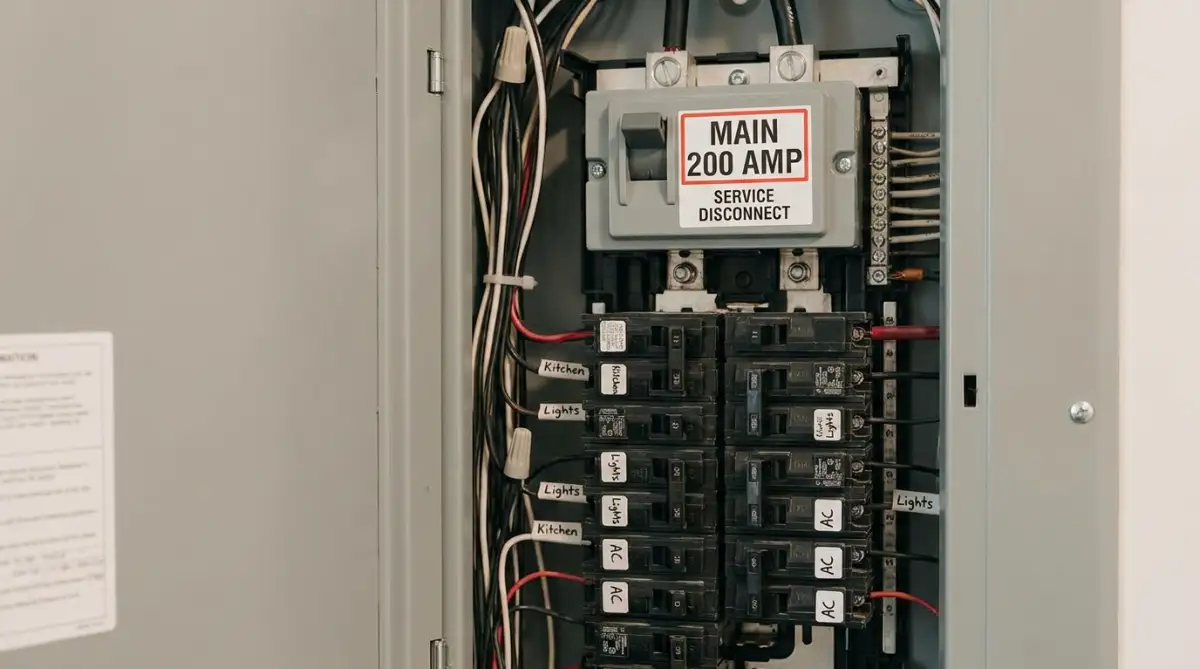
If you live in an older home, you might need a service upgrade from your utility company. If upgrading the panel is too expensive, you can use smart energy management systems that pause your car charging automatically when your oven or air conditioner turns on.
My personal experience with electrical panels taught me a valuable lesson. When I installed my charger, I almost bought a massive 48-amp unit, only to find out my older home's panel could only safely support a 32-amp charger without a costly upgrade. Checking my panel's capacity first saved me from blowing my budget on electrical rework I simply could not afford.
Making the Connection: Hardwired vs. Plug-In Options
Once you know your home can handle the extra power, you face a major decision on how to connect the equipment to your wall. You have two main choices here: wiring the unit directly into your electrical system, or installing a heavy-duty receptacle.
Both methods have strong benefits, but making the wrong choice for your specific lifestyle can be annoying later on. Let's look at the differences clearly so you can decide what fits your long-term goals.
A hardwired setup means the electrical wires run straight from your circuit breaker directly into the back of the charging unit. This creates an incredibly secure, weatherproof connection that allows for the absolute fastest charging speeds your car can accept.
On the other hand, a plug-in setup uses a large, 240-volt outlet known as a NEMA 14-50, which looks just like the plug behind a large kitchen stove. This allows you to easily take the unit with you if you move houses or need to replace a broken machine.
However, local electrical codes now require expensive GFCI breakers for these high-power outlets. This hidden cost often makes the plug-in route more expensive than simply hardwiring the unit directly.
Here is a quick breakdown of my estimated setup expenses to show you what this actually means for your home improvement budget:
Perfecting the Location and Cable Management
Where you mount the machine on your wall is just as important as how it connects to the power grid. A poorly placed unit will force you to drag a heavy, dirty cable across your beautiful garage floor every single day.
You need to consider exactly where your car's charging port is located. Some manufacturers put the port on the front driver's side, while others place it on the rear passenger side.
Always park your car in its normal spot and physically measure the distance from the wall to the charging port. You want to buy a unit with a cable that is at least a few feet longer than your measurement so you never have to stretch it tight.
Watch exactly how the professionals handle cable management and location planning below:
[Insert YouTube Video Link Here]
Avoid placing the main box directly in paths where people walk carrying groceries, as the thick cable can become a serious tripping hazard. Installing a dedicated cable hook or a retractable system keeps your floor totally clear and protects the expensive cord from being run over by your tires.
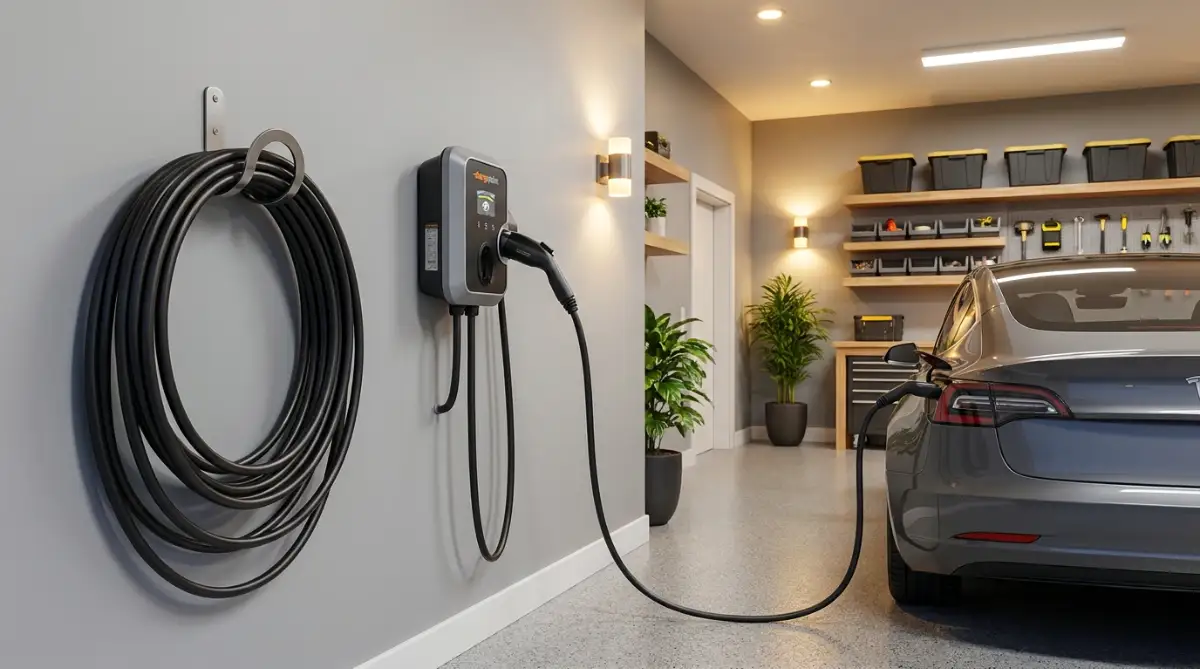
If you have to install the system outside in a driveway, make sure you choose a spot that is shielded from direct, brutal sunlight if possible. Extreme heat can cause the internal computer of the charging station to reduce the power flow to protect itself, slowing down your overnight charge.
Smart Features vs. Basic Power Delivery
When shopping for your new equipment, you will notice a huge price difference between basic units and those with built-in Wi-Fi and smartphone apps. Deciding whether you need a smart machine depends entirely on how your local utility company bills you for electricity.
A basic, non-smart unit acts just like a simple light switch. You plug it into your car, and power flows immediately until the battery is full. These machines are incredibly reliable because they have very few complex computer parts that can break down over time.
However, many utility companies offer special "Time of Use" pricing, where electricity is incredibly cheap in the middle of the night but very expensive during the early evening. If you have this type of billing, a smart unit can literally pay for itself in a few months.
Smart stations connect to your home Wi-Fi and allow you to set strict schedules through an app on your phone. You can plug your car in at 6:00 PM when you get home from work, but the smart station will wait until exactly midnight to start pulling power, securing the lowest possible energy rate.
Additionally, smart apps give you beautiful charts and graphs showing exactly how much money you are spending on electricity each month. This data makes it incredibly easy to track your transportation budget compared to your old gasoline expenses.
Navigating Permits and Professional Safety
It can be very tempting to watch a few online tutorials and try to run the heavy-duty copper wires yourself to save a few hundred dollars. This is arguably the biggest mistake any homeowner can make during this process.
Dealing with 240 volts of electricity and continuous high-amperage loads is completely different from changing a simple living room light switch. A loose wire connection on a car charger can generate extreme heat over several hours, easily starting a silent fire inside your garage walls.
Always hire a licensed, experienced electrician who specializes in electric vehicle equipment. They understand local building codes and will ensure the correct gauge of wire is used for the exact distance from your main panel to your garage.
Furthermore, pulling the correct municipal building permits protects you financially. If an unpermitted, DIY electrical job causes damage to your home, your homeowners insurance company will likely deny your claim entirely.
An official permit guarantees that an independent city inspector will review the electrician's work. This second set of eyes ensures everything is perfectly safe, allowing you to sleep peacefully while your car pulls massive amounts of energy in the room next door.
Myth vs. Reality: Common Misconceptions
To make the best decisions, you need to clear up some common misinformation that floats around neighborhood groups and online forums.
Myth: You must buy the charging station made by your specific car manufacturer.
Reality: Almost all electric cars in North America use a universal plug standard (or an included adapter). You can confidently buy a highly-rated third-party brand that offers better features or a longer warranty than the expensive branded version sold at the dealership.
Myth: Charging your car quickly every single night will ruin your battery life permanently.
Reality: Home Level 2 charging is actually considered a normal, healthy speed for modern electric vehicle batteries. The internal battery management system in your car perfectly regulates the incoming power. It is the extreme, high-voltage public fast-chargers that you should try to limit to road trips, not your home setup.
Myth: You need the absolute fastest charger available on the market.
Reality: Most drivers only travel around 40 miles a day. Even a modest 32-amp system will completely refill that daily usage in just over an hour. Do not spend thousands upgrading your electrical panel for maximum speed if your daily driving routine does not actually demand it.
By analyzing your true daily driving needs, assessing your home's power limits safely, and choosing the right physical location, you transform your garage into a private, highly efficient refueling station. You take back control of your time, completely eliminate range anxiety, and finally experience the seamless joy of driving on electricity.
Mastering Your New Electric Refueling Station
When your shiny new station is finally mounted on the garage wall, the real journey begins. Having the high-speed equipment ready to go is honestly only half the battle. Knowing exactly how to use it efficiently will save you thousands of dollars over the lifespan of your vehicle.
Many new owners simply grab the heavy cable, plug it in, and walk away into the house. By doing this, they are completely ignoring the incredible smart features they just paid a premium for. Tweaking a few simple daily habits can extend your expensive battery's health by several years.
First, we really need to talk about the golden rule of electric driving, which is the 80 percent charging limit. Unless you are heading out on a massive cross-country road trip tomorrow morning, you absolutely do not need a 100 percent full battery.
Pushing those final few electrical electrons into a nearly full battery creates intense excess heat. This heat puts massive strain on the delicate chemical cells hiding underneath your car's floorboards.
You should always set your vehicle's internal dashboard computer, or your smart wall station app, to stop the power flow right at 80 percent. This acts like an invisible protective shield for your vehicle's long-term range.
Think of it like packing a suitcase for a weekend trip. The first 80 percent of your clothes fold in easily, but forcing the last 20 percent inside requires you to push, squeeze, and stress the zippers until they almost break.
The Hidden Art of Cable Preservation
Next, let's look at daily physical cable management from a long-term perspective. The thick, heavy cord hanging in your garage is packed with hundreds of tiny copper strands wrapped in heavy rubber insulation.
These internal copper wires are surprisingly sensitive to constant twisting, tight bending, and heavy physical impacts. If you casually let the cord twist into tight knots on the dusty garage floor, those internal wires will slowly begin to snap one by one.
When enough copper strands break inside the rubber casing, the cable can no longer handle the massive power load safely. The remaining unbroken wires will overheat dramatically, completely melting the plastic handle right onto your car's charging port.
Always take an extra five seconds to loop the cable in wide, gentle circles when hanging it back on the wall mount. Treating the physical equipment gently prevents extremely dangerous overheating situations while you sleep.
You can actually review detailed safety testing standards from trusted organizations like the National Fire Protection Association to see exactly why cable integrity matters so much for residential safety. Their research shows that damaged cords are a leading cause of preventable garage hazards.
Beating the Extreme Weather Variations
If your garage is not perfectly insulated, the changing outdoor seasons will directly affect how your new machine operates. Cold weather physically slows down the chemical reactions inside your car's battery pack.
During freezing winter nights, your smart system might use a large portion of the wall power just to run internal heaters. It has to warm up the physical battery pack before it can even start adding your driving miles for the next day.
Do not panic if your smartphone app shows a much slower charging speed during a massive January snowstorm. The system is intentionally slowing down the power delivery to keep the freezing cells from cracking.
In the middle of a blazing hot summer, the exact opposite scenario happens. The wall machine will actively trigger your car's loud cooling fans to prevent the battery cells from cooking while they accept the high-speed energy.
You might hear loud whirring or buzzing noises coming from your dark garage in July, which is totally normal. The system is just doing its automated job to protect your expensive investment from heat degradation.
Solving the Frustrating Internet Dead Zones
Most people never even think about their home internet router when planning a massive garage power upgrade. However, almost all modern units require a rock-solid Wi-Fi connection to function properly and save you money.
Garages are typically surrounded by thick cinderblock concrete walls and heavy metal doors that completely block your home's internet signals. If your smart machine loses its Wi-Fi connection in the middle of the night, it might skip your scheduled cheap-energy charging session entirely.
I highly recommend installing an inexpensive Wi-Fi mesh node or a simple signal extender right next to the door inside your house. A remarkably strong signal ensures you always get your automatic software updates and those beautiful cheap utility rates.
Dealing with technology failures when you just want to drive to work is incredibly frustrating and mentally draining. It is very easy to fall into a terrible cycle where you feel exhausted but cannot sleep simply because you are staying up late worrying if your car is actually preparing for the morning.
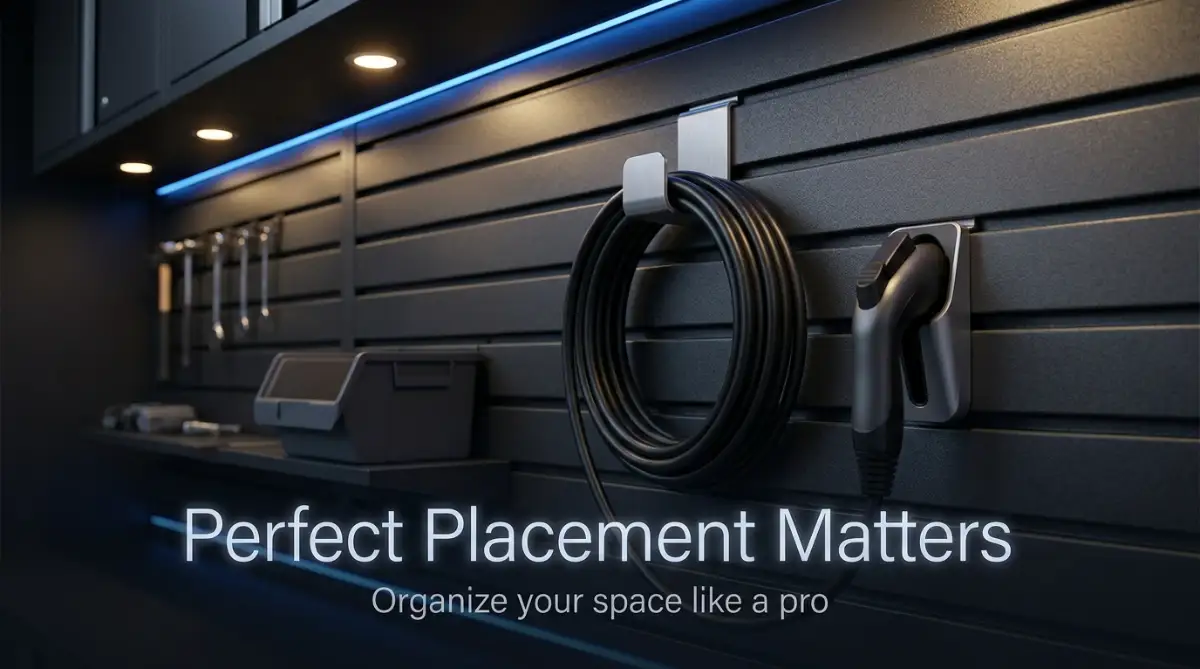
Hidden Traps That Can Ruin Your Garage Setup
Even with the best intentions, I see eager homeowners making the same incredibly expensive mistakes over and over again. Rushing this specific home improvement process usually leads to buying the wrong equipment or completely compromising on family safety.
The Danger of Cheap Online Knockoffs
The absolute most dangerous trap is hunting for massive bargains on random overseas websites or unknown digital marketplaces. You will easily find generic, unbranded charging stations online for half the price of reputable, trusted brands.
These shockingly cheap units almost never have proper safety certifications or quality control checks. You must look for a clear, verifiable mark from a recognized testing laboratory before letting any machine pump massive electricity into your home.
I always tell new owners to verify their equipment through trusted safety databases, like the official certification directories at UL Solutions. A machine that has not passed intense heat and load testing is a ticking time bomb for your electrical panel.
A fake or poorly built knockoff machine lacks the sensitive internal heat sensors needed to prevent a silent garage fire. Saving two hundred dollars on the initial online purchase is never worth risking the safety of your entire family while they sleep.
Ignoring the Future of Your Driveway
Another massive mistake is failing to plan for your next five or ten years of daily driving habits. You might own a small electric commuter sedan today that only needs a very modest 32-amp power supply.
But what happens when your family grows and you eventually buy a massive electric pickup truck that requires far more daily energy? If you only tell your electrician to install a low-capacity wire in your wall right now, you are limiting your future options.
When you buy that larger truck, you will have to rip all the drywall out and pay for the exact same labor a second time. Always tell your professional electrician to run a thicker, higher-capacity copper wire than your current car actually needs.
My Quick Advice on Cable Thickness:
Tell your electrician to lay down a 6-gauge copper wire on a 50-amp circuit even if you only install a basic 32-amp charger today. That way, if you buy a larger electric truck or SUV down the line, you only have to swap the wall box, not tear down your garage drywall to run thicker lines again.
This smart concept is called "future-proofing," and it guarantees your home is completely ready for whatever vehicle you park in the driveway next. Planning ahead requires clear intention and a focus on long-term results.
It is very similar to preparing an academic statement of purpose that gets you accepted—you have to look past the immediate task and prepare the foundation for massive future success.
Trusting the Wrong Installation Help
I frequently see people blindly hiring their friendly neighborhood handyman to do the heavy-duty wall wiring to save on labor costs. While your neighbor might be absolutely amazing at fixing a leaky bathroom sink, high-voltage continuous electrical loads require specialized, specific knowledge.
If the internal screws inside the wall plug are tightened just a fraction too loosely, the metal connection will slowly heat up over several months. Eventually, that tiny loose gap will create a spark that melts the thick plastic casing right off the wall.
Always insist on hiring a licensed, bonded professional who actually specializes in modern electric vehicle infrastructure. They know exactly how to pull the correct city permits and ensure your home insurance remains totally valid.
You honestly do not need to master complex brain science secrets to remember hard topics regarding residential electricity and voltage drops. You just need to respect the raw power of the technology and hire someone who already knows the science inside and out.
Your Next Steps Toward Seamless Morning Commutes
Building your perfect home station is honestly one of the most rewarding home improvement projects you will ever undertake. Once it is done right, the daily nagging stress of electric vehicle ownership practically disappears into thin air.
You will wake up every single morning with a "full tank" of fresh energy for absolute pennies on the dollar. No more freezing your hands at dirty gas station pumps or wasting your precious weekends waiting in long lines at broken public fast-chargers.
Start your journey this weekend by simply taking a clear, bright photo of your home's main electrical breaker box. Send that quick photo to three different local, certified electricians and ask for their honest professional opinion on your current power capacity.
Take a simple tape measure out into your garage tonight and physically map out exactly where the thick cord will hang. Visualize your daily walking path to ensure the heavy cable never becomes a frustrating obstacle course for you or your kids.
My own transition to a high-speed home charging setup completely changed how I view modern driving. I finally got my total mental peace back, and I want you to experience that exact same feeling of true, uninterrupted freedom on the road.
Take action today, make the right safety choices for your family, and you will never look at your daily morning commute the same way again.
What Most Neighbors Ask About Garage Charging
Do I really have to plug in my electric car every single day?
You absolutely do not need to plug the cable in daily if you only drive a few short miles to the office. However, keeping the vehicle plugged in during extreme winter cold helps the sensitive battery stay warm using cheap wall power instead of its own stored energy.
Is it completely safe to charge my car during a heavy thunderstorm?
Yes, modern electric vehicles and quality home stations are built with incredibly advanced surge protection technology inside. The systems will automatically shut down the power flow instantly if they detect any dangerous electrical spikes or sudden voltage drops from lightning.
Will my monthly home power bill become completely unmanageable?
Your monthly electric bill will certainly go up, but you must compare it directly to the cash you are no longer spending on liquid gasoline. For most normal drivers, the slight increase in home electricity costs is significantly less than their old expensive monthly fuel budget.
Can I share one single home station between two different electric cars?
Sharing one machine is totally fine, but it requires some minor daily coordination to physically swap the heavy cable between the vehicles. If both cars drive incredibly long distances daily, you might eventually want to upgrade to a smart dual-port system to charge both simultaneously.
Should I clean the physical plug that goes into my car's charging port?
It is a wonderful idea to occasionally wipe the outer plastic housing with a dry microfiber cloth to keep heavy garage dust away. Never push water, harsh liquid chemicals, or sharp metal tools inside the actual connection pins to avoid severe electrical shocks.
Disclaimer: The content provided in this article is strictly for informational and educational purposes and does not constitute professional electrical or financial advice. Working with high-voltage electricity carries severe risks, including fire and serious injury. Always consult with a licensed, certified electrician before attempting any modifications to your home's electrical panel or wiring. Complying with all local building codes and obtaining necessary municipal permits is solely the responsibility of the homeowner. We are not responsible for any damage or injury resulting from the installation or use of electric vehicle charging equipment.
![The Ultimate Guide to Hybrid Car Regenerative Braking [Step-by-Step]](https://vimex24.com/storage/uploads/blogs/1786162012_the-ultimate-guide-to-hybrid-car-regenerative-braking-step-by-step.webp)
![5 Hidden Electric Car Costs [Avoid These Costly Traps]](https://vimex24.com/storage/uploads/blogs/1786008022_5-hidden-electric-car-costs-avoid-these-costly-traps.webp)