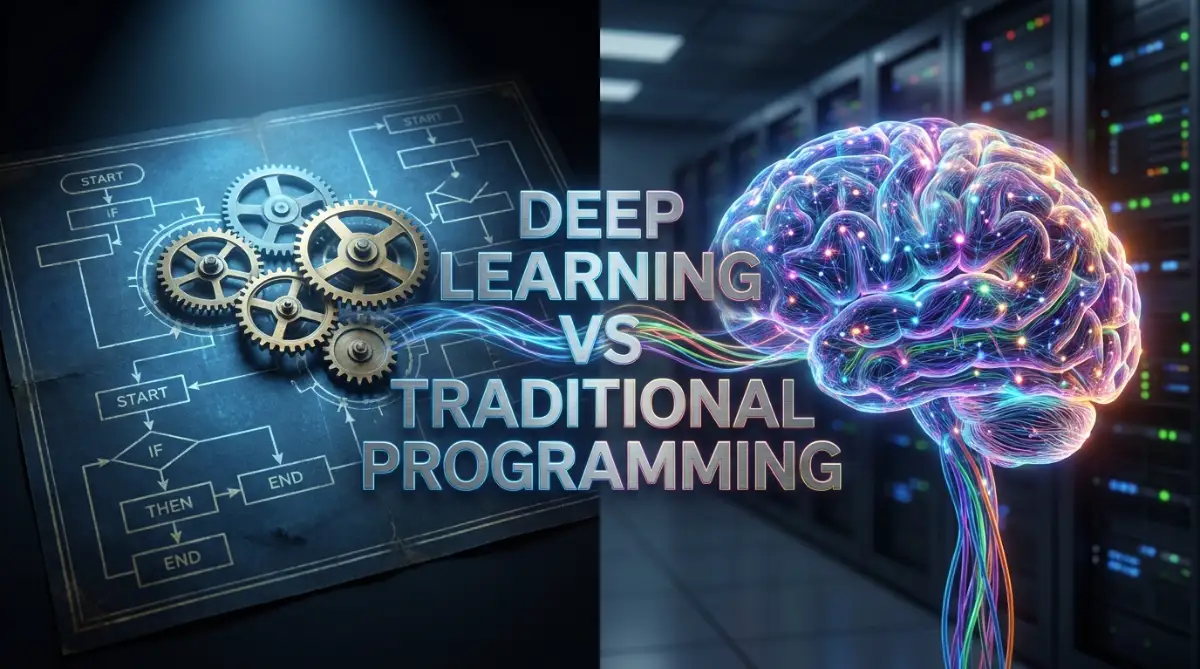
The Frustrating Gap Between Human Talk and Computer Code
You type out a perfectly normal question into a chat box, hit send, and wait. A second later, you get a response that makes absolutely zero sense. We have all been there, and it is pretty annoying, right? You might even wonder why computers, which can solve massive math equations in a blink, still struggle to understand a basic question. Bridging that gap between our messy human language and strict computer code is not magic—it is just really smart engineering. Let me show you exactly how it works.
We use our language to share deep emotions, complex ideas, and subtle jokes. But to a computer, our beautiful words are just empty static. This huge gap between human thoughts and cold digital chips has puzzled scientists for decades.
Have you ever wondered why older systems were so bad at helping you? They relied on rigid, pre-written rules that broke down the moment you made a simple typo. It felt like talking to a brick wall.
Fortunately, a quiet revolution has changed everything. Modern systems do not just match keywords anymore; they actually learn to follow our train of thought. Let us unpack how this shift happened and how these smart systems finally started to hear us.
The Short Version (Key Takeaways)
- Computers use math to understand human words by turning them into number lists (called vectors).
- Older systems failed because they followed strict rules; modern ones learn by watching how we naturally talk.
- You can get much better answers from AI by giving it a specific role and setting clear boundaries.
- Never share your private info, as bots can sometimes leak or mix up what you tell them.
From Static Rules to Smart Learning: The Modern AI Shift
For a long time, programmers tried to teach computers language by writing massive dictionaries of grammar rules. If you typed a sentence, the computer would search for exact matches in its database.
This approach failed because human speech is messy and constantly changing. We use slang, we change our tone, and we use the same word in ten different ways.
Machine learning models solved this problem by changing the strategy entirely. Instead of learning rigid rules, they look at millions of real sentences to spot patterns.
They learn much like a child does, by listening to how people talk every single day. Over time, the model figures out which words usually go together and what they mean in different situations.
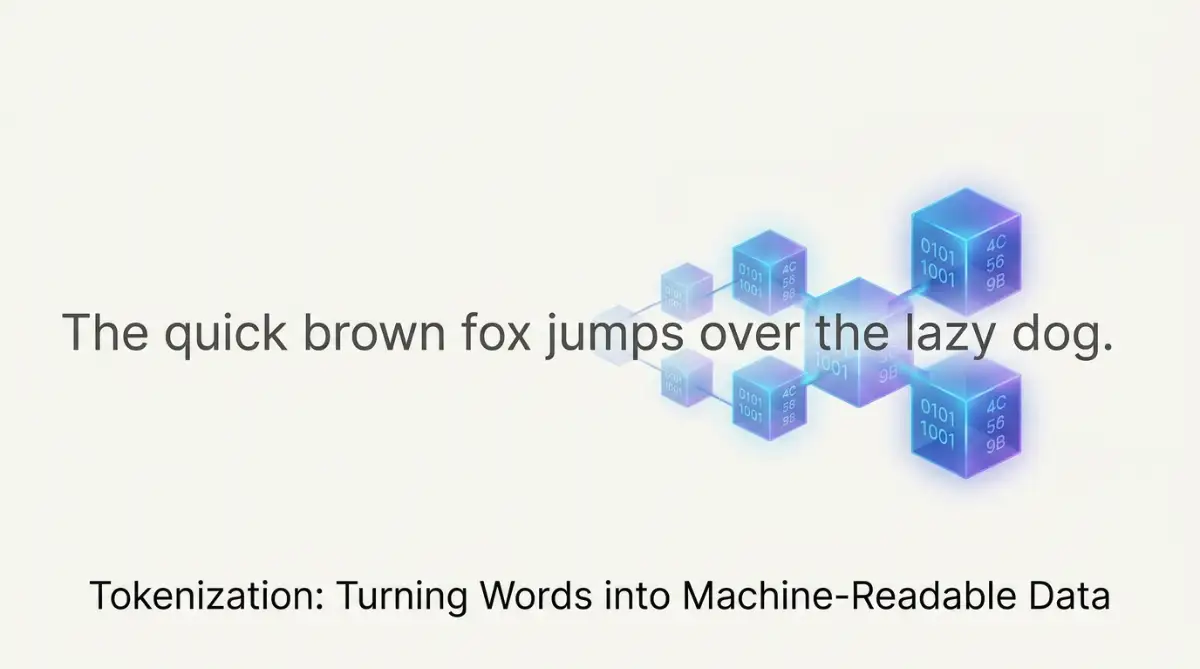
Step 1: Breaking the Text Into Pieces (Tokenization)
Before a model can read a sentence, it has to chop it up into smaller parts. This basic step is called tokenization.
Think of it like taking a lego castle apart so you can see how each block fits. The model does not see a whole sentence at once; it sees a sequence of small blocks.
Sometimes, the system encounters a brand-new word it has never seen before. Instead of giving up, it breaks the word down into even smaller pieces.
For example, the word "unbelievable" might be split into "un", "believe", and "able". This allows the model to guess the meaning of new words by looking at their familiar parts.

By doing this, the system avoids getting stuck on typos or creative slang terms. It keeps the processing pipeline moving smoothly without any manual intervention.
Step 2: The Magic of Vectors (Turning Words into Math)
Computers do not actually understand letters; they only understand numbers. Once the text is split into tokens, the model converts each token into a list of numbers called a vector.
This process is known as word embedding. It maps words into a giant, multi-dimensional mathematical space.
In this mathematical space, words with similar meanings are placed close together. For example, the numbers for "apple" and "orange" will sit very close to each other.
Meanwhile, the word "spaceship" will be placed very far away from both fruits. This mathematical distance is how the model understands the relationships between things.
Pro Tip: This system is so smart that it can perform word math. If you take the vector for "King", subtract "Man", and add "Woman", the math leads you directly to "Queen".
Step 3: Catching the Real Context (The Attention Method)
In the past, models looked at words one by one in a straight line. This was a major issue because the meaning of a word often depends entirely on the words around it.
Consider the word "bank" in these two sentences:
- "I sat on the grassy bank of the flowing river."
- "I went to the bank to deposit some cash."
An old model would treat the word "bank" exactly the same way in both cases. A modern language model uses an attention mechanism to solve this puzzle.
The attention mechanism allows the model to look at the entire sentence at the same time. It scores how much attention each word should pay to every other word in the sentence.
When reading "river," the model links "bank" to nature and water. When reading "deposit," the model links "bank" to money and finance.
This breakthrough has made AI systems feel much more human. They no longer get confused by words that have multiple meanings.
Real-Life Example: How AI Gets It Right
Q: So, how does the model know if I mean a "computer mouse" or the animal?
A: It looks at the neighboring words! If you type "The mouse ate the cheese," the system spots the words "ate" and "cheese." It instantly links them to the animal. But if you type "My mouse needs a new battery," it sees "battery" and knows you mean your tech gadget. Simple context clues do all the heavy lifting here.
Step 4: The Training Phase (How the Brain Grows)
A machine learning model starts out completely blank, knowing absolutely nothing about human speech. It must go through a massive training phase to build its digital brain.
This process generally happens in two distinct stages:
During this first stage, the model reads billions of pages from books, websites, and articles. It plays a giant game of "fill in the blank" to guess the next word in a sentence.
By repeating this game billions of times, it learns grammar, spelling, and general facts. It develops a broad, basic understanding of how humans communicate.
Once the model has general knowledge, experts guide it to be helpful and safe. Humans grade the model's responses and teach it how to follow instructions politely.
This step ensures the model does not generate spam or offensive text. It shapes the raw digital brain into a helpful, conversational partner you can actually trust.
Common Myths vs. The Actual Reality
There are many misconceptions about how these smart models work behind the screen. Let us clear up some of the most common misunderstandings.
- Myth: AI language models are conscious and actually feel emotions.
- Reality: They are complex math equations that predict the most likely next word. They do not have feelings, beliefs, or personal consciousness.
- Myth: The model searches the internet in real-time for every single answer.
- Reality: Most models rely on patterns stored in their internal mathematical weights. They do not always need to search the web to write a coherent sentence.
- Myth: Machine learning models are completely flawless and never make mistakes.
- Reality: They can make mistakes, sometimes called "hallucinations." They can generate confident answers that sound correct but are factually wrong.
How We Interact With These Models Everyday
You might not notice it, but you likely use these smart models multiple times a day. They run quietly in the background of your favorite apps and websites.
When your email app suggests a quick response like "Sure, sounds good!", it uses a mini language model. It reads your incoming mail and guesses your most likely reply.
Modern search engines do not just match your search terms word-for-word. They analyze the intent behind your query to give you the most relevant answers.
Grammar checkers and writing tools use these models to suggest better phrasing. They help you express your thoughts clearly without changing your original message.
Quick Cheat Sheet: AI Tools We Use Daily (Without Noticing)
- Spam Filters: Reads your incoming emails and spots fake words to keep your inbox clean.
- GPS Maps: Uses smart models to guess traffic patterns and talk to you in a human-like voice.
- Streaming Apps: Looks at the text summaries of movies you like to suggest your next weekend watch.
To Sum It Up: A Bridge of Numbers and Words
We have traveled a long way from the days of rigid, frustrating computer systems. Today, machine learning models act as a translation bridge between human thought and digital math.
By breaking our words into tokens, mapping them to mathematical vectors, and using context-aware attention, they can converse with us naturally. It is a beautiful mix of linguistics and computer science.
As these systems continue to grow, our daily digital interactions will only become smoother. The next time you chat with an AI assistant, you will know exactly how it turned your typed words into real, helpful actions.
Mastering the Interaction: How to Communicate Better with Language Models
When we understand that machine learning models process our words as mathematical patterns, we can change how we talk to them. Instead of typing random, messy commands, we can structure our inputs to get much better results. This practical shift allows you to work smarter, save time, and avoid endless retries that drain your daily energy.
Just as a reader looks for a clear step-by-step path when trying to learn how to secure a bank loan without collateral, we must give our systems a clear path to follow. When we feed a model disorganized text, its internal vector system gets confused. To get top-tier results, you need to master a few simple interaction secrets.
Speak with Contextual Clarity
The absolute best way to guide a language model is to feed it rich, specific context. If you ask a broad question, you will get a generic, boring answer that does not help you at all.
Instead of asking, "Write a post about productivity," try describing your exact situation. Tell the model who you are, who your target audience is, and what tone of voice you want to use.
Use Role-Playing to Direct the System
One of the most effective secrets of prompt engineering is assigning a specific role to the machine learning model. You can tell the model to act as a world-class chef, an experienced editor, or a helpful assistant.
When you assign a persona, the model shifts its internal mathematical weights. It begins prioritizing vocabulary and sentence structures that match that specific profession.
Set Strict Constraints to Stop Rambling
Machine learning models love to talk, and they will often write long, repetitive paragraphs if you let them. To stop this, you should always set clear boundaries inside your prompts.
Tell the model exactly how many words, paragraphs, or bullet points you want to see. You can even tell it which specific words to avoid or which formatting styles to use.
Setting boundaries forces the model to focus only on the most important facts. It prevents the model from generating unnecessary fluff that you will have to manually edit later.
By keeping the output short and sweet, you make it much easier for readers to scan your text. This is especially true for mobile phone users who hate reading massive walls of text on small screens.
Give Examples of Your Desired Output
If you want the model to write in a very specific format, do not just describe it—show it. Giving one or two examples of what a perfect response looks like is called few-shot prompting.
For example, show the model a short paragraph you wrote yourself and ask it to copy that exact rhythm. The model will analyze your sentence lengths and vocabulary choices to mimic your style.
This simple step ensures the output looks natural and fits your personal brand. It is the easiest way to make computer-generated text feel warm, human, and genuinely helpful.

The Silent Failures: Pitfalls to Watch Out For When Prompting AI
While machine learning models are incredibly helpful, using them incorrectly can lead to massive headaches. Many people fall into easy traps that ruin their productivity and leave them feeling completely disappointed. If you do not watch out for these silent failures, you can end up spreading misinformation or wasting hours of your day.
Treating the Model Like a Fully Conscious Mind
Perhaps the most common mistake is assuming the computer actually understands the real world the way we do. We must remember that these tools are built on math, statistics, and probabilities[1][2].
They do not have personal experiences, common sense, or a moral compass. They simply predict which word should follow the previous one based on their training[3].
If you treat them like human experts, you might blindly trust an answer that is entirely incorrect. Always double-check important facts, data points, and mathematical calculations with trusted human sources.

Sharing Private and Sensitive Personal Information
When we talk to conversational bots, it can feel like we are speaking to a close friend. This friendly feeling causes some users to share highly private data, like their passwords, bank details, or private business strategies.
Remember that many of these models use your chats to train future versions of their systems. If you paste sensitive data into the chat box, that data could accidentally be shown to someone else.
Treat your chat screen like a public forum. Never type anything into an AI system that you would not want your neighbors or co-workers to read.
Relying on the First Answer Without Editing
Many beginners copy and paste the very first response a language model gives them. This is a huge mistake because the first output is often generic and contains tell-tale robotic patterns.
Robotic writing can hurt your brand and make your readers walk away. People want to read fresh, exciting thoughts, not repetitive sentences that sound like they were written by a machine.
Always take a moment to inject your own stories, opinions, and real-life examples into the text. This personal touch is what turns a basic draft into a helpful piece of content.
This process is highly similar to modern software tools that help people find financial help. For example, when databases process applications for instant approval loans, human agents still monitor the algorithms to make sure everything runs safely.
Your Roadmap to Smarter Human-AI Conversations
Learning to work with machine learning models is a journey that takes time and practice. Instead of feeling overwhelmed by the complex math, we should focus on the amazing ways these tools can assist our daily lives. They are designed to be our creative helpers, not our replacements.
By understanding the basic steps of how they read and write, you can easily guide them to produce helpful results. The key is to stay curious, keep experimenting, and never stop learning.
Action Steps for Tomorrow
If you want to start getting better results right away, try using this simple action plan tomorrow morning:
- Pick one repetitive task: Start by using a language model to help you summarize long emails or organize a messy to-do list.
- Write a role-play prompt: Tell the system to act as a specific expert and watch how much better its responses become.
- Verify before you share: Always read the output out loud to make sure it sounds natural, friendly, and factual.
A Word from the Expert
The goal of this new era of technology is to build stronger bridges between humans and systems. When we learn to communicate clearly, we unlock amazing new ways to solve everyday problems.
So, go ahead and try these strategies out today. You might be surprised at how much easier your daily digital work becomes when you speak the language of context.
Disclaimer
This article is for educational and informational purposes only. The information provided about machine learning, natural language processing, and general financial topics does not constitute professional advice. For specific professional guidance, please consult with a qualified industry expert.