
The Hidden Cost of Waiting: Why Your Dream Does Not Need a Million Dollars to Start
You have a solid business idea, but your bank account is practically empty. Let's be honest, seeing those "start a small business with $10k" guides makes you want to throw your laptop out the window. I get it. I started my first side hustle with just enough cash to buy a domain name and a cheap pizza. You do not need a massive bank loan to get moving—you just need a smarter game plan. Let's look at how you can bypass the big expenses and actually launch your idea today.
You watch others launch their ideas while you sit on the sidelines just because you cannot afford expensive market reports. This gap between your big dreams and your small bank balance can make you feel completely helpless. It robs you of your sleep and makes you doubt your own talent.
The truth is that the traditional business world makes us believe that money is the only key to success. We are told we need fancy software and high-priced consultants just to write down our goals. This false idea creates a wall of anxiety that stops everyday people from taking their first steps.
You do not have to let a lack of money stop your progress. Let us break down how you can bypass these expensive barriers and build a real roadmap for your business without spending a fortune.
📌 The "Zero-Budget" Quick Summary
- Skip the expensive software; Google Sheets and free online tools are all you need to map out your plan.
- Talk to real people on social media to find their exact pain points before building anything.
- Pre-sell your idea to fund your early production instead of taking out high-interest loans.
- Barter your skills with other local business owners to save cash on professional services.
Building Your Low-Cost Business Roadmap From Scratch
To build a business plan with minimal capital, you must shift your focus from spending money to gathering high-value information. A great business does not start with expensive office spaces or fancy logos. It starts with a clear understanding of a problem and a simple way to solve it.
Focusing on the Core Problem You Solve
Every successful company exists because it makes life easier for someone else. Before you write a single word of your plan, identify the exact headache your future customers are facing. You do not need expensive software to do this research.
Talk to real people in online forums, social media groups, and local communities. Ask them what frustrates them most about their current options. Listen closely to their complaints and write down their exact words.
This deep understanding of your audience costs absolutely nothing but your time. When you know their pain points, your plan practically writes itself. You can easily design an offer that people are eager to pay for because it solves their direct problems.
🧠 Quick Reality Check: The "Perfect Product" Myth vs. Fact
- The Myth: You need a finished, polished product before you can ask anyone for money.
- The Fact: You only need a working solution. Did you know Dropbox started with just a simple demo video? Zappos started by taking photos of shoes in local stores without owning any actual inventory.
- Your Move: Sell the result first, and build the final product using the revenue you generate.
Testing Your Idea Without Spending a Dime
The biggest mistake new entrepreneurs make is spending their savings to build a product before knowing if anyone will buy it. You can easily validate your idea using free tools and simple conversations. This method is often called building a minimum viable offer.
Create a simple survey using free online forms and share it with your target audience. Ask them if they would buy a solution like yours and how much they would pay. This gives you real data to put into your business plan with minimal capital.
If you want to see a real-life example of how a massive company started with almost no budget, watch this brief case study video.
[Insert YouTube Video Link Here]
You can also offer your service to a small group of people for free in exchange for honest feedback. If they love what you do, you know you have a winning concept. If they struggle with it, you can fix the issues before you spend any money.
Mapping Your Lean Operations
Once you know your idea works, you need to write down how you will run things day-to-day. Keep your operations as simple as possible to avoid unnecessary expenses. Do not buy expensive equipment or lease space if you can work from your living room.
Identify the absolute bare minimum tools you need to deliver your service or product. If you are starting a consulting business, all you need is a laptop, an internet connection, and a free email account. If you are making physical goods, start with small batches made at home.
Write down who will do the work and how much time it will take. In the beginning, you will likely wear all the hats, which keeps your overhead costs at zero. This hands-on approach also helps you understand every corner of your business.
Traditional vs. Low-Capital Planning
To help you see the difference, let us compare the old way of planning a business with the modern, low-capital method.
As you can see, the low-capital route relies on resourcefulness rather than a big bank account. It keeps your risks extremely low while you learn the ropes.
Avoiding the Trap of Perfect Software
Many new business owners waste weeks choosing the perfect accounting software, website builder, or project management tool. They sign up for multiple monthly subscriptions before making their first dollar. This is a fast way to drain your tiny budget.
My Personal Realization:
When I tried to launch my first small venture, I spent over three hundred dollars on premium business tools before I even had one client. I quickly realized that a simple paper notebook and a free spreadsheet did the exact same job without costing a dime. Focus on making sales first, and worry about fancy systems much later.

💡 The $0 Tech Stack (What I Actually Use):
Wondering how to survive without expensive software subscriptions? Here is the exact free toolkit you can use right now:
- For taking notes & planning: Notion (The free version has everything you need).
- For tracking money: Google Sheets (Simple, cloud-based, and zero cost).
- For basic graphic design: Canva (You don't need the Pro version to make a decent logo).
- For a fast test website: Carrd.co (Build a clean landing page for free in an hour).
Use free alternatives like Google Sheets to track your ideas and basic plans. You do not need a fancy design to show that your business makes sense. A clean, simple layout is much better than a cluttered plan made with expensive templates.
The Simple Financial Skeleton Plan
You cannot have a business plan with minimal capital without talking about numbers, but do not let math scare you. You do not need to be an accountant to write a basic financial plan. Keep your projections realistic and easy to understand.
First, list your fixed monthly costs, which should be as close to zero as possible. This might include your phone bill, internet, or cheap web hosting. Next, calculate the cost of delivering one unit of your service or product.
Subtract that cost from your selling price to find your profit margin. Once you have this number, you can easily calculate how many sales you need to make each month to cover your basic living expenses. This simple math keeps your goals clear and realistic.
Building Your Minimal Viable Offer
A minimal viable offer is the simplest version of your product that someone is willing to pay for. It does not have all the bells and whistles, but it gets the job done. This concept is the secret weapon of low-budget planning.
If you want to start a tutoring business, do not build a complex online school platform first. Start by teaching students over a free video call tool. If you want to launch a clothing brand, start with a few custom designs printed on demand.
This approach lets you generate revenue immediately. You can then use this early income to fund the next stages of your business plan. It is a natural way to grow without taking on heavy debt.
Harnessing Free Digital Tools
The internet is packed with free resources that can help you write, design, and share your business plan. You do not need to pay for professional writing software when you can use free online document editors. These tools also make it easy to share your work with potential partners.
For basic graphic design, use free web-based design platforms to create simple logos or presentation slides. For marketing, leverage social media networks to share your journey and build an audience.
By using these free resources, you can keep your startup costs near zero. This allows you to focus your limited funds on things that directly bring in revenue, like raw materials or essential permits.
Connecting with Your First Customers
Finding your first few buyers is the most exciting part of starting a business. Do not hide behind a screen waiting for people to find you. Be proactive and reach out to the people you talked to during your research phase.
Send them a polite message explaining that you built a solution based on their feedback. Offer them a special introductory rate to thank them for their help. This personal touch build trust and often leads to your very first sales.
Word-of-mouth is the most powerful and cheapest marketing tool in the world. When you treat your first customers like gold, they will naturally tell their friends about you. This organic growth is the ultimate goal of any low-capital business plan.
Smart Scaling Secrets to Keep Your Venture Alive and Growing
When you build a business, you do not need a large bank account to make a big impact. You can use creative scaling secrets to stretch your limited funds. These ideas help you grow your brand naturally without taking on high-risk debt.
One of the best secrets is using sweat equity instead of hiring expensive help. You can partner with other creative people who share your vision but lack funding. By giving them a small share of your business, you get high-quality work without spending cash.
Another smart tactic is bartering services with other small business owners in your local area. For example, if you are great at social media, you can manage an accountant's social page. In return, they can help you organize your business tax documents for free.
This type of trade saves you thousands of dollars in professional service fees. It also helps you build deep connections with other local business owners. These relationships often turn into helpful partnerships down the road.
If you eventually find yourself needing a small injection of cash to get basic supplies, you must be careful. You might look into how to get unsecured personal loans with bad credit safely to bridge the gap. Just make sure the monthly payments fit easily into your simple budget.
Always avoid rushing into high-interest traps like no credit check loans that can drain your profit margins before you even start. These high-interest options often create a cycle of debt that is hard to escape. Keep your funding sources clean and low-risk to protect your business.
To understand how professional organizations look at lean operations, check out how the Small Business Administration advises writing a lean startup business plan [1]. They emphasize focusing on your value proposition and key partnerships rather than heavy financial spreadsheets [1].
Funding Your Growth with Customer Cash
The absolute safest way to fund your business is to use your customers' money. This means selling your product or service before you actually build or buy it. Many famous companies used this exact approach to launch their brands.
You can set up a simple pre-order page on a free website builder. Offer your early supporters a special discount if they buy your product in advance. Use the cash from these early sales to pay for your first manufacturing run.
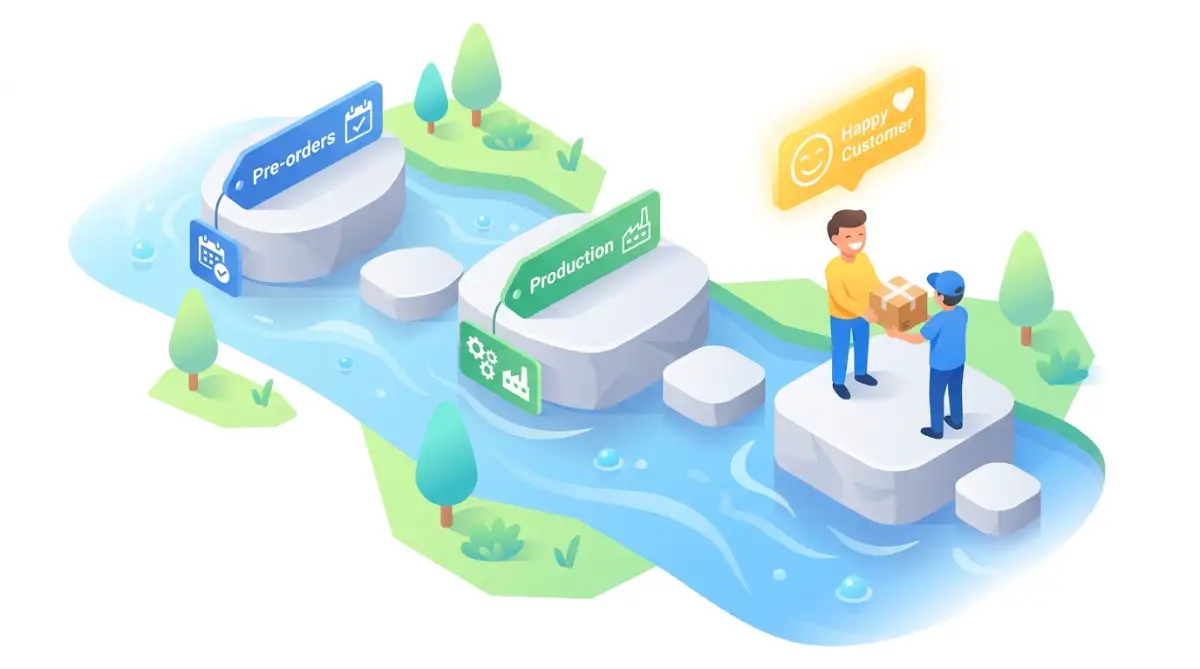
This method completely removes the financial risk of holding unsold inventory. It also proves that people actually want to buy what you are offering. If no one pre-orders, you can simply refund the few buyers and try a different idea.
Sticking to Free Marketing Methods
Do not waste money on expensive online ads when you are just starting out. Paid advertising can eat through a small budget in a matter of hours. Instead, focus on building an organic audience that loves your message.
Create helpful content on social media platforms that answers questions your target audience is asking. Share behind-the-scenes videos of your daily business journey. People love to support real human beings who are honest about their struggles.
Write helpful articles on your own blog to share your industry knowledge. This organic approach takes time, but it builds long-term trust that paid ads can never buy. Over time, search engines will reward your helpful content with free organic traffic.
Dark Traps That Can Quietly Destroy Your Low-Budget Business
Starting with very little money actually forces you to be smart, but it also comes with unique dangers. If you do not watch your step, you can easily fall into traps that ruin all your hard work. Knowing these dangers beforehand is the best way to keep your business safe.
A very common mistake is falling in love with your own product instead of the customer's actual problem. You might spend months building something you think is amazing, only to find out that no one wants to buy it. Always let the market guide your product choices.
Another trap is failing to separate your personal money from your business money. Even if you only have a hundred dollars, keep it in a separate account. Mixing these funds makes it impossible to see if your business is actually making a profit.
When you eventually grow and look for a physical space, make sure you understand the hidden traps in commercial leases. Many new owners sign long leases with hidden fees that quickly drain their bank accounts. It is always safer to work from home as long as you possibly can.
It is also wise to separate your business liabilities from your personal estate. You must take steps to protect your personal assets in case of any future legal disputes. Even a small home-based business needs basic legal protection to keep your family safe.
According to research published by Harvard Business School, the lean startup methodology reduces business failure rates by testing assumptions early [2]. If you ignore these tests, you risk joining the large number of failed ventures. Do not let stubbornness blind you to what your customers are saying.
The Danger of Ignoring Your Cash Flow
Cash flow is the lifeblood of any small business, and running out of it is the number one reason startups fail. You can have a highly profitable product, but if your customers take months to pay you, your business can still go under. Always keep a close eye on when money actually enters and leaves your account.
Never spend your last dollar on inventory or equipment. Always keep a small cash buffer for unexpected emergencies, like a broken laptop or a sudden fee. Having this small cushion gives you peace of mind and keeps your business running smoothly.
Try to negotiate favorable payment terms with your suppliers from day one. Ask if you can pay for materials thirty days after you receive them. This gives you time to sell the finished goods before you have to pay for the raw materials.
Trying to Do Everything Yourself for Too Long
While wearing all the hats is necessary at the start, it can eventually hold you back. You only have twenty-four hours in a day, and you cannot grow if you are doing every single task. Trying to do it all leads to extreme burnout and poor decision-making.
Once you start making a steady profit, identify the tasks that take up most of your time but do not make you money. This could be basic data entry, scheduling, or answering simple customer emails. Hire a virtual assistant for a few hours a week to handle these chores.
This frees up your time to focus on activities that actually grow your business, like meeting clients or developing new offers. Think of outsourcing as an investment in your own growth rather than an expense. It is the only way to scale your business without losing your sanity.
Data from the Bureau of Labor Statistics shows that many new businesses struggle to survive past their first five years due to poor financial management [3]. By keeping your cash flow positive and avoiding burnout, you give yourself a much better chance of beating these odds [3].
Your Day-One Action Plan for Long-Term Growth
To make your business plan a reality, you need a clear action plan that you can start today. Do not let the fear of not having enough money freeze your progress. Take small, steady steps forward every single day to build momentum.
Start by writing down your business idea on a single sheet of paper. Identify the exact problem you want to solve and who has this problem. This simple exercise keeps your mind focused on what truly matters.
Next, reach out to five people who fit your target audience profile. Ask them about their struggles and take detailed notes on their answers. Use this free feedback to refine your offer and make it irresistible.
Here is a simple daily checklist to keep you on the right track:
- Morning: Spend thirty minutes engaging with your target audience online for free.
- Midday: Work on refining your simple offer based on the feedback you receive.
- Afternoon: Reach out to potential partners or customers to talk about your solution.
- Evening: Review your daily spending to make sure your overhead remains near zero.
By following this simple routine, you will build a solid foundation without spending a fortune. Remember that consistency is far more powerful than a big budget.
I know how scary it feels to start a business when your pockets are empty. I was in your shoes once, and I know the doubt that keeps you awake at night. But I promise you that your passion, creativity, and hard work are worth far more than any bank loan, so take that first step today and watch your dream grow.
Common Questions About Low-Budget Startups
Can I really start a viable business with zero dollars?
Yes, you can absolutely start a service-based business with no initial capital. By using your skills, free digital tools, and organic social media marketing, you can secure your first paying clients. Once you earn your first profits, you can reinvest that money to grow your business naturally.
How do I write a business plan if I do not have financial data?
When you write a plan with no capital, focus on your operational strategy and target audience research. You can use realistic industry averages to estimate your future sales and expenses. Keep your financial projections simple, focusing on how many sales you need to cover your basic monthly costs.
What is the safest way to test my business idea?
The safest way is to talk directly to potential customers and offer your service or product as a pre-order. This lets you see if people are willing to pay for your solution before you spend money to build it. If you get enough pre-orders, you can use that cash to fund your launch.
Should I get a partner to help fund my new startup?
Getting a partner can be helpful, but you should only do it if they bring skills or resources you do not have. Make sure you write a clear agreement that explains how you will share the work and profits. It is often safer to start small on your own before bringing in partners.
Disclaimer
The information provided in this article is for educational and informational purposes only. It does not constitute professional financial, legal, or business advice. Please consult with a certified professional before making any major business or financial decisions.
![7 Proven Steps to Secure Your First Seed Funding [Step-by-Step]](https://vimex24.com/storage/uploads/blogs/1786243058_7-proven-steps-to-secure-your-first-seed-funding-step-by-step.webp)
![7 Proven Agile Methodologies to Skyrocket Remote Startup Growth [Step-by-Step]](https://vimex24.com/storage/uploads/blogs/1786212322_7-proven-agile-methodologies-to-skyrocket-remote-startup-growth-step-by-step.webp)